Custom Wooden Cutting Board Manufacturer in China: 2026 Sourcing Guide
Edge-grain vs end-grain construction, the woods that survive dishwashing, FDA/LFGB/CARB compliance, 2026 FOB price tiers, MOQ, private-label options and a 12-week sourcing timeline for a custom wooden cutting board from

Sur cette page
Sur cette page
Wooden cutting boards look like the simplest product a factory can make — a flat slab of wood. That simplicity is exactly why most of them are bad. Walk the Amazon "cutting board" category and the median review score sits around 3.6 stars, dragged down by warping, splitting, glue lines that delaminate in the dishwasher, and "food-safe" finishes that turn out to be lacquer. For a private-label brand, that quality gap is the opportunity: the demand is enormous and evergreen, but the average product is mediocre. Win on construction and compliance and you out-rank the field in twelve months.
This is the sourcing playbook our factory uses with the brands we manufacture cutting boards for — the grain construction that actually survives daily knife work, the woods that hold up to dishwashing reality (and the ones that don't), the food-contact certifications buyers and marketplaces now demand, the real 2026 FOB price bands, and the supplier red flags that separate a factory from a re-seller. If you are evaluating whether to private-label a wooden cutting board from China, this is what we wish every first-time buyer knew before sending the first email.
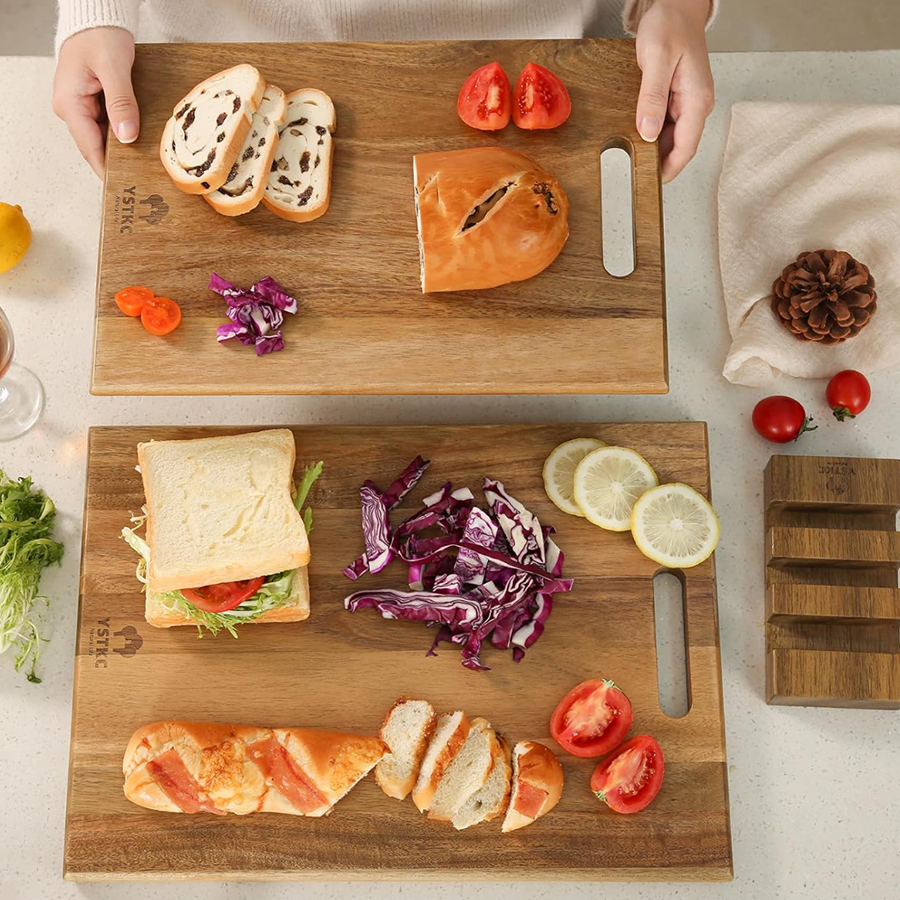
Why wooden cutting boards are a strong private-label category in 2026
Three forces make this category attractive in 2026. First, demand is structural, not trend-driven: every kitchen needs a cutting board, replacement cycles are short (most consumers replace within 2-3 years), and the "charcuterie / home entertaining" wave has pulled premium boards into the gifting market. Second, the unit economics are clean — a board that retails at $39-$69 lands at $4-$12 FOB depending on size, wood and construction, leaving genuine margin even after Amazon FBA fees. Third, the category rewards quality signalling: end-grain construction, food-safe finishes and laser-engraved branding are visible upgrades a buyer will pay 2-3x more for, so differentiation is achievable without inventing anything.
The catch is compliance. Because a cutting board is a direct food-contact product, marketplaces and retailers (Amazon, Wayfair, Williams Sonoma, Crate & Barrel, and every EU grocery-adjacent chain) increasingly require FDA and LFGB documentation on the wood and the finish — plus formaldehyde-emission certificates (CARB / TSCA Title VI) on any edge-glued or laminated board. A factory that can't produce these in 24 hours will lose your order to one that can.
Edge-grain vs end-grain vs face-grain: the decision that defines your product
This is the single most important spec in a cutting board, and the one cheap suppliers blur. Grain construction determines durability, knife-friendliness, price and weight. Get this right before you discuss anything else.
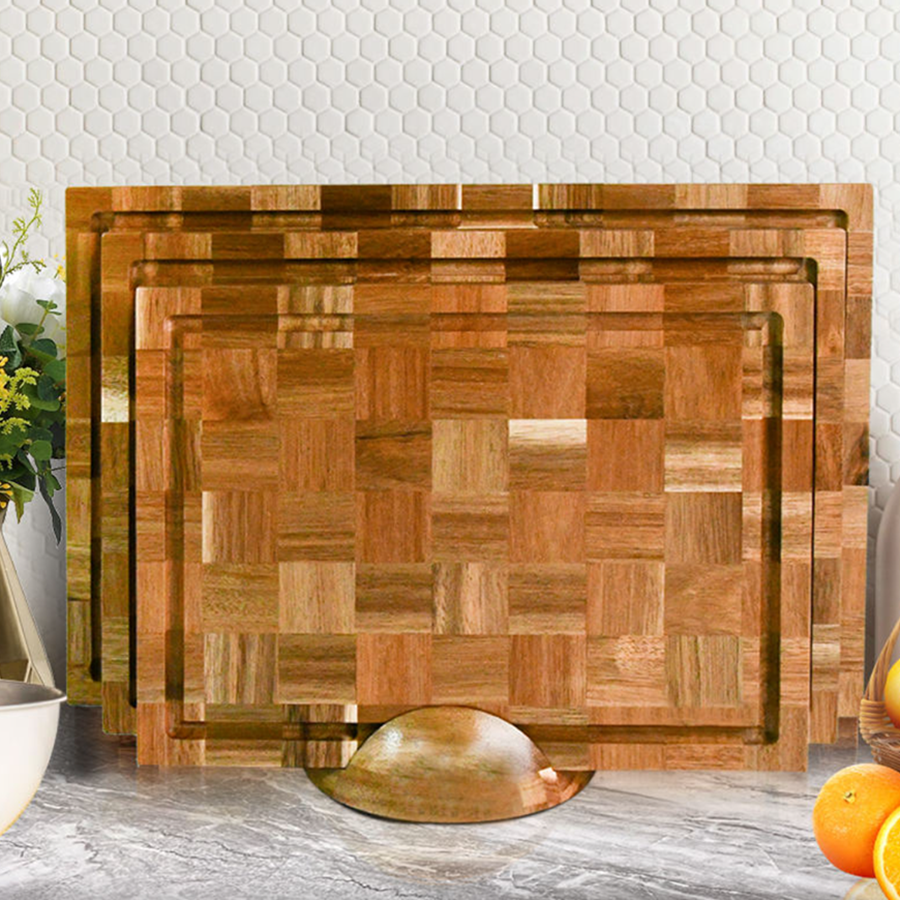
| Construction | FOB cost index* | Knife-friendliness | Durability | Best fit |
|---|---|---|---|---|
| Edge-grain | 1.0× | Good | High — stable, dishwasher-tolerant if sealed | The workhorse: $29-$59 D2C and Amazon volume |
| End-grain (butcher block) | 1.8–2.4× | Excellent — fibres "self-heal", gentle on edges | Highest if maintained; can check if neglected | Premium $69-$149 gifting and chef brands |
| Face-grain | 0.8× | Fair — shows knife marks fastest | Lowest — better for serving than chopping | Serving boards, low-price promo, charcuterie |
*FOB cost index normalised to edge-grain at 1.0×, for a 35 × 25 cm board in acacia at 3,000 units.
Edge-grain — the volume workhorse
Strips of wood glued side-by-side with the grain running lengthwise across the surface. Stable, relatively light, and the most forgiving to manufacture consistently at scale, which keeps the defect rate low on large runs. This is the right default for any brand whose volume sits in the $29-$59 retail band.
End-grain — the premium statement
Blocks of wood stood on end and glued so the knife meets the fibre tips, which part and close around the blade ("self-healing") instead of being sliced. It is gentler on knife edges, hides cut marks, and carries the checkerboard look buyers associate with serious cookware. It costs more because of waste, glue-up labour and a longer kiln/conditioning cycle — and it demands a flawless food-safe glue and finish or it will check (crack) along the glue lines. Only buy end-grain from a factory that can show you its moisture-control data.
Face-grain — serving, not chopping
A single board (or wide slats) showing the flat face of the grain. The cheapest and most photogenic, but it scars fastest under a knife. Position these as serving / charcuterie boards rather than working cutting boards, and the lower durability stops being a problem.
Picking the right wood
| Wood | FOB cost index* | Hardness (Janka) | Food-safety | Best fit |
|---|---|---|---|---|
| Acacia | 1.3× | ~1,700 lbf | Excellent — dense, naturally antimicrobial oils | Premium D2C, gifting, the category's best all-rounder |
| Moso bamboo (laminated) | 1.0× | ~1,400 lbf | Good if sealed; native silica is hard on knives | Volume D2C, eco-positioning, sub-$40 retail |
| Rubberwood (Hevea) | 0.95× | ~960 lbf | Good — FSC-friendly, even tone | Budget edge-grain, paint/engrave-ready blanks |
| Walnut | 2.5× | ~1,010 lbf | Excellent | $79+ luxury and end-grain butcher blocks |
| Beech / maple | 1.1× | ~1,300 lbf | Good | Classic pale butcher block, EU market taste |
| Teak | 2.2× | ~1,070 lbf | Excellent — high natural oil, water-resistant | Wet-use / outdoor / hospitality boards |
*FOB cost index normalised to bamboo at 1.0×, edge-grain 35 × 25 cm board at 3,000 units. Janka hardness figures are typical industry references.
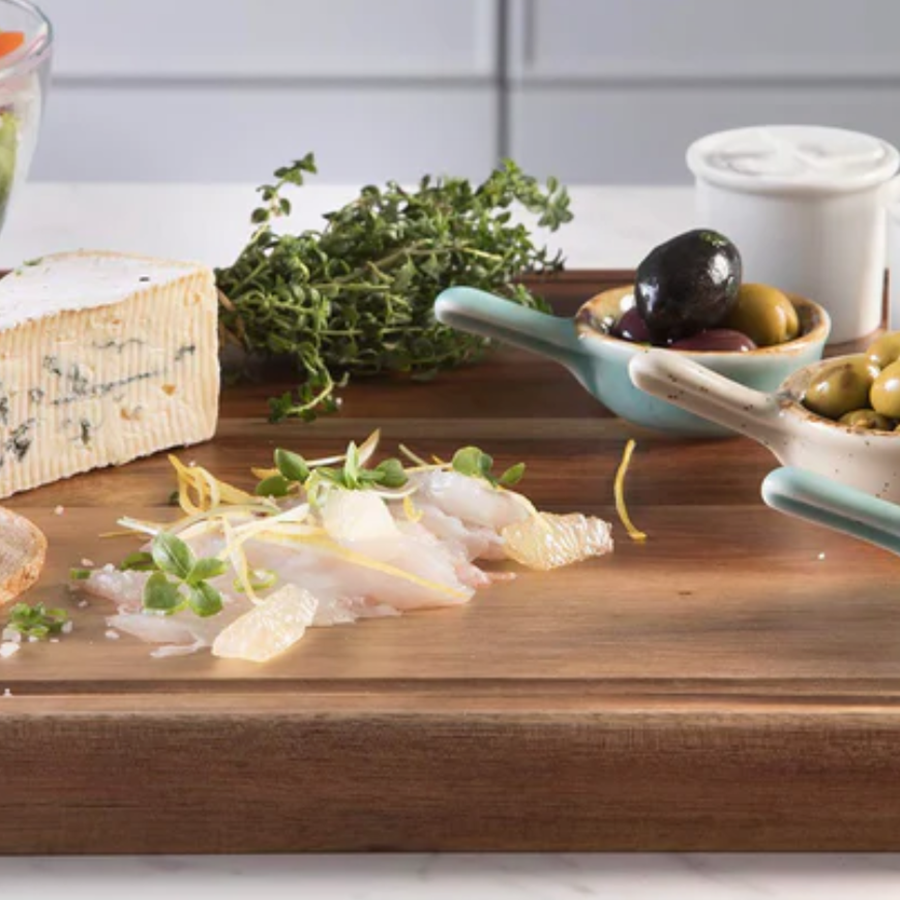
Acacia is the workhorse of the premium tier for one structural reason: every board has a unique grain pattern, so 3,000 mass-produced units still photograph as hand-selected. Bamboo wins on price and eco-positioning below $40 retail, but specify a high-density laminated moso and warn your marketing team it is technically a grass — some "100% wood" claims have triggered Amazon listing issues. Walnut and teak only pencil out above $79 retail. For paint-ready or laser-engraved blank boards, rubberwood gives the cleanest, most affordable canvas. (For a deeper material breakdown, see our wood material guide and best wood for serving boards.)
The anatomy of a cutting board that lasts five years
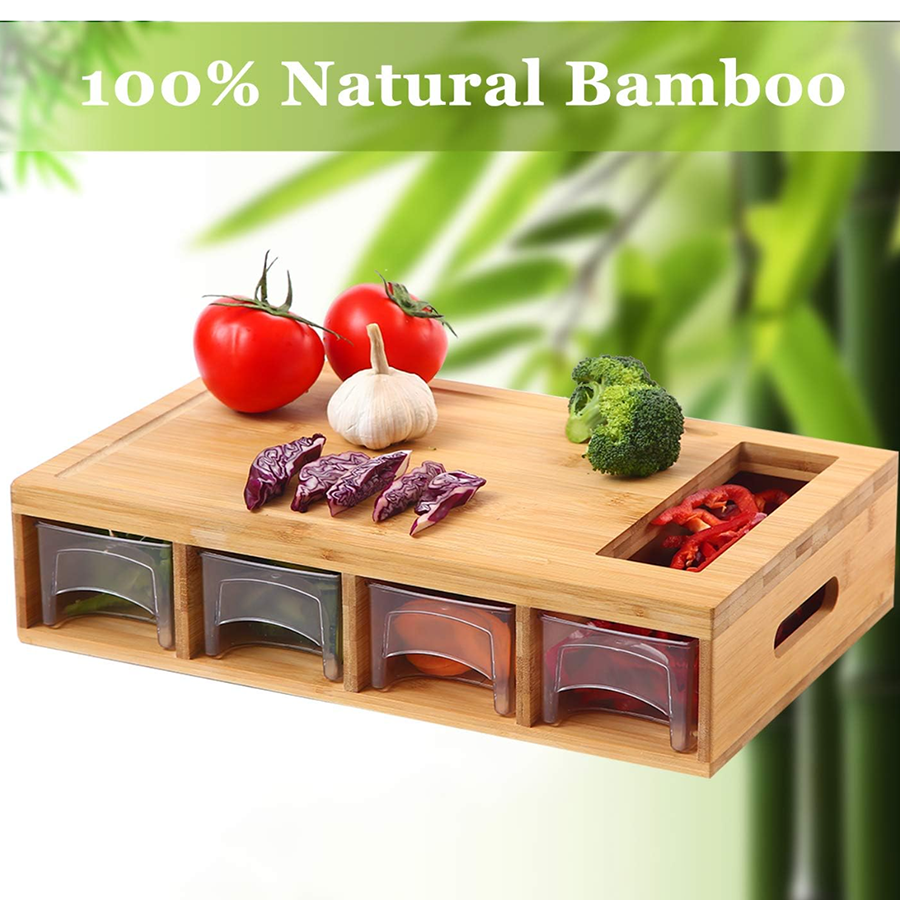
A good cutting board is engineered as six interlocking systems. Knowing what each should look like lets you tell a serious quote apart from a thin one.
1. Thickness
Serving boards run 12-18 mm; everyday chopping boards 18-25 mm; end-grain butcher blocks 30-50 mm. Anything under 15 mm in a chopping board will cup or warp within months, because a thin slab can't resist the moisture gradient between its wet top and dry bottom. Specify thickness with a ±1 mm tolerance, not "about 2 cm".
2. Moisture content at glue-up
This is the number that decides whether your boards crack in a dry US winter. Kiln-dry to 8-12% moisture content and require the factory to log it. Boards glued at 15%+ will split when they hit a heated home. A factory that can't tell you its target MC, or doesn't own a kiln, is a re-seller.
3. The glue
Every multi-piece board lives or dies on its adhesive. Require a D3 or D4 water-resistant, food-contact-safe PVA (or equivalent), and confirm it carries low-formaldehyde certification (CARB Phase 2 / TSCA Title VI). Delamination along glue lines is the #1 cutting-board return reason, and it is 100% a glue-and-MC problem.
4. The finish
For a food-contact board the only correct finish is food-grade mineral oil plus a beeswax / carnauba blend, applied as multiple saturating coats. NEVER accept polyurethane, lacquer or "varnish" on a working cutting board — it isn't food-safe under knife contact and it fails visibly within months. We get explicit "no PU finish" specs from roughly 70% of EU buyers and 50% of US buyers; treat it as the default.
5. Juice groove and grip
If your design has a juice groove, the ideal is 5-8 mm deep with a rounded U-profile. Specify hand-grip cutouts or a hanging hole explicitly — these are the details that read as "premium" in product photos. For boards used wet, request non-slip food-grade silicone feet over glued rubber, which detaches in the dishwasher.
6. Edge and corner treatment
A 2-3 mm chamfer or roundover on every edge prevents splintering and signals quality. Sharp factory edges are the fastest way for a customer to feel they bought something cheap.
Food-contact compliance that actually matters
Do not treat certification as paperwork you chase after production. Specify it in the brief, and ask for sample certificates before you pay the deposit. The four that matter for wooden cutting boards:
| Standard | Market | What it covers |
|---|---|---|
| FDA 21 CFR | USA | Food-contact safety of the wood and the finish/oil |
| LFGB §30/31 | Germany / EU | Stricter food-contact migration testing; the EU benchmark |
| CARB Phase 2 / TSCA Title VI | USA | Formaldehyde emission limits for the glue in edge-glued/laminated boards |
| California Prop 65 | USA (CA) | Warning/limits on finishes, stains and any added chemicals |
If you want a sustainability story, add FSC chain-of-custody — increasingly a buying requirement for European retail and a genuine differentiator on Amazon. We cover the documentation chain in detail in our FSC sourcing guide.
MOQ and price tiers in 2026
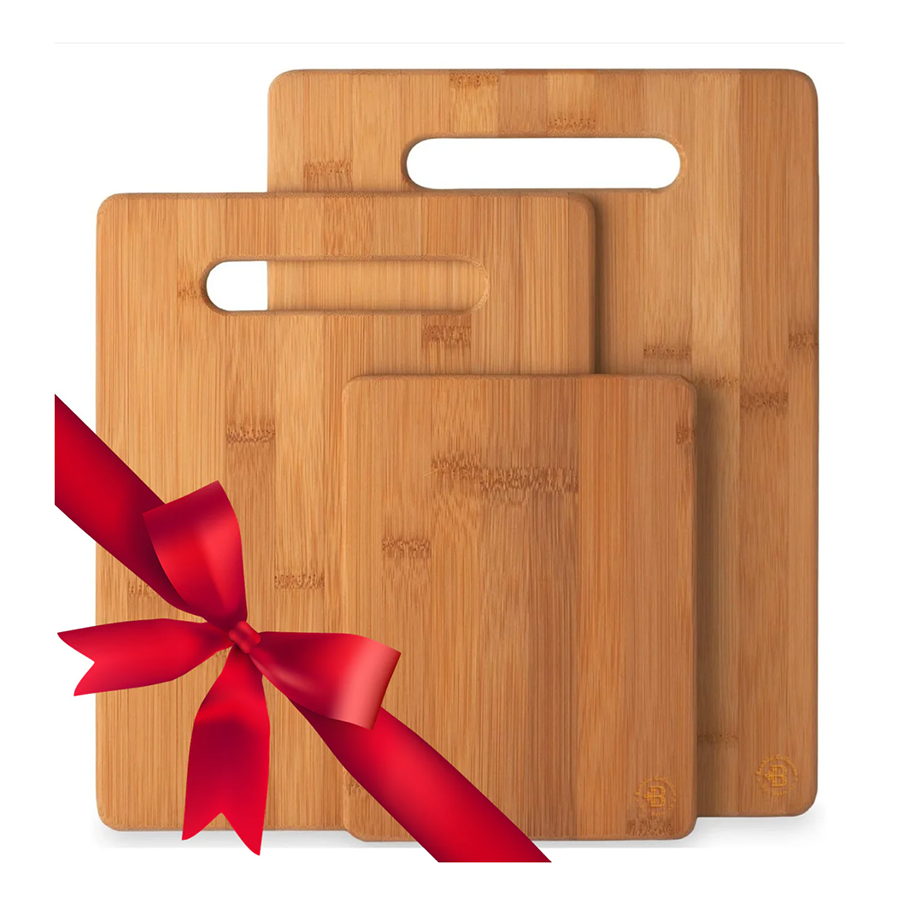
Typical MOQ for a custom wooden cutting board is 500-1,000 pieces per design — lower for a plain board, higher once you add drawers, engraving plates or multi-material inlays. Indicative 2026 FOB bands (Xiamen, edge-grain unless noted):
| Board | Size | FOB @ 1,000 | FOB @ 5,000 |
|---|---|---|---|
| Bamboo edge-grain | 30 × 20 cm | $2.4–$3.2 | $1.9–$2.5 |
| Acacia edge-grain | 35 × 25 cm | $4.5–$6.0 | $3.6–$4.8 |
| Acacia w/ juice groove + feet | 40 × 28 cm | $6.5–$8.5 | $5.2–$6.8 |
| End-grain butcher block | 40 × 30 × 4 cm | $11–$16 | $9–$13 |
| Board + container set | set | $8–$13 | $6.5–$10 |
Indicative FOB Xiamen, excluding mould/engraving plate fees and freight. Real quotes depend on wood grade, finish and packaging — ask for the full 500 / 1,000 / 5,000-unit curve, not a single number.
A real factory shares the price curve across volume tiers; a re-seller quotes one number and stays there. That single behaviour is the fastest way to tell the two apart.
Custom and private-label options
- Branding: laser engraving (logo, recipe, measurement marks) is near-free at volume; UV-printing and branded steel inlays cost more but pop on shelf.
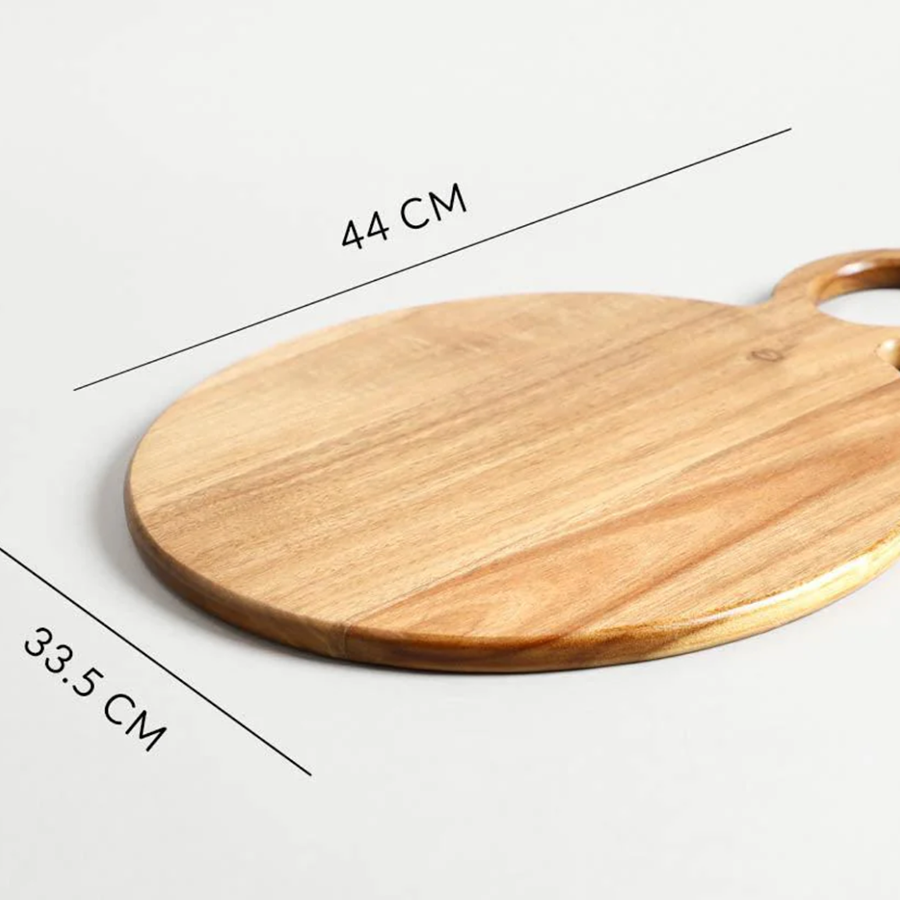
- Shape and size: custom CNC shapes (paddle, country outline, monogram) from a one-time plate/jig fee, usually $80-$300.
- Packaging: kraft sleeve, full-colour gift box, shrink + barcode — designed for retail shelf or Amazon FBA. We routinely ship drop-tested, FNSKU-labelled cartons straight to Amazon warehouses.
- Sets and accessories: matching stands, knife sets (specify 304 stainless), prep containers, handle straps — the proven path to higher AOV.
For Amazon sellers specifically, the packaging and compliance work is often more decisive than the board itself — we walk through it in custom packaging for Amazon sellers.
The 12-week sourcing timeline
From first email to boards in your 3PL, a first-order private-label cutting board runs about twelve weeks. Compressing it below eight is where quality corners get cut.
- Week 1: Send a one-page spec brief (size ±1 mm, grain construction, wood, MC target, finish, glue cert, branding, packaging, MOQ, target FOB). A good brief returns a quote in 24-48 hours.
- Week 2: Compare quotes from 3-5 vetted factories across volume tiers; pay the sample fee ($40-$120) at your chosen supplier.
- Weeks 3-4: Receive and approve the custom sample against a written acceptance form (dimensions, finish reference, hardware, "do-not-ship-if" defects).
- Week 5: Wire the 30% deposit by T/T to start mass production.
- Weeks 6-9: Mass production; request weekly progress photos and a mid-line inspection.
- Week 10: Pre-shipment QC at AQL 2.5 (SGS / BV / QIMA) once 80% is finished and packed; wire the 70% balance on pass.
- Weeks 11-12+: Sea freight, customs clearance and last-mile to your warehouse.
Vetting a supplier: seven red flags
- Can't state a target moisture content or doesn't own a kiln.
- Quotes one price regardless of volume (re-seller behaviour).
- Can't produce FDA / LFGB / CARB certificates within 24 hours.
- Pushes polyurethane or "waterproof lacquer" as the finish on a chopping board.
- Demands 100% payment upfront (industry standard is 30/70).
- Refuses third-party inspection or factory-visit requests.
- Sample is flawless but won't agree to a written acceptance standard for the production run.
For the full factory-vs-trading-company breakdown, read factory-direct vs trading company sourcing.
Logistics, Incoterms and container math
FOB Xiamen is the cleanest base Incoterm for cutting boards; DDP is operationally simpler for first-time importers but adds 15-20% to landed cost. Sea transit from Xiamen runs roughly 18-24 days to US West Coast, 28-34 days to US East Coast, and 32-40 days to EU North ports. The common HS code for wooden kitchenware is 4419.12 / 4419.19 — confirm with your customs broker. Cutting boards ship dense and flat, so a 20' container holds a lot of units; pack with desiccant and avoid stuffing boards above 12% MC to prevent transit-humidity cupping.
Why brands source cutting boards from CHIC
We are a factory-direct wooden products manufacturer with our own production in Xiamen and Caoxian, China, making edge-grain, end-grain and bamboo cutting boards for brands across 60+ countries. That means kiln-dried solid wood logged at 8-12% MC, food-safe mineral-oil finishes by default, FDA / LFGB / CARB documentation on request, full private-label branding and packaging, and Amazon-FBA-ready cartons shipped direct to your warehouse. We share the real price curve across volume tiers, support 500-piece pilot runs, and develop custom shapes from a sketch.
If you're ready to spec a board, send us your brief for a quote in 24-48 hours, or browse the full wooden product catalog to see what we already tool.
Questions fréquentes
Les questions que posent les acheteurs avant de commander
What is the MOQ for a custom wooden cutting board?
Edge-grain or end-grain - which should I order?
What is the best wood for a cutting board?
Which finish is food-safe for a cutting board?
What certifications do I need for export?
How much does a custom wooden cutting board cost FOB?
How do I stop cutting boards from cracking or warping?
Can you private-label and ship to Amazon FBA?
Continuer la lecture
Articles connexes

May 16, 2026 · Buyer Guides
Comment obtenir une planche à fromage en bois personnalisée de Chine: un guide de l'acheteur 2026
Facteurs de forme, matériaux, la question de finition de contact alimentaire, les niveaux MOQ, les prix FOB, la conformité FDA/LFGB et un calendrier d'approvisionnement de 12 semaines pour un plateau de fromage en bois de marque privée.
Lire l'article →
May 16, 2026 · Buyer Guides
Comment obtenir un support à épices en bois personnalisé en provenance de Chine: Guide de l'acheteur 2026
Facteurs de forme, matériaux, niveaux de MOQ, prix FOB, tolérances de pot-ajustement, conformité FSC / REACH / CARB/FDA, et un calendrier d'approvisionnement de 12 semaines pour une course de marque privée de rack à épices en bois.
Lire l'article →
May 16, 2026 · Buyer Guides
Comment trouver un caddie de bain en bois personnalisé en provenance de Chine: un manuel de sourcing 2026
Le playbook usine-direct pour le privé-étiquetage un chariot en bois de bain: matériaux, niveaux de MOQ, prix FOB, les quatre défauts à machiner, conformité de FSC / REACH/CARB, et chronologie réaliste d'approvisionnement de 12 semaines.
Lire l'article →Prêt à vous approvisionner ?
Lire c'est bien — mais un vrai devis fait avancer le projet.
Vous avez un produit en bois en tête ? Envoyez-nous un brief, un croquis ou une photo de référence — nous reviendrons avec un devis et un calendrier d'échantillons sous 24 heures.