Wood Materials Guide
Choose the right wood for your product & market.
Written by our factory team based on real production experience. Compare 12 common woods used in kitchenware, storage, and packaging — with clear recommendations on what each material is good for.
At a Glance
12 woods, side by side.
Quick comparison of the materials we work with. Click any wood to jump to its full profile.
| Wood | Hardness | Weight | Cost | Moisture | Best For |
|---|---|---|---|---|---|
| Acacia Wood | ★★★★★ | Medium | $$$ | Good | Cutting boards · Cheese boards |
| Walnut Wood | ★★★★★ | Medium-heavy | $$$$ | Good | Watch boxes · Jewelry boxes |
| Bamboo | ★★★★★ | Light | $$ | Moderate | Pantry organizers · Cutlery trays |
| Pine Wood | ★★★★★ | Light | $ | Fair | Storage boxes · Large gift packaging |
| Paulownia Wood | ★★★★★ | Very light | $ | Fair | Wine boxes · Large gift boxes |
| Oak Wood | ★★★★★ | Medium-heavy | $$$ | Good | Premium serving trays · Cutting boards |
| Beech Wood | ★★★★★ | Medium | $$ | Moderate | Plates & boards · Minimalist kitchenware |
| Rubber Wood | ★★★★★ | Medium | $$ | Moderate | Kitchenware · Home organizers |
| Teak Wood | ★★★★★ | Medium-heavy | $$$$ | Excellent | Premium cutting boards · Bathroom trays |
| Sapele Wood | ★★★★★ | Medium-heavy | $$$ | Good | Plates & trays · Decorative boxes |
| MDF | ★★★★★ | Medium | $ | Poor | Painted gift boxes · Photo frames |
| Plywood | ★★★★★ | Medium | $ | Moderate | Storage boxes · Drawer organizers |
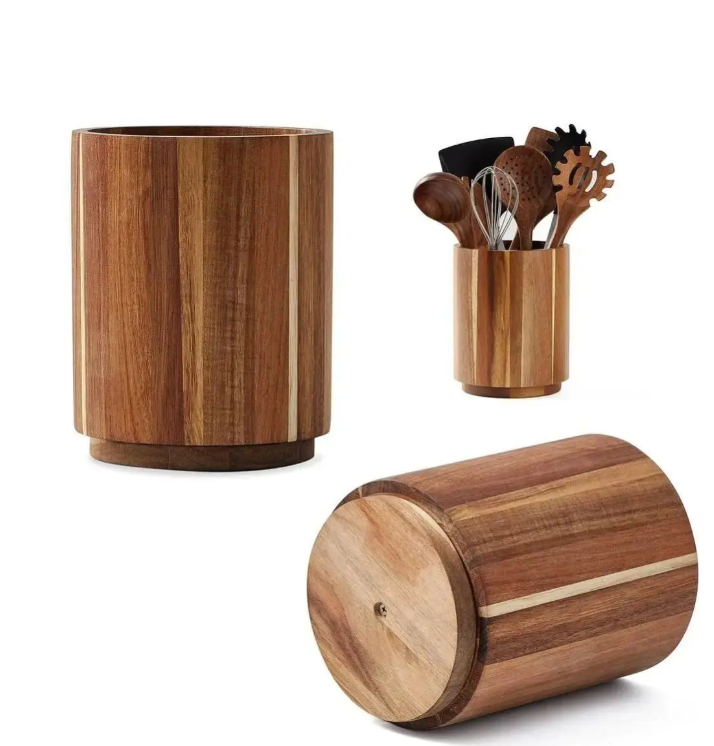
$$$ · Medium
Acacia Wood
The all-rounder hardwood for premium kitchenware.
A durable hardwood with rich, irregular grain — extremely popular for wooden plates, serving trays, cutting boards and kitchen organizers. Excellent food-contact safety with proper finishes.
Key Advantages
- Strong, dense, hard-wearing structure
- Natural color variation gives a premium look
- Food-safe with proper food-grade finish
- Ages beautifully with use
Common Products
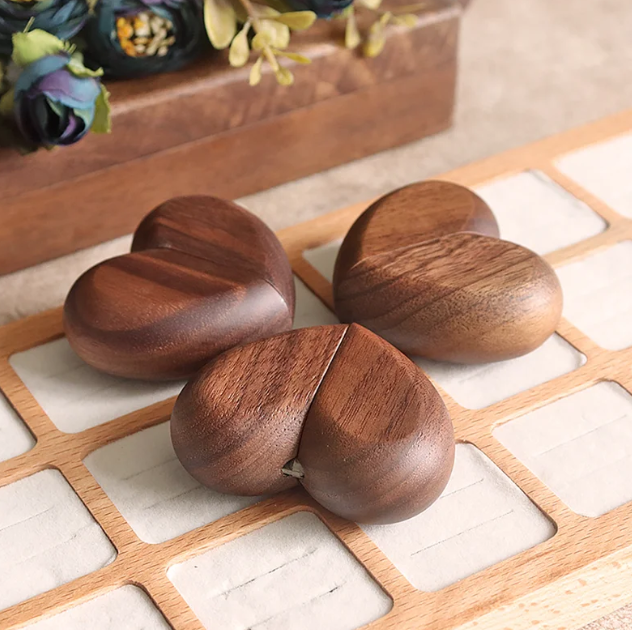
$$$$ · Medium-heavy
Walnut Wood
Premium dark hardwood for high-end gifts and luxury packaging.
A premium hardwood with deep chocolate tones and elegant straight grain. The go-to material when the brand brief says "luxury" — watches, jewelry, premium gift sets and heirloom keepsake boxes.
Key Advantages
- Striking dark color, no staining required
- Very strong and durable
- Reads as high-end on a retail shelf
- Pairs beautifully with brass / leather accents
Common Products
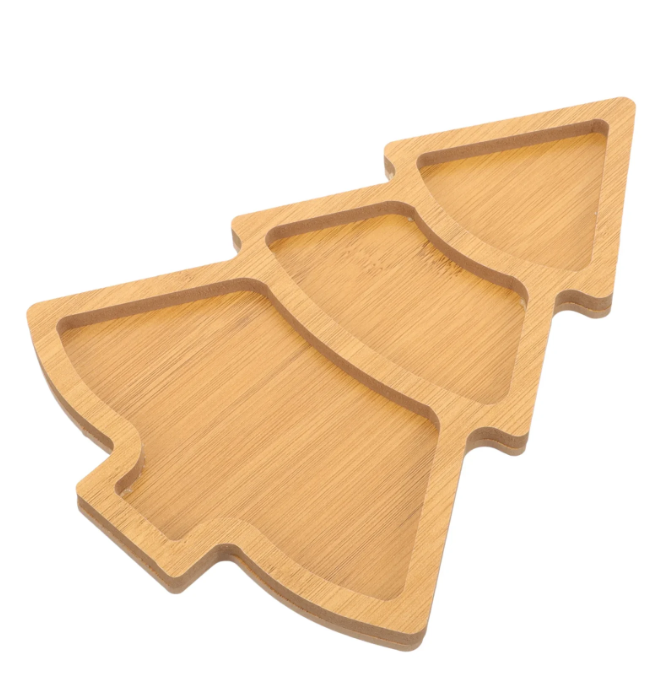
$$ · Light
Bamboo
Eco-friendly, fast-growing, light-toned and cost-efficient.
Technically a grass, but used as a wood. Pale, smooth, sustainable — bamboo is the choice for eco-conscious brands and Amazon sellers selling kitchen storage and organizers.
Key Advantages
- Sustainable & fast-growing (3–5 year cycle)
- Stable and warp-resistant
- Smooth, even surface — minimal sanding
- Cost-effective at scale
Common Products
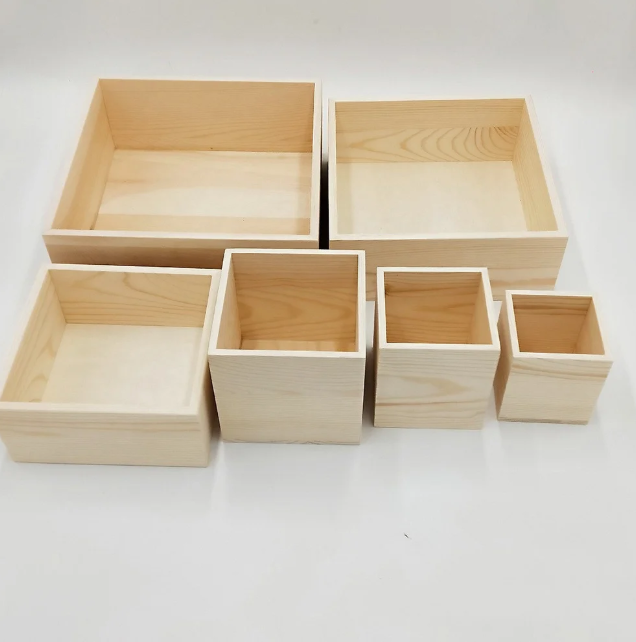
$ · Light
Pine Wood
Lightweight, affordable softwood — workhorse for volume orders.
A pale, lightweight softwood that takes paint and stain beautifully. Best for budget-friendly storage boxes, larger organizers and pieces where weight (and shipping cost) matter.
Key Advantages
- Cost-effective for large pieces
- Easy to machine, shape and assemble
- Accepts paint, stain or natural finish
- Good for printed branding
Common Products
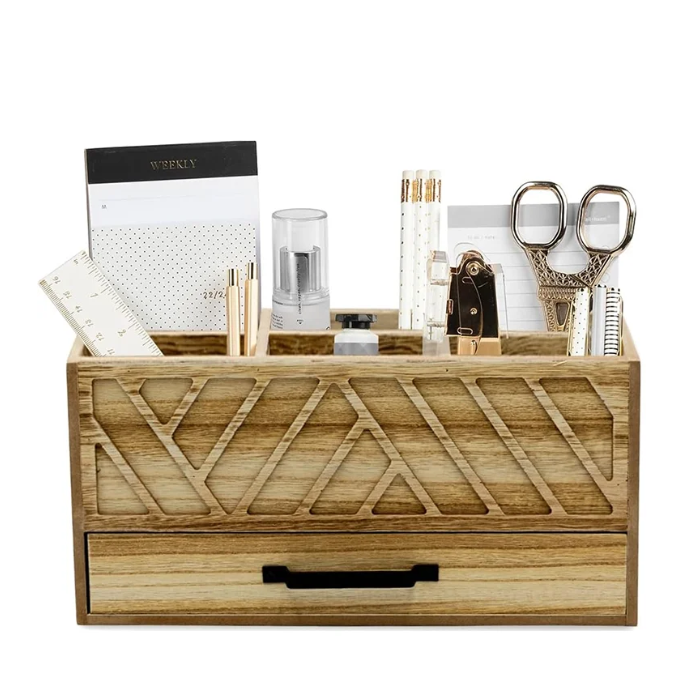
$ · Very light
Paulownia Wood
Ultra-lightweight option for big boxes that ship cheap.
One of the lightest commercial timbers available. Paulownia is the secret weapon for brands shipping large wooden boxes — wine cases, gift packaging, decorative storage — where every kilo of freight cost counts.
Key Advantages
- Extremely lightweight (cuts shipping cost)
- Stable, low warping
- Great for bulk production
- Takes finishes well
Common Products
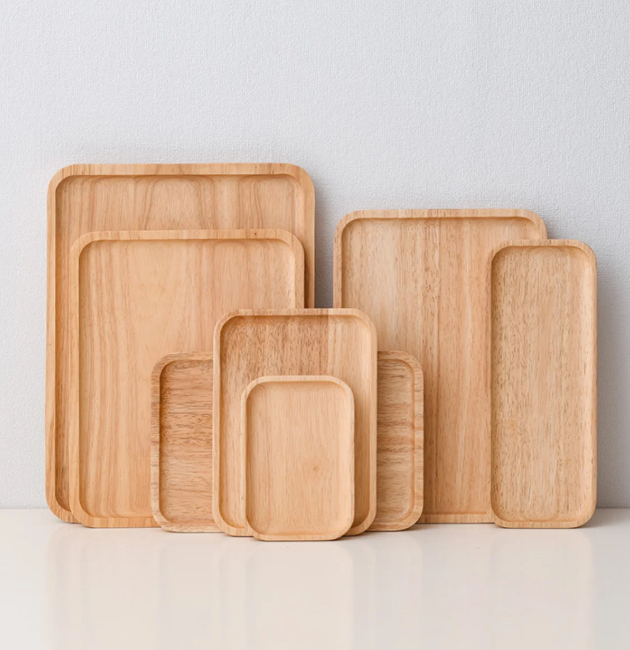
$$$ · Medium-heavy
Oak Wood
Classic premium hardwood — built for the long haul.
A long-favored European hardwood, prized for its open, classic grain and outstanding durability. Used where the product needs to last decades — premium boards, furniture-grade organizers and statement gifts.
Key Advantages
- Excellent durability — generational
- Distinctive open grain
- Holds finishes very well
- Reads as classic & high-end
Common Products
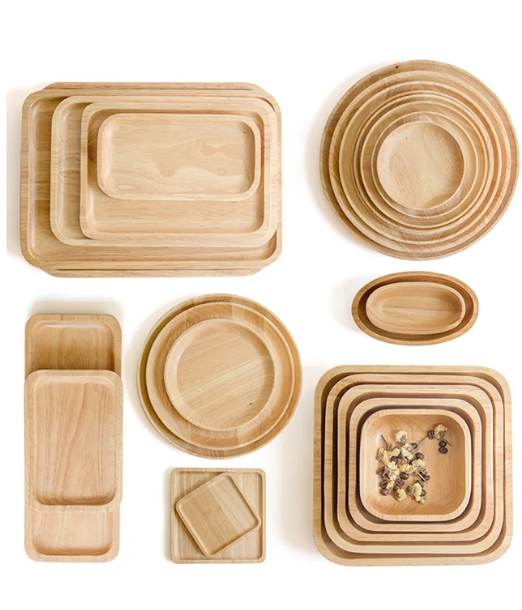
$$ · Medium
Beech Wood
Smooth, even-grained hardwood — the minimalist's choice.
A pale European hardwood with a fine, uniform grain. Works beautifully for clean, minimal product designs — Scandinavian-inspired kitchenware and household items where the wood should feel quiet, not loud.
Key Advantages
- Smooth, uniform surface
- Strong food-contact-safe hardwood
- Pale, clean appearance
- Stains evenly
Common Products
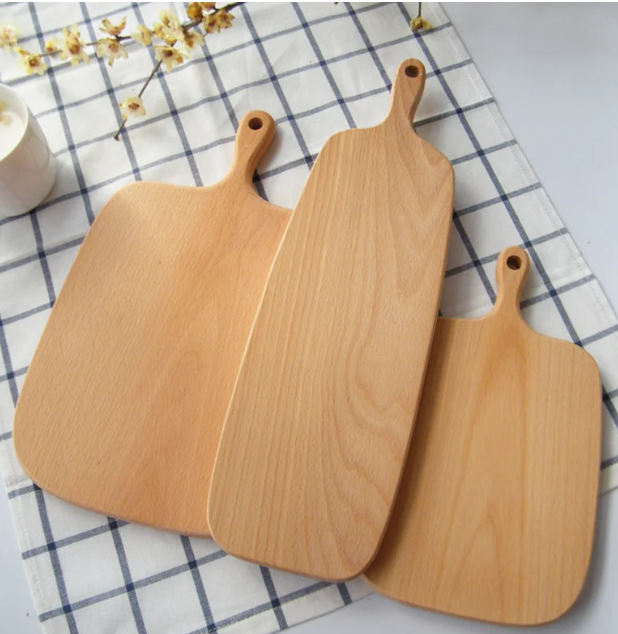
$$ · Medium
Rubber Wood
Pale, sustainable hardwood reclaimed from rubber plantations.
After rubber trees stop producing latex, the timber is harvested instead of burned — making rubber wood one of the most sustainable hardwoods on the market. Pale, even and strong — perfect for everyday kitchenware and organizers.
Key Advantages
- Sustainable — reclaimed plantation wood
- Stable, low movement
- Light, even color — easy to brand
- Strong yet workable
Common Products
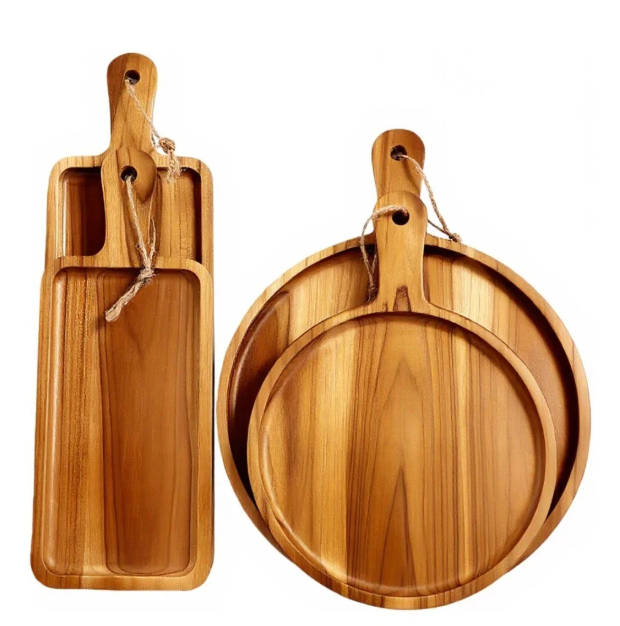
$$$$ · Medium-heavy
Teak Wood
Naturally water-resistant — premium pick for cutting boards.
Naturally rich in oils that repel water, teak resists warping and cracking better than almost any other timber. Premium choice for boards, trays and storage that may meet moisture or humidity.
Key Advantages
- Excellent moisture & humidity resistance
- Very high durability
- Beautiful warm golden-brown color
- Naturally rot-resistant
Common Products
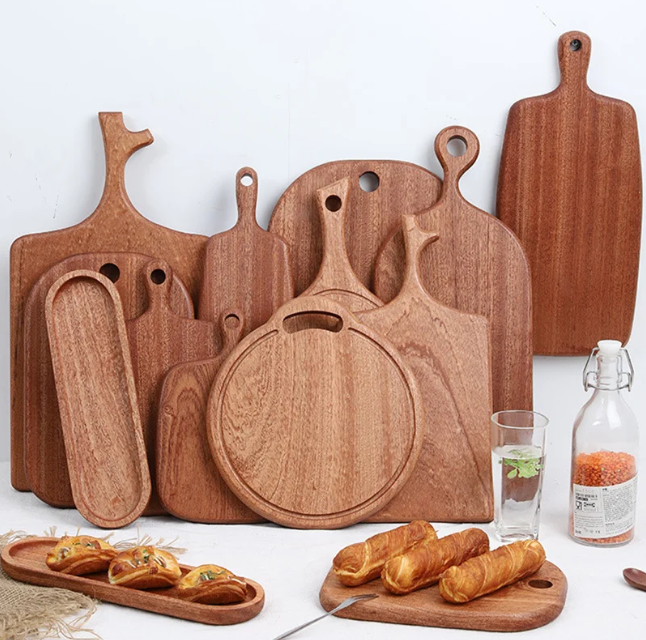
$$$ · Medium-heavy
Sapele Wood
Reddish-brown hardwood — affordable mahogany alternative.
A tropical hardwood with a warm reddish tone, often used as a cost-effective stand-in for true mahogany. Strong, stable and visually striking — a great fit for plates, trays and decorative pieces.
Key Advantages
- Attractive reddish-brown color
- Good strength and stability
- More affordable than mahogany
- Polishes to a deep luster
Common Products
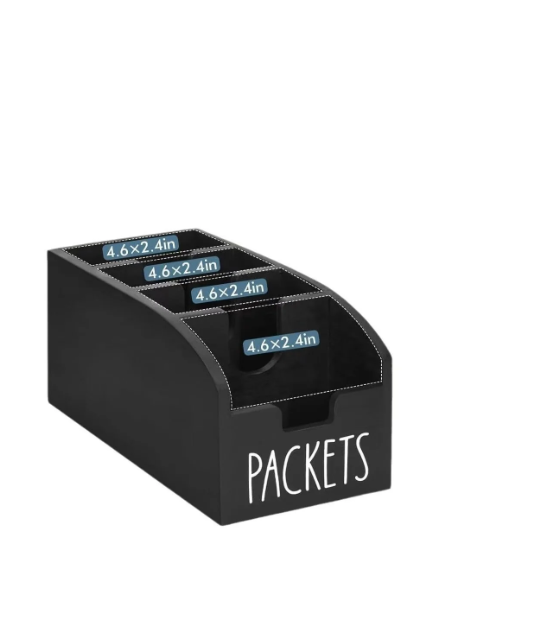
$ · Medium
MDF
Engineered budget option for painted, printed, or laminated finishes.
Medium-density fiberboard. Not a solid wood — it's an engineered panel. Smooth, dimensionally stable and cheap. The choice when the design relies on paint, print, decals or laminate rather than visible grain.
Key Advantages
- Perfectly smooth — ideal for paint / print
- Consistent quality, no knots or splits
- Lower material cost
- Stable in size and shape
Common Products
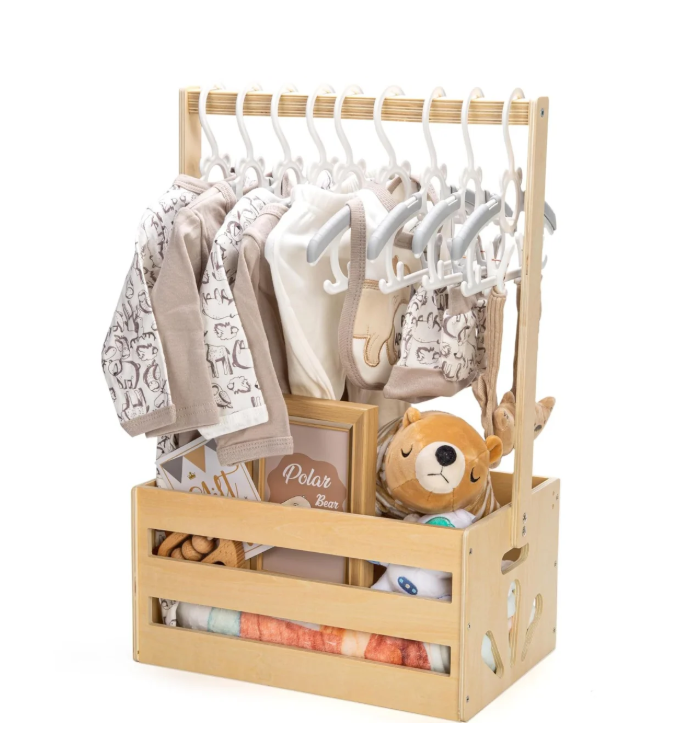
$ · Medium
Plywood
Layered engineered wood — strong, stable, finish-flexible.
Multiple veneer layers cross-bonded for strength and stability. Plywood resists warping better than solid wood at the same thickness — a reliable engine for storage boxes and large organizers, often surfaced with a veneer for a wood look at a lower cost.
Key Advantages
- Very stable — resists warping
- Strong for its weight
- Surface can be veneered, laminated or wrapped
- Cost-effective for big pieces
Common Products
How to Choose
Pick a wood by your use case.
Same product type, different priorities — premium feel vs. shipping cost vs. brand palette. Here's how we usually recommend wood by the job at hand.
Premium gift packaging
Watch boxes, jewelry boxes, luxury gift sets — the wood IS the product.
Cutting boards & food contact
Knives, juices, frequent washing — needs hardness + moisture resistance.
Big lightweight boxes
Wine cases, large gift packaging — every kilo of freight matters.
Painted / printed designs
Brand color, custom artwork, promotional items.
Sustainable / eco-conscious brands
FSC-aware brands, plant-based packaging audiences.
High-volume Amazon FBA
Cost target driven, FBA dimension limits, bulk repeatability.
Janka Hardness
How hard is each wood, measured in pounds-force?
Janka hardness measures how much force it takes to embed a small steel ball half-way into the wood. Higher numbers = better resistance to dents, scratches and cutting-board cuts. Anything above ~1,000 lbf is generally suitable for heavy-use kitchenware.
Indicative reference values — actual results vary by species sub-variety, growing region, and finishing process.
Finishes & Surface Treatments
7 finish options, one for every market.
The wood is half the story — the finish decides how the product feels, how it ages, and which compliance standards it meets. Here's what we offer.
Food-Safe Lacquer
Food-safeClear protective coat that meets food-contact safety standards. Most common finish for kitchenware.
Mineral Oil
NaturalNatural, food-safe finish that nourishes the wood. Needs periodic re-application.
Beeswax Blend
EcoSoft luster, hand-feel finish that protects against moisture without chemicals.
Polyurethane
DurableHard-wearing glossy or matte coat. Great for decorative pieces — not for cutting boards.
Color Stain
CustomTinted finish that lets the natural grain show through. Custom colors on request.
Solid Paint
CustomFull opaque color. Works best on MDF, pine, paulownia and plywood. Print-ready surface.
Natural / Raw
MinimalSanded only, no finish — the wood will patina with use. Lowest cost.
Branding & Customization
Make it unmistakably yours.
Every wooden product we ship can carry your brand in some form — from a discreet laser mark to a full-color UV print on every face. Pick the technique that fits your wood, your budget and your shelf positioning.
Laser Engraving
Burned-in mark, dark on light wood, virtually permanent. Best for logos, model numbers, batch IDs.
Hot Foil Stamping
Metallic gold, silver, copper or color foil pressed into the wood with heat. Premium retail look.
Debossing
Pressed indent without ink — subtle, classy, ages well. Reads as luxury.
Screen Print
1–6 spot colors on flat surfaces. Cost-effective for medium runs and bold logos.
UV Print
Full CMYK photo-quality print, including white. Photo, gradient and pattern artwork.
Pad Print
Transfers logo onto curved or uneven surfaces — bowls, handles, lid edges.
Custom Inserts
CNC-cut foam, velvet wrap, microfiber lining or molded pulp inserts inside the box.
Sustainability & Compliance
Certifications that unlock retail channels.
The wood you choose plus the supplier you choose decides which certifications you can claim. Here are the documents we can supply on request — typically issued per-order with the shipment.
Forest Stewardship Council
Sustainably-sourced wood from certified forests. Required by many EU retailers and brands aiming at FSC consumers.
EU Regulation 1907/2006
Restricts hazardous substances in finishes, glues and coatings. Required for products imported into the European Union.
California Air Resources Board (also TSCA Title VI in the US)
Caps formaldehyde emissions in MDF, plywood and particleboard. Mandatory for the US market.
Food contact safety
Independent testing that confirms finishes are safe for direct food contact — required for cutting boards, plates, utensils.
Quality management
Our factory operates under ISO 9001 quality processes — written procedures for sampling, production and outgoing QC.
Ethical sourcing audit
Available on request — covers labor, health & safety, environment and business ethics. Required by major retailers.
Care & Maintenance
How to make wooden products last for years.
Use this on your hangtags, packaging inserts and product pages. Educated end-customers return fewer products and leave better reviews.
Hand wash, never dishwasher
Dishwashers wreck wooden items — the heat, detergent and prolonged moisture cause warping and cracking. Wash with mild soap and a soft sponge.
Dry immediately, never soak
Don't leave wooden boards or trays sitting in water. Towel-dry right after washing and air-dry standing on edge.
Re-oil cutting boards monthly
Apply food-grade mineral oil or a board butter monthly (more often with heavy use). Wipe on, let sit 15 min, buff off the excess.
Avoid direct sun & heat
UV light fades wood color, dry heat causes splits. Keep wooden products away from windows and heaters.
Stabilize moisture
Sudden humidity changes cause warping. We pre-condition wood to ~8–12% moisture for export — your end-customers should avoid extreme climate swings.
Sand & re-finish if dull
Wooden surfaces can be refreshed at home — light sand with 220-grit and re-oil. Brings back the original look.
Buyer's Checklist
11 questions to ask your wood supplier.
Save this list. Send it to any factory you're evaluating — including us. The answers separate real manufacturers from middlemen.
- 01
What is the wood species' Latin name? (E.g. "Acacia mangium" — beware of generic terms like "hardwood")
- 02
Is this a real factory or a trading agent? Can you visit the factory or get a virtual tour?
- 03
Where is the wood actually sourced from? Plantation? Forest? Country of origin?
- 04
What's the moisture content target before assembly? (8–12% is typical for export.)
- 05
Do you provide third-party QC reports — material, dimensional, drop-test?
- 06
Can you supply FSC, REACH, CARB P2 documents on this order?
- 07
What food-safe testing is available — LFGB, FDA migration test, BPA-free?
- 08
How is the wood pre-treated against insects? (Heat, kiln, fumigation?)
- 09
What's the standard finish, and what custom finishes do you support?
- 10
What's the typical lead time for samples vs bulk production?
- 11
What happens if I find defects after delivery — your QC policy and warranty?
Material FAQ
Wood material questions, answered honestly.
Q1What's the difference between hardwood and softwood — and which should I pick?
Q2How do you ensure your wooden kitchenware is food-safe?
Q3Which wood is best for a heavy-use chef's cutting board?
Q4Will the wood warp or crack during international shipping?
Q5Can I get FSC-certified wood — and does it cost more?
Q6What moisture content should I specify in my purchase order?
Q7When should I use solid wood vs. plywood / MDF?
Q8How does grain direction affect product strength?
Read More
Related sourcing & manufacturing guides.
Apr 29, 2026
Custom Wooden Spice Rack with Glass Jars:What Kitchen Brands Should Know Before Bulk Ordering
Read article →
Apr 22, 2026
Wooden Whisky Box Packaging: What Buyers Should Confirm Before Production
Read article →
Apr 21, 2026
How to Source Wooden Document Trays for Corporate and Retail Programs
Read article →Need Help Choosing?
Still not sure which wood is right for your product?
Send us your design, target price and target market. Our engineering team will recommend 1–2 wood options and produce material samples for free.