Custom Wooden Desk Organizer Manufacturer in China: 2026 Sourcing Guide
The six desk-organizer formats, the woods that suit an office aesthetic, compartment ergonomics, felt bases and drawer hardware, CARB compliance, 2026 FOB price tiers, MOQ, corporate-gift branding and a 12-week sourcing

Auf dieser Seite
Auf dieser Seite
A wooden desk organizer is a small product with an outsized branding opportunity. It sits on a desk all day, in view on every video call, and it is one of the few homeware items a buyer will happily pay a premium for if it looks designed rather than generic. That is exactly why the category is crowded with mediocre product: most factories build a plain compartment box, slap on a logo, and call it custom. The brands that win specify the things buyers actually notice — compartment ergonomics, a felt-lined base that protects the desk, clean joinery, and laser-engraved branding that looks intentional. None of that costs much once you know to ask for it.
This is the sourcing playbook our factory uses with the brands we manufacture desk organizers for — the formats and who each one is for, the woods that suit an office aesthetic, the construction details that separate a $9 organizer from a $29 one, the corporate-gifting branding options that drive the highest margins, the real 2026 FOB price bands, and the supplier red flags. If you are evaluating whether to private-label a wooden desk organizer from China, this is what we wish every first-time buyer knew before sending the first email.
Why wooden desk organizers are a strong private-label category in 2026
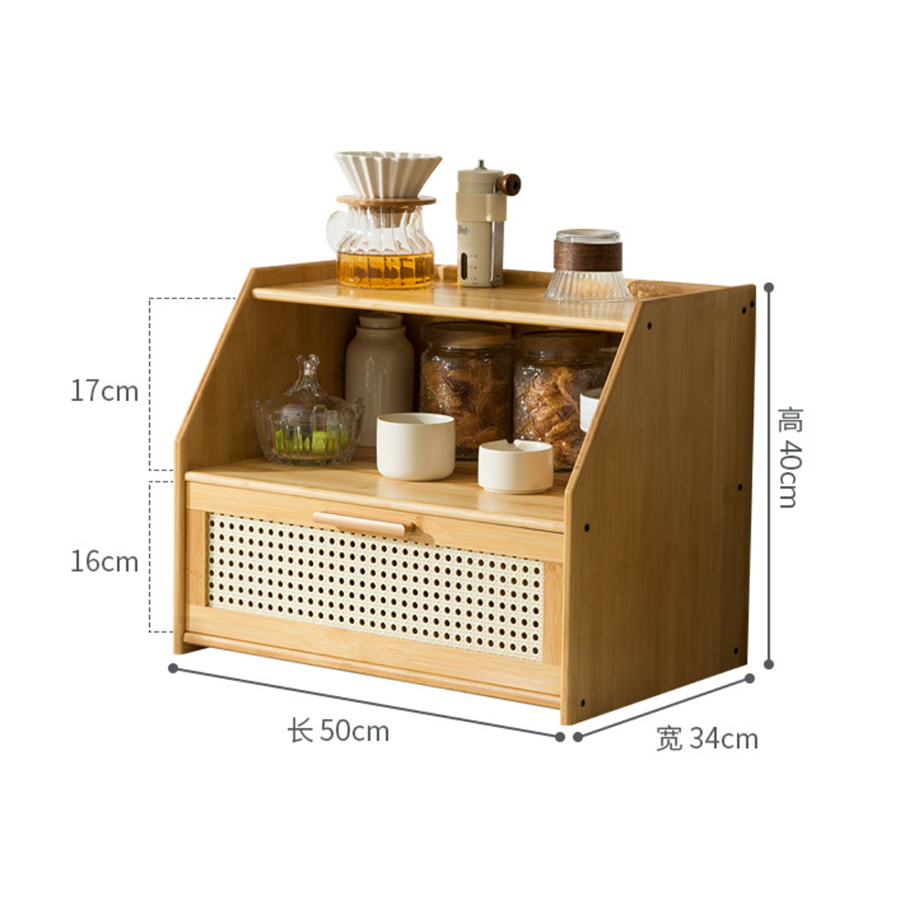
Three forces make this category attractive. First, the work-from-home shift turned the desk into a styled space — "desk setup" and "desk aesthetic" are durable search and social trends, pulling demand for warm, natural-material organizers over plastic. Second, the unit economics are clean and the branding margin is exceptional: a desk organizer that retails at $24-$49 lands at $3-$12 FOB, and because the product is a daily-visible surface, a laser-engraved logo converts it into a corporate-gifting SKU that sells in bulk at a premium. Third, the category rewards visible quality — a felt-lined base, a cable port and a phone slot are upgrades a buyer pays 2-3x more for, so differentiation is achievable without inventing anything.
The trap is that "desk organizer" spans six different products at very different costs, and a thin quote usually means the simplest one. Decide the format first.
The six desk-organizer formats and who each is for
| Format | FOB cost index* | Best fit |
|---|---|---|
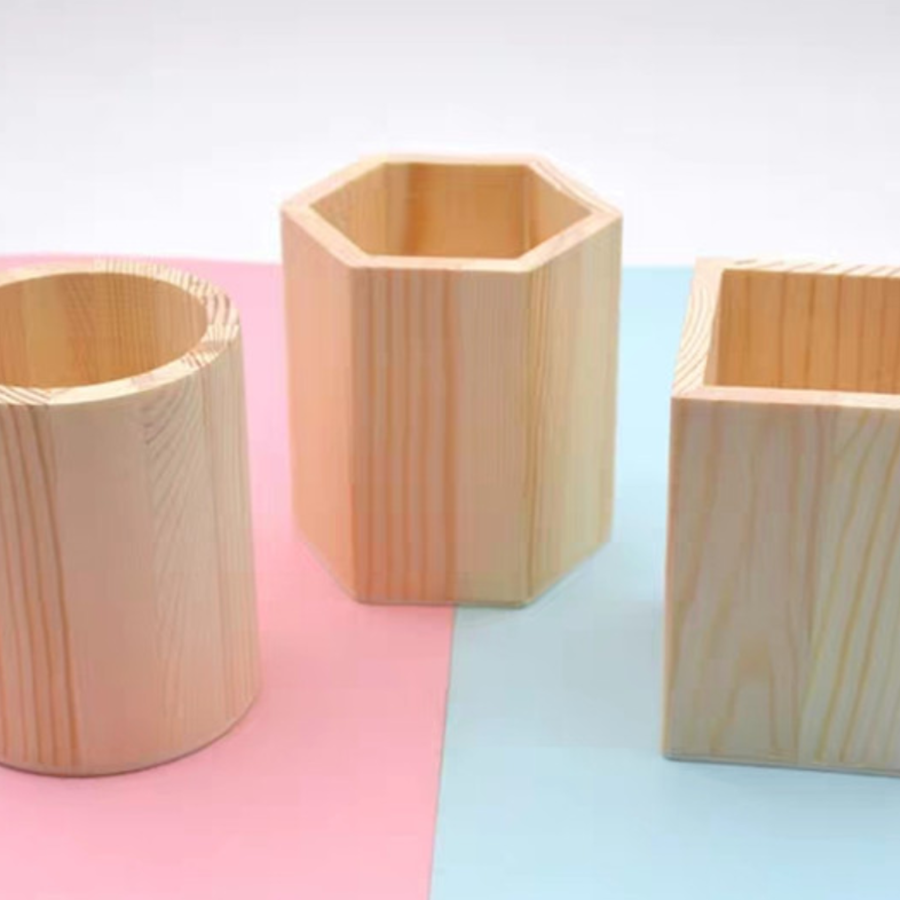
| Multi-compartment caddy | 1.0× | The workhorse: $24-$39 D2C and Amazon volume |
| Pen / pencil holder | 0.45× | Lowest MOQ, corporate-gift add-on, impulse SKU |
| Drawer organizer (1-3 drawers) | 1.8–2.6× | Premium $39-$79; the drawer is the wow factor |
| Document / letter tray (stackable) | 1.3× | Office & home-office, B2B bulk procurement |
| Valet tray (felt-lined) | 0.9× | EDC / nightstand / gifting; high perceived value |
| Monitor stand with storage | 2.2× | $49-$99 desk-setup premium tier |
*FOB cost index normalised to a multi-compartment caddy at 1.0×, bamboo, at 2,000 units.
For a first product, the multi-compartment caddy and the pen holder are the safest entries — low tooling, low MOQ, and the pen holder doubles as a near-free corporate-gift add-on. Drawer organizers and monitor stands carry the highest AOV but add tooling and QC complexity, so reserve them for a second order once you trust the factory.
Picking the right wood
| Wood | FOB cost index* | Strengths | Best fit |
|---|---|---|---|
| Bamboo (laminated) | 1.0× | Light, eco, stable, even tone | The default: volume D2C, eco-positioned desk sets |
| Acacia | 1.35× | Bold grain, premium look | Premium & gifting organizers, $39+ retail |
| Walnut | 2.5× | Dark, executive, luxury | $59+ executive / luxury desk lines |
| Rubberwood (Hevea) | 0.95× | Even, FSC-friendly, paint/engrave-ready | Budget & painted organizers, branded blanks |
| MDF (veneer / painted) | 0.7× | Flawless paint & print surface | Colour-matched collections; dry desk use only |
*FOB cost index normalised to bamboo at 1.0×, multi-compartment caddy at 2,000 units.
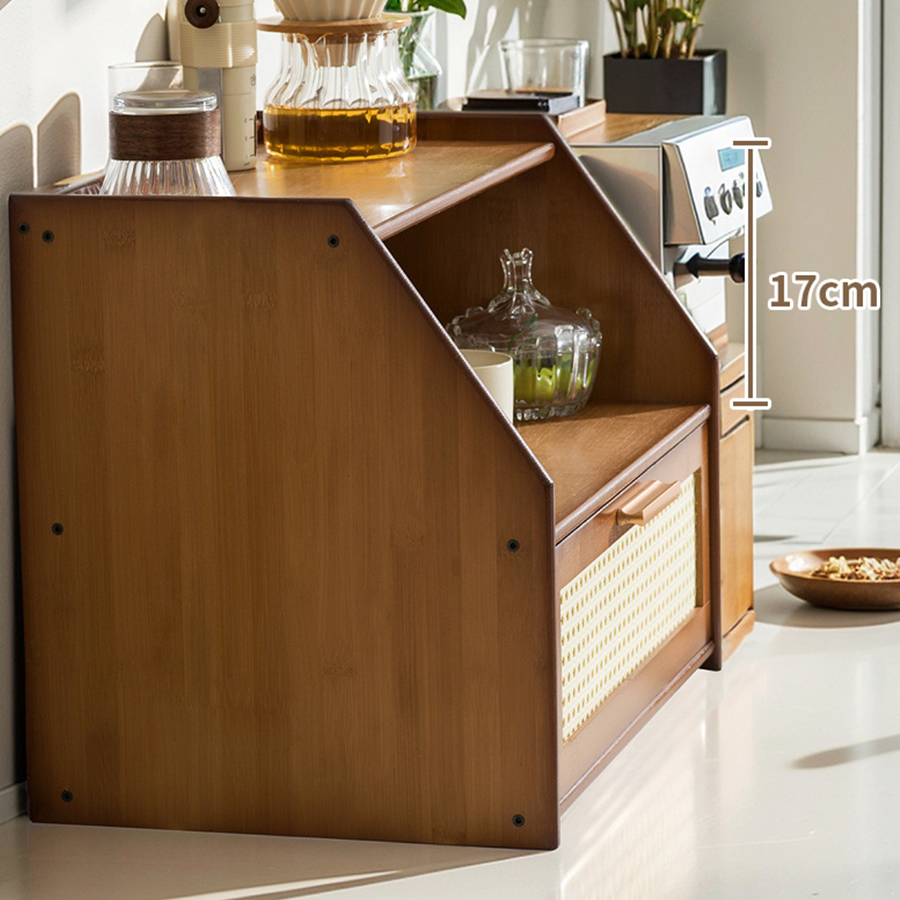
Bamboo is the workhorse of this category for a reason: it is light (cheap to ship), dimensionally stable, and its even, warm tone is exactly the "desk aesthetic" look buyers want. Step up to acacia or walnut for premium and executive lines where grain and weight justify the price. Rubberwood is the cleanest canvas for painted or heavily engraved blanks, and MDF gives a perfect colour-matched surface for a coordinated collection — but only for dry desk use, never anywhere it will get wet. For a deeper material breakdown, see our wood material guide and best wood for wooden organizers.
The anatomy of a desk organizer that sells
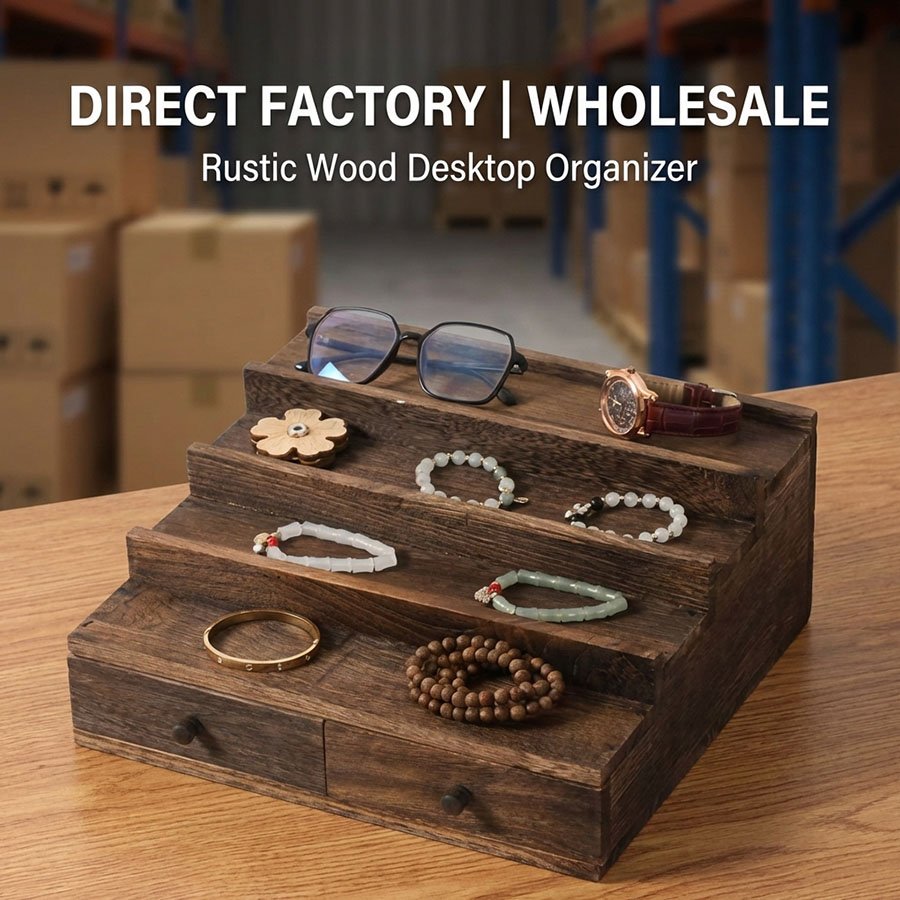
A good desk organizer is engineered as five interlocking systems. Knowing what each should look like lets you tell a serious quote apart from a thin one.
1. Compartment ergonomics
This is what separates a designed organizer from a generic box. Specify compartments sized for real objects: a pen well 70-90 mm deep, a phone slot 12-16 mm wide angled for visibility while charging, a shallow tray for paper clips and sticky notes, and a business-card slot. A factory that just quotes "5 compartments" without asking what goes in them is building a generic box.
2. The base — felt and anti-slip
A desk organizer sits on a surface people care about. Specify a die-cut felt or EVA base with a strong solvent-resistant adhesive, or recessed silicone feet. This protects the desk, stops the organizer sliding, and is the single cheapest detail that makes a product feel premium. Glued-on felt that peels is a top return reason — insist on full-coverage, die-cut felt, not a few stuck-on dots.
3. Joinery and edges
Corners should be mitred or finger-jointed and reinforced, not just glued and stapled. Every visible edge needs a 1-2 mm chamfer or roundover — sharp factory edges instantly read as cheap. For multi-piece or laminated bodies, require a D3 water-resistant, low-formaldehyde glue (CARB Phase 2 / TSCA Title VI).
4. Finish
Desk organizers want a matte or satin water-based finish — a glossy lacquer looks cheap under office lighting and shows fingerprints. Specify the sheen with a physical reference and confirm a low-VOC, water-based coating; buyers increasingly require it and it is the right call for an indoor product people touch all day.
5. Function details — cable ports, phone slots, modularity
The features that win the "desk setup" buyer: a cable pass-through notch, a charging-cable slot in the phone stand, and — increasingly popular — a modular/stackable design so the customer can expand the system. These are cheap to tool once and are exactly the upgrades that justify a higher price point.
Drawers: the part that gets returned
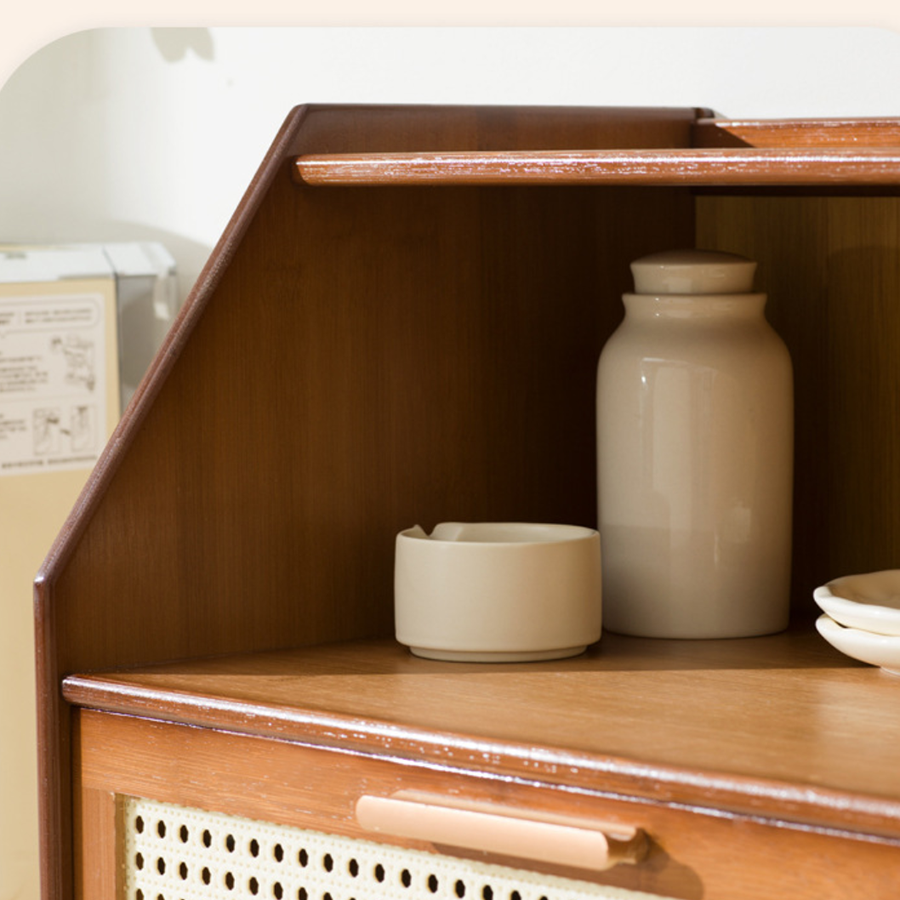
If your organizer has drawers, that mechanism causes most returns in this category, so treat it as a spec:
- Friction-fit wooden runners: cheapest, but swell and stick in humid climates. Acceptable only for small, light drawers with a tested clearance.
- Ball-bearing metal slides: the premium choice — smooth, durable, and what justifies a $49+ price. Specify the rated cycle life.
- Drawer stops & pulls: require a stop so the drawer can't be pulled all the way out, and solid wood or metal pulls — never chrome-plated zinc, which corrodes.
Put a drawer cycle test (e.g. opens/closes 5,000 times without sticking) in your acceptance form. It costs nothing and removes your biggest return driver.
Branding and corporate gifting — the margin multiplier
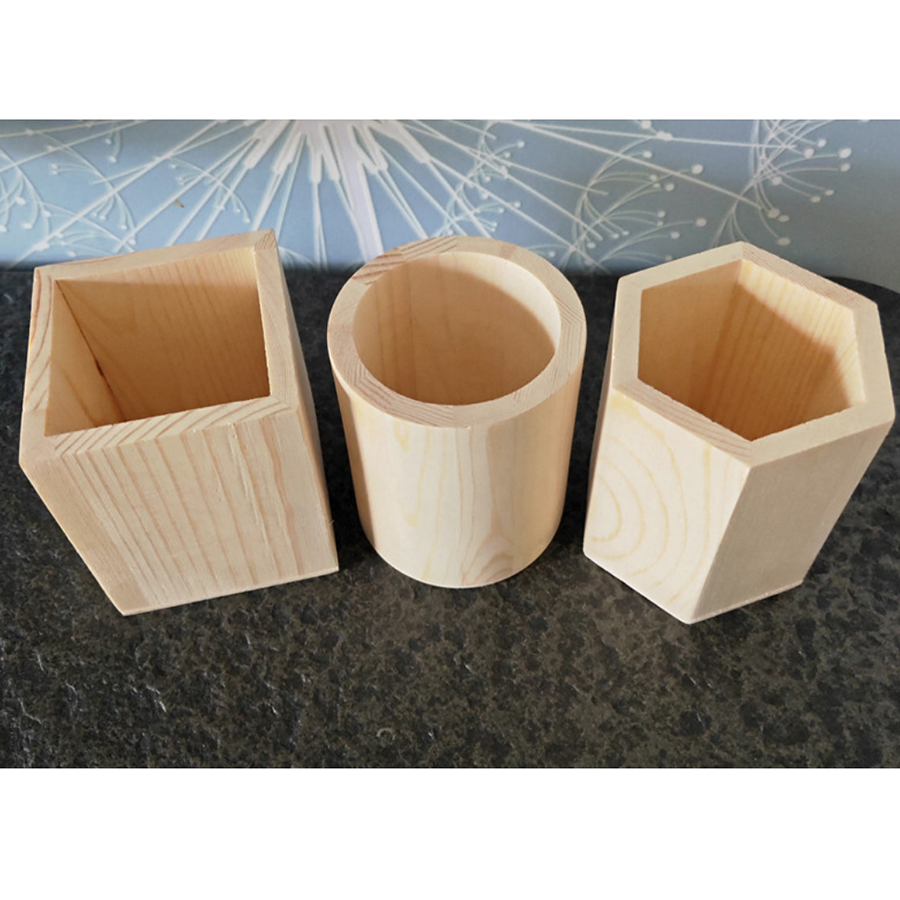
Desk organizers have the best branding economics of any wooden homeware category, because the product is a visible daily surface. Use it:
- Laser engraving (logo, name, motivational line) is near-free at volume and the #1 corporate-gift driver — companies buy these by the hundreds for onboarding and client gifts.
- UV / pad printing for full-colour logos on smooth bamboo or MDF surfaces.
- Custom compartment layout branded to a use case (a "content creator" desk set, a "WFH starter" set).
- Gift packaging: kraft sleeve or magnetic gift box, FNSKU-labelled for Amazon FBA. We ship drop-tested cartons direct to Amazon warehouses — see custom packaging for Amazon sellers.
Compliance for desk organizers
Desk organizers are not food-contact, so the certification load is lighter than kitchenware — but two things still matter for import, especially to the US and EU:
| Standard | When it applies | What it covers |
|---|---|---|
| CARB Phase 2 / TSCA Title VI | Any plywood/MDF-bodied organizer, USA | Formaldehyde emission limits for the panel & glue |
| California Prop 65 | USA (CA) | Warnings/limits on paints, stains & finishes |
| FSC chain-of-custody | Optional, EU retail increasingly asks | Sustainable-source certification — a real differentiator |
The trap is CARB / TSCA Title VI: it applies to any plywood- or MDF-bodied organizer for US import, even though the product never touches food, because it covers formaldehyde in the panel and glue. A solid-bamboo or solid-wood organizer sidesteps this. We cover the FSC documentation chain in our FSC sourcing guide.
MOQ and price tiers in 2026
Typical MOQ for a custom wooden desk organizer is 500-1,000 pieces per design — lower for a plain pen holder, higher once you add drawers or modular tooling. Indicative 2026 FOB bands (Xiamen, bamboo unless noted):
| Organizer | FOB @ 1,000 | FOB @ 5,000 |
|---|---|---|
| Pen / pencil holder | $1.4–$2.2 | $1.1–$1.7 |
| Multi-compartment caddy | $3.2–$4.6 | $2.6–$3.6 |
| Valet tray (felt-lined) | $2.8–$4.0 | $2.2–$3.2 |
| Drawer organizer (2 drawers) | $6.5–$9.5 | $5.2–$7.5 |
| Monitor stand with storage | $8–$13 | $6.5–$10 |
Indicative FOB Xiamen, excluding tooling/engraving plate fees and freight. Real quotes depend on wood, compartment count, drawer hardware and finish — ask for the full 500 / 1,000 / 5,000-unit curve, not a single number.
A real factory shares the price curve across volume tiers and itemises the body, hardware and engraving; a re-seller quotes one bundled number. That single behaviour is the fastest way to tell them apart.
The 12-week sourcing timeline
From first email to organizers in your 3PL, a first-order private-label desk organizer runs about twelve weeks. Compressing it below eight is where quality corners get cut.
- Week 1: Send a one-page spec brief (format, size ±1 mm, wood, compartment layout, drawer hardware, base/felt, finish & sheen, branding, packaging, MOQ, target FOB). A good brief returns a quote in 24-48 hours.
- Week 2: Compare quotes from 3-5 vetted factories across volume tiers; pay the sample fee ($40-$120) at your chosen supplier.
- Weeks 3-4: Receive and approve the sample against a written acceptance form (dimensions, finish reference, drawer cycle test, "do-not-ship-if" defects).
- Week 5: Wire the 30% deposit by T/T to start mass production.
- Weeks 6-9: Mass production; request weekly progress photos and a mid-line inspection.
- Week 10: Pre-shipment QC at AQL 2.5 (SGS / BV / QIMA) once 80% is finished and packed; wire the 70% balance on pass.
- Weeks 11-12+: Sea freight, customs clearance and last-mile to your warehouse.
Vetting a supplier: seven red flags
- Quotes "5 compartments" without asking what goes in them (generic-box thinking).
- Uses a few stuck-on felt dots instead of full-coverage die-cut felt.
- Offers friction-fit wooden runners on a premium drawer organizer with no clearance test.
- Can't produce CARB / TSCA Title VI certificates within 24 hours for a plywood/MDF body.
- Pushes a glossy lacquer finish for an office product.
- Demands 100% payment upfront (industry standard is 30/70).
- Refuses a written drawer cycle test or third-party inspection.
For the full factory-vs-trading-company breakdown, read factory-direct vs trading company sourcing; for the broader category strategy, see how to choose a wooden organizer manufacturer.
Logistics and packing
Multi-compartment organizers ship with internal void, so they are bulkier per unit than they look — always ask the factory for the packed CBM per carton, not just the unit price. Where possible, design for knock-down or nesting to cut freight. FOB Xiamen is the cleanest base Incoterm; the common HS code for wooden office/desk accessories is 4420.90 / 4419.90 — confirm with your customs broker. Sea transit from Xiamen runs roughly 18-24 days to US West Coast, 28-34 days to US East Coast, and 32-40 days to EU North ports.
Why brands source desk organizers from CHIC
We are a factory-direct wooden products manufacturer with our own production in Xiamen and Caoxian, China, making bamboo, acacia and walnut desk organizers, pen holders, drawer organizers, document trays and valet trays for brands across 60+ countries. That means stable kiln-dried material, ergonomic compartment design from your sketch, full-coverage felt bases, ball-bearing drawer hardware on request, low-VOC water-based finishes, CARB / FSC documentation on request, laser-engraved corporate-gift branding, and Amazon-FBA-ready cartons shipped direct to your warehouse. We share the real price curve across volume tiers and support 500-piece pilot runs.
If you're ready to spec a desk organizer, send us your brief for a quote in 24-48 hours, or browse the full wooden product catalog to see what we already tool.
Häufig gestellte Fragen
Fragen, die Einkäufer vor einer Bestellung stellen
What is the MOQ for a custom wooden desk organizer?
What is the best wood for a desk organizer?
How much does a custom wooden desk organizer cost FOB?
Do desk organizers need CARB or food-contact certification?
Can you add our logo for corporate gifting?
How do I stop the drawers from sticking?
What stops a desk organizer from looking cheap or sliding around?
Can you private-label and ship to Amazon FBA?
Weiterlesen
Ähnliche Artikel

May 30, 2026 · Buyer Guides
Hersteller individueller Holz-Serviertabletts in China: Beschaffungsleitfaden 2026
Böden aus Massivholz vs. Sperrholz vs. MDF, die Griffsysteme, die halten, Lebensmittelkontakt- und CARB-Konformität, FOB-Preisstufen 2026, MOQ, Stapellogistik und ein 12-Wochen-Beschaffungsplan für ein individuelles Holz-Serviertablett aus China.
Artikel lesen →
May 29, 2026 · Buyer Guides
Hersteller individueller Holzschneidebretter in China: Beschaffungsleitfaden 2026
Längsholz vs. Stirnholz, Hölzer, die die Spülmaschine überstehen, FDA-/LFGB-/CARB-Konformität, FOB-Preisstufen 2026, MOQ, Eigenmarken-Optionen und ein 12-Wochen-Beschaffungsplan für ein individuelles Holzschneidebrett aus China.
Artikel lesen →
May 16, 2026 · Buyer Guides
So beschaffen Sie ein kunden spezifisches Holz käse brett aus China: Ein Einkaufs führer für 2026
Formfaktoren, Materialien, die Frage nach dem Lebensmittel kontakt, MOQ-Stufen, FOB-Preise, FDA/LFGB-Compliance und ein 12-wöchiger Beschaffungs zeitplan für ein Holzkäse brett mit Handelsmarke.
Artikel lesen →Bereit zu beschaffen?
Lesen ist gut — aber ein echtes Angebot bringt das Projekt voran.
Haben Sie ein Holzprodukt im Sinn? Schicken Sie uns ein Briefing, eine Skizze oder ein Referenzfoto — wir melden uns innerhalb von 24 Stunden mit einem Angebot und einem Musterzeitplan.