
Wooden Whisky Box Export Packaging: What Buyers Should Confirm Before Production
Wooden whisky box packaging can immediately upgrade a bottle into a premium gift, collector’s item or limited-edition release. But for importers, distributors and brand owners, the real question is not just how the box looks in a photo—it is what must be confirmed before mass production so that your order arrives on time, within budget and without quality surprises.
This article summarizes the key checkpoints experienced buyers typically clarify with an OEM/ODM wooden packaging partner like Chic Homeware before moving from concept to production. It is written for sourcing managers, whisky brands, private label owners and Amazon sellers who need predictable, repeatable results from a wooden packaging project.
Clarify the Commercial Framework Before Sampling
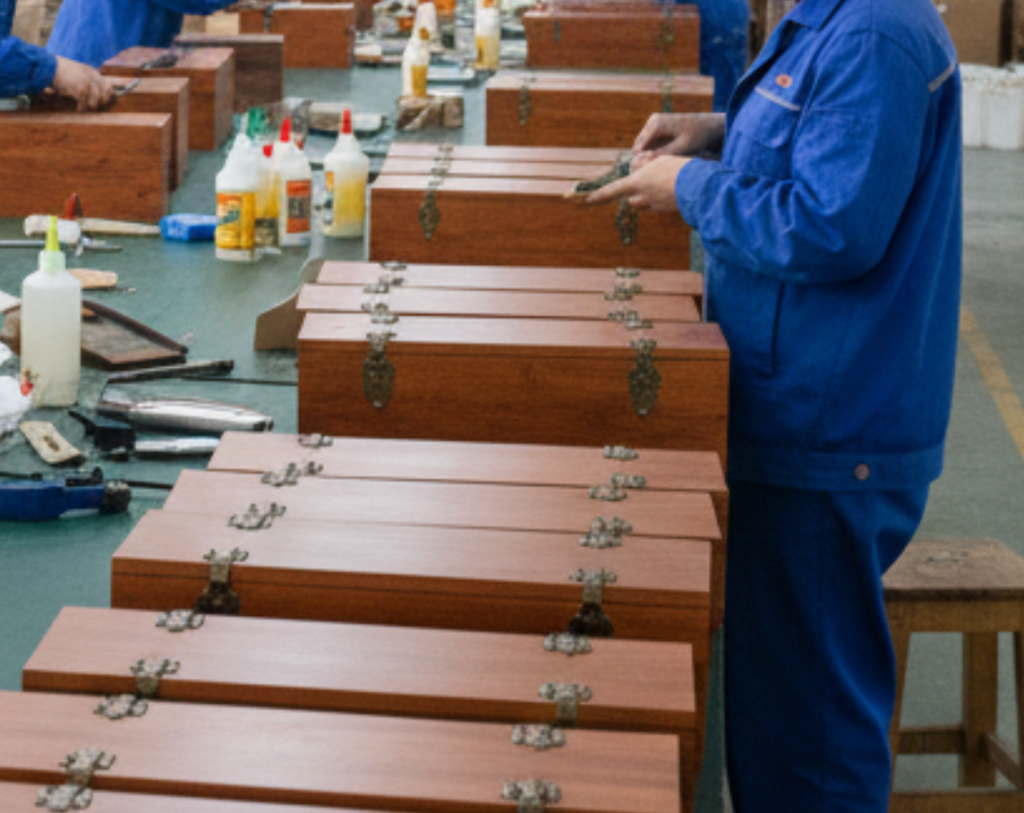
Before you invest time in structural drawings and finish samples, align with your factory on several commercial points. Clear early alignment reduces back-and-forth later and keeps your whisky launch timeline under control.
Define the Project Type and Positioning
Whisky box projects generally fall into a few categories:
- Standard gift packaging for regular retail or e-commerce, where unit cost and durability are balanced.
- Premium or collector’s edition boxes, often with heavier wood species, richer stain colors, glass or metal inserts, and more complex hardware.
- Taster set or sampler boxes with multiple small compartments or foam inserts for mini bottles.
- Corporate gift or limited batch projects with stricter branding consistency and more emphasis on unboxing experience.
Share this positioning at the beginning; it guides wood selection, structure, surface finishing level and price expectations.
MOQ, Price Structure and Project Phasing
Discuss these points clearly before you request custom engineering:
- MOQ tiers: Understand MOQ per design, per size and per finish. Many projects use one structure with different logos or stains to reach a more favorable price level.
- Price components: Clarify whether quotes include inner inserts, color boxes, mailer cartons, inner dividers or only the bare wooden shell.
- Sample cost and credit policy: Confirm if sample charges are deductible against bulk orders and how many revisions are realistic.
- Lead time windows: Align on lead time for sampling and mass production, including buffer for packaging approval and any third-party testing you may require.
A practical approach is to confirm an initial pilot order quantity that fits your launch plan, then a target repeat quantity once the design is validated. This helps the factory plan material reserves and tooling.
Confirm Wood Species and Structural Concept
For wooden whisky box packaging, wood species and structure decisions directly affect price, warping risk, weight, and perceived value. This is where factory experience matters.
Choosing the Right Wood for Whisky Boxes
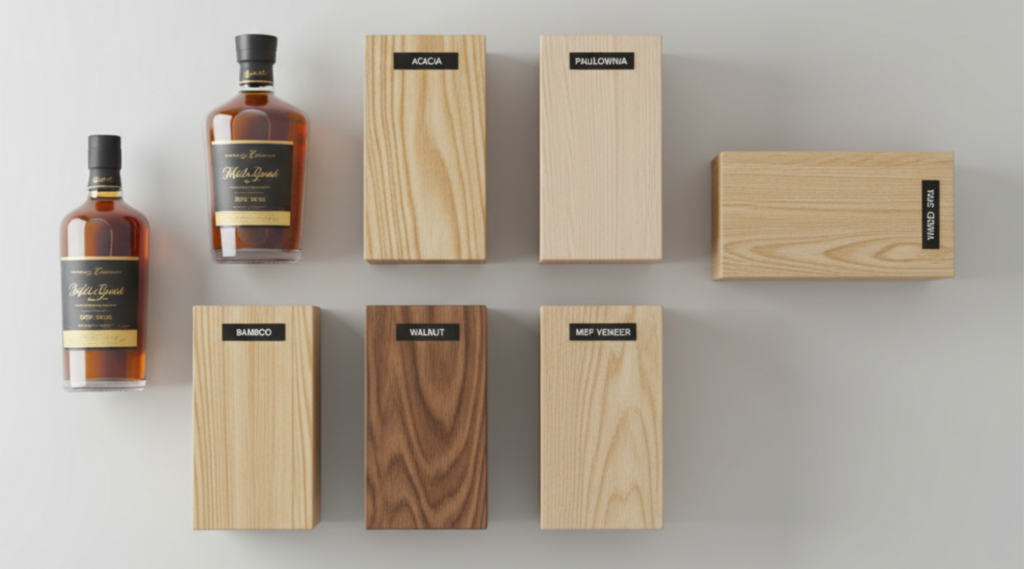
Chic Homeware typically works with acacia, pine, paulownia, bamboo, walnut, MDF veneer and plywood veneer. Each behaves differently in production and in transit.
| Material | Key Characteristics for Whisky Boxes |
|---|---|
| Acacia | Dense, stable, rich grain and color; suitable for premium or collector’s edition boxes. Heavier, with a more luxurious hand feel. |
| Pine | Cost-effective, widely available, lighter weight; popular for mid-range whisky gift sets and retail packaging. |
| Paulownia | Very light, good for air-freight projects and large-format boxes; softer, so structure and corner protection are important. |
| Bamboo | Hard, modern look with a sustainability angle; suitable for eco-positioned or minimalist whisky brands. |
| Walnut | Premium look with dark, elegant grain; ideal for high-ticket whisky releases and brand-building collections. |
| MDF veneer | Stable core with decorative veneer surface; good for complex shapes, consistent coloring and smooth painting. |
| Plywood veneer | Stronger than MDF for certain structures, resistant to warping when engineered correctly; suitable for larger boxes. |
When you brief your supplier, specify:
- Target positioning (entry-level, mid-range, premium).
- Target gross weight per unit if you have logistics constraints.
- Preference for visible natural grain vs. painted finishes.
- Any sustainability or sourcing preferences (for example, FSC-oriented sourcing discussion for certain markets).
Solid Wood vs. Engineered Panels
Whisky boxes can be produced in full solid wood or a mix of solid and engineered panels. For example, a structure might use solid pine frame with MDF veneer lid to achieve a flat, stable surface for printing.
Ask your manufacturer to propose at least two structure options:
- All solid wood for a more natural look and feel.
- Hybrid construction (solid frame + MDF or plywood veneer panels) to improve flatness, reduce warping risk and optimize cost.
Confirm which surfaces will be most visible to end-users (top lid, front panel) and prioritize the best surface material there.
Size, Bottle Fit and Internal Structure
Many problems in wooden whisky box packaging originate from unclear bottle data at the beginning. Exact size and interior structure decisions are critical for damage control and presentation quality.
Collect Accurate Bottle and Accessory Data
Before structural design, prepare a complete data set for your supplier:
- Exact bottle dimensions: height, maximum diameter, neck diameter, shoulder shape.
- Bottle weight when full.
- Closure details: cork, screw cap, capsule, wax seal.
- Any accessories included: glasses, pipettes, coasters, booklets, tasting notes or gift items.
- Whether the box will hold one bottle, two bottles or a full tasting kit with multiple SKUs.
Providing real bottles or dimensional drawings, when possible, allows the factory to develop a more accurate insert and compartment structure.
Internal Compartments, Inserts and Protection
For whisky packaging, internal structure must protect the bottle from movement while avoiding friction that can damage labels or capsules. Options include:
- Fixed wooden dividers for multi-bottle sets.
- Custom-cut EVA foam or PU inserts for precise bottle positioning.
- Cardboard or molded pulp inserts for value-oriented projects.
- Felt or fabric lining to reduce bottle friction and add a premium touch.
Clearly state whether you want the bottle to be:
- Tight fit (no movement, slightly more difficult to remove).
- Moderate fit (easy removal, minimal rattle).
Ask your manufacturer to provide photos or videos of prototype loading and drop simulations so you can review fit before sign-off.
Moisture Control and Dimensional Stability
Moisture is a frequent root cause of warping, cracking or lid misalignment in wooden whisky boxes—issues that become visible only after boxes reach a different climate. When you work with a wooden products factory in China for export, moisture control is a core topic to confirm.
Target Moisture Content and Climate Considerations
Discuss with your supplier:
- Wood moisture content target range at production (for example, aligned with typical indoor furniture ranges).
- Destination conditions: dry climates, high humidity, or seasonal changes in your main sales markets.
- Whether the products will be stored in climate-controlled warehouses or general storage.
Factories with experience in export-oriented wooden packaging will adjust drying and conditioning processes accordingly and will normally avoid overspeeding production at the expense of moisture stability.
Construction Methods that Reduce Warping Risk
Ask for details about the construction approach:
- Use of finger joints or engineered panels for wider surfaces such as lids and bases.
- Direction of wood grain relative to hinges and long edges.
- Allowances for expansion and contraction in panel design.
For larger whisky presentation boxes, hybrid structures (for example, MDF veneer lid on a solid frame) can significantly reduce warping and lid twist compared with large, single-piece solid panels.
Surface Finishing, Color and Branding
The surface finishing of a wooden whisky box strongly influences perceived value. Inconsistent sanding, stain or paint issues and unclear logo processes are common sources of disputes if they are not defined early.
Sanding and Surface Preparation
Confirm the sanding standard for your project:
- Visible surfaces (top, front, interior lid).
- Non-visible surfaces (bottom, back panel, inside joints).
For premium whisky boxes, many buyers require a smoother interior and exterior, especially when the box will be opened frequently or used as a keepsake. Make sure “sample level” sanding is realistic for mass production and not over-processed only for photography.
Stain, Paint and Clear Coat Choices
Decide how much wood grain you want to show:
- Transparent or semi-transparent stain to highlight the natural grain of acacia, pine, paulownia or walnut.
- Opaque paint for brand-specific colors, especially on MDF or plywood veneer panels.
- Oil or clear lacquer for a natural feel with protection.
Request labeled finish samples with:
- Color name or code.
- Gloss level (matt, semi-gloss, high gloss).
- Number of coats and whether sanding is done between coats.
Confirm which color is your approval standard for repeat orders. Store at least one approved sample in your own office and ask the factory to keep a matched reference in their sample room.
Logo Application and Special Effects
Wooden whisky box packaging often carries prominent branding on the lid, side panel or interior. Common processes include:
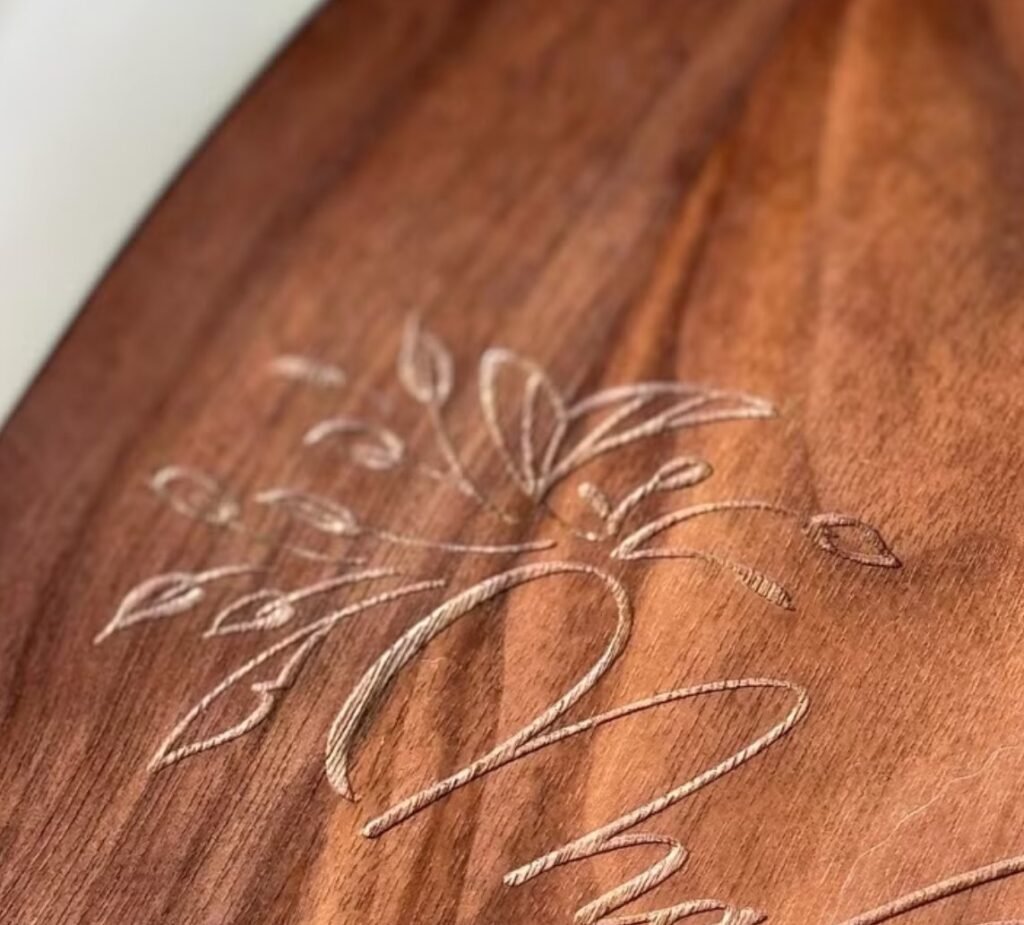
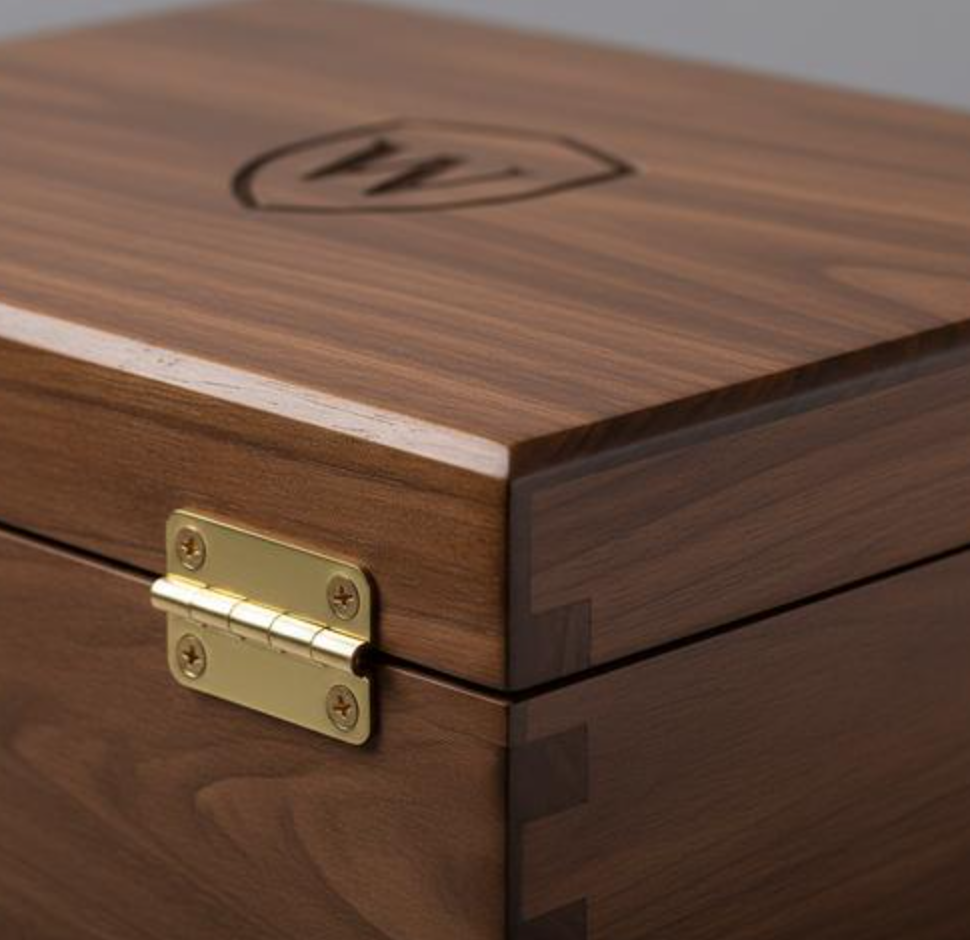
- Laser engraving: Clean, durable, natural-looking. Works well on most wood species.
- Silk-screen printing or pad printing: Good for solid colors and simple logos.
- UV printing: Allows more complex artwork and small text.
- Metal badges, decals or inlays: Used for premium or limited-edition runs.
To avoid issues, share:
- Vector logo files (AI, EPS, SVG) and any Pantone references.
- Precise positioning (top center, bottom right, front panel, inside lid, etc.).
- Maximum acceptable variation for logo size and placement.
For multi-SKU projects, consider whether only the logo changes between SKUs or if stain color, insert color and logo all vary; this affects both cost and packing complexity.
Hardware, Opening Experience and Safety
Hinges, clasps, magnets and other hardware elements define both the user experience and potential quality issues, especially at volume.
Hinges and Opening Angle
When specifying hinges, address:
- Type: Basic butt hinges, concealed hinges, piano hinges or specialized slow-open options.
- Material and color: Brass, black, silver tone, antique finishes.
- Opening angle: Whether you require a stay hinge or chain to stop the lid at 90°–110° for display purposes.
Clarify whether visible screw heads are acceptable on the interior or if you prefer a cleaner look with concealed or partially concealed hardware.
Magnets, Clasps and Child-Resistance Considerations
Whisky boxes often incorporate:
- Magnetic closures for a clean, modern appearance.
- Metal clasps or latches for a traditional gift box look.
- Ribbon pulls for inner trays.
Confirm:
- How strong the magnetic closure should be, balancing security with ease of opening.
- Whether you need to avoid small parts for certain markets.
- Any specific requirements regarding child resistance in your target market, especially when alcohol is being sold online.
Ask the factory to fully seat all magnets and hardware in pre-production samples so you can evaluate appearance, feel and durability.
Export Packaging, Drop-Testing and Damage Control
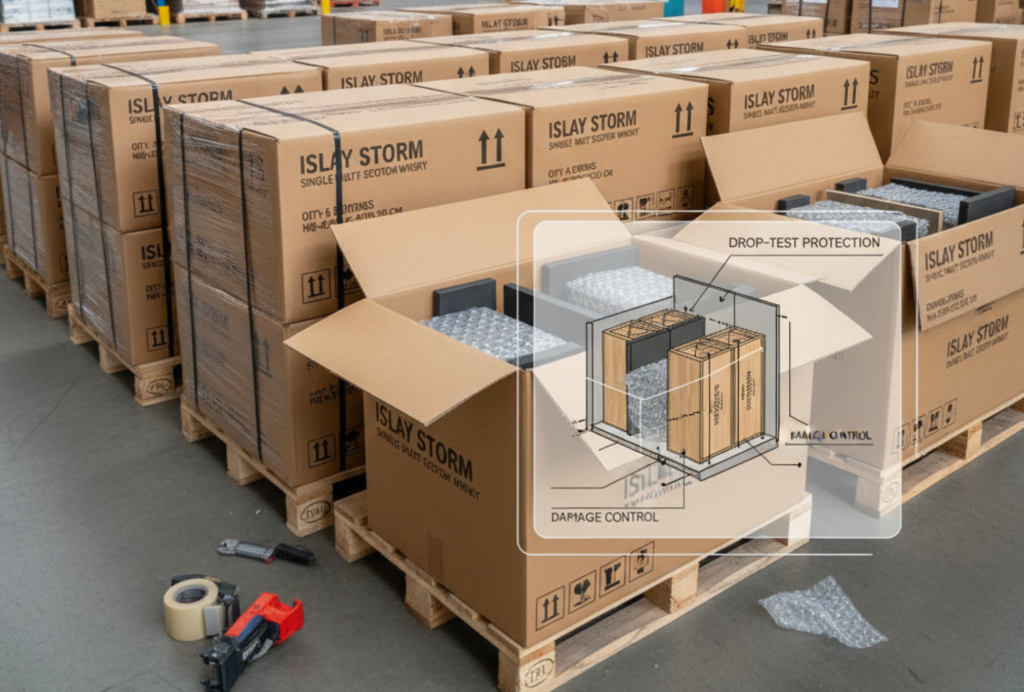
Even a well-made wooden whisky box can arrive damaged if export packaging is not planned correctly. This topic should be discussed as early as structural design and not left to the final weeks before shipment.
Retail Packaging vs. Transport Protection
Whisky packaging projects often involve multiple layers of packaging:
- Primary: The wooden box with bottle and inserts.
- Secondary: Color box or printed sleeve for retail presentation.
- Tertiary: Mailer carton or e-commerce shipper for direct-to-consumer shipments.
- Outer carton: Export carton for palletization and container loading.
Clarify which layers you want the factory to supply and which will be handled in your home market. Chic Homeware can align export packaging with typical carton drop-test thinking when the full pack-out is manufactured at the factory.
Carton Design, Carton Marks and Palletization
Confirm the following details:
- Packing configuration: Single piece per carton or multiple units per master carton.
- Carton strength: Board grade suited to the total weight of wooden box plus bottle if packed together.
- Carton marks: SKU, description, item code, color, logo, quantity, country of origin, and any barcodes.
- Pallet pattern: Pallet size, maximum height, and stacking limits to minimize compression damage.
Ask your supplier to share suggested packing photos and dimensions so your logistics partner can confirm container loading efficiency in advance.
Sampling, Approvals and Repeat-Order Consistency
Sampling is where serious buyers control quality risk. A structured approval process makes repeat orders smoother and reduces disputes for both sides.
Types of Samples to Approve
For wooden whisky box packaging, you may need several sample stages:
- Structure sample: Verifies size, internal layout, hardware position, and bottle fit (often in raw wood, no stain).
- Finish sample: Confirms stain or paint color, lacquer level, and surface smoothness.
- Logo sample: Confirms logo position and process (laser, print, metal badge, etc.).
- Pre-production (PP) sample: Represents the full, final specification including insert, logo, color, and hardware.
Document your acceptance criteria in a simple approval sheet that both your team and the factory can reference in future orders.
Controlling Color and Surface Consistency
Wood is a natural material; 100% identical appearance is impossible, but you can manage variation:
- Agree on acceptable color range around your master sample (for example, slightly lighter or darker tone but similar overall impression).
- Decide whether knots, mineral streaks, or contrasting grain are acceptable on visible surfaces.
- For painted finishes, ask for a standard color reference or code as part of the purchase order.
For repeat orders, clearly state that the master sample remains the reference point. A reliable custom wooden products manufacturer will keep physical retain samples and production records to match your approved standard over multiple years.
Compliance, Market Requirements and Documentation
While whisky is the primary product being regulated, packaging can sometimes be involved in compliance discussions, especially when entering EU or US markets.
Materials and Regulatory Topics to Discuss
Depending on your market, you may want to address:
- Wood sourcing discussions such as FSC-oriented supply options for brand positioning or retailer requirements.
- Surface coating information (for example, whether coatings are suitable for indirect food contact if the box is reused in kitchen spaces).
- Labeling requirements on cartons and packaging (country of origin declarations, recycling marks, etc.).
Provide any retailer-specific or marketplace-specific requirements to your factory at the beginning, not after PP samples are finished.
How to Brief Chic Homeware for a Wooden Whisky Box Project
To turn your idea into a practical project, you can structure your briefing as a short checklist:
- Project summary: Target price range, target customer, sales channel (retail, e-commerce, corporate gift).
- Bottle data: Dimensions, weight, shape, photos and any accessories.
- Wood preference: Acacia, pine, paulownia, bamboo, walnut, MDF veneer or plywood veneer; or ask for options.
- Finish direction: Natural, stained, painted, or premium dark wood look.
- Logo and branding: Process preference, logo files, approximate positions.
- Hardware: Hinges, magnets, clasps, opening angle details.
- Packaging configuration: Whether bottle and box ship together, color box requirements, mailer carton or master carton requirements.
- Commercial frame: Target MOQ, delivery deadline, shipping terms and any special documentation requirements.
With this information, Chic Homeware can advise structure options, material combinations and finishing routes that balance cost, appearance and durability for your specific markets.
Conclusion: Set Clear Checkpoints Before You Commit
Wooden whisky box packaging can significantly elevate your brand, but only if the production details are controlled from the start. By confirming wood species, structure, moisture control, finish standards, logo processes, hardware details and export packaging in advance, you reduce risk and create a design that is repeatable and scalable for future releases.
If you are planning a new whisky launch, seasonal gift program or private label upgrade, consider partnering with a dedicated custom wooden boxes specialist. Chic Homeware supports OEM/ODM development, from sample creation and material suggestions to export packing and repeat-order management.
Share your brief, technical drawings or bottle data, and the team can provide practical suggestions on construction, finishing and logistics that suit your budget and timeline.