
Wooden Spice Rack Manufacturer for OEM ODM Kitchenware Projects
For importers, wholesalers and private label kitchenware brands, a wooden spice rack is a simple product on paper but a complex one in production. Stability, moisture control, finishing quality and packaging can make the difference between a profitable, repeatable program and one that generates returns and bad reviews. This guide explains how a factory like Chic Homeware approaches wooden spice rack manufacturing so you can brief projects clearly, compare quotations properly and manage risk across multiple orders.
Aligning Your Wooden Spice Rack Concept With Factory Capabilities
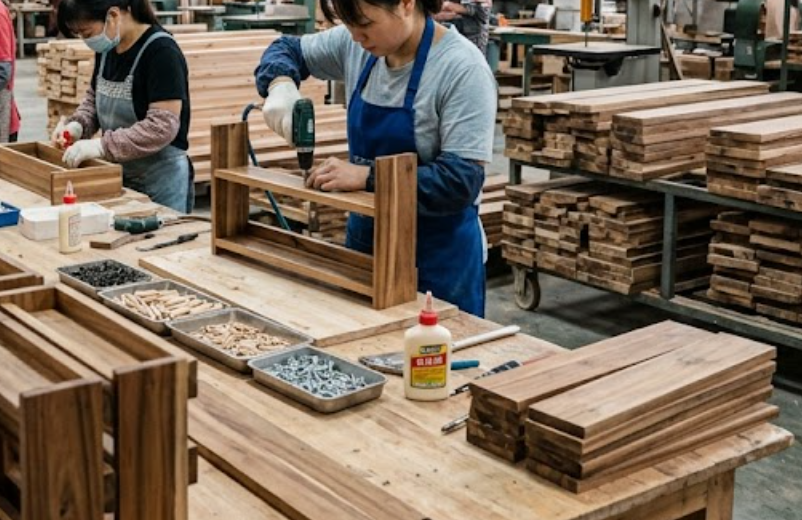
Before discussing wood species or finishes, it helps to define where your product should sit in the market. Most B2B wooden spice rack projects fall into three broad categories:
- Entry range: Simple tier or step design, pine or paulownia, clear or light stain, basic mailer carton for e-commerce and discount retail channels.
- Mid-range: Acacia, bamboo or walnut veneer, more refined joinery, branded color box, suitable for supermarkets and lifestyle retailers.
- Premium: Solid acacia or walnut, mixed materials (metal rods, glass jars), complex structures (expandable, drawer type), gift-worthy packaging.
Sharing where you expect your spice rack to sit helps the factory recommend a structure, wood species and finishing combination that meets your target price without sacrificing stability or appearance.
Choosing the Right Wood for Your Spice Rack Program
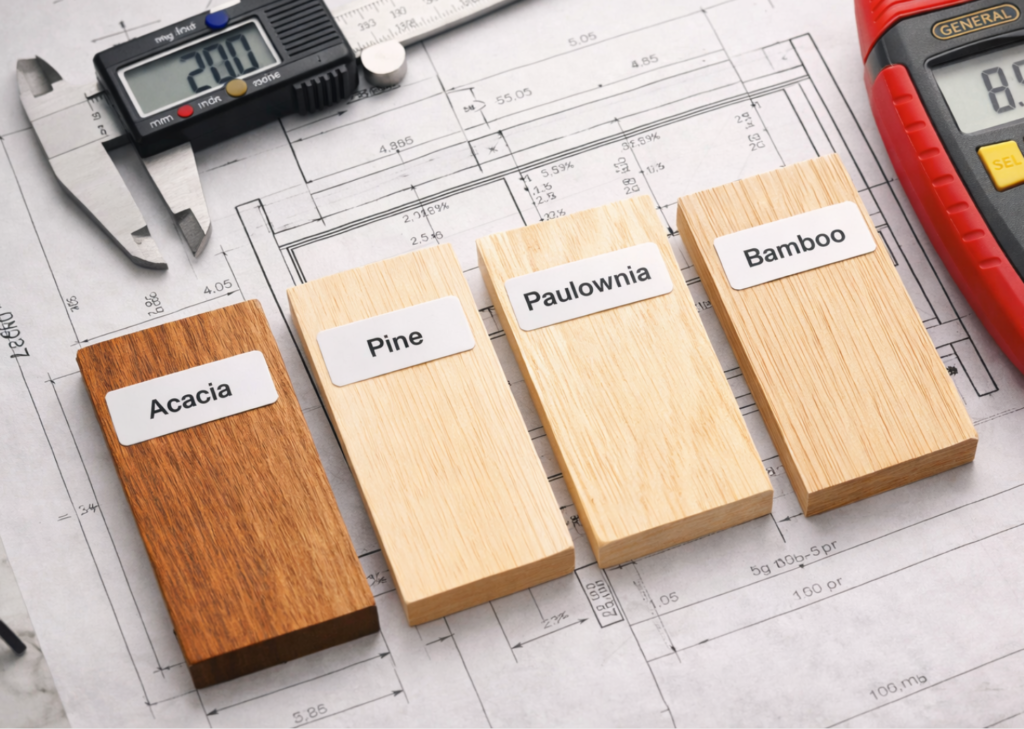
Wood selection will drive both cost and perceived value. Chic Homeware works with acacia, pine, paulownia, bamboo, walnut, MDF veneer and plywood veneer. Each material has specific advantages for wholesale spice rack programs.
Acacia: For Mid to Premium Programs
Acacia is popular for kitchen products because of its warm color and visible grain. For spice racks, it works well when you need both aesthetics and hardness.
- Pros: Dense and durable, attractive grain pattern, higher perceived value, works well with oil or clear lacquer finishes.
- Considerations: Higher raw material cost; requires stricter moisture control and more careful sanding to keep surfaces smooth.
- Best for: Fixed-tier spice racks, wall-mounted racks and counter displays where the wood remains visible and is part of the design story.
Pine: Cost-Effective and Versatile
Pine is one of the most commonly requested woods for entry to mid-level spice racks.
- Pros: Competitive pricing, good workability, suitable for staining into multiple color tones, relatively light weight for e-commerce.
- Considerations: Softer surface can dent; knots must be managed at grading and cutting stages; color variation is more pronounced under clear finishes.
- Best for: Volume programs for supermarkets and online marketplaces, especially when combined with a painted or darker stain finish.
Paulownia: Ultra-Lightweight for E-commerce
Paulownia is useful when weight and shipping cost are critical.
- Pros: Very light, easy to machine, dries quickly, helps reduce shipping weight for large FCL and LCL shipments.
- Considerations: Softer and more porous; requires controlled finishing to avoid a “dry” look; not ideal when heavy glass jars will concentrate stress in one area.
- Best for: Wall-mounted spice racks and larger organizer units where light weight and lower freight costs are key.
Bamboo: Modern Look and Sustainability Discussions
Bamboo panels offer a clean, modern appearance and are widely accepted in kitchenware categories.
- Pros: Dimensional stability, uniform appearance, suitable for EU and US markets with proper sourcing; aligns well with many brands’ sustainability messaging.
- Considerations: Edge details need careful machining; cross sections reveal the bamboo layers which must be considered in design; glue lines must be stable at high humidity.
- Best for: Flat-pack, contemporary spice racks, especially adjustable or expandable countertop designs.
Walnut & Veneers: Premium Look With Controlled Cost
Walnut and walnut veneer are common for higher-end kitchen ranges.
- Solid walnut: Premium look, rich color, higher cost and more sensitive to moisture changes.
- MDF or plywood with walnut veneer: Achieves a premium appearance while controlling cost and improving stability for precise structural designs.
Using MDF veneer or plywood veneer allows tighter tolerances for sliding or expanding spice rack mechanisms, especially when paired with metal hardware.
Moisture Control: Protecting Against Warping and Cracking
For spice racks destined for kitchens in Europe or North America, moisture control in the factory is more important than it looks on a drawing. Improperly dried wood can warp, twist or crack once the product reaches a drier or more humid climate.
Key Moisture Control Practices
- Pre-drying and kiln drying: Material is stabilized to an appropriate moisture content range before cutting.
- In-process checks: Random inspections using moisture meters, especially before assembly and finishing.
- Balanced structures: Designing shelf components and side panels with attention to grain direction so that movement is balanced and less visible.
- Conditioning before packing: Finished spice racks are allowed to rest long enough after coating so that residual moisture can stabilize.
When you discuss a new spice rack program with Chic Homeware, sharing target markets and typical end-use environments helps determine the right moisture standards and QC frequency for your product.
Sanding, Coating and Surface Finish Decisions
Wooden spice racks are usually touched and seen at close distance, so surface finish impacts brand perception directly. The finishing route must match your category positioning, price point and expected returns policy.
Sanding Consistency
For spice racks, inconsistent sanding shows immediately on flat shelves and tiered steps.
- Grit progression: Appropriate sanding steps (for example, 120–240 grit) help avoid swirl marks and uneven absorption of stain.
- Edge treatment: Light rounding on exposed edges improves tactile feel, reduces chipping during transit and improves coating coverage.
- Joint transitions: Where side panels join shelves, sanding must smooth the transition without destroying critical dimensions.
Stain, Paint and Clear Finish Options
- Clear or natural finish: Common for acacia, walnut and bamboo; shows the character of the wood and works well for mid to premium ranges.
- Stain finish: Used to unify color across pine or mixed components; darker stains can help mask minor color variation but require tight process control to avoid patchiness.
- Paint finish: Popular for white, black or pastel spice racks; requires more surface preparation and strict dust control.
Chic Homeware typically combines stain or paint with a protective topcoat suitable for kitchen environments. You can define gloss level (matt, satin, semi-gloss) based on your market feedback. Samples will confirm final color, gloss and tactile feel before mass production.
Logo Application: Balancing Branding and Cost
Many wholesale buyers use spice racks as part of a broader kitchen collection. Logo execution must align across items while remaining practical for the structure.
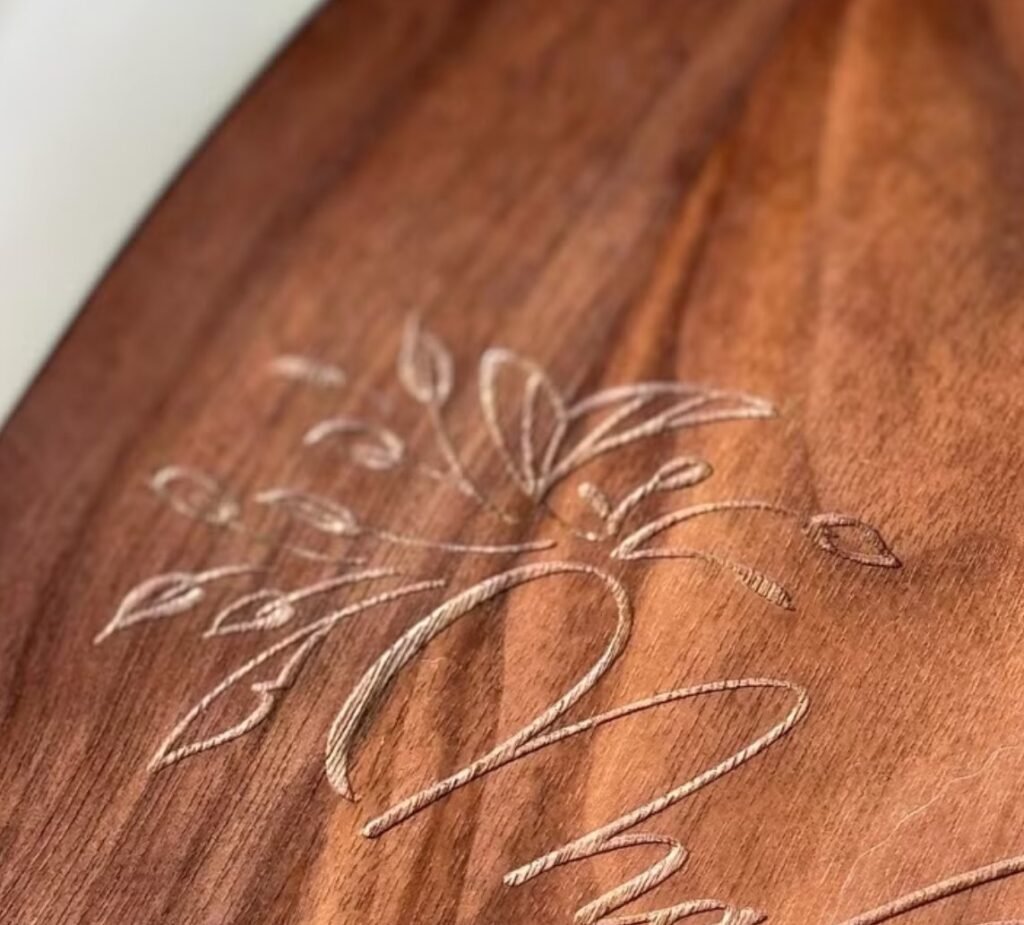
- Laser engraving: Works well on acacia, bamboo, pine and paulownia; cost-effective for small logos and supports relatively low MOQs.
- Silk screen printing: Suitable for logos in one or two colors on flat surfaces; requires stable fixtures during printing.
- Heat stamping or foil: More common for gift-oriented spice racks and when a metallic logo is required on darker finishes.
Discuss logo size, position, color and Pantone reference during sampling. This will avoid surprises at the mass-production stage and helps the factory set up stable jigs or fixtures for repeat orders.
Structural Design: Function, Stability and Assembly
Spice racks may look simple, but structural details directly impact end-user experience, product reviews and damage rates. Chic Homeware’s engineering team tends to review spice rack designs from three angles: load, movement and assembly.
Common Wooden Spice Rack Structures
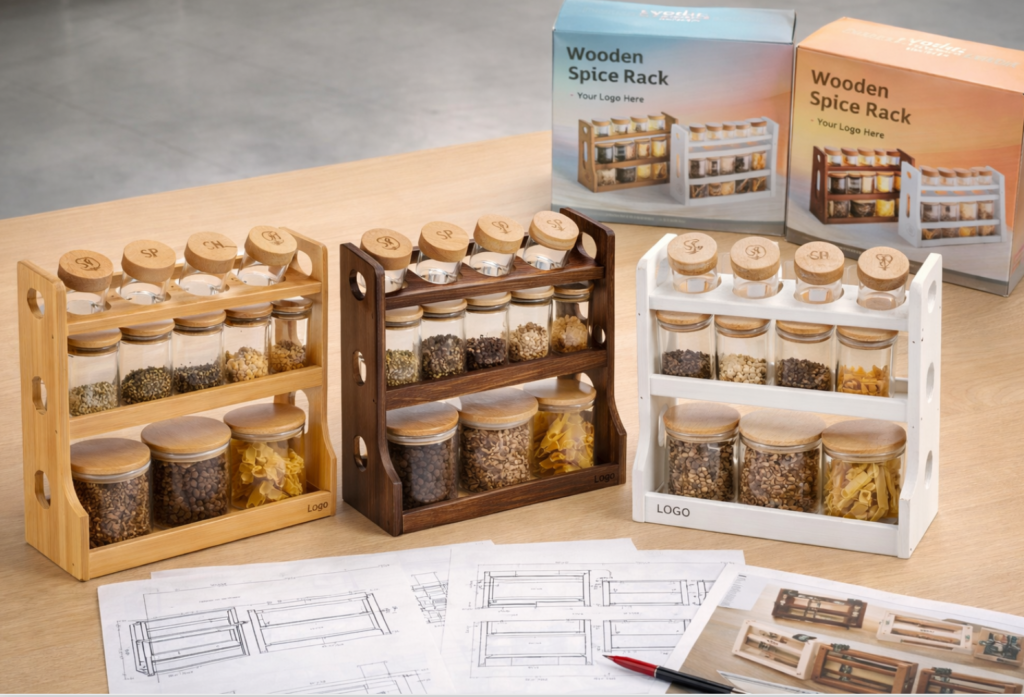
- Fixed-tier countertop racks: One-piece glued structure, simple and robust; shipping volume is higher but assembly complaints are minimal.
- Expandable or adjustable racks: Sliding panels or nested tiers; require precise tolerances in MDF or veneer to move smoothly without wobble.
- Wall-mounted racks: Must balance weight, mounting hardware and back-panel thickness so they hang safely with filled jars.
- Drawer-style or pull-out frames: Often used for inside-cabinet spice organization; require careful hardware selection and testing.
Hardware, Magnets and Inserts
While many spice racks are entirely wooden, hardware and accessories can help differentiate your product:
- Hinges: For spice racks with doors or lift-up panels; requires consistent routing of hinge pockets and stable screw holding in the chosen wood.
- Magnets: Used for door closures or removable panels; magnet pockets must be cut and filled accurately to avoid rattling or misalignment.
- Inserts: Includes glass jars, plastic jars, labels or metal holders; these demand careful compartment sizing and carton design.
When discussing a new project, provide a list of all components—wooden frame, jars, labels, hardware—so the factory can engineer the structure, compartment sizes and packaging together.
Managing B2B Customization: Size, Compartments and Branding
From a factory perspective, a “simple custom spice rack” still involves multiple parameters. Chic Homeware’s OEM/ODM workflow is designed to make these parameters explicit so that your sample reflects real mass-production conditions.
Key Customization Dimensions
- Overall dimensions: Width, depth and height must match your target shelves or countertop footprint.
- Tier spacing: Vertical distance between shelves should accommodate your jar height and label visibility.
- Compartment size: For spice racks using individual slots or cubbies, internal dimensions must leave enough tolerance for jars but not so much that they wobble.
- Wall-mount spacing: For wall racks, hole positions need to align with standard stud spacing where relevant, or include mounting templates.
Branding, Color Box and Carton Mark Coordination
On the packaging side, you will typically decide on:
- Color box vs. plain mailer carton: Color boxes support retail and gifting; mailer cartons are cost-effective for e-commerce and FBA.
- Artwork and carton marks: Layout of logos, instruction icons, barcode, regulatory details, and side marks for warehouse handling.
- Instruction sheet: Simple assembly diagrams and safety notes, especially for wall-mounted or multi-part racks.
Chic Homeware can integrate your artwork files into the packaging workflow and provide dielines for your designers. This ensures that product, branding and packaging are developed together, not as separate components.
From Sampling to Mass Production: What Buyers Should Expect
A structured OEM/ODM process helps reduce misunderstandings and hidden cost. Below is a typical wooden spice rack project timeline with Chic Homeware.
1. Project Briefing
- Share reference photos or drawings, target retail price, market, desired materials and estimated annual volume.
- Clarify if you need an existing factory design with logo only, or a fully custom structure.
- Indicate any specific import requirements for EU or US markets (packaging labels, surface finish expectations, etc.).
2. Material and Structure Proposal
- Factory provides suggestions on wood species, thickness, structure and finishing route to match your price and positioning.
- Preliminary quotation is based on agreed structure, target quantity and incoterm.
3. Sample Development
- Sample lead time is usually defined at the quotation stage and depends on complexity and finishing requirements.
- You confirm dimensions, finish, logo, hardware and packaging components during sample approval.
- Any changes after sample confirmation should be documented clearly and may require a new sample.
4. Mass Production and Quality Control
- Production is planned according to your PO quantity and required ship date.
- Key checkpoints include moisture testing, dimensional checks, surface finish inspection and logo accuracy.
- Carton drop-test thinking is applied to your agreed packaging to help reduce transit damage risk.
5. Export Packing and Documentation
- Final packing confirms inner polybags (if used), foam or board protection, color box or mailer, and master carton configuration.
- Carton marks and labeling follow your instructions to support FBA, 3PL or distribution centers.
- Shipping documentation is prepared according to your needs and the destination market’s requirements.
Key B2B Concerns: MOQ, Lead Time, Price and Repeatability
Experienced buyers usually focus on four core questions when evaluating a wooden spice rack supplier: MOQ, lead time, price structure and consistency.
MOQ and Program Size
MOQ depends on material, structure complexity and finishing:
- Simple pine or paulownia racks with clear finish can support lower MOQs.
- Acacia, walnut or mixed-material designs with jars, labels or metal parts usually require higher MOQs.
- Color box printing and specialized packaging components may have their own MOQ thresholds.
Discuss your target MOQ early. Chic Homeware can often adjust design, material choice and packaging to reach a practical starting quantity, especially for new product testing or Amazon launches.
Lead Time Expectations
Overall lead time depends on sample duration, material availability and complexity of finishing. Factors that can impact timing include:
- Availability of specific wood species thicknesses or bamboo panels.
- Scheduling of surface finishing lines and drying time for multi-coat systems.
- Extra steps such as logo tooling, custom hardware sourcing or third-party lab testing when requested.
It is advisable to align launch timelines with realistic production capacity, especially before peak seasons for kitchen and gift categories.
Price Structure and Cost Drivers
Understanding cost drivers helps you make informed trade-offs. Main price components include:
- Material: Species choice (acacia vs pine vs bamboo), thickness, veneer vs solid, and scrap rate.
- Labor: Complexity of structure, required assembly steps and sanding/finishing intensity.
- Hardware and accessories: Hinges, magnets, jars, labels, and any metal components.
- Finishing: Number of coats, color matching requirements and extra masking steps if needed.
- Packaging: Custom color boxes, inserts, protective materials and printing specifications.
Transparent breakdowns allow your team to decide where to allocate budget—for example, upgrading to acacia but using a simpler color box, or maintaining pine but adding jars and labels for differentiation.
Repeat-Order Consistency
Repeatability is essential for long-term programs. Key elements to stabilize include:
- Color and finish: Master standard boards and approved samples kept on both sides.
- Dimensions: Clear tolerances for critical sizes such as shelf depth, tier spacing and wall-mount hole positions.
- Packaging configuration: Fixed master carton and inner pack quantities, with documented packing steps.
Chic Homeware approaches each spice rack as a project, not just a one-off order, so that reorders can follow the same documented process.
Packaging and Damage Control for Exported Spice Racks
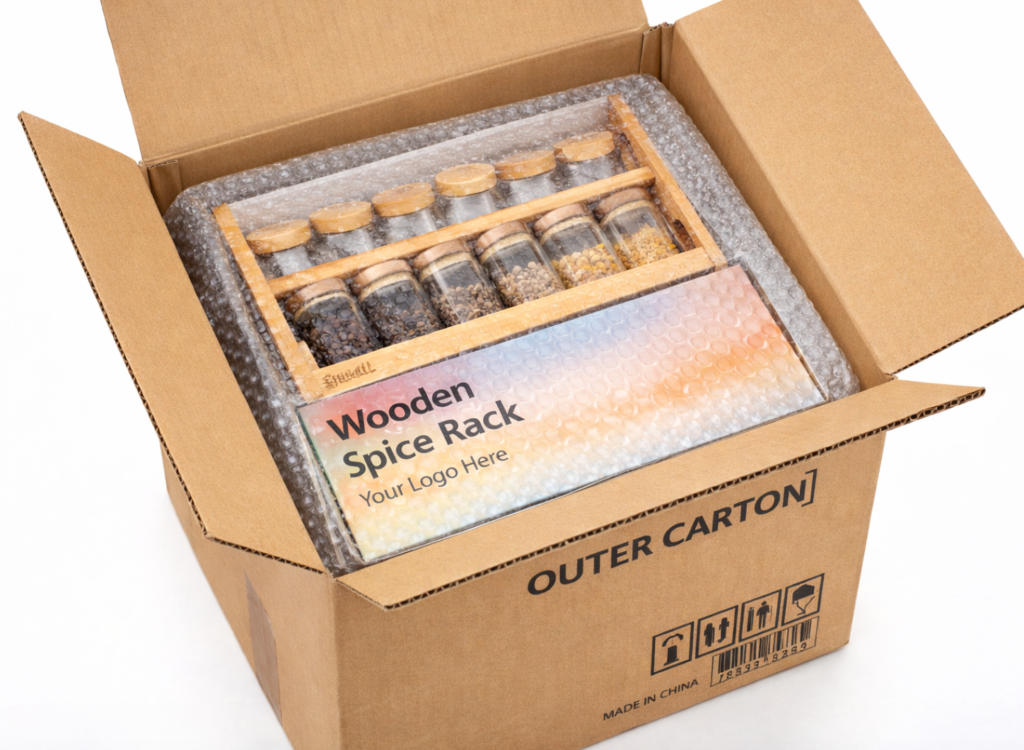
Spice racks often include multiple components: wooden frame, jars, labels and sometimes metal parts. Poor packaging can quickly erase margins through breakages and returns. A factory-oriented approach looks at packaging as part of the product, not an afterthought.
Structural Packaging Considerations
- Product protection inside the box: Corner protection, separators and inserts that fix the rack and jars in place.
- Drop-test thinking: Designing the internal packaging to handle typical courier and warehouse handling impacts.
- Moisture barrier where needed: Polybags or additional wrapping for markets with long transit times or variable climate.
Packaging Formats for Different Channels
- Retail display: Printed color boxes with photography, features and brand story; often used in supermarket or specialty retail programs.
- E-commerce: Sturdier mailer cartons with minimal void space, often brown with print but designed to survive parcel networks.
- Warehouse and pallet handling: Master cartons optimized for stacking, with clear carton marks and barcodes.
Chic Homeware can work with your logistics or packaging team to align on carton dimensions, stacking patterns and labeling to fit into your existing supply chain.
Working With a Specialized Wooden Products Manufacturer
Many kitchen and home brands prefer to consolidate sourcing of wooden items with a partner who understands both material behavior and packaging risk. As a dedicated Custom Wooden Products Manufacturer, Chic Homeware has experience integrating spice racks into broader ranges that include organizers, trays and storage boxes.
For buyers needing more complex storage sets or gift packs that include spice racks, our background in Custom Wooden Boxes and packaging structures helps make sure the overall set is structurally sound, cost-effective and optimized for export.
When evaluating a Wooden Products Factory in China for your spice rack program, consider not only unit price but also the factory’s ability to discuss moisture content, structural stability, finishing control and export packaging details. These are the points that protect your brand and margins over multiple seasons.
Conclusion: Turning a Simple Spice Rack Into a Reliable Program
A wooden spice rack may be a small item in your catalog, but it touches multiple risk points—wood species behavior, moisture control, surface finishing, hardware stability, and packaging performance in transit. When these are managed correctly at the factory level, the result is a product that arrives in good condition, assembles easily, and supports positive reviews and repeat orders.
Chic Homeware combines material flexibility (acacia, pine, paulownia, bamboo, walnut, MDF veneer and plywood veneer) with OEM/ODM project management to support wholesalers, importers, distributors and online brands in building long-term spice rack programs. From sampling and logo customization to export packing and compliance communication for EU and US markets, each step is handled with a practical, factory-oriented mindset.
If you are planning a new wooden spice rack project or want to improve an existing one, you can share your drawings, reference samples or current pain points. Our engineering and commercial teams can then propose a realistic structure, material combination and packaging solution aligned with your target price and channel requirements.
To discuss your next wooden spice rack program or wider kitchen storage range, please reach out to our team through the contact page and start a detailed project conversation.