
How Amazon Sellers Source Wooden Homeware with Custom Packaging
For Amazon sellers in home and kitchen, wooden homeware with custom packaging is one of the most efficient ways to build a recognizable brand and protect margins. But moving from an idea to a well-reviewed listing requires much more than choosing a “nice box.” It involves material decisions, moisture control, surface finishing, logo application, and export packaging that survives FBA handling and end-customer returns.
This article walks through how professional Amazon sellers and importers source wooden boxes, organizers, trays, kitchen storage and gift packaging from a factory-oriented OEM/ODM partner like Chic Homeware, and how to integrate custom packaging into the sourcing workflow without losing control of cost, timing or product quality.
Why Wooden Homeware with Custom Packaging Works on Amazon
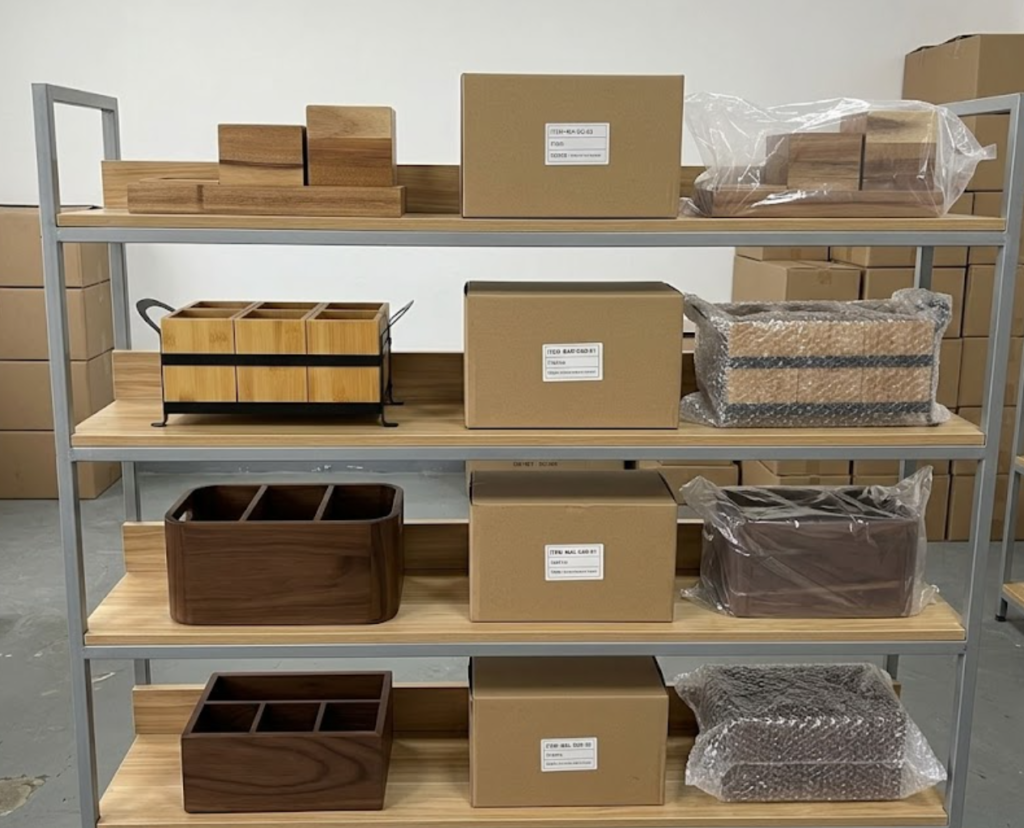
In a crowded marketplace, wooden homeware stands out visually and emotionally. When combined with tailored color boxes, mailer cartons and clear branding, wooden products help Amazon sellers:
- Differentiate in search results: Natural wood, visible grain and thoughtful inserts look premium in thumbnails and lifestyle images.
- Support higher perceived value: A well-finished acacia tray or bamboo organizer in custom packaging supports pricing above generic plastic alternatives.
- Reduce returns and damage: Proper internal fittings and export packaging reduce breakage, especially for items with glass jars, metal hardware or delicate lids.
- Build brand recall: Consistent logo, color box design and unboxing experience across multiple SKUs encourages cross-selling and repeat purchases.
However, to achieve this, the Amazon seller needs a factory capable of controlling both wooden production and packaging engineering, and willing to communicate clearly about MOQ, sampling, lead time and export packing details.
Step 1: Clarify Your Amazon Strategy Before Contacting a Factory
Before sending inquiries, experienced Amazon sellers define several parameters that directly influence how they source wooden homeware with custom packaging.
Define Product Role and Target Price Band
The first step is understanding the role of the product in your catalog:
- Entry-level SKU: Simple pine or paulownia organizer with basic logo and minimal packaging, focused on competitive pricing.
- Mid-range branded product: Acacia or bamboo tray set with a color box, printed manual and branded mailer carton.
- Premium giftable SKU: Walnut-look MDF veneer box with velvet insert, magnetic closure and sophisticated gift packaging.
Your target retail price band and margin expectations will determine whether solid acacia is needed or whether a mixed-material solution such as MDF veneer, plywood veneer or a combination with solid wood edges is more appropriate.
Confirm Amazon Channel Requirements
Clarify early whether you are selling via:
- FBA (Fulfilled by Amazon): You must plan for Amazon’s labeling, carton size, weight limits and rough handling during inbound checks and returns.
- FBM (Fulfilled by Merchant) / 3PL: Carton structure and mailer design can be optimized around your own warehouse and shipping methods.
This information impacts packaging thickness, carton marks, and how much protective space is reserved inside each master carton.
Step 2: Choose the Right Wood Material for Amazon Homeware
The material decision is not only about appearance. It also influences weight, cost, moisture behavior and packaging strength. Professional Amazon sellers discuss these specifics with their OEM/ODM factory partner.
Acacia: For Premium, Visible Grain Products
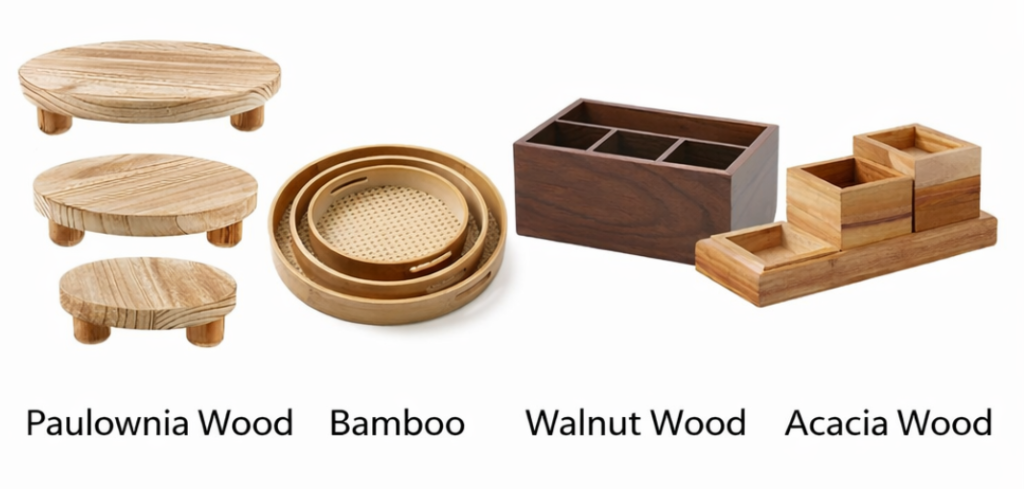
Typical applications: Serving trays, cheese boards, kitchen organizers, decorative storage.
- Pros: Attractive grain pattern, good hardness, premium feel, supports medium to dark stains.
- Considerations: Heavier than paulownia or pine; moisture control and sealing are crucial for stable performance in different climates.
Acacia homeware usually pairs well with color boxes and higher-end inserts, supporting listings positioned as “giftable” or “premium.”
Pine: Versatile and Cost-conscious
Typical applications: Storage boxes, small organizers, crates, basic kitchen storage units.
- Pros: Widely available, flexible for staining or painting, cost-effective for larger volumes.
- Considerations: Softer surface, more susceptible to dents, requires consistent sanding and finishing to look clean in product photos.
For Amazon sellers, pine works well when you want a natural wood listing with controlled cost and you are prepared to communicate clearly about surface finishing requirements.
Paulownia: Lightweight for Shipping-sensitive SKUs
Typical applications: Nested box sets, decorative storage, larger organizers that must remain lightweight.
- Pros: Very light, stable, suitable for light staining or painting, supports multi-piece sets without pushing weight limits.
- Considerations: Softer and more porous; factory must manage sanding consistency and, where necessary, sealing before painting.
Paulownia is often selected by Amazon sellers who face strict FBA weight thresholds or higher air-freight cost sensitivity.
Bamboo: Eco-oriented Positioning
Typical applications: Drawer organizers, kitchen storage, utensil holders, bathroom trays.
- Pros: Perceived as sustainable, good strength-to-weight ratio, stable in structure, visually clean.
- Considerations: Bamboo boards are laminated from strips; uniform color and joint lines require good quality control and surface finishing.
Sellers pursuing “eco-friendly” branding frequently combine bamboo with minimalistic packaging and natural color palettes.
Walnut and Veneer Solutions: Premium Look with Controlled Cost
Typical applications: Gift boxes, watch boxes, jewelry organizers, high-end office organizers.
- Solid walnut: Premium, rich color and grain; typically used for higher price points.
- MDF veneer / plywood veneer: Veneer gives the walnut look at a lower cost and provides stable surfaces for precise edges, inlays or logos.
For many Amazon sellers, MDF veneer or plywood veneer solutions provide the best balance between premium appearance, structural stability and cost control.
Step 3: Control Production Checkpoints That Affect Amazon Reviews
Buyers rarely see your factory, but their reviews reflect the factory’s discipline. Amazon sellers who work with OEM/ODM partners like Chic Homeware focus on key production checkpoints.
Moisture Control and Dimensional Stability
Wood moves with humidity. If moisture content is not controlled, products may warp, crack or cause lids and drawers to misalign after shipping. A professional wooden products factory monitors:
- Incoming wood moisture: Ensuring logs, planks or bamboo boards meet the target range for the product’s destination climate.
- Intermediate checks: During machining and assembly, moisture levels are tracked to avoid stress within panels.
- Final product checks: Especially for tight-fitting components like lids, sliding drawers and interlocking trays.
For Amazon sellers, this translates into fewer complaints about lids not closing, misaligned compartments or warped boards.
Sanding Consistency and Edge Treatment
Visible scratches or rough edges are among the fastest ways to trigger negative reviews. The factory should maintain:
- Uniform sanding grit sequence: Avoiding patchy surfaces that absorb stain unevenly.
- Edge rounding standards: Especially at corners where customers frequently touch or where packaging friction is highest.
- Pre-finish inspection: Rejecting pieces with sanding marks before staining, painting or clear coating.
Amazon listings with close-up photography require a level of surface quality that must be controlled at the factory, not corrected later with editing.
Stain, Paint and Clear Finish
Color variation between batches can damage brand consistency. A disciplined OEM/ODM factory concentrates on:
- Color reference samples: Using approved master samples for each stain or paint code.
- Application process: Spray, brush or wipe-on processes that deliver consistent color density and coverage.
- Drying and curing time: Ensuring coatings are fully cured before packing to avoid odor transfer or sticking surfaces.
For Amazon sellers, this means repeat orders match existing listings, avoiding confusion and returns when customers reorder or compare multiple SKUs.
Logo Process and Brand Elements
Brand visibility is critical on Amazon and beyond. Common logo processes include:
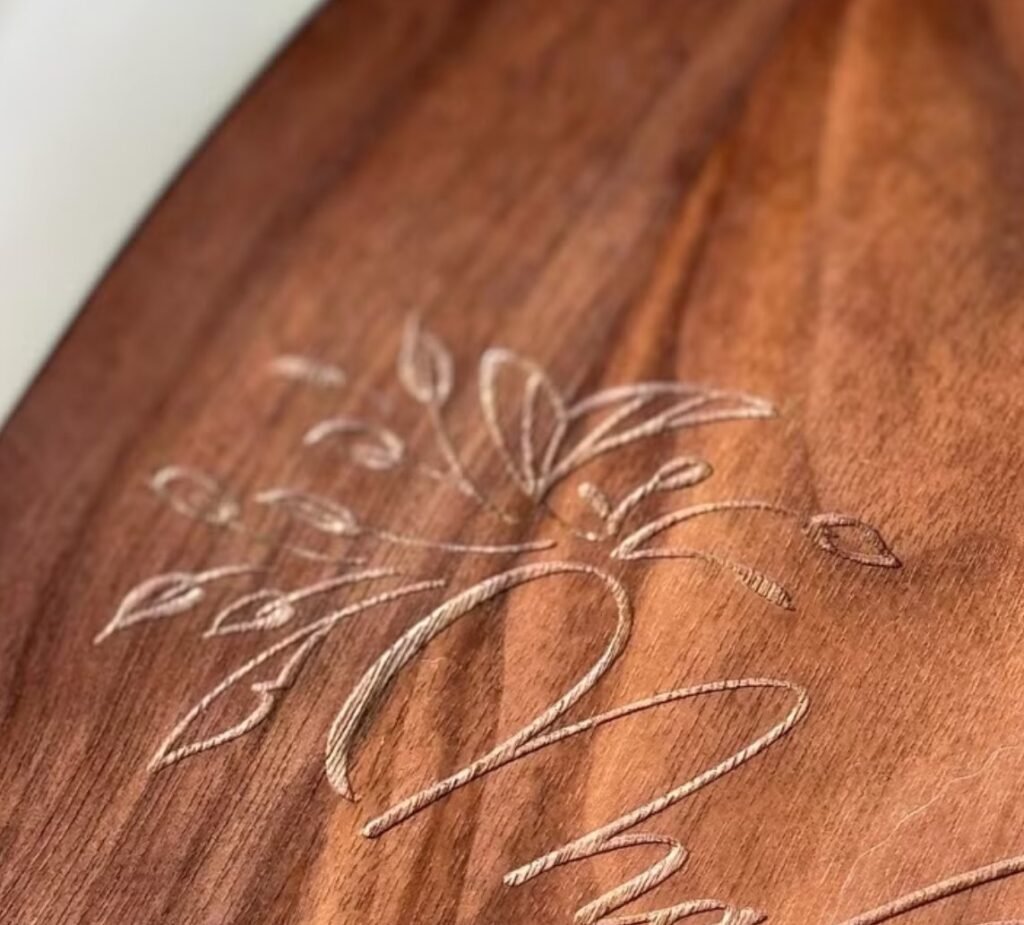
- Laser engraving: Precise, premium look, best for natural wood or darker stains.
- Silk-screen printing: For solid color logos on painted surfaces or light wood.
- Heat stamping / debossing: Often used for leather-like inserts or paper elements within the packaging.
Amazon sellers should decide where the logo appears: on the product, on the color box, inside the lid, on inserts, or on the mailer/carton. A factory experienced with OEM/ODM projects will manage logo files, print positioning and color matching across both product and packaging.
Hardware Fitting and Structural Stability
Many wooden homeware items use hinges, magnets, handles or drawer slides. Common checkpoints include:
- Hinge alignment: Lids must open smoothly and sit flat without twisting.
- Magnet strength: Just strong enough to feel secure but not so strong that customers struggle to open the box.
- Screw and pin stability: No loose movement under normal use; pre-drilling standards to prevent splitting.
On Amazon, structural issues appear in reviews as “arrived broken,” “lid misaligned,” or “hinge came off after one week.” A competent factory addresses these in design and pre-shipment quality control.
Step 4: Integrate Custom Packaging into Your Sourcing Plan
For Amazon sellers, packaging is part of the product, not an afterthought. Custom packaging should be considered alongside the wooden structure from the earliest discussions with your OEM/ODM partner.
Common Customization Points for Packaging
When sourcing wooden homeware with custom packaging, buyers typically discuss:
- Color box design: Printed graphics, product photos, usage icons, multilingual text and barcode placement.
- Mailer carton: Brown or white corrugated mailer with or without print; sized to protect the color box during shipping.
- Carton marks: Product name, SKU, quantity, country of origin, Amazon FBA label layout and any buyer-specific codes.
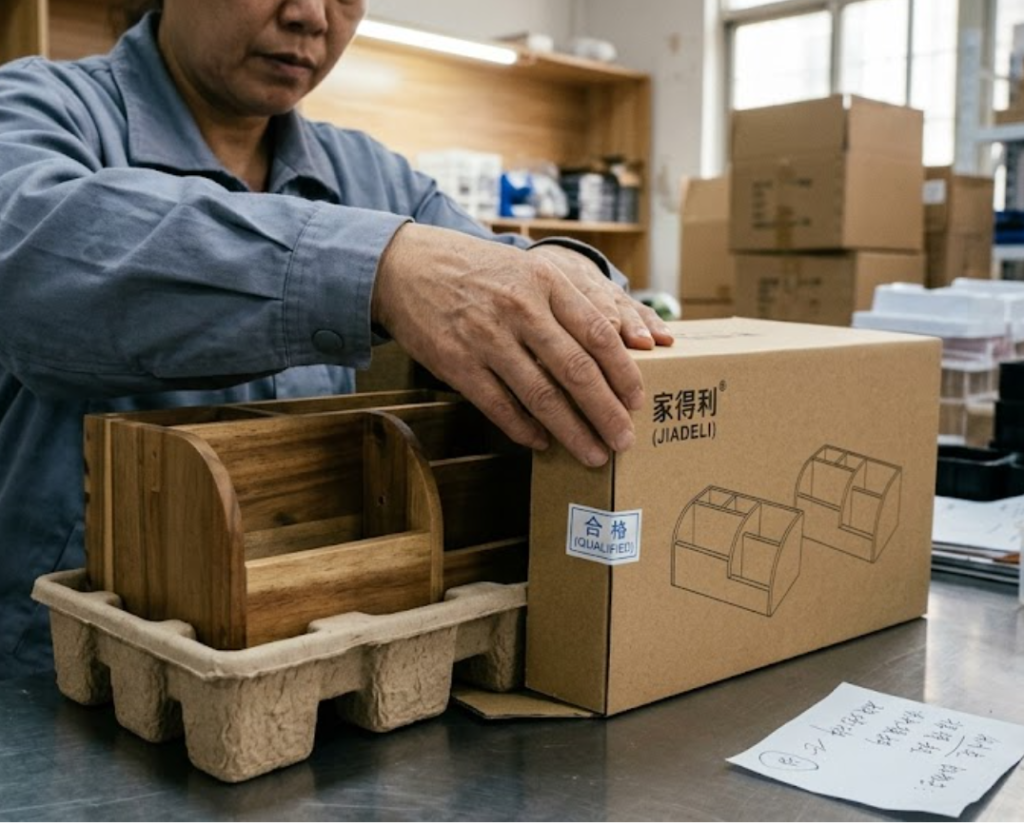
- Internal inserts: Cardboard dividers, foam, molded pulp or fabric-covered inserts to hold the product and protect against impact.
The objective is to balance brand appeal, product protection and cost per unit in line with your FBA fee structure and target contribution margin.
Export Packaging and Carton Drop-test Thinking
Professional Amazon sellers push their factories to think beyond the product and color box. Export packaging must withstand:
- Vertical drops: Simulating falls during loading/unloading or warehouse stacking.
- Edge and corner impacts: Where the carton is most vulnerable.
- Compression: Stacking in containers and Amazon warehouses for prolonged periods.
Working with a factory that is comfortable discussing carton drop-test scenarios, internal padding and stacking limits will reduce damage rates and unexpected costs. It also supports smoother relationships with FBA and fewer “unsellable damaged” units.
Balancing Packaging Cost with Amazon Fees
Heavier or oversized packaging can increase FBA fulfillment fees. A factory familiar with Amazon’s environment will help you:
- Optimize dimensions: Keep the product and packaging within a favorable fee tier without compromising protection.
- Manage weight: Use lightweight inserts and efficient structural design to avoid unnecessary grams.
- Test prototypes: Sample runs allow you to check actual weight and dimensions before locking in artwork and mass production.
Chic Homeware routinely combines structural wood adjustments (wall thickness, compartment layout) with packaging design tweaks to keep products within your required fee bracket while maintaining a premium unboxing experience.
Step 5: Work Through an OEM/ODM Workflow That Matches Amazon Timelines
Amazon launches are schedule driven. A commercially practical OEM/ODM workflow helps keep projects on track from first inquiry to repeat orders.
Initial Inquiry and Concept Discussion
When you approach a Custom Wooden Products Manufacturer like Chic Homeware, prepare the following:
- Target product type (box, tray, organizer, kitchen storage, gift pack).
- Approximate dimensions and usage scenario.
- Preferred materials (acacia, pine, paulownia, bamboo, walnut, MDF veneer, plywood veneer).
- Expected order quantity and target price range.
- Desired packaging level (plain mailer, branded color box, premium gift box).
On this basis, the factory can respond with material suggestions, cost indications and possible mixed-material options to balance budget and appearance.
Sampling and Functional Testing
The sampling stage is where Amazon sellers validate both product and packaging:
- Product sample: Check appearance, finish, smell, weight, and any mechanical features (hinges, magnets, drawers).
- Logo sample: Confirm logo size, position and color on product and packaging.
- Packaging sample: Confirm packaging structure, insert fit and carton dimensions; simulate handling similar to FBA conditions.
During this stage, MOQs and price structures are fine-tuned based on actual material consumption and packaging choices.
MOQ, Lead Time and Price Structure
For Amazon sellers and importers, MOQ and lead time must match inventory planning. A factory-oriented supplier will:
- Offer realistic MOQ options and explain how mixed material or shared components can help lower starting quantities.
- Clarify standard lead times from deposit to shipment for both repeat orders and first orders with new tooling or packaging.
- Break down price structure (product + packaging + logo + inner inserts) so you can model landed cost and FBA economics.
Amazon sellers should share their launch schedule and safety stock strategy so production and shipping can be aligned with expected sales velocity.
Project-based Compliance and Documentation
Different regions have different requirements for wood products and packaging. Buyers in the EU and US often need:
- Information related to wood sourcing and discussions around FSC-oriented procurement.
- Details on coatings and adhesives used on wood and packaging for potential internal compliance checks.
- Support in preparing basic technical files for internal records, if required by their organization.
An experienced factory partner will communicate openly about these points at project level, helping you avoid last-minute issues at customs or within your own quality system.
Step 6: Maintain Consistency Across Repeat Amazon Orders
Once a wooden homeware SKU with custom packaging performs well on Amazon, the priority shifts to keeping quality and appearance stable across repeat orders and potential product line extensions.
Batch-to-batch Color and Finish Control
To maintain listing consistency, the factory should:
- Retain master color and finish samples for each SKU.
- Record stain formulas and process parameters for future runs.
- Apply incoming inspection on key raw materials such as veneer and bamboo boards to avoid abrupt color shifts.
This allows Amazon sellers to restock without updating product photos or dealing with customer confusion when old and new batches overlap in inventory.
Stable Packaging Specifications
Packaging must also remain consistent unless you intentionally rebrand or resize. Work with your factory to:
- Lock in packaging drawings for color box, inserts and master cartons.
- Maintain printer color profiles for graphics and brand colors.
- Document Amazon label placement and carton mark formats for each SKU.
For series products (for example, multiple sizes of a wooden organizer family), unified packaging design helps anchor the brand and simplify customer decision-making.
Continuous Improvement Based on Reviews and Returns
Amazon reviews and return notes are valuable feedback for factory improvement. Common action points include:
- Reinforcing corners or increasing insert thickness if breakage is reported.
- Smoothing specific edges where customers note roughness.
- Adjusting magnet strength or hinge resistance for better user experience.
The most efficient Amazon sellers funnel this feedback back to their OEM/ODM partner to refine future batches and improve new product development.
Example Sourcing Scenarios for Amazon Sellers
The following scenarios illustrate how different Amazon strategies translate into specific material and packaging decisions.
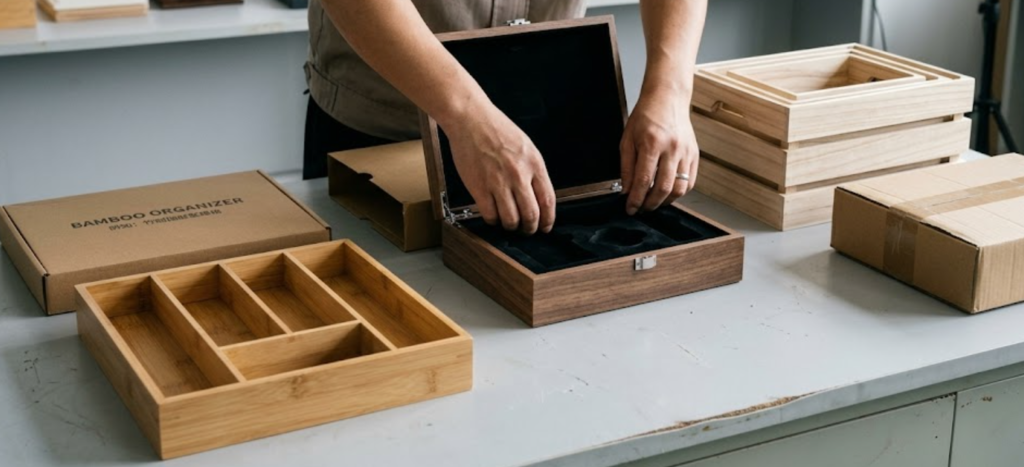
Scenario 1: Mid-range Bamboo Drawer Organizer with Branded Color Box
Target customer: Kitchen organization shoppers seeking eco-friendly products.
- Material: Bamboo boards with clear lacquer finish.
- Customization: Size tailored to common drawer widths, adjustable dividers, laser engraved logo inside one compartment.
- Packaging: Printed color box with photo and usage icons, cardboard insert to prevent movement, master carton designed for FBA weight limits.
- Buyer focus: Stable bamboo color, precise dimension control, moisture and finish that resist kitchen humidity, packaging that supports “eco” positioning.
Scenario 2: Premium Walnut-look Gift Box for Watches with Magnetic Closure
Target customer: Gift buyers wanting a premium box with an independent brand.
- Material: MDF or plywood structure with walnut veneer, soft-touch fabric insert with cushions.
- Customization: Magnet closure, metal hinge, logo printed under lid and on external color sleeve.
- Packaging: High-end printed gift box, foam or EVA insert, outer mailer for e-commerce shipping.
- Buyer focus: Veneer matching across panels, magnet strength, hinge fitting, color stability between batches, packaging that looks giftable yet survives FBA handling.
Scenario 3: Lightweight Paulownia Storage Set with Simple Mailer Carton
Target customer: Cost-sensitive home storage buyers, high-volume FBA model.
- Material: Paulownia for light weight; simple natural or light stain finish.
- Customization: Three-piece nested set, basic logo on bottom or small side area.
- Packaging: Plain mailer carton with single-color print, protective corners, optimized for volumetric shipping.
- Buyer focus: Low total landed cost, controlled warping risk, simple yet reliable packaging, manageable MOQs for seasonal or promotional sales.
Working with a Factory-oriented Partner for Amazon Projects
Amazon-focused buyers gain efficiency by working directly with a Wooden Products Factory in China that understands OEM/ODM requirements, export packing, and the practical realities of FBA and global distribution.
Chic Homeware supports importers, wholesalers, distributors and Amazon sellers across:
- Material selection and mixed-material design: From acacia and bamboo to paulownia, pine, walnut, MDF veneer and plywood veneer.
- Structural and functional optimization: Compartment layout, hinges, magnets, handles and inserts that match your usage scenario.
- Brand and packaging integration: Logo development, color box, mailer carton and carton mark planning with export packaging in mind.
- Sampling and MOQ discussion: Practical paths from first sample to scalable repeat orders.
- Project-based communication: Moisture control, surface finishing specifications, FSC-oriented sourcing discussions and compliance-related exchanges.
Conclusion: Turning Wooden Homeware and Custom Packaging into a Scalable Amazon Asset
Sourcing wooden homeware with custom packaging for Amazon is not just about finding a product that looks good in photos. It requires coordinated decisions on material, structure, finish, logo, insert, color box and export packaging – all aligned with your margin targets and review expectations.
By partnering with a capable OEM/ODM factory like Chic Homeware, Amazon sellers and importers can convert product ideas into reliable SKUs that scale: stable quality, consistent branding, controlled damage rates and packaging ready for FBA or global distribution.
If you are planning your next wooden box, tray, organizer or gift packaging project, you can explore more customized options for boxes and sets via Custom Wooden Boxes, and discuss your Amazon-specific requirements, packaging concepts and timelines directly with the Chic Homeware team.