
Wooden Gift Box Manufacturing Guide for Wholesale Buyers
For importers, distributors, and private label brands, a wooden gift box is not just packaging – it is part of the product value and the unboxing experience. A well-designed box must balance aesthetics, durability, cost, and compliance. This guide explains how Chic Homeware approaches wooden gift box manufacturing from a factory perspective so you can specify the right structure, finish, and packaging for your wholesale projects.
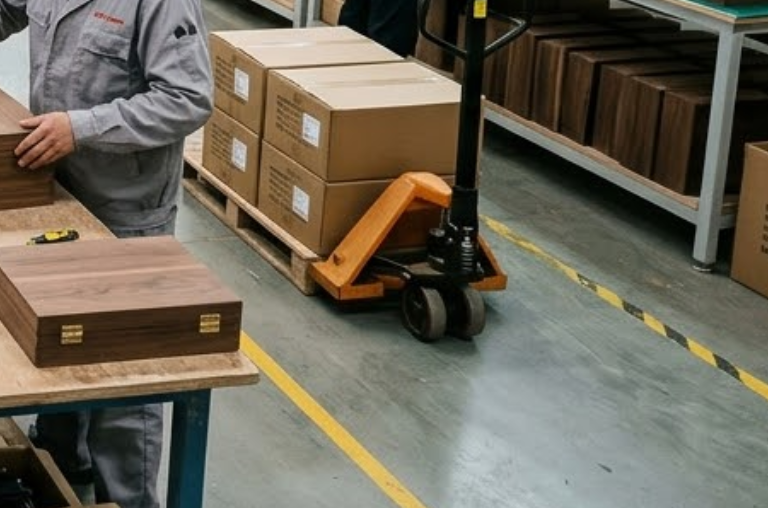
As an OEM/ODM partner, Chic Homeware supports flexible wood species, moisture-controlled production, consistent finishing, logo customization, and export packaging that aligns with the expectations of EU and US buyers. The goal is simple: wooden boxes that arrive safely, look consistent across orders, and support your brand positioning on every shipment.
1. Matching Wood Species to Your Gift Box Project
The starting point for any wooden gift box is the material. Each species has different weight, hardness, grain pattern, and cost, which influences the final result. For B2B buyers, choosing the wrong material often leads to avoidable issues: warping, cracking, overweight cartons, or a finish that does not match the brand mood.
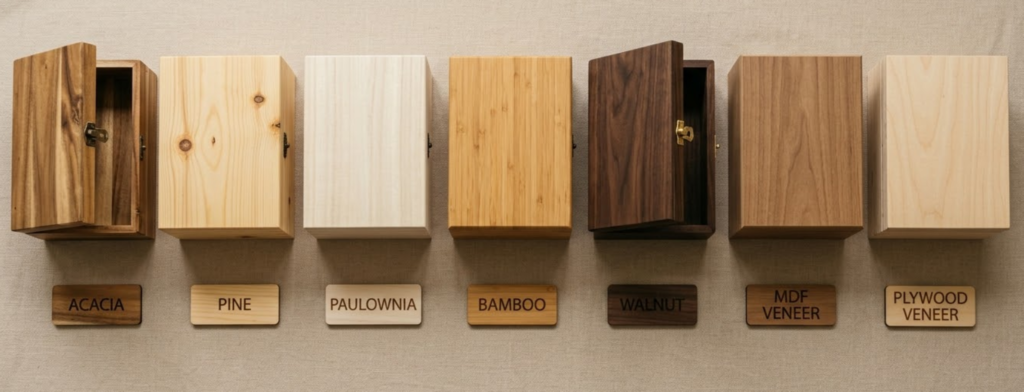
1.1 Common Wood Options for Wooden Gift Boxes
| Material | Key Characteristics | Typical Use Cases |
|---|---|---|
| Acacia | Hard, dense, rich grain, mid-to-dark natural color | Premium gift boxes for spirits, gourmet food, and high-end accessories |
| Pine | Soft, light color, cost-effective, visible knots if requested | General gift sets, promotion boxes, seasonal packaging |
| Paulownia | Very light weight, soft, pale color; good for larger volume boxes | Large hamper boxes, nesting sets, where shipping weight is sensitive |
| Bamboo | Engineered panels, stable, contemporary look, sustainable perception | Modern gift boxes, eco-positioned brands, kitchen-related gift sets |
| Walnut | Dark, elegant, premium grain and color, higher cost | Luxury gift packaging for watches, jewelry, spirits, or corporate gifting |
| MDF Veneer | Stable core, smooth surface, veneer for real wood look | Painted or veneered boxes with high consistency and flat surfaces |
| Plywood Veneer | Layered core, strong and stable, veneered for appearance | Larger gift boxes or lids where warp resistance is a priority |
During project discussion, it is useful to clarify whether natural grain, paint coverage, sustainability positioning, or weight is the primary driver. For example, an Amazon seller launching a mid-range grooming kit may prefer pine or MDF veneer, while a corporate gifting client may specify walnut or acacia for a more premium feel.
1.2 Moisture Control and Dimensional Stability
Regardless of species, moisture control is critical. Inconsistent wood moisture leads to cracking, joint gaps, and warped lids, especially after long sea freight or when goods move between humid and dry climates.
- Incoming material control: Wood is checked and stored to stabilize moisture content before cutting.
- Balanced structure design: For larger panels, MDF or plywood cores with veneer are often recommended to achieve a flatter, more stable lid.
- Production environment: Controlled storage and proper spacing during drying and finishing helps minimize deformation.
When you brief a wooden gift box project, share your destination markets. Boxes going to both coastal and inland regions, or being sold online and stored in different warehouses, may require more conservative material choices and structure design.
2. Structural Design: Lids, Compartments and Hardware
The structure of a wooden gift box decides how it performs in daily use and during transportation. B2B buyers often focus on appearance first, but structural decisions influence cost, export packaging, and damage rate.
2.1 Common Lid and Opening Structures
- Hinged lid with metal hinges: Classic presentation for gift boxes. Offers a premium feel and easy opening. Requires accurate hinge positioning, pre-drilling, and proper screw length to avoid cracking.
- Hinged lid with concealed or piano hinge: Clean exterior look and more load support on longer lids. Suitable for medium to higher-end products.
- Sliding lid: Uses grooves in the side panels and a thin top panel that slides out. Cost-effective, good for lighter contents and simple gift sets.
- Lift-off lid (shoe box style): Simple structure with separate base and lid. Efficient for nesting sets and bulk packaging, but needs accurate tolerances for smooth fit.
- Clamshell or book-style box: Often MDF or plywood with veneer, used when you need straight edges for printing or wrapping.
Each lid choice affects carton size, stacking strength, and assembly time. For example, a sliding lid box may reduce hardware cost and assembly labor, but might not be ideal for very heavy or fragile products.
2.2 Magnets, Latches and Other Closure Options
Closure systems must match both the brand image and the practical reality of shipping and usage:
- Embedded magnets: Offer a clean, modern look. Require precise drilling and gluing, and attention to polarity. Ideal for premium gift sets, but magnet strength and placement must be tested to avoid accidental opening during transit.
- Metal latch or hasp: More visible hardware, can give a vintage or rustic feel. Adds cost and assembly time but provides a secure closure.
- Leather or fabric straps: Mixed-material approach that can support a lifestyle brand image. Works well on lighter boxes where full hardware is unnecessary.
- Simple elastic or ribbon tie: Often used together with a lift-off lid. Good for decorative sets where tamper resistance is not critical.
During development, Chic Homeware runs opening and closing checks and simple drop trials to confirm that magnets and latches stay functional after handling.
2.3 Internal Compartments and Inserts
Internal structure is often where a project succeeds or fails. The same outer box can serve multiple product sets if the internal configuration is well planned.
- Fixed wooden dividers: Durable and aligned with the main material. Best when the product sizes are standard and unchanging.
- Removable wooden or MDF trays: Adds flexibility. For multi-SKU programs, the same base box can accept different trays for various product combinations.
- Foam inserts: Cut to shape to hold bottles, glassware, or electronics securely. Requires precise measurements and coordination between foam and wooden box dimensions.
- Cardboard or pulp inserts: More cost-effective and lightweight, suitable for medium-protection requirements.
- Fabric lining: Velvet, linen or cotton adds a premium touch but needs careful gluing and trimming to avoid wrinkles.
Providing early information about your products’ exact dimensions, weight, and fragility allows our engineering team to suggest insert structures that balance cost and protection.
3. Surface Finishes: From Rustic to Premium
The finish of a wooden gift box signals brand positioning immediately. The same pine box can look rustic, modern, or luxury depending on the sanding level, stain color, and coating system.
3.1 Sanding and Surface Preparation
Sanding consistency is one of the most visible indicators of manufacturing quality. Inconsistent sanding can lead to stain patchiness, rough edges, and poor logo definition.
- Grit sequence: Boxes are sanded using multiple grits, typically progressing from coarser to finer, to achieve a smooth yet tactile surface.
- Edge rounding: Slightly rounded edges help coatings adhere better and reduce chipping during transit.
- Filler and repair: Knot holes or small defects are selectively filled based on the agreed quality level and style (e.g., rustic vs. clean).
For painted MDF or veneered boxes, flatness and edge sharpness are especially important because any inconsistency becomes very visible under solid color coatings.
3.2 Stain, Paint and Clear Coating Choices
Different brands require different visual outcomes, and finish decisions have an impact on both cost and lead time.
- Natural clear coat: Transparent coating that showcases the wood grain. Popular for acacia, walnut, and bamboo boxes where the material itself is a key selling point.
- Light to dark stain: Adjusts color while still allowing grain visibility. Useful for aligning pine or paulownia boxes with a more premium look.
- Solid paint (matte or gloss): Ideal for MDF veneer or plywood veneer, giving a uniform color and modern appearance. Solid paint can also help with brand color consistency across multiple SKUs.
- Oil or wax finishes: Provide a more natural look and feel, sometimes used for eco-positioned lines. Requires discussion around maintenance and resistance to handling marks.
In each case, Chic Homeware uses controlled spray or brush processes and curing times to achieve uniform coverage. Color confirmation is typically done via physical finish samples based on your Pantone or reference product, to avoid misunderstandings during mass production.
3.3 Consistency Across Repeat Orders
Repeat-order consistency is a major concern for importers and Amazon sellers. Color deviation between earlier and later batches can cause listing problems and returns. To reduce this risk:
- Approved master samples are stored physically and referenced before each mass run.
- Batch-to-batch color checks are conducted during finishing.
- Any necessary adjustments to stain concentration or spray parameters are made early in production, not after final assembly.
Clear documentation of your accepted color tolerance (for example, slightly lighter/darker range) helps align expectations and avoid disputes.
4. Logo Application and Branding Options
For B2B buyers, logo application is not just decoration – it is central to private label and OEM strategy. A wooden gift box is often reused by the end customer, making it a long-term brand touchpoint.
4.1 Common Logo Processes for Wooden Gift Boxes
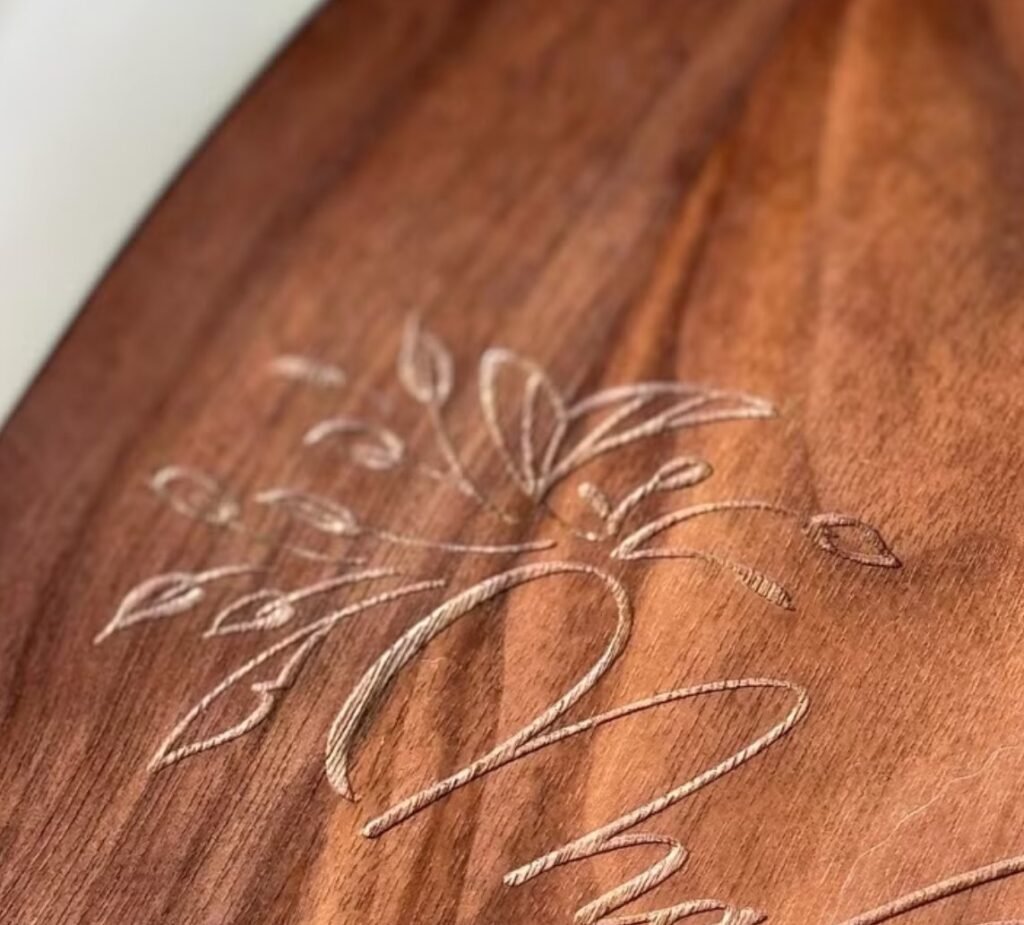
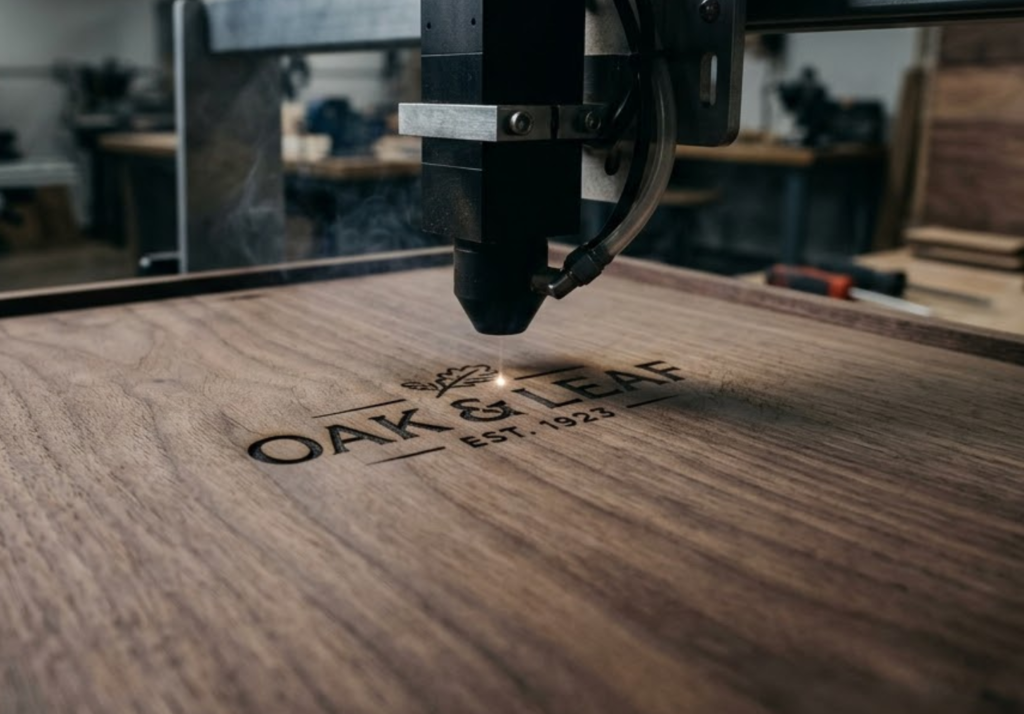
- Laser engraving: Precise, permanent, and well-suited to natural or stained finishes. Works best on flatter surfaces and medium to dark tones where contrast is visible.
- Silk-screen printing: Good for solid colors and simple logos. Efficient for larger order quantities with fewer color changes.
- UV printing: Allows full-color artwork and gradients on flat surfaces. Works best on painted MDF or very smooth veneer.
- Metal or acrylic badges: A small plate or emblem fixed with adhesive or pins. Suitable when you want a removable or upgradable branding element.
- Foil stamping (on paper-wrapped or PU-wrapped boxes): For wooden core boxes with wrapped surfaces, metallic foil stamping can deliver a luxury effect.
When selecting a logo process, consider your brand’s standard files (vector vs. raster), the number of colors, and whether the logo should be subtle (engraving) or high-contrast (printing).
4.2 Logo Positioning and Production Control
Precise positioning and repeatable results are critical. Misaligned logos are highly visible on a flat box lid and can lead to large portions of the shipment being rejected.
- Position jigs and fixtures are built to ensure consistent logo placement.
- Pre-production samples are used to confirm logo size, location, and color density.
- For multi-color prints, registration checks and curing times are carefully controlled.
If your project involves multiple SKUs with different logos in the same shipment, early confirmation of artwork and color codes is essential to keep the production schedule on track.
5. Export Packaging: From Single Box to Container
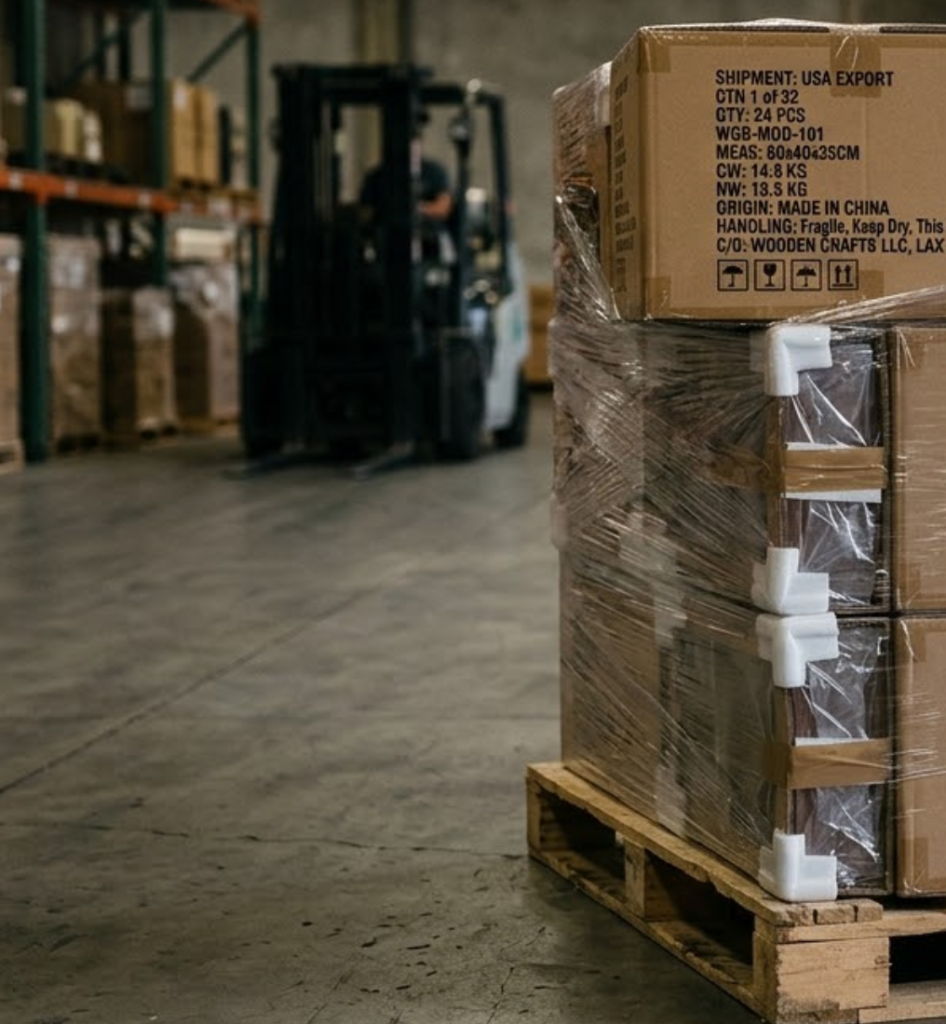
A wooden gift box must survive not only the end user’s handling but also factory loading, sea freight, customs handling, and local courier delivery. Export packaging and protective measures are therefore central to the manufacturing plan, not an afterthought.
5.1 Individual Packaging Options
- Bulk packed (no individual box): Lowest cost, suitable for B2B projects where the buyer repacks locally. Requires careful inter-layer protection and strong master cartons.
- Simple polybag or tissue wrap: Protects the surface from dust and minor abrasion. Often used when the wooden box itself is the outer packaging.
- Printed color box: Cardboard box with product images and branding. Adds shelf impact for retail distribution, but increases packaging material and design time.
- Mailer carton: Corrugated box sized for direct shipping, common for ecommerce or drop-shipping models.
During quotation, confirm whether you need color boxes or mailer cartons, and whether the wooden gift box is purely secondary packaging or part of the final retail presentation.
5.2 Master Carton Design and Damage Control
Master carton design is a key factor in damage rate and freight cost. Chic Homeware works with buyers to align inner pack structure with real-world transport conditions.
- Carton strength and size: Specified based on box weight, stacking height, and container planning. Oversized cartons with under-filled interiors are more likely to collapse.
- Inter-layer protection: Cardboard partitions, corner protection, or EPE sheets can be added for fragile contents or premium finishes.
- Drop-test thinking: Cartons are evaluated for likely weak points such as corners, edges, and top/bottom. Simple internal trials help identify where extra padding is required.
- Carton markings: Customized marks, barcodes, and directional labels are applied according to your warehouse or FBA requirements.
Sharing your internal damage rate targets or FBA defect expectations helps us design more appropriate packaging. A small incremental cost at the factory level can often reduce downstream claims and returns.
6. OEM/ODM Workflow with Chic Homeware
For sourcing managers, the most valuable supplier relationships are those that turn concepts into repeatable, scalable products. Chic Homeware operates as a Custom Wooden Products Manufacturer with a structured OEM/ODM workflow tailored to wooden gift boxes and related packaging.
6.1 From Concept to Samples
- Initial briefing: You share intended product type, target retail price range, brand positioning, quantity expectations, and markets.
- Material and structure proposal: We suggest wood species, lid style, hardware, and internal inserts based on your requirements and cost band.
- Drawing and specification: Basic drawings with dimensions, compartment layout, and key tolerances are confirmed.
- Sample development: One or more physical samples are produced, including logo placement and finish, for approval.
At this stage, adjustments are often made for cost optimization, packing efficiency, or aesthetic refinements.
6.2 MOQ, Lead Time and Price Structure
MOQ and lead time depend on material choice, finish complexity, and packaging requirements.
- MOQs: Some items can be produced at relatively modest MOQs when using standard materials and finishes, while custom hardware, special veneers, or complex inserts may require higher MOQs.
- Lead time: Standard lead times are influenced by sample approval date, confirmations of artwork, and seasonal production peaks. Aligning your order plan with factory capacity helps keep timings realistic.
- Price breakdown: Pricing typically reflects material cost, processing and assembly, hardware and inserts, finishing steps, logo application, and packaging. Clear communication about where you can compromise (e.g., insert material vs. finish complexity) often creates better cost-performance balance.
Forecasts or framework agreements help secure smoother scheduling and more stable pricing over multiple orders.
6.3 Compliance and Sourcing Discussions
For EU and US buyers, discussions often include sourcing and compliance considerations.
- FSC-oriented sourcing: Where required, we discuss FSC-related supply options and documentation, aligned with your company’s sourcing policies.
- Chemical and coating considerations: Coating systems are selected with relevant market regulations in mind, and project-based communication is used to address specific directives or retailer standards.
- Documentation and traceability: Packing lists, material specifications, and photos can be provided as part of your internal compliance files.
Clear compliance checkpoints at the beginning of a project reduce delays later, particularly when you work with multiple retail or distribution channels.
7. Practical Comparisons for Different Buyer Profiles
Different B2B buyers prioritize different factors. Understanding your own focus helps guide the specification process.
7.1 Importers and Distributors
Importers and distributors typically focus on stable quality, reasonable MOQs, and flexibility across multiple end customers.
- Prefer structures that can be slightly modified (e.g., internal divider changes) without redesigning the entire box.
- Often choose pine, paulownia, or MDF veneer for a balanced cost and appearance.
- Value simple, robust packaging that performs well across varied transport routes.
7.2 Amazon Sellers and Ecommerce Brands
Online sellers are sensitive to reviews, unboxing experience, and carton performance in courier networks.
- Frequently request integrated mailer cartons or reinforced color boxes.
- Emphasize logo visibility, finish consistency, and scratch resistance.
- Need exact carton dimensions and weights for FBA or 3PL setup.
Choosing a design that is easy to photograph and aligns with lifestyle imagery also supports listing performance.
7.3 Private Label and Corporate Gifting Programs
Private label and corporate gifting projects often require higher-end finishes, mixed materials, and precise brand alignment.
- More likely to use acacia, walnut, or high-quality veneer with clear or stained finishes.
- May require multiple logo applications (outer lid, inner lid, and inserts) and coordinated color schemes.
- Often prioritize low damage rates and consistent presentation for event or client deliveries.
Early sample review and pilot orders are valuable tools before scaling to large corporate campaigns.
8. Why Work with a Factory-Oriented Partner
Working directly with a factory-oriented supplier helps you manage cost, technical detail, and long-term program stability. Chic Homeware operates as a Wooden Products Factory in China, focusing on wood species selection, moisture control, surface finishing, structural stability, and protective packaging for export.
Beyond gift boxes, the same engineering and production capabilities apply to organizers, trays, kitchen storage, and other coordinated wooden items, allowing you to develop complete ranges with consistent quality and branding.
Conclusion: Turn Your Wooden Gift Box Concept into a Repeatable Program
A successful wooden gift box project is built on the right material, a well-planned structure, a finish that matches your brand, reliable logo application, and carefully designed export packaging. When these elements are aligned with your MOQ, lead time, and price targets, the result is a product that performs well in the market and can be repeated across seasons and collections.
Chic Homeware supports OEM/ODM wooden gift box projects with practical, factory-based guidance at each step of development, from sampling and logo customization to export packing and repeat-order control. To discuss your next wooden gift box or coordinated packaging range, visit our Custom Wooden Boxes page and share your brief. Our team can help you select the right structure, finish, and packaging options for your wholesale business.