
Wooden desktop organizer trends 2026
Desktop organizers have evolved from simple pen holders into multi-functional work hubs that must meet branding, logistics and durability demands across different markets. For 2026, B2B buyers are not just asking for a wooden organizer that looks good in photos; they are asking how it ships, how it performs under daily use, how stable the finishing is across repeat orders, and how flexible the OEM/ODM workflow can be.
As an OEM/ODM-focused partner, Chic Homeware sees desktop organizer trends directly from the sampling table, moisture meters and packing lines. This article summarizes where demand is moving, what specifications are becoming standard, and how sourcing managers can structure new desktop organizer projects to protect margin and reduce claims.
Why Wooden Desktop Organizers Stay Relevant in 2026
In 2026, desktop organizers remain a core SKU for office categories, home office assortments and gifting programs. Wood stands out because it can bridge between premium and mass-market positioning with relatively small changes in material, finishing and packaging.
Key reasons B2B buyers still choose wood over plastic or metal
- Brand positioning: Wood supports both “eco-conscious” and “premium lifestyle” narratives depending on species and finish.
- Photo and content friendliness: Wooden grain reads well in e‑commerce photography and video, helping conversion.
- Flexible price banding: From pine and paulownia to walnut veneer, price levels can be engineered without changing the basic structure.
- Customization depth: Compartments, drawers, pen slots, charging docks and logos can be integrated without heavy tooling investment.
For importers and distributors, this flexibility makes wooden desktop organizers a reliable base item for private label lines, corporate gifting and seasonal programs.
2026 Design Trends in Wooden Desktop Organizers
Buyers are using desktop organizers as a compact but visible way to communicate brand identity and category focus. Several clear design directions are shaping RFQs in 2026.
1. Hybrid organizers for laptop and device-first desks
As more customers work from smaller desks and multi-use spaces, organizers that integrate tech storage are gaining share. In OEM discussions, this translates into:
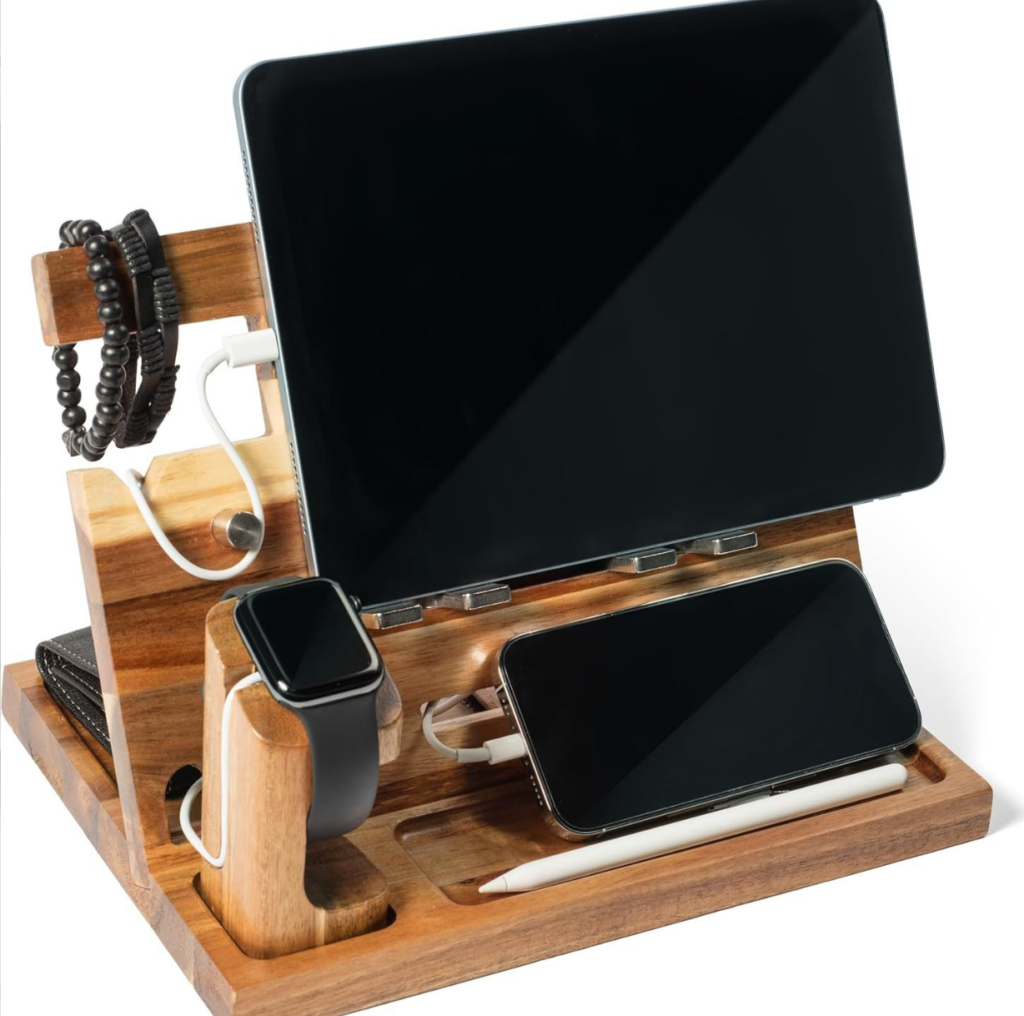
- Device grooves and docks: Slotted channels to hold phones or tablets at a viewing angle, often in bamboo or acacia for stability.
- Cable pass-throughs: Routed holes or notches at the back of organizers to keep charging cables controlled.
- Removable dividers: For buyers serving both traditional stationery users and tech-heavy users with one core SKU.
2. Compact vertical footprints
For 2026 assortments, many sourcing managers are minimizing desktop footprint while maintaining storage volume. Practically, that means:
- Tiered shelves instead of large flat trays.
- Stacked drawers with MDF or plywood veneer carcases and lightweight paulownia fronts to control overall weight.
- Clip-on or modular add-ons that allow upsell bundles without forcing a new master design.
3. Soft minimalism and warm finishes
Demand is shifting from high-gloss lacquer and heavy color blocking toward softer, more natural finishes that travel better in export cartons and suit mixed home-office aesthetics.
- Light stains on pine and paulownia with a protective clear coat.
- Matte finishes vs. high gloss to reduce visible scratching and fingerprint complaints.
- Natural bamboo with light edge radius for a smooth, touch-friendly feel.
4. Hidden storage and cable control
Organizers that look simple from the front but hide small clutter are gaining traction, especially in gifting and corporate orders. This trend often requires attention to structure and hardware:
- Hidden magnets for lids or small compartments.
- Rear cable channels that can be machined into MDF or plywood panels.
- Low-friction drawers with accurate sizing and consistent sanding to prevent jamming across batches.
5. Eco-conscious narratives without overclaiming
While not every project requires full certification, more buyers expect a conversation around sourcing, finishing and packaging impact. In 2026, this typically shows up as:
- FSC-oriented sourcing discussions where needed for specific markets or key accounts.
- Bamboo or fast-growing species as a visible sustainability signal.
- Reduced plastic in inner packs, replaced by paper wraps, corner protectors and cardboard honeycomb where feasible.
Material Choices for 2026 Desktop Organizers: Practical Comparisons
Material selection is still the fastest way to hit a target price and positioning without redesigning the entire product. Below is a functional comparison based on typical OEM/ODM projects for wooden desktop organizers.
| Material | Positioning & Use | Strengths | Points to Watch |
|---|---|---|---|
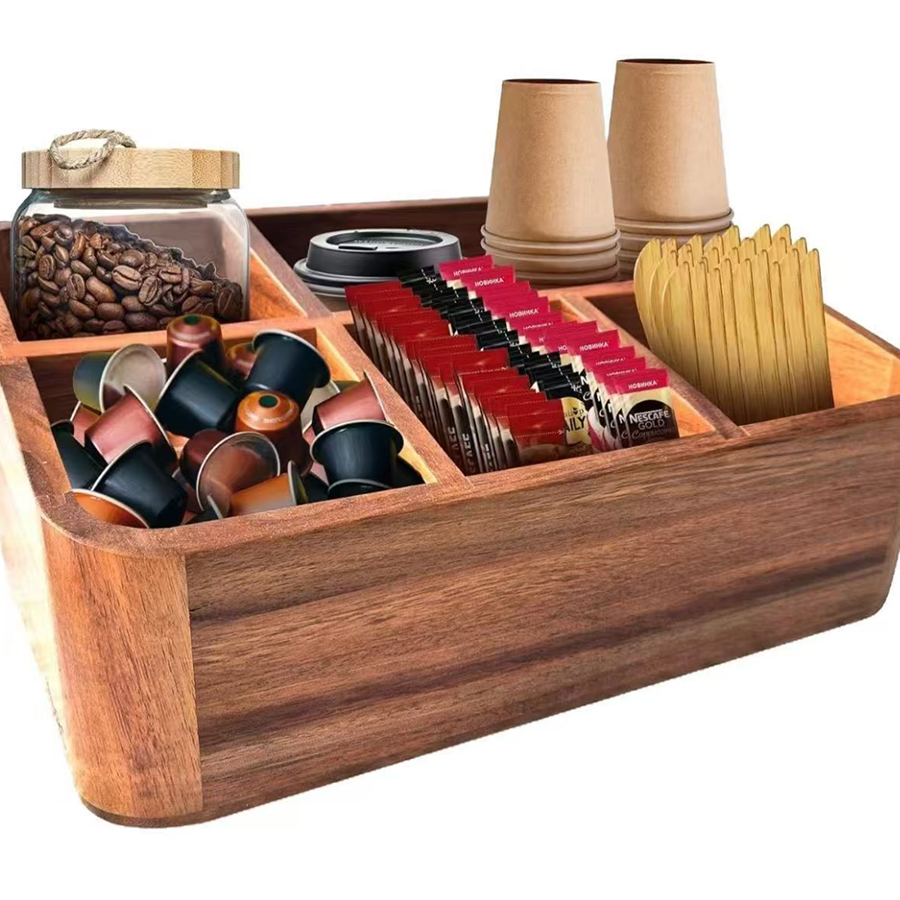
| Acacia | Mid-to-premium, gifting, lifestyle brands | Rich grain, strong, good for visible panels and trays | Needs careful moisture control; color variance must be managed in grading |
| Pine | Entry to mid-level, mass retail and e‑commerce | Cost-effective, lightweight, easy to stain | Softer surface; requires steady sanding and protective coating |
| Paulownia | Gifting, lightweight organizers, larger formats | Very light, good for bigger organizers and mailer-friendly SKUs | Softer; needs structural reinforcement; easy to dent if finishing is too thin |
| Bamboo | Eco-positioned, contemporary designs | Hard and stable, strong sustainability perception | Edges must be processed carefully; cut quality shows in final look |
| Walnut / Walnut veneer | Premium and executive lines | Dark, elegant appearance, strong for corporate gifting | Cost-sensitive; veneer layup must be controlled to prevent bubbling |
| MDF veneer | Consistent, color-focused designs | Flat and stable surfaces, good for painted or uniform finishes | Requires good edge sealing; moisture control and packing are important |
| Plywood veneer | Structural parts, mid-range organizers | Good strength-to-weight ratio; less warping when designed correctly | Edge aesthetics; veneer alignment must be managed for visible sides |
Many 2026 desktop organizer projects use mixed material strategies. For example, a design may combine a bamboo front panel with MDF internal dividers and a plywood back to balance cost, strength and appearance. Discussing these combinations at RFQ stage can prevent surprises when you move to volume orders.
Production Checkpoints That Protect Your Desktop Organizer Project
Trends only convert to healthy, repeatable business when the production process is controlled. For B2B buyers, the main risk areas are not design; they are moisture, finishing, fittings and packaging. Chic Homeware approaches wooden desktop organizers with a factory-first checklist that B2B buyers should actively question and align with.
Moisture control and warping prevention
Desktop organizers sit on flat surfaces; any warping is immediately visible to end users. For acacia, pine, paulownia and bamboo, moisture control influences the claim rate on every shipment.
- Use material with moisture content suitable for the destination climate and indoor usage.
- Allow enough conditioning time after machining and before painting or lacquering.
- Plan structural elements (like back panels and bases) to reduce movement, especially in wider pieces.
Consistent sanding and edge treatment
Organizers are handled daily. Poor sanding will show as rough edges, especially on pen slots, phone grooves and drawer openings.
- Define sanding smoothness expectations in your specification (e.g., focus on touch points such as handles, groove edges, and front frames).
- Confirm that rounded edges or radiuses are included in drawings where needed, especially with bamboo and plywood.
- Include sample approval for hand-feel, not just appearance.
Stain, paint and clear coat control
Color consistency is a common challenge in repeat orders. For 2026, more buyers are specifying detailed finishing requirements in their PO documents.
- Provide color references (physical swatches or approved master samples) for stains and paints.
- Confirm whether the design needs open-pore or closed-pore effects; this affects the number of coats and the feel.
- Align on gloss level (matte, semi-matte, satin) for surfaces that will be heavily touched.
Logo process and brand application
Desktop organizers are often used as branding surfaces in gift sets or corporate programs. Logo clarity and durability are important in 2026 product lines.
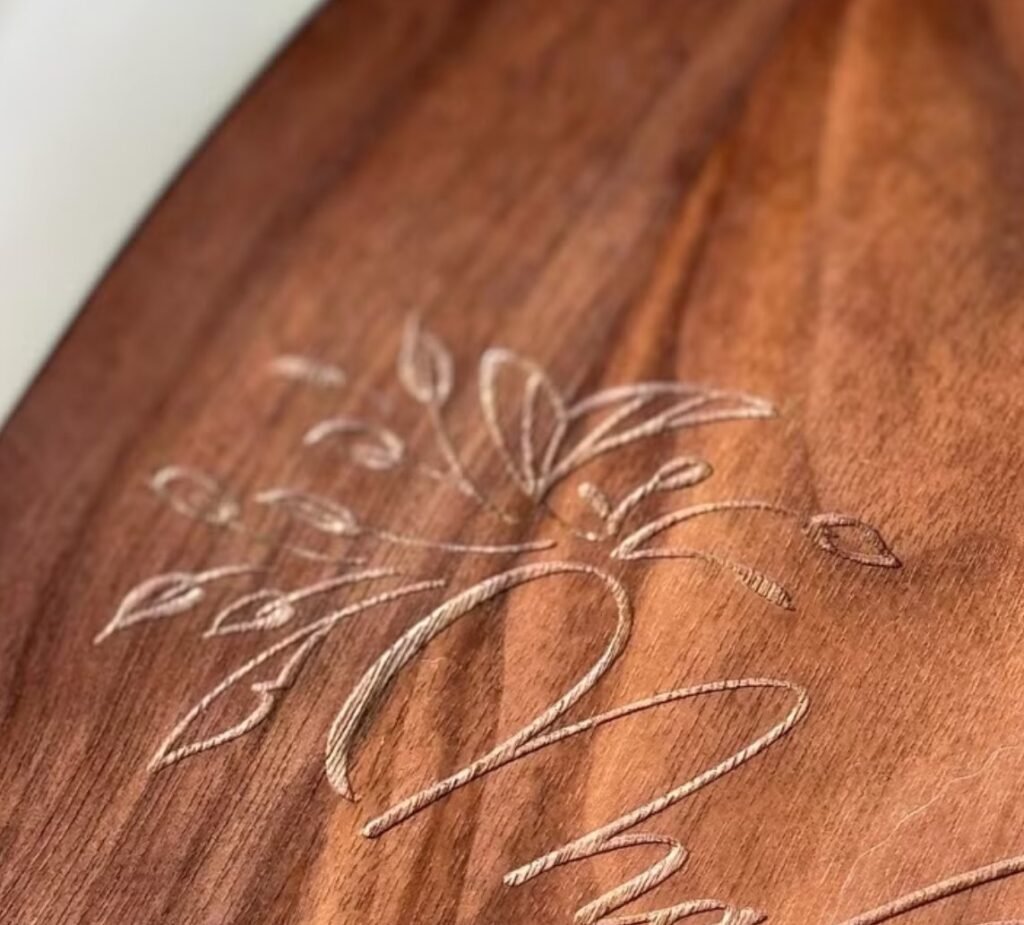
- Options: Laser engraving, screen printing, UV printing, metal plates and debossed leather tags.
- Decide early if logos must match across related SKUs (e.g., organizers, boxes and trays from the same program).
- Consider logo position vs. mailer and color-box artwork so the unboxing experience is consistent.
Hardware fitting and structural stability
Although many wooden desktop organizers are hardware-light, small details such as hinges, magnets and drawer pulls can generate complaints if not controlled.
- Specify hardware finish (e.g., black, nickel, brass) to match brand positioning.
- Define open/close resistance for drawers and lids; too tight feels low quality, too loose feels cheap.
- Test magnets inside the factory with your target contents (e.g., full drawers, stacked stationery) and current packaging.
Export packaging and damage control
Packaging design is directly connected to cost, damage rates and reviews. For desktop organizers, the main risks are corner crush, dented edges and surface scratching.
- Decide early between color box + export carton vs. mailer carton + master carton, depending on your channel (retail, distribution, e‑commerce).
- Use carton drop-test thinking at the design stage; protect corners and top surfaces with inserts or reinforced structures.
- Confirm that protective materials align with your brand’s plastic-use policy.
Key Customization Options B2B Buyers Are Using in 2026
Desktop organizers remain highly customizable without high tooling costs. For OEM and ODM projects, the crucial step is organizing decisions clearly at the start of the project.
Structure and size
- Overall dimensions: Width and depth decisions depend on whether the target user is a laptop user, desktop PC user or general home office customer.
- Tiering: Decide how many levels and whether your organizer should sit under a monitor, beside a monitor or float as a modular accessory.
- Stackability: If your market likes stacking units, test stability and alignment at sample stage.
Compartments, inserts and layout
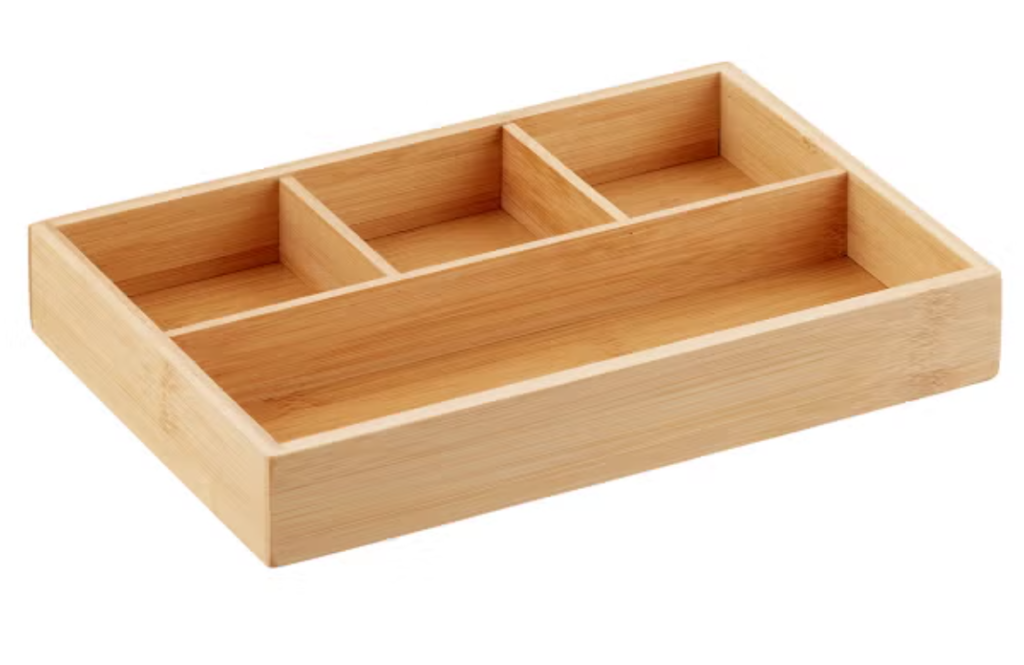
- Number and size of drawers, pen slots and card compartments.
- Removable or fixed dividers for maximum SKU flexibility.
- Specialized inserts for sticky notes, phone docks, or business cards.
Hinges, magnets and openings
- Top-opening lids vs. front drawers for users with limited vertical space.
- Soft-close or basic hinges depending on budget and positioning.
- Magnets hidden inside panels for a clean exterior appearance.
Logos, color boxes and mailer cartons
- Logo type: Engraving for natural designs; printing or plates for strong color branding.
- Color box: Often required for retail and gift programs; allows branding and usage instructions.
- Mailer carton: Essential for direct-to-consumer fulfillment; needs attention to size, material strength and carton mark layout.
By structuring these points in a clear specification sheet, B2B buyers help factories avoid assumptions that later create delays or extra charges.
How Buyer Concerns Shape Desktop Organizer Projects in 2026
Trends only matter when they fit within procurement realities. In 2026, sourcing managers are balancing design innovation with familiar constraints around MOQ, pricing and timing.
MOQ and assortment planning
For wooden desktop organizers, MOQ is driven by material, complexity and finishing process.
- Simple pine or paulownia designs with clear coat can support lower MOQs, especially if combined with other items in the same material line.
- Premium walnut veneer or multi-color painted designs often require higher MOQs per color to control production cost.
- Multifunction families (e.g., matching organizer, letter tray, and pen cup) can share materials and finishes to optimize total MOQ across SKUs.
Sampling and decision speed
Sampling is where most timing is lost or saved. A structured sample phase for desktop organizers generally includes:
- First structure sample to confirm layout, size and compartment design.
- Finishing sample to lock stain, paint, logo and coating levels.
- Pre-production sample reflecting full process flow, including packaging and carton marks.
Buyers who consolidate feedback into one or two clear rounds usually see smoother mass production and fewer disputes during inspection.
Lead time and capacity planning
Lead time for wooden desktop organizers is directly tied to complexity and finishing. Busy seasons for gift sets and back-to-school assortments can squeeze capacity.
- Align your timeline with known seasonal peaks and allow extra buffer for complex finishing or large sets.
- Discuss combined production of related SKUs (organizers, storage boxes, trays) to optimize schedules.
- Confirm how long your approved samples remain valid if orders are placed in multiple batches throughout the year.
Price structure and value engineering
In 2026, many buyers ask for at least two price tiers for the same design: a premium version and a more commercial version. This can be achieved by adjusting:
- Material (e.g., acacia front + MDF body vs. full acacia).
- Hardware (premium metal handles vs. cut-out finger pulls).
- Finishing (multi-step stained finish vs. single-color paint).
- Packaging (full color box vs. kraft mailer with sticker).
Value engineering should be considered early in the development process, not after the first PI is issued, to avoid significant redesign.
Damage control and repeat-order consistency
For importers and Amazon sellers, carton damage and inconsistent finishing can quickly impact ratings. Desktop organizers, with their flat surfaces and edges, need special attention.
- Define acceptable tolerances on color, grain variance and small dimensional differences.
- Confirm the exact packing method: single unit per inner, bubble or paper wrap, corner protectors, and master carton stacking plan.
- Request carton size and weight details before finalizing your logistics plan.
Maintaining one approved reference sample for each ongoing model helps control consistency across repeat orders in different seasons.
Integrating Desktop Organizers into Broader Wooden Product Programs
Many 2026 buyers are bundling desktop organizers with other wooden items to create cohesive assortments and gift sets. Working with one factory across multiple product types helps align materials, colors and branding.
For example, a sourcing manager might pair a desktop organizer with promotional storage boxes from a dedicated Custom Wooden Organizers line using the same stain and logo process. This approach simplifies photography, packaging artwork and inventory planning.
Chic Homeware operates as a Custom Wooden Products Manufacturer handling organizers, trays, boxes and other desktop accessories within the same workflow. That allows coordinated discussions on finishing, FSC-related sourcing questions and export packaging across an entire program, not just single SKUs.
Working with a Wooden Products Factory in China for 2026 Organizer Programs
Factory capabilities differ widely, even when product photos look similar online. When selecting a partner for 2026 desktop organizer projects, buyers should look beyond the catalog and focus on process, communication and export experience.
OEM/ODM workflow that supports real-world projects
An effective workflow for desktop organizers typically includes:
- Concept and requirement discussion, including target market, channels and price range.
- Material and structure suggestions (e.g., acacia vs. bamboo, MDF veneer vs. solid wood).
- Detailed drawings or reference samples for compartment layout and dimensions.
- Sample development, with clear feedback rounds and master sample confirmation.
- Packaging and carton design aligned with your distribution model.
Chic Homeware combines this workflow with experience in export packing, carton drop-test planning and project-based compliance communication for EU and US buyers.
Compliance and documentation expectations
Different markets and channels require different levels of documentation. Common topics for desktop organizer programs include:
- FSC-related discussions where requested by key accounts.
- Finishing and chemical compliance communication for specific regions.
- Packaging and labeling alignment with local regulations.
Clear early communication about required documentation helps keep development on schedule and avoids last-minute changes before shipment.
Practical Next Steps for B2B Buyers Planning 2026 Desktop Organizer Lines
For sourcing managers, the fastest way to move from idea to workable project is to structure information before sending RFQs. For wooden desktop organizers, prepare:
- Target retail price band and channel (e‑commerce, retail, wholesale, gifting, B2B corporate).
- Approximate dimensions and storage needs (drawers, phone slot, pen holder, document tray, etc.).
- Preferred materials (e.g., bamboo for eco lines, pine/paulownia for price-sensitive ranges, walnut veneer for premium).
- Required logo type and packaging style (color box or mailer, with or without inserts).
- Initial volume expectations and reorder potential for MOQ and pricing discussion.
Providing these basics allows a factory-oriented partner to respond with realistic material options, price ideas and lead time expectations instead of general answers.
Conclusion: Turning 2026 Desktop Organizer Trends into Reliable SKUs
Wooden desktop organizers in 2026 are more than cosmetic office accessories. They are compact, visible products that can anchor larger home-office and stationery assortments, communicate brand values and drive repeat business—if the design and production details are handled correctly.
By aligning materials, structure, finishing, logo processes and export packing with a capable Wooden Products Factory in China, B2B buyers can transform trends into durable, low-complaint SKUs. Chic Homeware supports OEM/ODM projects through sample development, mixed material suggestions, logo customization, MOQ discussion and packaging planning tailored to importers, wholesalers, Amazon sellers and private label brands.
If you are planning your 2026 desktop organizer or broader wooden product lineup, prepare your core requirements and connect with a factory partner that can translate them into stable, repeatable production.