
When Should a Brand Choose a Wooden Box Instead of Paper Packaging?
For many importers, wholesalers and private label brands, the default packaging choice is still a paper box. It is familiar, relatively low cost and quick to source. But there comes a point in a product or brand lifecycle when paper packaging stops supporting growth: products need more protection, the brand needs a stronger shelf presence, or a retailer expects a giftable presentation that does not feel disposable. That is when a wooden box becomes a strategic packaging tool, not just a nicer container.
This article looks at when a brand should choose a wooden box instead of paper packaging, from the viewpoint of a factory that works daily with acacia, pine, paulownia, bamboo, walnut and veneered MDF or plywood for export markets. The goal is to give sourcing managers, category buyers and Amazon sellers practical criteria they can use to decide when the added investment in wooden packaging will return value in protection, perceived value and repeat orders.
Wooden Box vs Paper Packaging: A Strategic Comparison
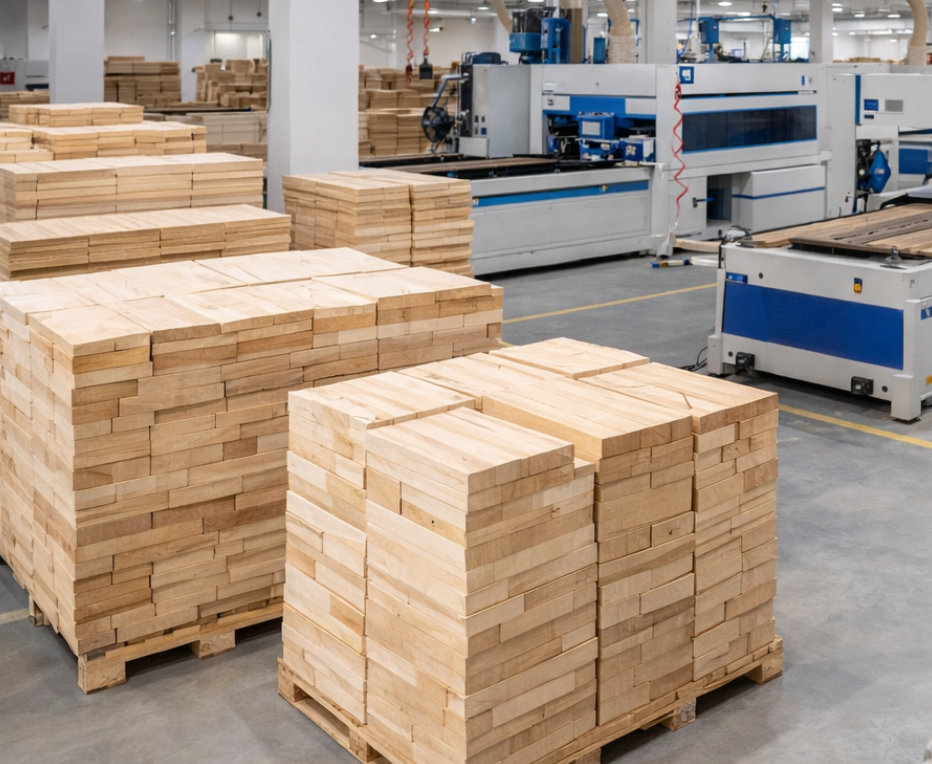
The decision between a wooden box and paper packaging is not simply about luxury vs basic. It is about matching material performance to product positioning, handling risk and branding goals. Paper packaging excels in cost efficiency and lightweight shipping, while wooden boxes shine in durability, perceived value and long-term reusability.
Below is a practical comparison that many buyers use as a starting point when evaluating a packaging upgrade.
| Criteria | Paper Packaging | Wooden Box |
|---|---|---|
| Perceived value | Basic to mid-tier; quality depends heavily on printing and board thickness | Clearly premium; adds weight and presence to the product, even before opening |
| Protection | Good for light, non-fragile items; vulnerable to crushing and moisture | Strong structural protection; works better for glass, ceramics, high-value sets |
| Reusability | Often discarded after unboxing | Commonly reused as storage or decor, keeping your brand in view |
| Brand storytelling | Printed graphics carry most of the story | Material, texture, hardware, engraving and opening experience all support the story |
| Shipping risk | Higher risk of corner crush and deformation without strong cartons | Better protection if moisture and hardware are well controlled |
| Cost per unit | Lower initial cost | Higher unit cost but leverageable for higher price points or gift editions |
| Environmental positioning | Can be recyclable; perception depends on design and coating | Uses renewable materials; can be aligned with FSC-oriented sourcing and long-term use |
Understanding these trade-offs helps you identify when a wooden box is not just a nicer option but the right option for your market and price point.
Scenario 1: Premium Product Launch or Brand Upgrade
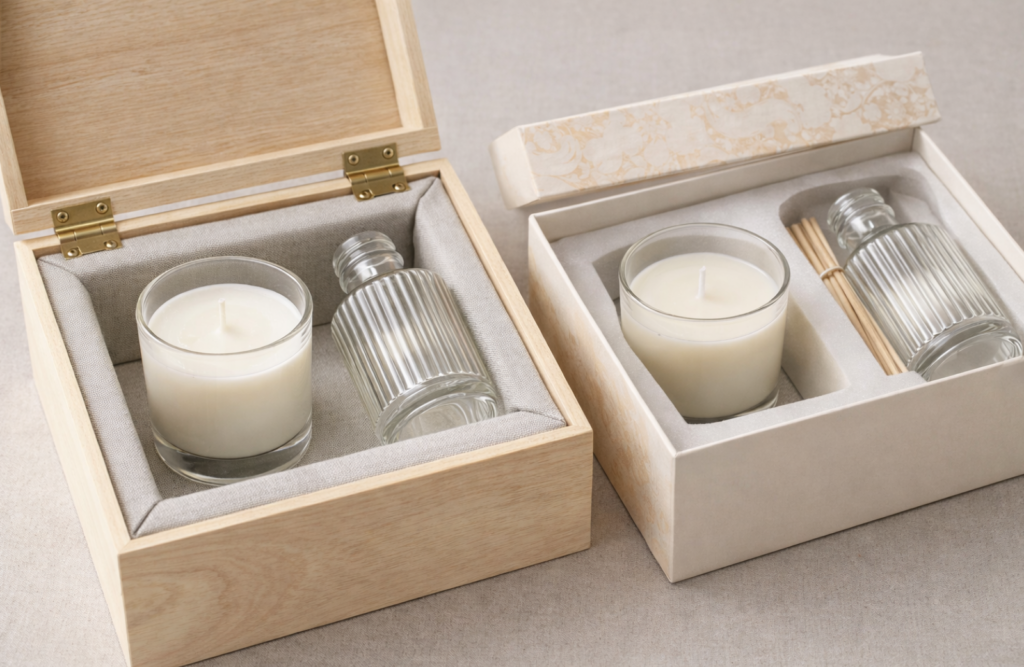
One of the clearest signals that it is time to move from paper to a wooden box is when you are repositioning a product or brand into a higher price segment. This is common for candles, wine and spirits, cosmetics sets, tea and coffee, kitchenware, barware and collector items.
In these cases, the packaging must support the target retail price. If a customer is paying a premium, a light paper box can cause a mismatch between product value and perceived value. A well-designed wooden box immediately communicates that the product is a giftable, keepable item rather than a disposable purchase.
Wooden boxes work particularly well when you are:
- Launching a limited or seasonal edition where the box itself becomes part of the collection
- Entering new retail channels where competitors already use elevated packaging
- Seeking stronger differentiation for online listings where photos must communicate quality instantly
- Building a private label line that needs a consistent premium look across multiple SKUs
In such projects, the packaging is not an afterthought. It becomes a deliberate part of the product development process, with early decisions on wood species, color tone, hardware style and logo technique.
Scenario 2: Fragile, Heavy or Moisture-Sensitive Products
Another moment when a wooden box outperforms paper packaging is when the product is fragile, heavy or sensitive to moisture. Export cartons and drop tests can mitigate some risk for paper boxes, but there are limitations when the primary packaging is not rigid.
Consider wooden boxes when you are packing:
- Glassware or ceramics sets where breakage is a recurring issue
- Metal tools, knives or bar accessories with sharp or heavy components
- Food gifts in humid or long-transit environments where soft paper boxes deform easily
- Electronics accessories or hobby tools where buyers expect structured, protective storage
With a wooden box, the structure itself absorbs impact and protects the contents, especially when combined with optimized internal compartments and inserts. At Chic Homeware, structure optimization often starts with understanding how the product will be stacked in warehouses and shipped in containers, then designing thickness, corner construction and lid closure to align with expected abuse levels.
Moisture control is critical in this scenario. Wood species like paulownia or pine must be dried to a stable moisture content before machining, sanding and assembly. Poor moisture control leads to warping, lid misalignment and hardware issues after arrival in destination markets. A reliable factory will integrate moisture monitoring and pre-shipment checks into its workflow to minimize these risks.
Scenario 3: When You Want Customers to Keep and Reuse the Packaging
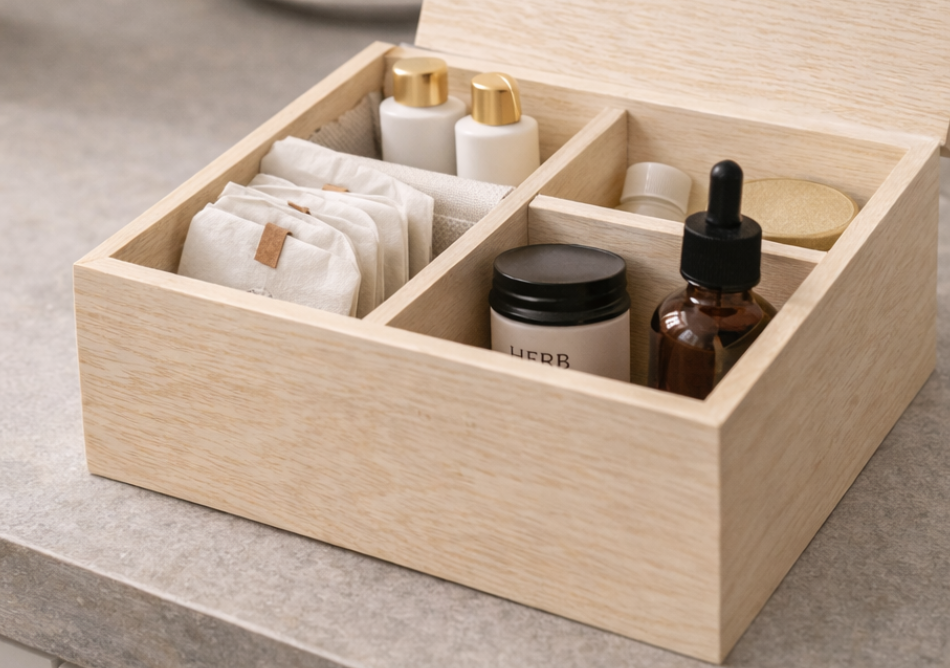
If a core part of your brand strategy is to remain visible in the customer’s home for years, a wooden box is a powerful tool. Paper boxes are rarely kept; they are not designed to be part of the home. Wooden boxes, organizers and trays are kept on shelves, desks and countertops, continuing to broadcast your logo long after the product is unboxed.
This is especially useful when you are selling:
- Tea, coffee or gourmet food where the box can become a kitchen organizer
- Beauty or grooming sets where the box can be reused for makeup, tools or accessories
- Stationery, craft or hobby products that naturally pair with compartmentalized storage
- Gift sets where the recipient may not know your brand yet and you want lasting exposure
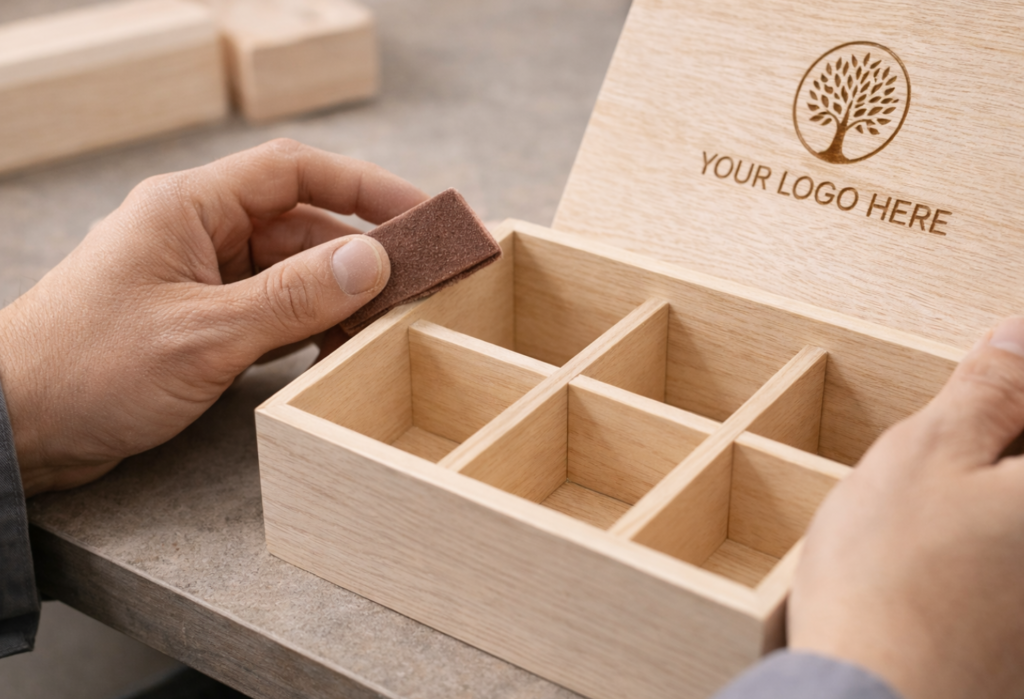
In such cases, the internal structure is as important as the exterior. Decisions about compartments, dividers, removable trays, magnets and hinges turn a simple box into a practical organizer. Chic Homeware frequently combines solid wood frames with MDF or plywood veneer panels to optimize strength, cost and weight while maintaining a premium look.
Scenario 4: E-commerce Brands Needing Consistent Unboxing and Fewer Returns
For Amazon sellers and DTC brands, packaging must survive a long and unpredictable journey: warehouse handling, last-mile couriers and sometimes reverse logistics. A damaged paper box quickly turns into bad reviews and higher return rates, even when the product inside is fine.
A wooden box, combined with thoughtful export packaging, can stabilize this experience. When you choose wooden packaging, you can often reduce damage through:
- Rigid primary packaging that resists crushing inside outer cartons
- Better alignment with mailer carton dimensions and protective padding
- Improved stacking strength for high-bay storage
- More predictable results in carton drop tests because the inner structure does not deform easily
E-commerce brands also benefit from the unboxing effect. A wooden box feels substantial when lifted out of the mailer carton, helping justify a higher price point and elevating the perceived value of the brand. When combined with a color box sleeve or printed mailer carton, this creates a layered unboxing journey that buyers often mention in reviews.
Scenario 5: When Sustainability and Longevity Matter More Than Disposability
Many brands are shifting from talking about sustainability as a marketing angle to implementing it in product and packaging decisions. While both paper and wood can fit into sustainable strategies, wood offers specific advantages when longevity and reuse are emphasized.
Wooden boxes align with several common sustainability objectives:
- Using renewable, responsibly sourced materials with traceable supply chains
- Designing packaging that is reused instead of immediately discarded
- Reducing the volume of printed coatings and plastic laminations found in many paper boxes
- Supporting a repairable, refinishable material rather than a purely disposable one
For buyers who need to discuss FSC-oriented sourcing with their customers, working with an experienced factory partner is essential. Discussions often include which wood species or veneers are most suitable for documentation, how to balance FSC requests with cost targets, and what kind of labeling or paperwork is realistic for the project volume and timeline.
Choosing the Right Wood and Construction for Your Box
Once you decide the project requires a wooden box instead of paper packaging, the next question is which material and construction approach to use. Different wood species and structures address different market needs.
Common material directions include:
- Acacia – Dense, warm-toned hardwood suitable for premium gift boxes, kitchen storage and serving sets. Ideal when you want a natural grain and heavier feel.
- Pine – Lighter, cost-effective and easy to stain or paint. Often used for mid-range boxes, wine packaging and decorative sets.
- Paulownia – Very light yet stable when properly dried. Useful for larger boxes or sets where total weight must stay low.
- Bamboo – Strong, eco-oriented perception, with a modern and clean look. Frequently chosen for sustainable branding projects.
- Walnut – Dark, premium appearance for high-end packaging where the box is almost a furniture piece.
- MDF or plywood veneer – Allows for very stable panels with decorative veneers, useful when you need flat surfaces for printing or smooth finishes at scale.
Construction choices then define how the box feels and performs. For example, solid wood frames combined with veneered panels can balance cost and stability, while fully solid boxes may be reserved for very premium projects. Hardware decisions such as hinges, clasps, magnets or sliding lids affect both user experience and production cost.
As a custom wooden products manufacturer, Chic Homeware typically starts projects with a structure discussion: how the box should open, what weight it must support and how the internal layout should function. From there, material and finish options are aligned with budget and brand positioning.
Key Production Checkpoints That Protect Your Brand
Wooden packaging projects succeed or fail in the details. Sourcing managers often focus on unit price and finishing options, but the hidden value is in stable production and repeatability across runs. Several checkpoints should be part of your conversations with a factory partner.
- Moisture control – Raw material drying, in-process checks and final inspections to prevent warping, cracking or lid misfit after shipping.
- Sanding consistency – Uniform surfaces and edges that accept stain or paint evenly and feel premium to the touch.
- Stain or paint finish – Controlled color recipes and application methods to avoid large shade variation between batches.
- Logo process – Clear decisions between laser engraving, silk-screen printing, UV printing, hot stamping or metal badges based on brand style and quantity.
- Hardware fitting – Precise hinge and clasp installation so lids close correctly and magnets align securely.
- Structural stability – Joint selection, panel thickness and reinforcement that match your drop-test expectations and handling conditions.
- Export packaging – Inner polybags, corner protection, inner boxes and master carton design that reflect the real transit route, not just a theoretical solution.
Well-managed factories integrate these checkpoints into standard procedures, rather than treating them as one-time adjustments. For repeat orders, this is what keeps appearance and fit consistent from batch to batch, reducing after-sales headaches for importers and brand owners.
Customization Factors: From Structure to Carton Mark
Wooden boxes rarely succeed as off-the-shelf solutions. Most B2B projects require a set of coordinated customizations so that packaging integrates smoothly with the product and the supply chain. When planning your project, it helps to prepare decisions around these common customization points:
- Size and proportions – Clear internal measurements based on product dimensions, padding and any inserts or manuals.
- Compartments and inserts – Fixed dividers, removable trays, foam or cardboard inserts, and how they will be assembled and packed.
- Hinges, magnets and closures – Type, color and strength, plus whether you need child-resistant or tamper-evident features.
- Logo and artwork – Logo position, scale and technique, and whether additional artwork is required on lids, sides or inner panels.
- Finish and color – Natural, stained, painted or washed finishes, and whether you need to match existing collections or Pantone targets.
- Color box, mailer carton and carton mark – Whether the wooden box will be directly visible in shipping cartons, or packed inside a color box or printed mailer. Carton marks, barcodes and shipping labels must also be planned early.
Upfront clarity on these points shortens sampling time and reduces back-and-forth communication. For project managers under time pressure, a structured OEM/ODM workflow with defined checkpoints for sampling, approval and pre-production is essential.
MOQ, Sampling and Lead Time: What Buyers Should Realistically Expect
When shifting from paper packaging to wooden boxes, some buyers underestimate how MOQs, sampling and lead times are affected. Unlike standard printed cartons, wooden boxes require material preparation, tooling for certain structures and often more handwork.
Typical considerations include:
- MOQ – MOQs depend on wood species, structure complexity and finishing. Lightweight pine or paulownia boxes with simple finishes can often be produced at lower MOQs than complex acacia or walnut boxes with multiple hardware pieces.
- Sampling – It is best to budget time for at least one physical sample round, especially when logo positioning, color tone or hardware style are critical. Pre-production samples are strongly recommended for larger orders.
- Lead time – Lead time must cover material preparation, machining, assembly, finishing, logo application, drying, inspection and export packing. It is wise to align delivery expectations with peak season capacity and container schedules early in the discussion.
- Price structure – Pricing often follows a step-ladder structure, where small volume orders carry higher unit costs due to labor and setup, and unit prices become more competitive at higher volumes. Mixed material solutions (for example, combining solid wood with veneered panels) can help control cost without sacrificing perceived quality.
Open conversations about these topics at the quotation stage help avoid surprises later and allow factories to suggest practical options that balance design with cost and timing.
When a Wooden Box is Not the Right Choice
Although wooden boxes add value in many situations, there are cases where paper packaging remains more appropriate. Recognizing these helps you use budget where it matters most.
Paper packaging may be better when:
- The product is very low value and price sensitive, and customers do not expect to keep the packaging
- Shipping weight must be minimized to meet strict courier cost targets
- The product is highly perishable and has a short market life, making reusable packaging less meaningful
- You need fast turnaround for a test batch and are not ready to invest in sampling and tooling for wooden packaging
Some brands start with paper packaging for early validation and then move to wooden boxes once market response and pricing are proven. In that case, it is useful to design the initial packaging with future wooden dimensions in mind, so that insert and product layouts can be reused later.
Inspecting and Managing a Wooden Box Project with a China Factory
Importers and sourcing offices that manage projects remotely need confidence that the factory can maintain standards across multiple shipments. Visiting a reliable wooden products factory in China is ideal, but not always feasible. In that case, communication and documentation become your main tools.
Effective practices include:
- Requesting detailed drawings with dimensions, tolerances and hardware positions before sampling
- Defining acceptable variations for color, grain and logo alignment so both parties have the same expectations
- Aligning on moisture content targets and storage conditions before shipment, especially for humid or very dry destination climates
- Agreeing on export carton specifications, including inner packing, palletization and drop-test thinking
- Using photos and videos during production and final inspection to confirm that structure and finishing match approved samples
When projects involve EU or US compliance considerations, proactive documentation is important. This may include material declarations, finish and coating information and packaging-related details requested by retailers or marketplaces.
How Chic Homeware Supports Brands Moving from Paper to Wood
Chic Homeware works as an OEM/ODM partner for brands that are ready to step up from paper boxes to wooden packaging. The factory-oriented supply chain supports multiple wood species such as acacia, pine, paulownia, bamboo and walnut, along with MDF and plywood veneer solutions for cost-effective scaling.
For each project, the team focuses on:
- Matching material and structure to the product and target price point
- Controlling moisture, sanding, finishing and logo application for consistent appearance
- Advising on hardware, magnets and compartments to create a functional, memorable unboxing
- Planning export packaging with realistic carton and pallet solutions for your route
- Supporting FSC-oriented sourcing discussions and compliance communication where needed
The OEM/ODM workflow includes sampling, logo customization, mixed material suggestions, MOQ discussions and packaging options configured to the needs of importers, brand owners and online sellers. The goal is to make the shift from paper to wooden boxes smooth, predictable and commercially practical.
Conclusion: Recognizing the Right Moment to Choose a Wooden Box Instead of Paper Packaging
Deciding when a brand should choose a wooden box instead of paper packaging comes down to three core questions:
- Does the current packaging support the price, positioning and channel expectations of your product?
- Are you losing margin or reputation due to damage, poor presentation or inconsistent unboxing experiences?
- Would reusable, durable packaging strengthen your brand presence and sustainability story?
When the answer to these questions points toward an upgrade, wooden boxes become a serious, strategic option. With the right structure, material, finishing and export planning, they can protect your products, justify higher price points and keep your brand visible in customers homes long term.
If you are considering a move from paper packaging to wood for your next collection or seasonal launch, you can start the discussion with drawings, reference photos or target cost and channel details. The team at Chic Homeware can then translate these into sampling and production proposals tailored to your market and volume.
To explore a project, request sampling timelines or discuss technical details such as moisture control, logo options and carton planning, you can reach out via Contact Chic Homeware and begin shaping a wooden packaging solution that fits your brand and your supply chain.