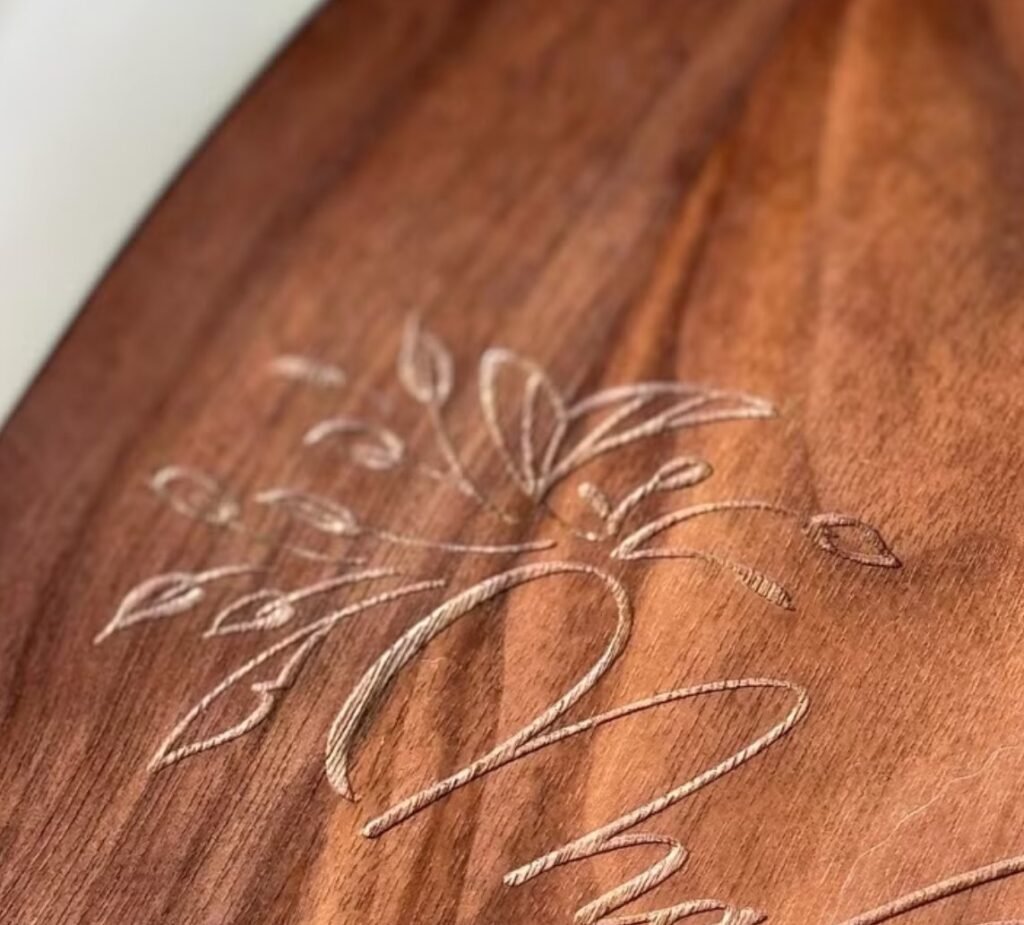

How to Design a Wooden Box for Mini Bottle Tasting Sets
Mini bottle tasting sets have become a practical way for brands to introduce new spirits, oils, sauces, perfumes and wellness shots without committing to full-sized packaging. For importers, wholesalers and private label brands, a well-designed wooden box turns these mini formats into a premium, giftable product that justifies higher price points and supports repeat orders.
From a factory perspective, designing a wooden box for mini bottle tasting sets is not only about aesthetics. It is about structure, material stability, moisture control, branding possibilities, export packing and the long-term repeatability of the project. Below is a practical, experience-based guide to help you brief and evaluate your OEM/ODM partner so you avoid trial-and-error on live orders.
1. Clarify the Tasting Set Concept and Sales Channel
Before discussing wood species or finishes, it is essential to define how and where the mini bottle set will be sold and used. This shapes almost every design decision for the wooden box.
1.1 Define the primary use case
Common applications include:
- Spirits or liqueur sampler sets for retail and duty-free
- Olive oil, vinegar or hot sauce discovery kits for gourmet food brands
- Essential oil or fragrance mini sets for beauty and wellness lines
- Welcome gifts or amenity packs for hotels and corporate gifting programs
- Subscription box inserts or influencer kits for marketing campaigns
If the set is mainly for gifting and shelf display, the wooden box should prioritize visual impact, fine finishing and a smooth opening experience. If it is more of a logistics tool (for example, internal tasting kits or subscription refills), protection, compact size and cost efficiency may rank higher than luxury detailing.
1.2 Match design to sales channel
Sales channel has a direct impact on structure and packaging:
- Brick-and-mortar retail: The wooden box often needs a strong shelf presence, consistent color and branding, and good resistance to handling. A color box or sleeve may be needed to provide barcode and regulatory space.
- E-commerce and Amazon: Drop-test friendly cartons, interior buffering and stable hinges or magnets are critical. The wooden box must survive courier handling, so export packing and shipper design become part of the product design.
- Corporate gifting and B2B programs: Here the brief typically requires a balance of premium look with controlled cost. Custom engraving or logo plates are common, while outer cartons must be optimized for palletization and warehouse storage.
Sharing this context with your manufacturing partner at the start allows them to recommend appropriate structures, inserts and packing methods instead of just quoting from a photo.

2. Choose the Right Wood or Veneer for Mini Bottle Tasting Boxes
Different wood species and material structures behave differently during machining, finishing and long-distance shipping. For mini bottle tasting sets, you are usually balancing premium appearance, weight, cost and stability.
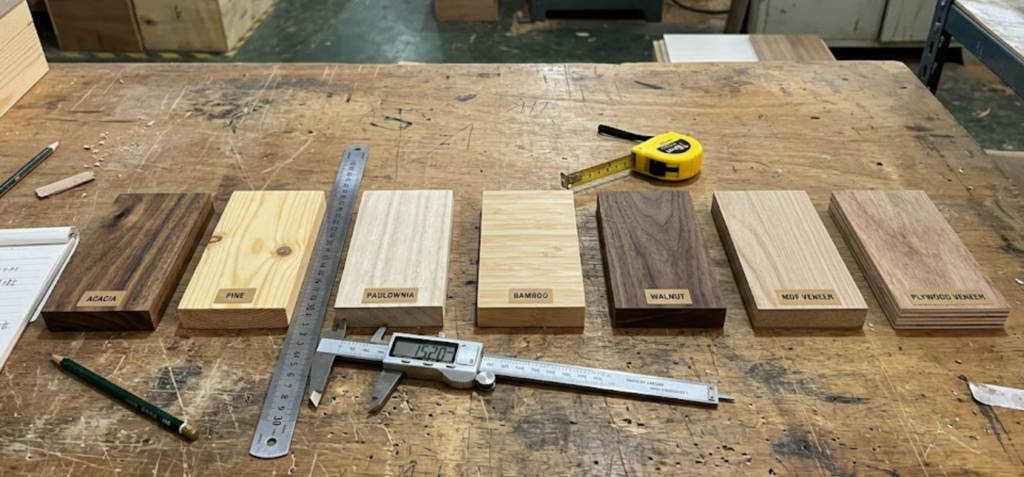
2.1 Common material routes and when to use them
- Acacia: Harder and heavier, with a rich, expressive grain. Suitable for premium spirits or gourmet sets where a natural, upscale look is important. Acacia works well with clear or tinted oil finishes to highlight the grain.
- Pine: Cost-effective, relatively light and easy to machine. Good for mid-range projects and larger volumes. Pine takes stain well but may show knots; these can be controlled with selection and grading.
- Paulownia: Very light weight, suitable when freight cost is a concern or when the box size is relatively large compared to the mini contents. More suitable for softer, lighter finishes, often with a rustic or natural positioning.
- Bamboo: Technically a grass but widely used as an eco-oriented material. Strong with a distinctive linear pattern. Works well when the brand story emphasizes sustainability or Asian-inspired aesthetics.
- Walnut: Dark, premium-looking wood often used in high-end spirits and gift sets. Higher cost, so usually reserved for top-tier SKUs or limited editions.
- MDF veneer: Engineered core with a real wood veneer on top. Offers a flat, stable surface ideal for consistent staining and painting, with good dimensional stability and less risk of warping.
- Plywood veneer: Layered core with veneer surface, combining strength with a natural look. Suitable for larger lids or panels where strength and stability are needed with controlled cost.
When planning custom wooden boxes for mini bottle sets, it is common to mix approaches. For example, the outer shell may be pine or paulownia for cost-efficiency, with a walnut veneer lid to achieve a more premium visual effect without using solid walnut throughout.
2.2 Moisture control and dimensional stability
Mini bottle tasting sets often travel internationally and pass through different climates and humidity levels. Improper moisture control can result in warping lids, misaligned magnets and boxes that no longer close properly.
Key practical points to discuss with your supplier:
- Target moisture content for the chosen species and whether kiln-drying is used
- Storage conditions for lumber and semi-finished parts inside the factory
- Time allowed between machining, sanding and finishing so the wood can stabilize
- Special handling during rainy seasons or in high-humidity regions
These are rarely visible in photos, but they determine whether your project is repeatable without deformation issues across multiple orders and seasons.
2.3 Finish compatibility with your product
If your minis contain food or consumables (spirits, oils, sauces), you may want to consider low-odor or low-VOC finishes and avoid overly heavy lacquers inside the box. Exterior surfaces can still be stained, painted or sealed to achieve your brand tone, while interior surfaces can be left natural or finished with more neutral coatings.
3. Structural Design: Size, Compartments and Inserts
The core of designing a wooden box for mini bottle tasting sets is the internal structure. The goal is to present the bottles neatly while preventing them from colliding or breaking during transport.
3.1 Start from the primary bottle dimensions
Before sketching, confirm the exact dimensions of your mini bottles, including:
- Height including cap or closure
- Widest diameter or width, including any shoulders or embossing
- Weight when filled
Add clearance for easy insertion and removal. As a practical rule, leave finger space above or beside the bottle, especially if the box uses a fixed tray or cut-out insert. It is better to build a prototype based on the actual bottle rather than rely on catalogue dimensions.
3.2 Decide on bottle count and layout
Common configurations include 3, 4, 5, 6 or 12 mini bottles. The number of units will influence overall box footprint and the best layout:
- Single row layout: Good for long, narrow boxes, often used for spirits gift sets. Offers a strong linear presentation.
- Two-row grid: More compact, efficient for shipping and storage. Works well for oils, sauces or wellness shots.
- Clustered layout: For example, a central hero bottle with smaller minis around it. More complex but visually impactful for premium editions.
A good OEM/ODM partner will help you find a layout that balances presentation, material efficiency and carton optimization.
3.3 Compare insert options
The insert is critical for protecting mini bottles. Options include:
- Solid wood dividers: Traditional and durable. Suitable for rectangular bottles or boxes where natural wood is part of the story. Adds weight and cost.
- MDF or plywood trays: Stable and precise, can be wrapped with veneer or paper. Good balance of strength and cost.
- Foam inserts: EVA or PE foam cut to shape. Offers superior protection in transit, especially for glass minis. Can be wrapped in flocking or fabric for a premium look.
- Cardboard or pulp inserts: Lightweight and cost-effective. Suitable for mass retail or subscription projects where cost and recyclability are priorities.
For e-commerce-heavy projects, a hybrid solution is common: a wooden or MDF tray combined with a foam layer or card sleeve that holds the bottles securely during courier transport.
3.4 Lids, bases and structural strength
Mini bottle boxes may seem small, but they still face stacking pressure in cartons and pallets. When designing your box:
- Confirm panel thickness for lid and base to resist deformation
- Use corner joints (such as finger joints or reinforced miters) appropriate to the wood species and load
- Allow for slight dimensional tolerances so lids and bases fit smoothly even with minor climate changes
These structural choices directly influence complaint rates and breakage claims once the product is in market.
4. Surface Finishing, Logo Application and Branding
The finish and branding turn a simple wooden box into a recognizable brand asset that can be replicated across ranges and seasons.
4.1 Sanding and surface preparation
Consistency in sanding is often overlooked in early discussions, but it is visible the moment customers touch the box. Smooth edges, consistent corner radiuses and controlled fiber raising after staining all contribute to a professional feel.
When reviewing samples, check not just the top lid but also inside edges, corners and the underside of the box. Inconsistent sanding is a sign that mass production may vary, so this is worth aligning during the sample stage.
4.2 Stain, paint and clear coat options
Common finishing routes for mini bottle tasting sets include:
- Clear oil or clear lacquer: Showcases the natural grain, often used on acacia, walnut and bamboo.
- Tinted stain: Allows you to match brand colors while keeping the wood visible. Dark walnut, oak and black stains are common for spirits; lighter tones suit gourmet or wellness brands.
- Opaque paint: Creates a more modern, uniform appearance. Works well with MDF and pine when the grain should be minimized.
Discuss gloss level (matte, satin, semi-gloss) and possible color variations between batches. A reliable partner will set realistic tolerances and may keep a retained standard panel for future orders to support repeatability.
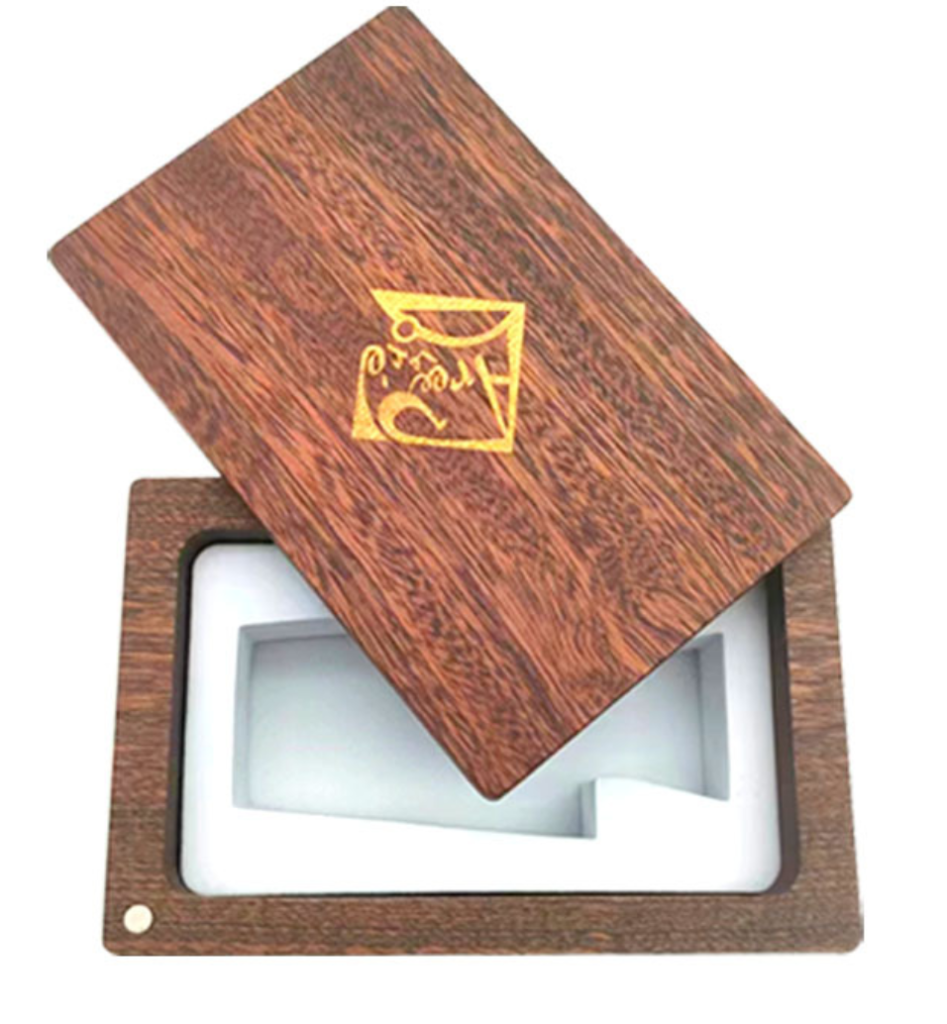
4.3 Logo and graphic methods
Several logo applications work well on wooden tasting boxes:
- Laser engraving: Clean, permanent and suitable for smaller MOQs. Works best on lighter woods or finishes where the engraving contrast is visible.
- Silk-screen printing: Good for solid colors and simple graphics. Suitable for moderate to large runs.
- UV digital printing: Allows multi-color logos and imagery without separate plates, useful for more complex brand artwork and shorter runs.
- Metal plates or badges: Adds a premium, gift-like feeling. The metal plate can be debossed or printed and then fixed to the wood.
- Hot stamping or foil: Works well for logos or text on painted or laminated surfaces, especially when a metallic effect is desired.
Think about the customer journey: is the main brand mark on the lid, front edge, or inside the cover? For samplers and tasting kits, many brands use an understated exterior logo and a stronger branded message printed or engraved inside the lid where the storytelling happens.
Working with a custom wooden products manufacturer also lets you combine branding methods, for example a laser-engraved logo on the lid plus a printed tasting guide on a removable wooden tray or card.
5. Hardware, Opening Experience and User Handling
The way a mini bottle tasting box opens and closes influences perceived value and durability. Hardware also impacts cost and assembly time.
5.1 Hinges and lid styles
Common lid constructions include:
- Fixed hinged lid: Traditional book-style opening with metal hinges. Offers a classic presentation but requires accurate alignment.
- Lift-off lid: Simple construction with fewer hardware components. Often used for more minimal, modern designs or when cost must be tightly controlled.
- Sliding lid: A panel that slides into grooves. Good for compact, informal sets or more rustic presentations.
For hinged lids, confirm hinge type, color and placement early in the design stage. Check whether the lid should open to a specific angle or lie flat on a surface when open. Misaligned hinges can create stress on the wood and lead to loose screws over time.
5.2 Closures and magnets
Mini bottle boxes often use magnets to achieve a clean look without visible latches, or they may use metal clasps for a more classic feel.
- Hidden magnets: Installed in the lid and front panel. Offer a smooth, modern closure but require accurate drilling and gluing to avoid misalignment.
- Metal latches or clasps: More visible but ensure a clear mechanical closure. Suitable for rustic or vintage-inspired designs.
- Ribbon or elastic closures: Less common in wooden boxes but sometimes combined with mixed-material lids or sleeves for special projects.
When evaluating samples, open and close the box multiple times. There should be no grinding sounds, catching at corners or gaps along the front edge. These are early signs that tolerances or hardware installation processes need adjustment before mass production.
6. Carton Design, Drop-Test Thinking and Export Packaging
Mini bottles are fragile and concentrated; one damaged set can mean leakage, staining or odor in the entire parcel. Designing your wooden box without considering outer packaging is a common mistake in B2B projects.
6.1 Inner packaging around the wooden box
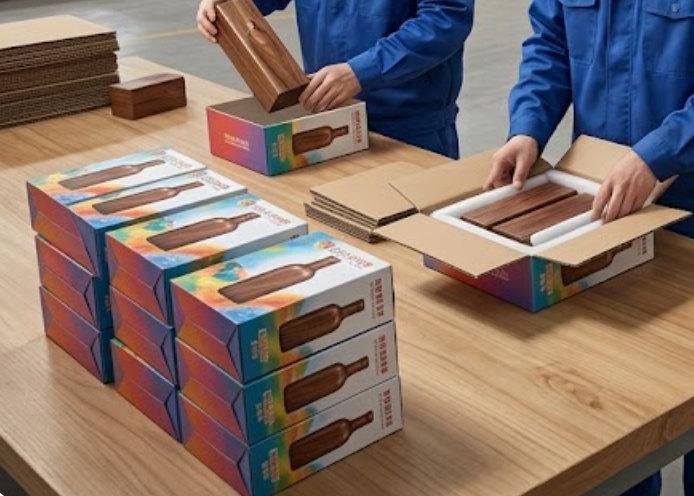
Depending on your channel and branding requirements, the wooden box may be packed in:
- Plain mailer cartons: For e-commerce and Amazon, sized to match the box with sufficient buffer material for drop resistance.
- Color boxes: Printed cartons that add branding, barcodes and regulatory information. The wooden box is usually wrapped in tissue, paper or a bag inside.
- Protective bags or sleeves: Such as polybags, non-woven bags or paper sleeves to reduce scratching and dust.
Make sure that the inner packaging does not compress the lid or hardware. Over-tight fitting can cause long-term stress on hinges and joints.
6.2 Master carton planning
Master carton design affects freight cost, pallet utilization and damage rates. When planning a wooden box for mini bottle tasting sets, discuss:
- How many units per master carton and the resulting weight
- Orientation of boxes in the carton to protect the weakest surfaces
- Use of corner protectors, dividers or top pads to prevent crushing
- Carton quality, including board grade and sealing method
For projects going into large retailers or 3PL networks, it is common to check the design against typical drop-test procedures. While formal testing may be done at the customer side, designing with drop-test scenarios in mind reduces surprises later.
6.3 Carton marks and compliance communication
Carton marks should be planned together with your supplier to ensure correct model codes, quantity, gross and net weight and country of origin. For EU and US buyers, early communication about any compliance requirements, potential FSC-oriented sourcing discussion or special labeling instructions is recommended. Integrating this into the artwork and carton layout early will save time in pre-shipment stages.
7. OEM/ODM Workflow for Mini Bottle Tasting Sets with Chic Homeware
Chic Homeware operates as an OEM/ODM partner focused on wooden boxes, organizers, trays and gift packaging, supporting customers from the initial idea through to export-ready cartons. When you are ready to develop a wooden box for mini bottle tasting sets, a typical project flow looks like this:
7.1 Project briefing and material discussion
You share your bottle information, target markets, brand positioning, expected order quantities and target price range. Based on this, the factory team suggests suitable materials (acacia, pine, paulownia, bamboo, walnut, MDF veneer or plywood veneer), structural options and insert solutions that match your cost and performance goals.
7.2 Technical drawing and sampling
Once the general direction is clear, technical drawings are prepared to define size, thicknesses, joints, hardware positions and internal compartments. A pre-production sample is then made to validate dimensions, moisture behavior, finishing and logo application. This sample is also your chance to test bottle fit with actual products and to review the opening experience and overall feel.
7.3 Quotation, MOQ and lead time
After sample approval, the quotation is confirmed based on the agreed structure and finish. Discussions typically cover:
- MOQ per design or color
- Unit price at different quantity levels
- Tooling or one-time setup costs for printing or hardware, if any
- Estimated production lead time after final approval and deposit
Chic Homeware works with commercially practical MOQs while still supporting brand owners and Amazon sellers who may need a more flexible starting point.
7.4 Mass production, QC and packing
During mass production, the focus is on:
- Maintaining moisture control and dimensional stability for all wooden parts
- Consistent sanding and finishing to match the approved sample
- Accurate logo placement and color matching where applicable
- Correct installation of hinges, magnets and other hardware
- Implementation of agreed inner packing and master carton solutions
Random inspections and final QC help ensure that the boxes you receive feel and function the same as the approved sample, across the whole order and future repeats.
7.5 Repeat orders and range extension
Once the first mini bottle tasting set is stable, many buyers extend the concept into related SKUs: different flavor assortments, seasonal colors or special editions for key accounts. Because the structural foundation has been validated, range extension becomes a faster process focusing on artwork, finish variations or slight size adjustments.
Conclusion: Turn Your Mini Bottle Tasting Concept into a Repeatable Product
Designing a wooden box for mini bottle tasting sets is a strategic packaging decision, not just a styling exercise. By aligning concept, material choice, structural design, finishing, hardware and export packaging from the start, you reduce project risk and build a platform that can support multiple SKUs and repeat orders over time.
Chic Homeware combines a factory-oriented supply chain, flexible material options and an OEM/ODM workflow tuned to the needs of importers, brand owners and online sellers. If you are planning a new mini bottle tasting project or looking to upgrade an existing sampler into a more robust wooden presentation, you can share your brief, bottle details and target markets through the Contact Chic Homeware page. The team can then recommend practical structures, material routes and packing solutions that match your brand positioning, budget and compliance requirements, turning your tasting concept into a reliable, export-ready product line.