

Choosing the right wooden sofa tray is not simply a design decision.
For wholesalers, retailers, and e-commerce sellers, it directly impacts product positioning, customer satisfaction, and long-term sales performance.
Different markets have different expectations when it comes to material, durability, appearance, and pricing. Understanding these differences is essential before selecting a product for your target audience.
If you are looking for a complete overview of wooden sofa tray designs, materials, and OEM options, you can explore our [wooden sofa tray solutions] page for a full reference.
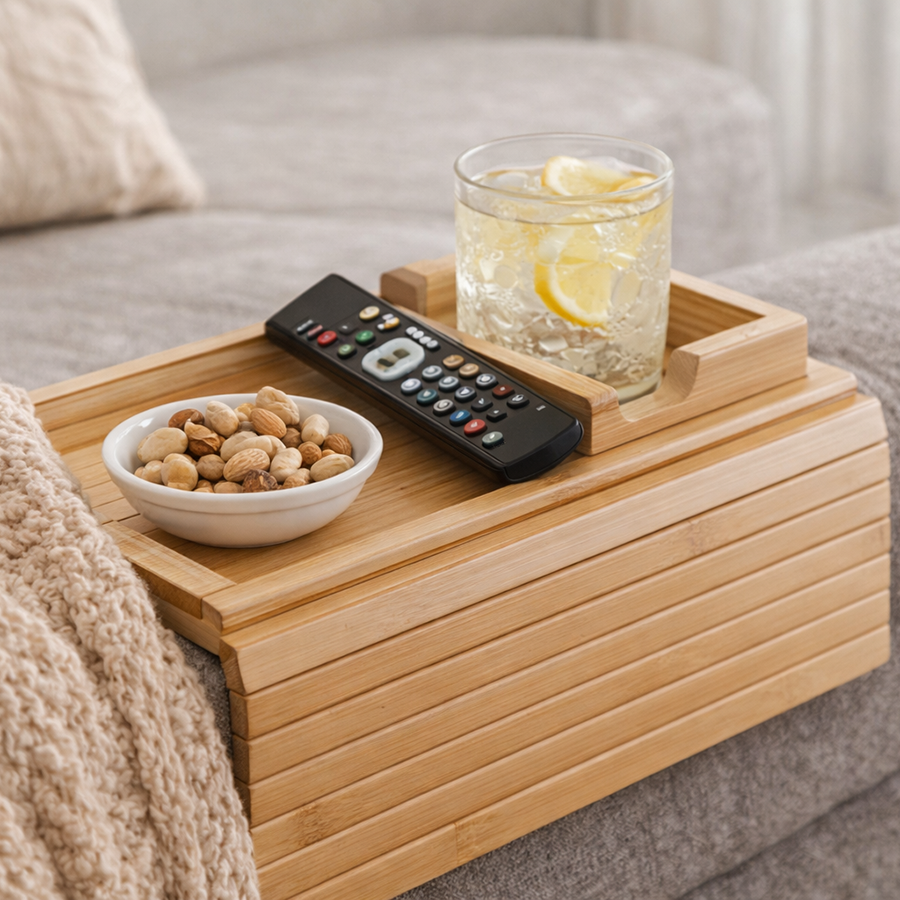
1. Understand Your Target Market First
Before choosing a wooden sofa tray, it is important to clearly define who you are selling to.
Key questions to consider include:
- Are your customers purchasing for everyday home use or premium gifting?
- Is your primary sales channel Amazon, retail stores, or hospitality projects?
- Is pricing or design the main purchasing driver?
For example, mass-market e-commerce customers typically prioritize functionality and price, while boutique retailers and lifestyle brands often focus on material quality and visual appeal.
2. Choose the Right Material for Your Market Positioning
Material selection plays a critical role in determining both product performance and perceived value.
Bamboo Wooden Sofa Trays – Ideal for Mass Market & E-commerce
Bamboo is one of the most widely used materials for wooden sofa trays due to its balance of strength, moisture resistance, and affordability.
Bamboo wooden sofa trays are commonly chosen for:
- Amazon and online marketplaces
- Entry to mid-level price segments
- Daily household use
Its lightweight nature also helps reduce shipping costs, making it suitable for large-volume distribution.
Different materials serve different markets, and a clear comparison can help reduce sourcing risks. Our [wooden sofa tray solutions] page outlines available materials, applications, and customization options in more detail.
Acacia Wood Sofa Trays – Best for Premium & Branded Products
Acacia wood is a durable hardwood known for its rich grain patterns and long service life.
Acacia wooden sofa trays are often selected for:
- Premium home décor brands
- Gift and lifestyle collections
- Higher-end retail positioning
Compared to bamboo, acacia offers a more distinctive appearance and higher perceived value, making it ideal for branded and long-term product lines.
3. Match the Design to Real Usage Scenarios
A successful wooden sofa tray should solve real everyday problems rather than serve as a purely decorative item.
Common design features include:
- Cup holders to prevent spills
- Phone or tablet slots for convenience
- Flat surfaces for snacks and small items
- Non-slip bases for fabric sofas
Usage scenarios also vary by market:
- Living room use requires stability and moisture resistance
- Small apartments benefit from compact, space-saving designs
- Hotels and Airbnb properties prioritize durability and easy maintenance
Understanding how the product will be used helps reduce returns and negative reviews.
4. Consider Pricing and Shipping Efficiency
Pricing strategy should be aligned with material choice, structure, and logistics costs.
Factors that influence overall cost include:
- Material weight and thickness
- Product dimensions
- Packaging design and carton efficiency
For international buyers, optimizing size and packaging can significantly reduce shipping expenses without compromising usability.
5. Evaluate OEM and Customization Capabilities
For many buyers, OEM support is a key decision factor when selecting a wooden sofa tray supplier.
Important OEM capabilities include:
- Custom sizes and layouts
- Multiple material options
- Logo engraving or private label branding
- Retail-ready or Amazon-compliant packaging
If you are sourcing wooden sofa trays for retail, e-commerce, or hospitality projects, our [wooden sofa tray solutions] page provides a complete overview of materials, applications, and OEM support from a manufacturing perspective.
6. Ensure Quality Control and Consistency
Regardless of market positioning, consistent quality is essential for long-term success.
Key quality considerations include:
- Smooth sanding and finishing
- Proper moisture control to prevent warping
- Stable structure for repeated daily use
- Protective packaging to minimize shipping damage
Working with an experienced manufacturer helps ensure consistent standards across different production batches.
Final Thoughts
The best wooden sofa tray is not necessarily the most expensive or visually complex option.
It is the one that aligns with your specific market needs.
By selecting the right material, optimizing design for real usage, and partnering with a supplier that offers reliable OEM support, you can build a wooden sofa tray product line that performs well across different sales channels.
For a complete overview of wooden sofa tray materials, applications, and customization options, visit our [wooden sofa tray solutions] page.