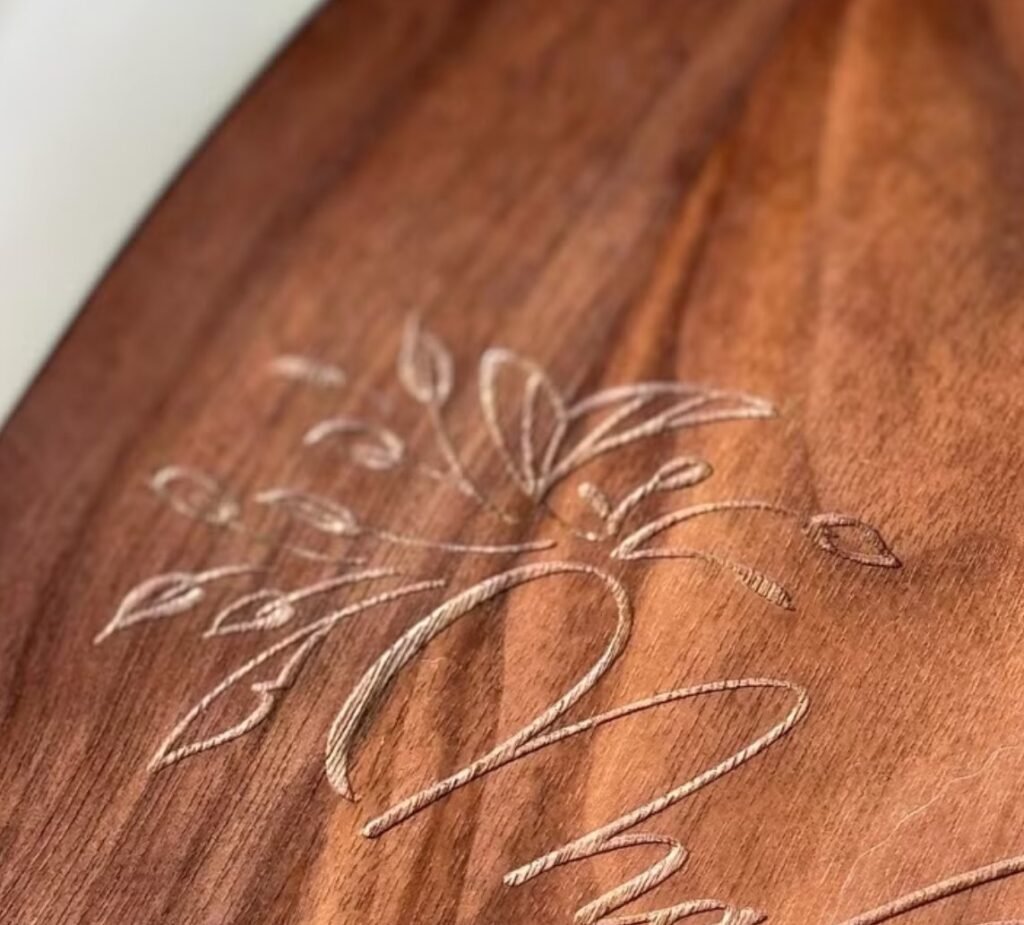

Factory Direct Wooden Boxes vs Trading Sourcing: What B2B Buyers Should Compare
For importers, wholesalers and private label brands, the decision between sourcing factory direct wooden boxes or working through trading companies is not just about price. It touches MOQ flexibility, technical control, damage rates, repeat-order stability and how smoothly your business can scale. When your assortment includes custom wooden boxes, organizers, trays, kitchen storage and gift packaging, small details in production control can quickly become big commercial issues.
As an OEM/ODM manufacturer and export partner, Chic Homeware works with buyers who use both sourcing models. This article summarizes what experienced sourcing managers typically compare when deciding between factory direct and trading sourcing for wooden boxes, and how a factory-oriented approach can support long-term B2B growth.
1. Sourcing Model Overview: Factory Direct vs Trading Company
1.1 Factory Direct Wooden Boxes
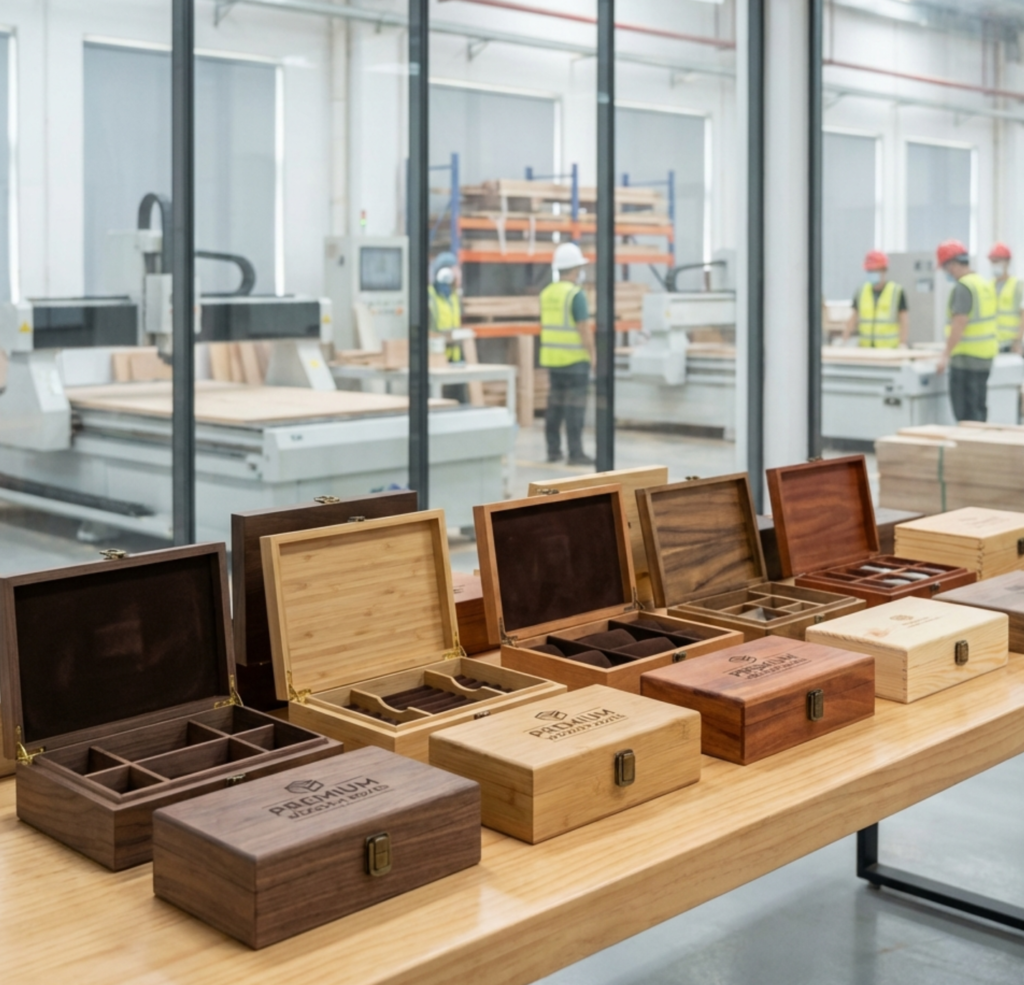
Factory direct sourcing means you work with the manufacturer who actually cuts, assembles, finishes and packs your wooden boxes. Communication goes straight to the team controlling production parameters such as timber selection, moisture, surface treatment and export packing.
For wooden boxes and organizers, this model is common when buyers require consistent long-term supply, custom dimensions, or brand-specific finishes. It suits importers, brand owners and Amazon sellers who need a reliable OEM/ODM partner rather than purely off-the-shelf items.
1.2 Trading Company Sourcing
Trading companies aggregate orders, coordinate several factories and present collections from multiple sources. For wooden products, they often provide a wide range of designs and materials but typically do not run their own workshops. Technical decisions are relayed between buyer and factory via the trading team.
Trading sourcing can be attractive if you want small test orders across many categories, or if you prefer not to manage multiple factories. However, the distance between buyer and production can limit how efficiently technical issues are solved.
1.3 What Experienced Buyers Actually Compare
When evaluating these two paths, professionals usually look beyond a single price quote. Key comparison points include:
- Control over materials, moisture and finishing quality
- Speed and clarity of technical communication
- Sampling efficiency and OEM/ODM flexibility
- MOQ structures and repeat-order stability
- Export packaging design and damage prevention
- Support for compliance, sustainability discussions and retailer requirements
2. Material Control and Wood Species Selection
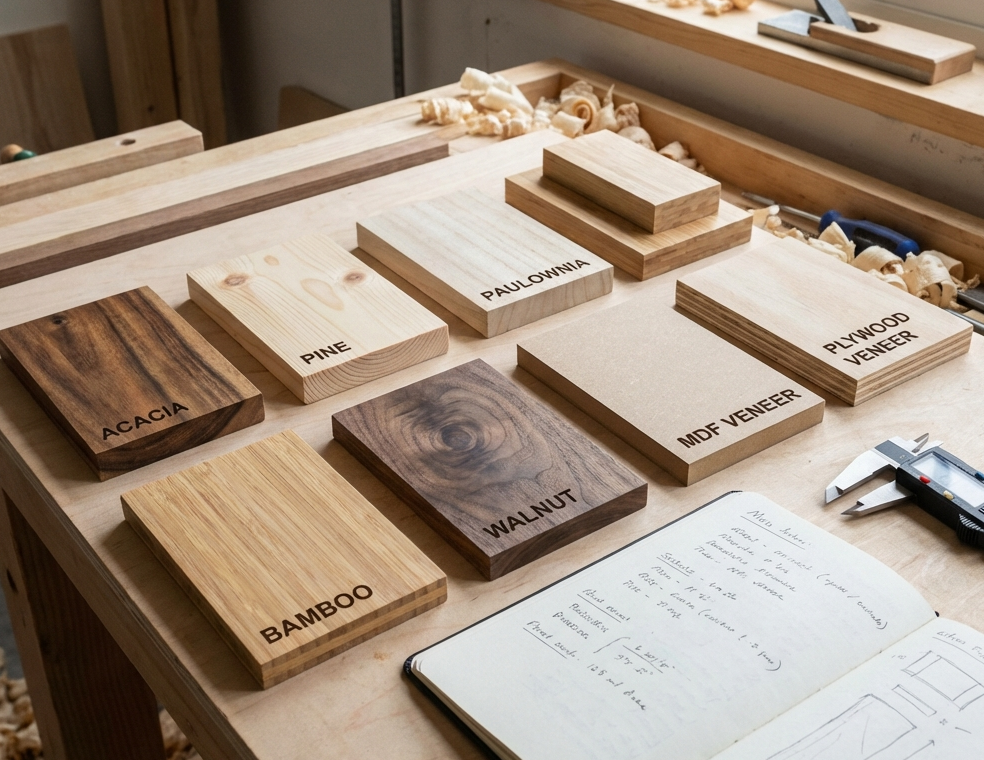
Wooden boxes may look similar in photos, but the internal material decisions strongly influence cost, weight, durability and appearance. The main species and materials commonly discussed with Chic Homeware include acacia, pine, paulownia, bamboo, walnut, MDF veneer and plywood veneer.
2.1 Factory Direct Advantages in Material Planning
When you work directly with a Custom Wooden Products Manufacturer, material discussions are much more specific:
- Acacia and walnut: Selected for higher-end gift boxes, kitchen storage or display pieces where grain and color are part of the brand story.
- Pine and paulownia: Used where weight and cost are sensitive, such as bulk packaging boxes, subscription boxes or large decorative storage.
- Bamboo: Preferred for certain markets for its renewable perception, especially kitchen and bathroom items.
- MDF and plywood veneer: Common for precise shapes, smooth surfaces and stable dimensions, often with oak, walnut or other veneers.
Factory engineers can match material combinations to your price point and functional requirements. For example, a box body in pine with a walnut veneer lid, or MDF core with acacia veneer for a premium look at controlled cost.
2.2 Trading Company Approach to Materials
Trading companies usually communicate at a higher level: “solid wood,” “pine box,” “bamboo range.” Detailed conversations about lumber grade, veneer thickness, or alternative species to hit a target price can be slower, because every change request must be relayed to the actual workshop.
This can impact projects where your buyer requires consistent wood tone across multiple SKUs, or where you need fast cost engineering between acacia, pine and MDF veneer to reach a specific retail price.
3. Moisture Control, Surface Finish and Structural Stability
For wooden boxes, the real difference between stable supply and recurring quality complaints is often hidden inside production checkpoints. These are areas where factory direct sourcing typically offers clearer control.
3.1 Moisture Control
Proper moisture control avoids warping, cracking, lid misalignment and joint gaps after the goods arrive in your warehouse or the end market. Factory teams control:
- Incoming kiln-dry reports and in-house moisture testing
- Balancing moisture between different components (e.g., lid vs body vs base)
- Storage conditions between machining, sanding and finishing steps
When you work directly with a factory, you can agree realistic moisture ranges and monitor them in pre-shipment inspections. With a trading company, these details may be summarized only as “quality controlled,” without access to specific process data.
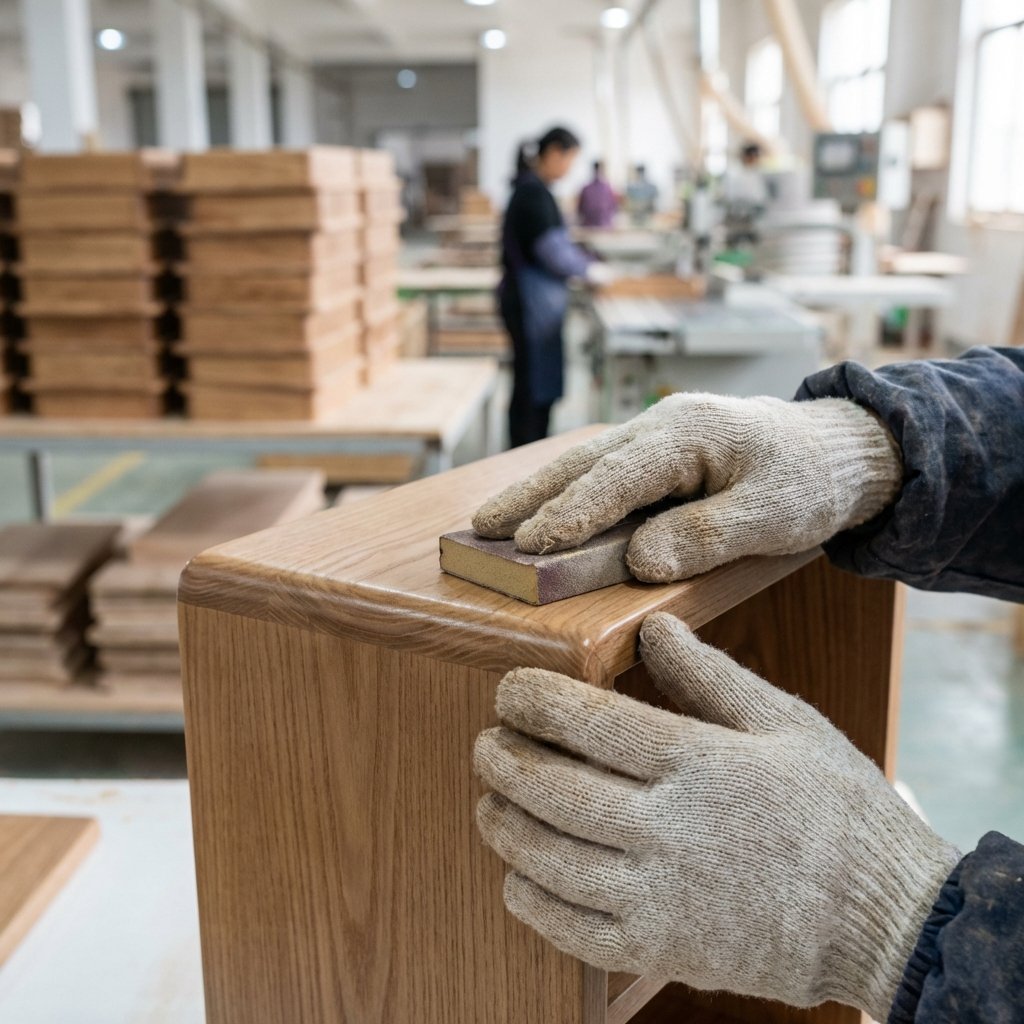
3.2 Sanding and Finishing Consistency
For brand owners and Amazon sellers, surface feel and color consistency are highly visible to end customers. In an OEM/ODM factory environment, finishing control typically covers:
- Grit sequences for sanding to avoid raised grain and scratch marks
- Stain or paint application method (spray, wipe, brush) for even coverage
- Gloss level agreements (matte, satin, semi-gloss) and color matching
- Oil, lacquer or water-based coatings chosen for specific markets
When communication is direct, you can send physical color chips or reference samples, then iterate quickly during sampling. In a trading model, color and varnish adjustments can require multiple back-and-forth cycles.
3.3 Hardware Fitting and Structural Stability
Many wooden boxes use hinges, clasps, magnets or metal frames. Structural stability depends on precise drilling, correct screw choice and suitable adhesive for magnets or inserts. Factory engineers are involved in:
- Optimizing hinge positions to avoid splitting thin panels
- Reinforcing load-bearing corners or edges
- Testing magnet pull force vs. wall thickness
- Aligning lids and bases to avoid twist and racking
With direct access to the factory, you can discuss failures from previous orders and adjust structures accordingly. In a trading setup, structural optimization is possible but tends to be slower because the technical discussion is indirect.
4. Customization Scope: From Sampling to Logo and Packaging
Custom wooden boxes are rarely one-size-fits-all. B2B buyers usually need tailored dimensions, interiors and branding. How efficiently these changes are handled is a major difference between factory direct and trading sourcing.
4.1 Common Customization Points for Wooden Boxes
- Size: Internal and external dimensions, wall thickness, lid height.
- Compartments: Fixed or removable dividers, slots for bottles, cards or tools.
- Hinges and magnets: Hidden or visible hinges, soft-close options, magnet positions and strengths.
- Inserts: EVA, foam, cardboard or wooden inserts for fragile items, glassware, cosmetics or electronics.
- Logo: Laser engraving, screen print, UV, hot stamping or metal badge.
- Color box: Printed retail box around the wooden item.
- Mailer carton and carton mark: E-commerce-ready packaging and shipping marks tailored to your warehouse or 3PL.
4.2 Factory Direct Sampling and Development
When you develop with a factory, OEM/ODM sampling is a structured process. Typical steps include:
- Preliminary drawing or reference sample review
- Material and finishing suggestions based on your target market
- Prototype with proposed hardware and inserts
- Logo position tests and packaging mock-ups
- Cost revision after design optimization
This direct conversation allows the factory to propose mixed material solutions (e.g., bamboo lid with MDF body and veneer) or thickness adjustments that reduce cost without downgrading perceived quality.
4.3 Trading Company Development Dynamics
Trading companies can also coordinate custom projects, but every decision passes through an extra layer. Changes to hinge position or insert design may require more sampling rounds and longer response times. For very detailed projects, buyers sometimes feel they are negotiating with an intermediary rather than the people who will solve the technical challenge.
5. MOQ, Price Structure and Lead Time
MOQ, cost and lead time are core concerns for importers and brand owners planning assortments and promotions. Both factory direct and trading models can be workable, but they typically behave differently under volume and customization pressure.
5.1 MOQ and Volume Flexibility
Factory MOQs are driven by material purchases, setup costs and finishing line efficiency. A factory may offer:
- Different MOQs for stock materials vs special species such as walnut
- Lower MOQs for simple finishes compared with complex painting and printing
- Project-based MOQ negotiations when you have annual forecasts
Trading companies sometimes advertise more flexible MOQs because they consolidate small orders across several buyers. However, this can mean less control over which factory makes each batch, which may influence long-term consistency.
5.2 Price Structure Transparency
With factory direct sourcing, you see how changes in material, finish or packaging affect cost at a technical level. For example:
- Switching from solid acacia to acacia veneer over MDF to control cost
- Reducing lid thickness or changing magnet size to offset a hardware upgrade
- Adjusting inner compartment complexity to meet a strict landed cost target
Trading prices often include additional margins along the chain. The quote can be clear, but the underlying cost structure is less visible, making it harder to engineer product versions for different retail tiers while keeping a consistent brand look.
5.3 Lead Time and Capacity Planning
Factories plan capacity by production line: cutting, assembly, sanding, finishing, packing. When you work directly with a Wooden Products Factory in China, you can discuss realistic production windows, peak-season risks and split shipments based on actual capacity, not just target dates.
Trading companies may work with multiple factories to buffer capacity but can be more exposed to delays if one supplier faces issues. For time-sensitive promotional orders or new listings with fixed go-live dates, visibility into real capacity is critical.
6. Damage Control and Export Packaging
Hidden costs often appear after goods leave the factory: transit damage, rework, refunds and poor reviews. Wooden boxes, with their hinges, glass or metal inserts and finished surfaces, require attentive export packaging.
6.1 Factory-Oriented Export Packaging Design
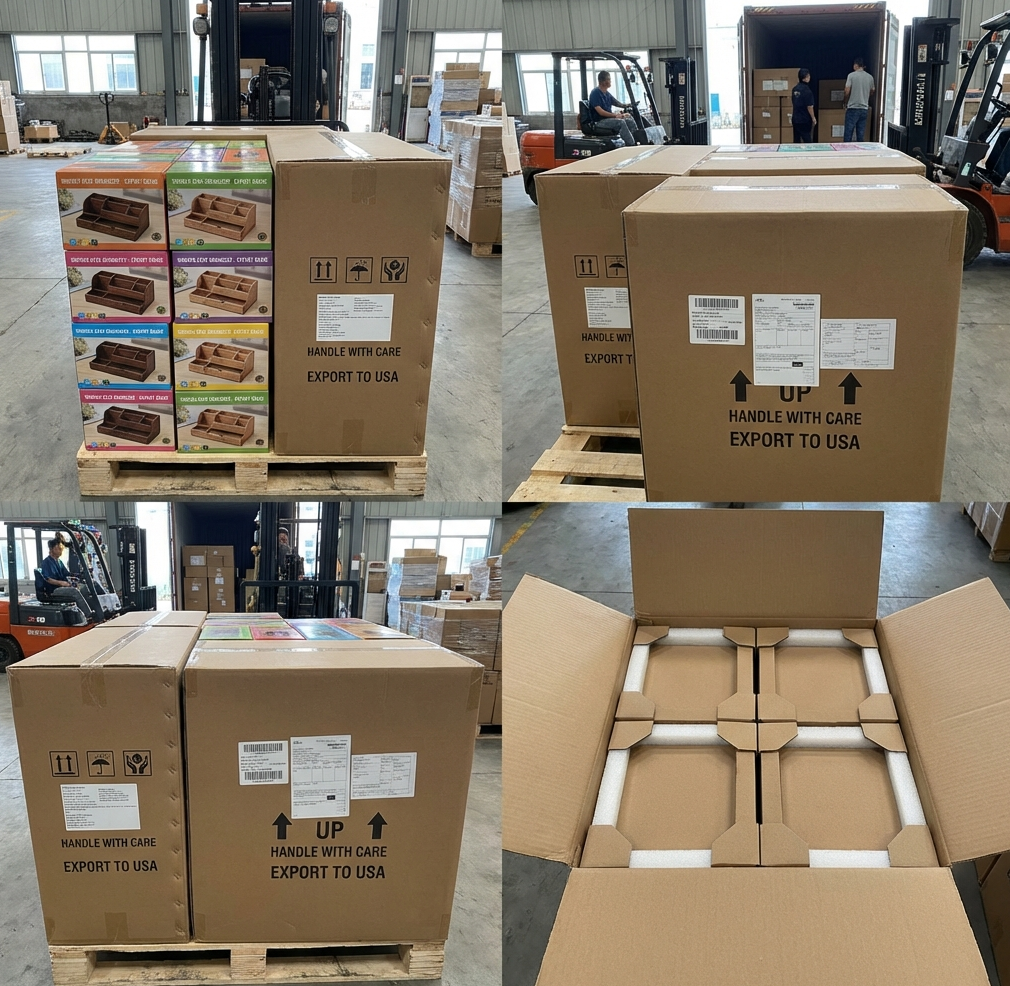
Factory teams who regularly ship export orders design packaging with both protection and container efficiency in mind. Key topics include:
- Individual protection: corner protection, foam pieces, bags or sleeves to avoid scratching.
- Inner carton design: partitioning, stacking direction and dunnage for drop resistance.
- Master carton planning: alignment with carton drop-test thinking and stacking strength.
- Palletization and container loading patterns to reduce crushing risk.
Because the factory sees actual damage feedback from multiple buyers and markets, they can refine carton dimensions, insert design and taping methods, reducing the risk of repeat problems.
6.2 Trading Company Involvement in Packaging
Trading companies usually rely on factories to propose packaging solutions and then coordinate buyer requirements such as color boxes, barcodes and labels. If the trading partner has strong QC routines, this can work well. However, when complex packaging is needed (e.g., e-commerce mailers with strict dimensional limits and drop-test expectations), direct engineering dialogue with the manufacturer is often more efficient.
7. Quality Control, Compliance and Repeat-Order Consistency
For wholesale and private label projects, a single successful shipment is not enough. Long-term value comes from repeat orders where quality, color, dimensions and packaging remain stable across batches.
7.1 Factory-Level Quality Checkpoints
A factory-oriented workflow designs quality into the process instead of relying only on final inspections. Important checkpoints include:
- Incoming wood inspection and moisture testing
- In-process checks for dimensions and panel flatness
- Surface inspection after sanding and between coats
- Assembly checks for hinge alignment and lid fit
- Final inspections for color, logo correctness and packaging integrity
When you source directly, these checkpoints can be aligned with your own AQL standards and retailer requirements. You can also request targeted checks for issues previously found in your market.
7.2 Compliance and Sustainability Conversations
Many EU and US buyers now require clear documentation or at least structured discussions on topics such as:
- FSC-oriented sourcing options
- Restrictions on certain coatings or adhesives
- Labelling, warning text or symbols required by retailers
Factories handling export wooden boxes on a regular basis know how to prepare relevant documents, test reports (where applicable) and internal process descriptions. Trading companies can coordinate this, but the information eventually comes from the production floor, so communicating directly can reduce misunderstandings and save time.
7.3 Repeat-Order Consistency
Consistency issues in wooden boxes often appear in color tone, veneer pattern, logo execution or dimensions. Factory direct sourcing allows you to:
- Keep stable finishing formulas and application processes
- Control wood sourcing routes to minimize color deviations
- Standardize jigs and fixtures for drilling and assembly
- Record and reference master samples for future batches
Trading companies may place repeat orders with the same factory, but if they switch suppliers for price or capacity reasons, subtle differences in finish, material or dimensions can appear, which is critical for brands selling coordinated sets.
8. When Trading Sourcing Makes Sense
Despite many advantages of factory direct sourcing, trading companies still play a useful role in certain scenarios:
- Broad category testing: When you are testing many different product types in small quantities, a trading company can consolidate sourcing.
- One-time or short-lived promotions: For limited projects where long-term consistency is less important, the speed of accessing ready-made designs can be attractive.
- Multiple-country mix: A trading company might combine products from several countries under one invoice and logistics service.
However, when wooden boxes and related organizers become a core long-term category in your portfolio, working directly with an OEM/ODM factory often offers better stability, technical control and cost structuring.
9. How Chic Homeware Supports Factory-Oriented Buyers
Chic Homeware focuses on factory direct cooperation with importers, wholesalers, distributors, Amazon sellers and private label brands. The aim is to combine manufacturing control with commercially practical communication.
9.1 OEM/ODM Workflow for Custom Wooden Boxes
For custom wooden boxes, organizers, trays and gift packaging, the typical collaboration flow includes:
- Project briefing with target market, price range and key functions
- Material route discussion: acacia, pine, paulownia, bamboo, walnut, MDF veneer and plywood veneer
- Structure optimization to balance appearance, strength and cost
- Sample development including logo and basic packaging concept
- MOQ and lead time discussion based on confirmed design
- Export packaging planning with container loading and drop-test thinking in mind
Because the entire process is managed at the factory level, technical adjustments can be implemented quickly, and the impact on cost and timing is clearly explained.
9.2 Support for B2B Requirements
Common concerns from EU and US buyers are integrated into daily practice, such as:
- FSC-oriented sourcing conversations and documentation where applicable
- Logo and packaging coordination for retail or e-commerce channels
- Carton mark planning for 3PL and warehouse operations
- Damage prevention thinking during export packaging design
This approach reduces friction between your purchasing, quality and logistics teams and the production floor, which is difficult to achieve when communication is filtered through multiple intermediaries.
10. Practical Checklist: What to Ask Before You Decide
Before choosing factory direct wooden boxes or trading sourcing for your next project, consider asking the following questions to your potential suppliers:
- Which wood species or material combinations do you recommend for my price and positioning?
- How do you control moisture content before and after assembly?
- What are your standard sanding steps and finishing options for my market?
- Can you show typical structures you use for hinges, magnets or heavy inserts?
- What is your usual MOQ for this design? Can it be adjusted for first order vs repeat orders?
- How do you design export packaging to reduce damage during sea or air shipment?
- How do you keep color and dimension consistency across repeat orders?
- What is your process for logo artwork approval and sample confirmation?
The quality and speed of answers to these questions often reveal whether you are speaking with the actual manufacturing team or an intermediary. For complex or long-term wooden box programs, direct access to the factory generally makes project management smoother.
Conclusion: Choosing the Right Partner for Factory Direct Wooden Boxes
Both factory direct and trading sourcing models can work for wooden boxes, organizers and gift packaging. Trading partners are useful for wide-range testing and small, short-term programs. However, when wooden products become a core part of your assortment, factory direct sourcing gives you deeper control over materials, moisture, finishing, packaging and repeat-order consistency.
Chic Homeware positions itself as an OEM/ODM partner for buyers who want to build sustainable wooden box ranges with practical communication, stable quality and clear cost structures. If you are planning a new collection or reviewing your current suppliers, you can explore more options on our Custom Wooden Boxes page or share your brief directly with our team.
Send your project details, reference photos or drawings, and we can discuss sampling, MOQ, lead time and packaging solutions based on a factory-oriented approach that supports your long-term brand and distribution goals.