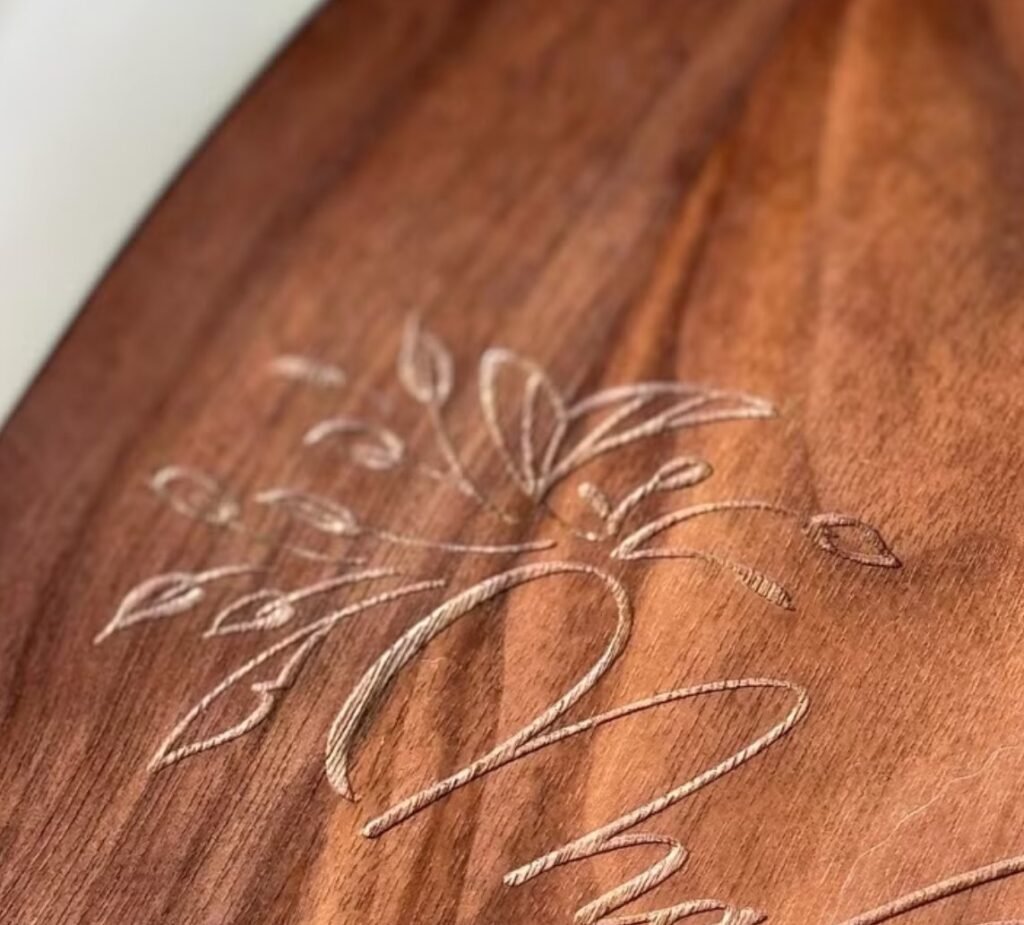

If you are searching for a customized wooden gift box, you are usually not just looking for a box.
You are looking for a supplier that can turn your packaging idea into a repeatable product with stable quality, predictable lead time, and acceptable landed cost.
That is where many projects go wrong.
In wooden packaging, the sample is often the easy part. Bulk production is the hard part. Wood reacts to humidity. Burned finishes can vary from batch to batch. Logo placement that looks clean on one sample can drift during mass production if the factory does not control the process tightly. For B2B buyers, the real question is not “Can they make one nice sample?” It is “Can they make 500 or 5,000 units that look acceptably consistent?” Wood moisture behavior is a real production variable, not a small detail. The USDA Forest Products Laboratory notes that wood moisture content changes with surrounding relative humidity and temperature, which is exactly why drying and storage control matter before assembly and finishing.
Why buyers choose a customized wooden gift box in the first place
A customized wooden gift box works well when the product needs more than protection. It also needs positioning.
That usually means one of four goals:
- make the product feel more premium
- improve shelf or unboxing presentation
- support private-label branding
- create a reusable package that adds perceived value
For importers and brand owners, wooden packaging is often chosen because it sits between rigid luxury packaging and commodity paper packaging. It can feel more durable than paperboard, but more distinctive than standard corrugated retail packs. The catch is that wood is less forgiving. If the supplier does not control moisture, sanding, finish tone, hinge fit, and print consistency, the package can look unstable from lot to lot.
A good factory should therefore discuss not only appearance, but also the structure, finish tolerance, branding method, insert design, and export packing method before quoting.
Start with the material, because the material changes everything
Many buyers treat wood species as a styling choice. In practice, it is also a cost, weight, and yield decision.
For a customized wooden gift box, the usual options are paulownia, pine, acacia, walnut, MDF-based structures with veneer, or mixed-material construction. For lightweight export gift boxes, paulownia is common because it is easy to machine, relatively light, and suitable for laser engraving and multiple finish tones. Pine is usually denser and more solid-looking. Hardwoods can raise the premium feel, but they also raise machining difficulty, cost, and sometimes rejection risk if the design includes thin walls or tight tolerances.
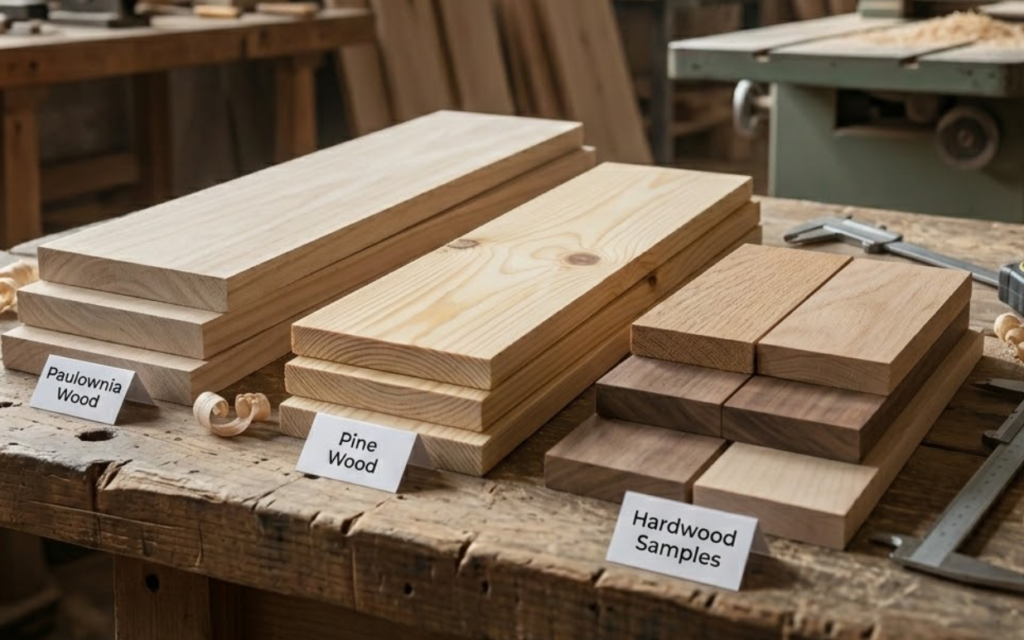
What matters most is not just species name. It is whether the supplier matches the wood to the intended use:
- Paulownia for lightweight gift boxes, promo packaging, and painted or burned finishes
- Pine for a stronger body and slightly more substantial feel
- Hardwood for premium positioning where material identity is part of the selling story
The technical reason buyers should care is simple: wood takes on and releases moisture depending on ambient conditions. That affects dimensional stability, lid fit, warping risk, and crack risk during shipping and warehousing. USDA Forest Products Laboratory publications explain that wood moisture content is tied to temperature and relative humidity, and that drying aims to bring moisture content closer to expected service conditions.
Finishing is not just aesthetic; it affects consistency and positioning
For this product line, your finish options matter because they shape how the market reads the box.
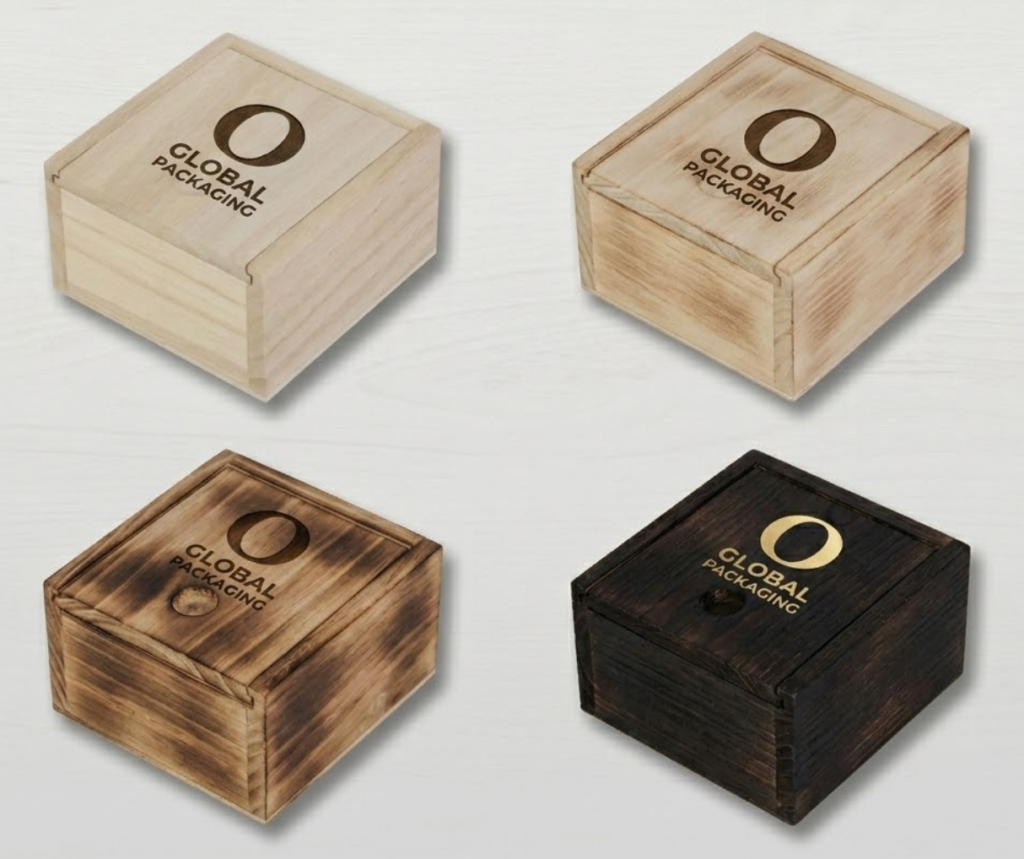
A natural unfinished look often works for DIY channels, handmade-style brands, and importers who want to do local decoration later. A light burn or medium burn finish usually suits rustic, gift, wine, and home decor categories. A darker burn or stained finish can look more premium, but it also makes tone variation more visible across batches.
That is why serious buyers should ask the factory three very practical questions:
- Will color approval be based on one physical sample?
- What level of tone variation is accepted in bulk?
- How is the finish controlled between different production lots?
The wrong way to buy is to approve one beautiful sample and assume the full order will match it exactly. The better way is to define an acceptable range.
Choose the branding method based on the brand goal, not only the artwork
Most customized wooden gift box projects are really branding projects in disguise.
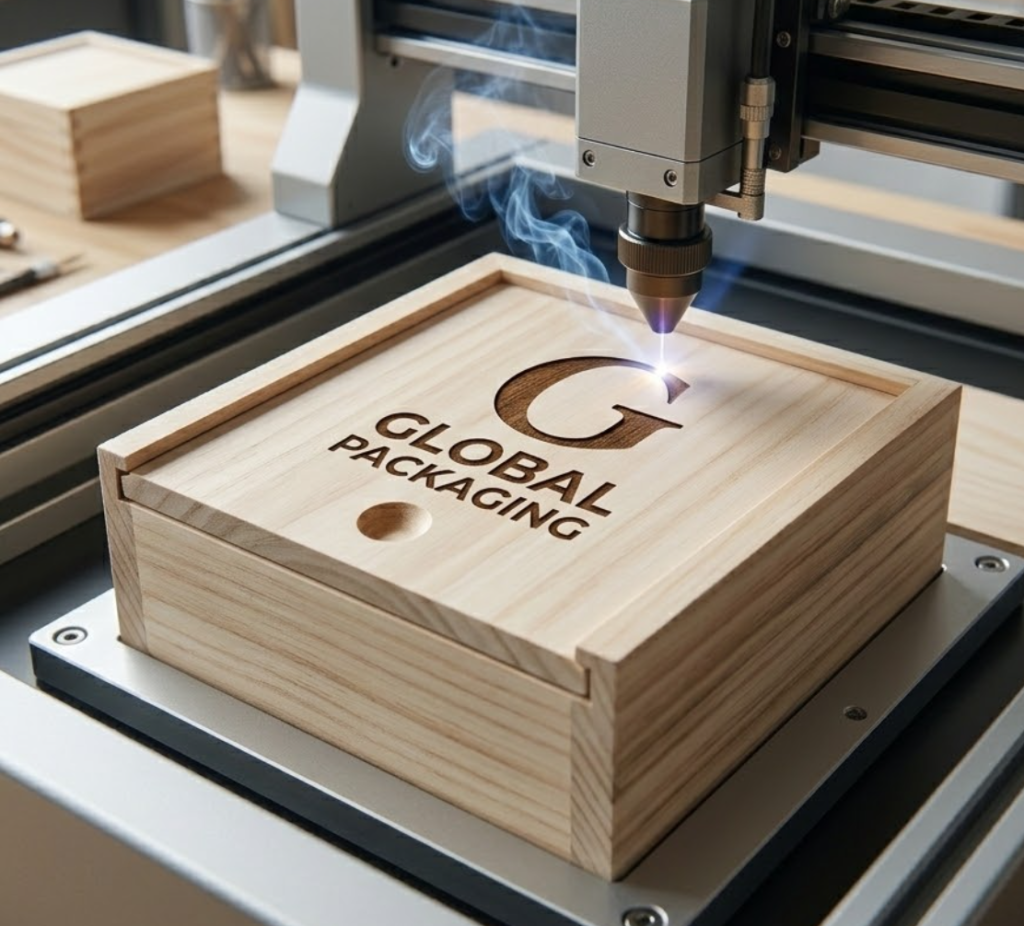
The common logo methods are:
- laser engraving
- UV printing
- silk screen printing
- hot stamping
- metal plate or badge attachment
Laser engraving is stable, tactile, and usually the safest option for a wood-first look. UV printing is better when color identity matters. Silk screen can be cost-effective for volume runs with simple artwork. But the best method depends on where the logo sits, how often the box will be handled, whether the surface is raw or sealed, and what the end market expects.
If the box will be used with food-related products, buyers should not stop at “food-safe wood.” That phrase is too vague. The FDA explains that food contact substances include not only packaging itself, but also packaging components and substances applied to packaging surfaces, such as adhesives and colorants. In practical sourcing terms, that means the real compliance discussion is often about the coating, ink, adhesive, insert material, or liner, not just the wood body.
Inserts and interior structure are often more important than the outer box
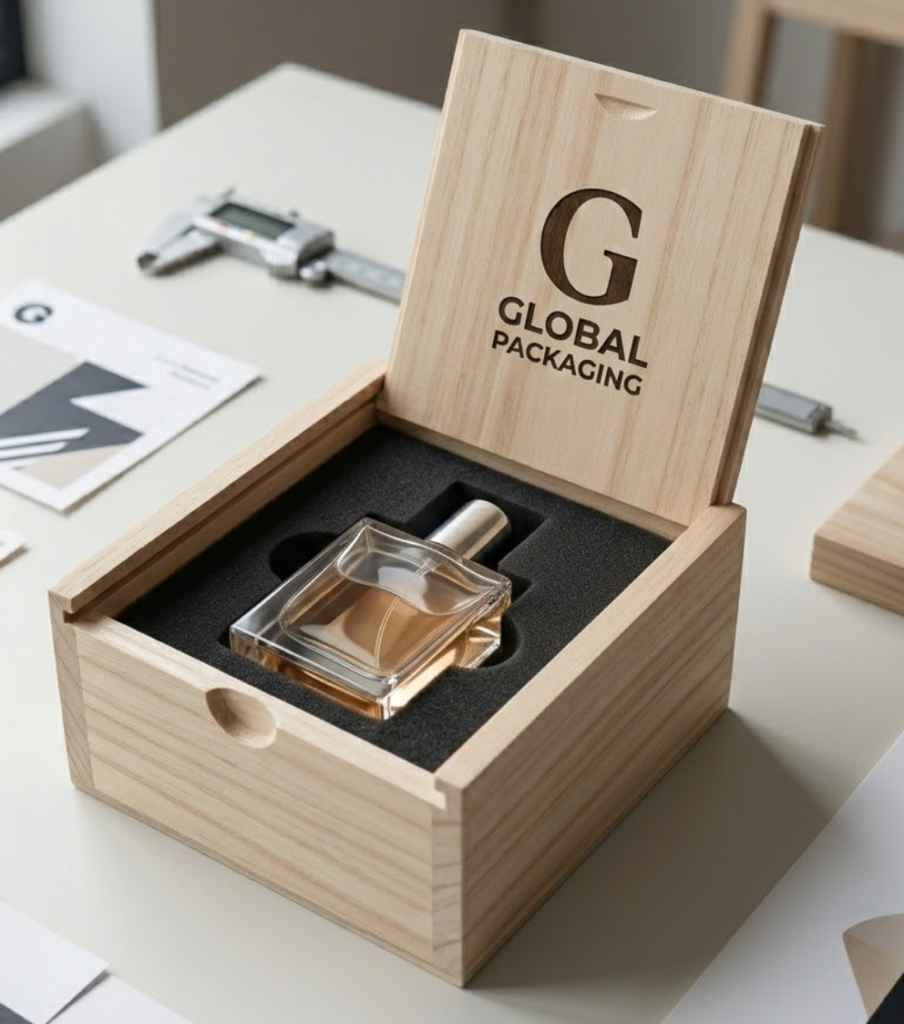
Buyers sometimes focus too much on the exterior photo.
In real export projects, the inside of the box often decides whether the packaging works. A perfume bottle, mug, candle, jewelry piece, tea tin, or gift set can fail in transit if the insert is wrong, even if the outer wooden box looks good.
Before approving a customized wooden gift box, buyers should define:
- product dimensions with tolerance
- orientation inside the box
- insert type: EVA, velvet, paperboard, foam, molded pulp, or none
- whether the insert is decorative, protective, or both
- whether the box must pass courier-style handling or palletized shipment only
A supplier who quotes too quickly without asking these questions is usually quoting the box as a photo prop, not as real packaging.
MOQ is a manufacturing logic, not a negotiation trick
Many overseas buyers ask for a low MOQ because they want to test the market. That is understandable.
But for a factory, MOQ exists because setup cost is real. A custom project often needs drawing confirmation, cutting setup, logo position testing, insert sampling, finish trials, and packing validation. If the box is simple and based on an existing structure, the MOQ can stay relatively friendly. If the project requires a new structure, custom insert, multiple decoration methods, and strict color matching, the minimum quantity usually rises.
A useful way to think about MOQ is this:
- standard box + simple logo = lower MOQ
- new structure + custom insert + special finish = higher MOQ
For many B2B orders, 300–500 pieces is a realistic entry point. If the supplier promises a very low MOQ on a complex wooden packaging project, you should ask where they are making up the cost. Often it appears later in sampling charges, poor finish control, or inconsistent handwork.
Sampling should test risk, not just appearance
A sample should answer questions.
Too many buyers use sampling only to check whether the box “looks nice.” A better sample process checks the production risks early:
- Does the lid sit flat?
- Is the wall thickness strong enough?
- Does the insert fit tightly without stressing the product?
- Does the logo stay sharp on the chosen finish?
- Does the hinge or magnet alignment stay consistent after repeated opening?
- Does the finish still look correct under warehouse light, not only photo light?
For higher-value programs, it is often worth approving two things separately:
the structure sample and the color/logo approval sample.
That reduces confusion later.
Quality control for wooden packaging should be specific
If a supplier says “we check quality carefully,” that tells you almost nothing.
For a customized wooden gift box, your inspection points should be written down. A practical B2B QC checklist often includes:
- dimensions and internal usable size
- moisture-related issues such as warp, split, or panel movement
- lid alignment and gap consistency
- magnet or hinge position
- sanding quality and edge smoothness
- burn/stain tone range
- logo location and clarity
- insert fit
- odor level after finishing
- export carton condition
This is especially important if you are buying for Amazon FBA, chain retail, subscription boxes, or corporate gifting, where repeatability matters more than artisan uniqueness.
Export packaging is part of the product, not an afterthought
Some projects fail not because the box was made badly, but because the shipper packed it badly.
Outer cartons, dividers, inner polybag choice, carton drop resistance, and pallet pattern all affect claim rates. For this reason, many serious buyers ask the supplier to validate shipping performance with recognized package-testing logic. ISTA provides standardized test procedures and testing guidance used to evaluate packaged-product performance and transport risk.
That does not mean every wooden gift box project needs formal lab certification. But it does mean the supplier should understand what happens in small-parcel delivery, LCL shipping, or long warehouse storage, and should be able to propose a sensible packing plan.
Sustainability questions are now part of normal procurement
For many buyers, sustainability is no longer an optional marketing line. It is part of vendor approval.
If your market asks for FSC, buyers should know what FSC actually covers. FSC explains that its certification system verifies responsible sourcing through the value chain, and that chain-of-custody certification is the mechanism used to verify that certified forest-based materials are credibly tracked from forest to finished goods. FSC also notes that certificates are issued by accredited certification bodies, not by FSC itself.
So if a supplier claims “FSC material,” the buyer should ask a more precise question:
Is this project supplied under valid FSC chain-of-custody rules, or is the factory only saying the raw material source is FSC-related?
That difference matters.
How to evaluate a customized wooden gift box supplier before you place the order
A serious supplier evaluation is usually more revealing than the quote itself.
Here is a practical shortlist of what buyers should verify before placing a bulk order:
- Can the supplier explain why a certain wood is suitable for the structure?
- Do they ask about insert protection and shipping method?
- Can they show similar past projects, not just attractive random samples?
- Do they define finish variation tolerance honestly?
- Do they discuss QC points before deposit payment?
- Can they recommend a carton spec, not only quote the box?
- Are they clear about lead time for sample, pre-production, and bulk?
- Do they understand your channel: distributor, private label, Amazon FBA, or brand retail?
In real B2B sourcing, the best supplier is usually not the one who says yes to everything. It is the one who identifies your risk early and helps you reduce it.
Final takeaway
A customized wooden gift box is a useful packaging format when you need branding, perceived value, and a more substantial presentation than ordinary paper packaging.
But it only works well when the sourcing process is handled like a manufacturing project, not like a photo-ordering exercise.
If you are comparing suppliers, look beyond the sample photo. Ask how the factory controls moisture, finish consistency, insert fit, export packing, and brand application in bulk. That is where most of the real cost and most of the real risk live.
For wholesale buyers, importers, and brand owners, that is the difference between a pleasant sample and a reliable supply program.
FAQ
What wood is usually best for a customized wooden gift box?
It depends on the project goal. Paulownia is often chosen for lightweight export packaging and flexible customization. Pine can feel sturdier. Hardwoods are better when premium material identity is part of the product story. The best choice is the one that matches your structure, finish, and target price.
What is a realistic MOQ for a customized wooden gift box?
For a relatively standard structure, 300–500 pieces is common. If the box requires a new structure, custom insert, and multiple decoration methods, the MOQ usually needs to go higher to keep production stable.
Is laser engraving better than UV printing?
Not universally. Laser engraving is better when you want a natural wood look and permanent branding. UV printing is better when color accuracy matters. The right answer depends on your branding style, handling conditions, and price target.
Can a wooden gift box be used for food-related products?
It can be used for food-related packaging, but buyers should evaluate the whole contact system, not just the wood. If coatings, inks, adhesives, liners, or inserts may contact food, those materials matter too. FDA guidance treats packaging components and substances applied to packaging surfaces as relevant to food-contact compliance.
How do buyers reduce the risk of cracking or warping?
The main controls are proper drying, stable storage, sensible structure design, and avoiding rushed finishing. Buyers should ask how the supplier controls moisture before assembly and how finished goods are stored before shipment. USDA wood-moisture guidance is useful background here.
Do I need packaging tests for a wooden gift box order?
Not every project needs formal lab testing, but export packaging should still be validated. If the goods will move through courier networks or long international routes, asking the factory about drop resistance, carton design, and test logic is a smart step. ISTA testing frameworks are commonly used as transport-packaging references.
If a supplier says the product is FSC, what should I ask next?
Ask whether the order is supplied under valid FSC chain-of-custody rules. That is more precise than a broad claim about “FSC wood,” and it is the better way to verify whether the certified material is credibly tracked through the supply chain.