
Custom Wooden Chocolate Boxes: OEM B2B Sourcing Guide
For importers, wholesalers and private label brands in the chocolate category, wooden gift packaging is no longer just a “nice to have.” It is a key tool to move up in price point, differentiate on crowded online marketplaces, and reduce damage claims. But selecting the right wooden packaging ideas for chocolate gift sets is very different from shopping for a retail gift box. It is about material behavior, moisture control, repeat-order stability and production thinking at scale.
This guide summarizes what experienced B2B buyers typically prioritize when they brief Chic Homeware as their OEM/ODM partner for custom wooden chocolate gift boxes and sets.
1. Clarify the Role of Wooden Packaging in Your Chocolate Offer
Before discussing materials and finishes, define the business role of the wooden packaging. This will guide all technical choices and cost structure discussions with your supplier.
1.1 Positioning: Premium, Seasonal or Everyday Gifting
For chocolate gift sets, we usually see three positioning types:
- Luxury or limited edition: Heavier woods such as acacia or walnut, darker stains, and more complex structures (sliding lids, inlay trays, magnetic closures). Buyers here target higher resale prices and long-term box reuse by consumers.
- Seasonal gifting (Christmas, Valentine’s, Mother’s Day): Balanced between visual impact and cost. Pine, paulownia, bamboo and veneers are common. Box structure must work across different flavors and assortments.
- Volume-driven or subscription chocolate boxes: Lightweight materials, efficient dimensions for logistics, and simplified finishing. MDF veneer or plywood veneer can help achieve a consistent “wood look” while managing price and weight.
1.2 Single-use vs. Reusable Packaging
If your brand story depends on reusability (jewelry box, keepsake box, kitchen storage after the chocolate is consumed), the wooden box must be built for longer life:
- Stronger hinges and closures, properly countersunk screws or stable magnetic fittings.
- Smoother sanding with fewer splinters, especially on edges and corners.
- More durable surface finishing (PU coating, water-based lacquer, or UV finish) to handle repeated handling.
For one-off promotional sets, you may accept simpler hardware and a thinner coating, prioritizing unit cost and weight instead.
2. Selecting the Right Wood Material for Chocolate Gift Packaging
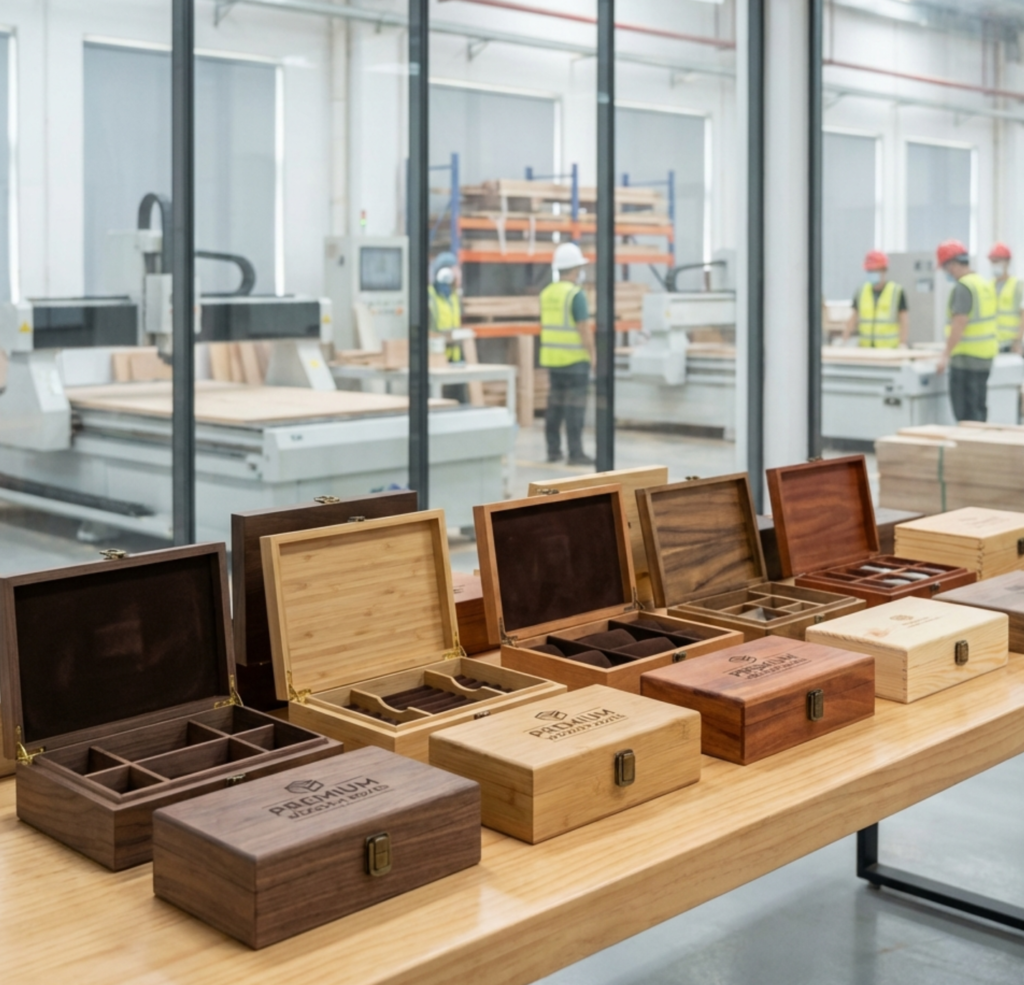
Chic Homeware supports multiple wood species and constructions, including acacia, pine, paulownia, bamboo, walnut, MDF veneer and plywood veneer. Each option behaves differently in terms of appearance, weight, machinability and price. Your material choice should match your chocolate format, transport plan and budget.
2.1 Overview of Common Material Options
| Material | Key Characteristics | Typical Use in Chocolate Gift Sets |
|---|---|---|
| Acacia | Hard, dense, rich grain, premium look, heavier | High-end collections, limited editions, luxury gifting, co-branded corporate sets |
| Walnut | Dark, elegant, fine grain, high perceived value | Luxury corporate gifts, special assortments, brand flagship lines |
| Pine | Softwood, light color, cost-effective, easy to process | Seasonal promotions, mid-range gift boxes, painted boxes |
| Paulownia | Extremely light, stable, good for larger formats | Large assortments, online shipping where weight is critical |
| Bamboo | Fast-growing, modern aesthetic, strong with a unique grain | Eco-oriented brands, Asian-inspired collections, wellness-related chocolate ranges |
| MDF veneer | Stable core, smooth surface, wood veneer appearance | Precise edges, clean geometry, consistent look over large runs |
| Plywood veneer | Layered sheet, good strength-to-weight, cost-effective | Flat-lid boxes, sliding lids, mailer-optimized structures |
2.2 Matching Material to Channel and Logistics
For Amazon sellers and e-commerce brands, dimensional weight and breakage risk directly influence profitability. Lightweight materials (paulownia, certain plywood constructions) help reduce shipping cost. For boutique retail or duty-free channels, acacia and walnut pay off in perceived value at shelf and in-hand feel.
Discuss with your supplier how the chosen material will behave in your target climate and logistics route. For example, very dry climates or long sea freight legs require more disciplined moisture control and potential adjustment of wall thickness.
3. Moisture Control and Food-Adjacent Safety Thinking
Chocolate is highly sensitive to temperature and humidity. While the chocolates are usually packed in inner trays, pouches or blisters, the wooden outer box still influences overall performance during shipping and storage.
3.1 Moisture Content of Wood
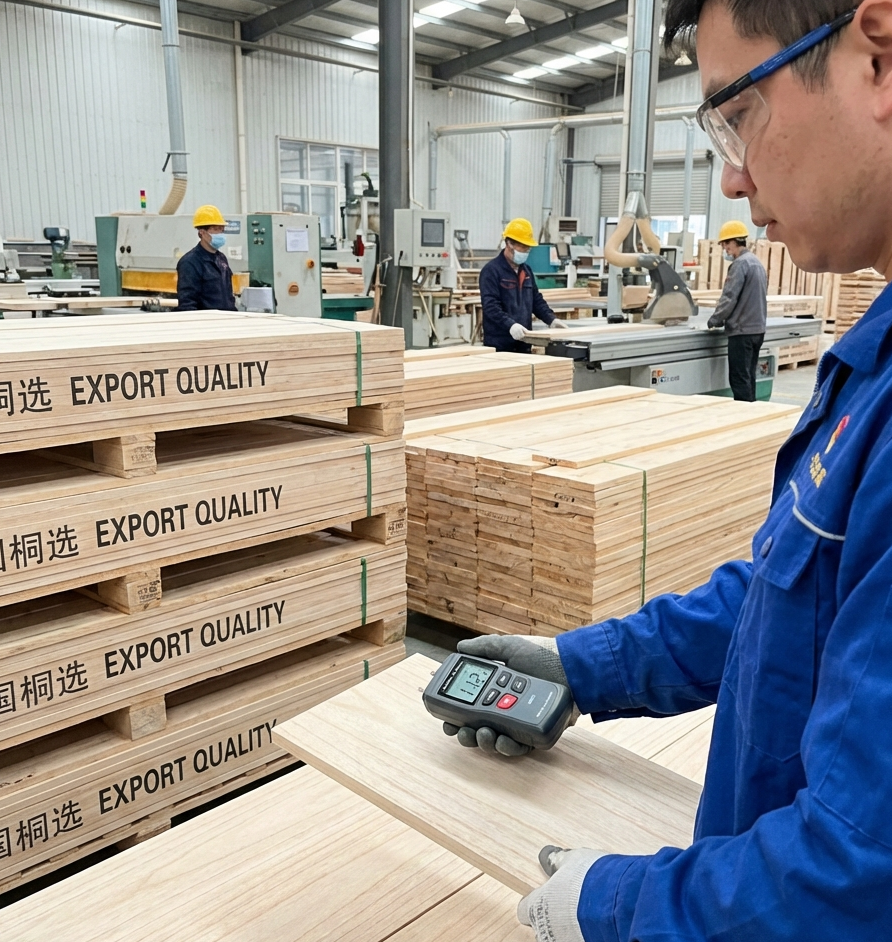
For export-focused chocolate gift projects, a stable moisture content in the wooden box is essential to minimize warping, cracking and lid misalignment. A factory-oriented partner will:
- Select kiln-dried boards in appropriate ranges for your destination climate.
- Control workshop humidity to avoid re-absorption of moisture during machining and finishing.
- Check moisture at critical points: before machining, after assembly and before final packing.
For buyers, the practical question is: how will the factory manage moisture for my specific route and season, and can we validate that during sampling?
3.2 Surface Finish and Odor Considerations
Even if the wooden box does not directly contact chocolate, B2B buyers need to think about odor and migration risk. Recommend discussing:
- Use of low-odor, food-contact-conscious coatings where appropriate.
- Adequate drying and curing time so that residual solvent smell does not impact the unboxing experience.
- Compatibility with your inner packaging format (foil, blister, paper inserts, plastic trays).
Chic Homeware frequently collaborates with buyers on sample-based validation, where you load chocolate prototypes into pre-production boxes and verify no off-odor or condensation issues appear after simulated transport.
4. Structure Design: Compartments, Inserts and Closures
Successful wooden chocolate gift packaging is usually a combination of the outer wooden structure plus a tailored inner system that holds the chocolate firmly and presents it attractively.
4.1 Compartments and Internal Layout
Key questions to clarify early:
- Are chocolates individually wrapped, in blisters, or loose in cups?
- Is the count fixed (e.g., 12-piece, 24-piece), or will you need layout flexibility across SKUs?
- Will you mix formats (bars plus truffles, chocolate plus accessories like spoons or mugs)?
Based on these answers, common wooden packaging ideas include:
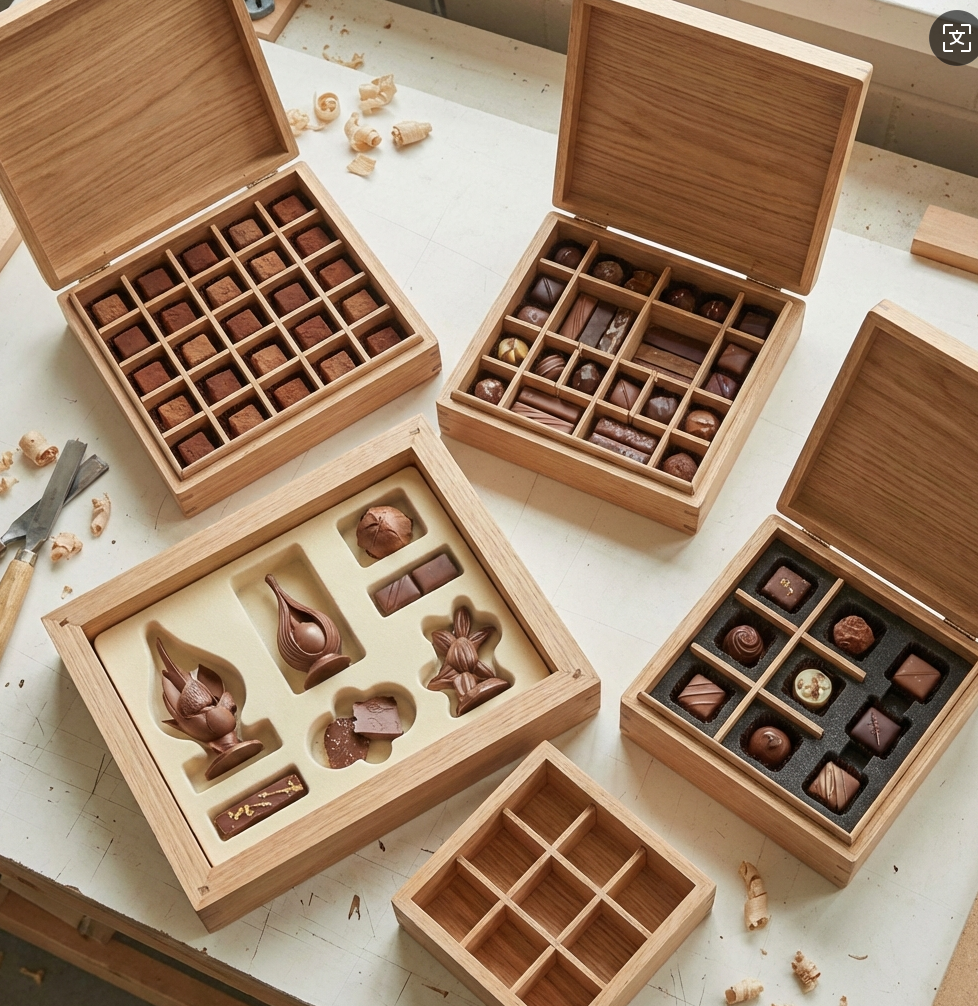
- Fixed wooden compartments: Elegant and durable, suitable for consistent assortments. Requires more precise planning of piece dimensions.
- Removable dividers: Ideal for brands that plan future flavor changes or different seasonal mixes under the same outer box shape.
- Hybrid structures: Wooden outer, with paperboard, EVA, foam or molded pulp inserts. This helps control cost and weight while keeping a premium wooden appearance.
4.2 Closure Types and Unboxing Flow
Closure design affects both perceived value and damage risk. Common choices for chocolate gift sets include:
- Simple hinged lid with clasp: Often used in mid-range sets. Metal clasp or hook hardware gives a classic gift feel.
- Magnetic closure: Cleaner look, suitable for contemporary brands. Requires careful fitting to avoid misalignment when wood moves slightly.
- Sliding lid: Efficient to produce, good for flat trays of chocolates or bars, and easy to stack for e-commerce warehousing.
- Lift-off lid with internal shoulder: Creates a tight, premium feel. Needs precise tolerance control to ensure a smooth open/close experience.
B2B buyers should ask for hand-feel checks during sampling: how does a customer open the box, where do they hold it, and does anything feel loose or misaligned?
5. Surface Finishing, Sanding Quality and Branding
For chocolate gifts, the first visual and tactile impression of the packaging can strongly influence perceived taste and quality. The finishing choices you make with your wooden box supplier are central to this.
5.1 Sanding Consistency and Edge Treatment
Sanding is a basic process but often defines the difference between a value line and a premium gift product. In B2B projects, you should align on:
- Acceptable smoothness on all touchpoints, not only on the lid surface.
- Edge rounding level: sharp, slightly rounded, or fully rounded corners, depending on brand language and safety preferences.
- Inside sanding: particularly important if the box is intended for reuse, or if customers will touch inner walls when removing trays.
5.2 Stain, Paint and Clear Coat Choices
Popular finishing approaches for chocolate gift boxes include:
- Natural clear coat: Showcases the original grain of acacia, walnut or bamboo. Works well for artisanal or origin-focused chocolate brands.
- Dark stain: Adds luxury feeling, especially with brass hardware or gold-foil logos.
- Painted surfaces: White, black, or brand color panels, often on pine or MDF veneer. This is effective for strong visual identity and seasonal collections.
- Mixed materials: Wooden body with contrasting veneer lid, or fabric/leather-wrap sections. Adds design interest while managing cost.
In every case, consistency across batches is critical. B2B buyers should request a clearly defined color standard, sample board or Pantone reference where paint or stain tone is important.
5.3 Logo Application Methods
Chic Homeware supports multiple logo processes for wooden chocolate packaging:
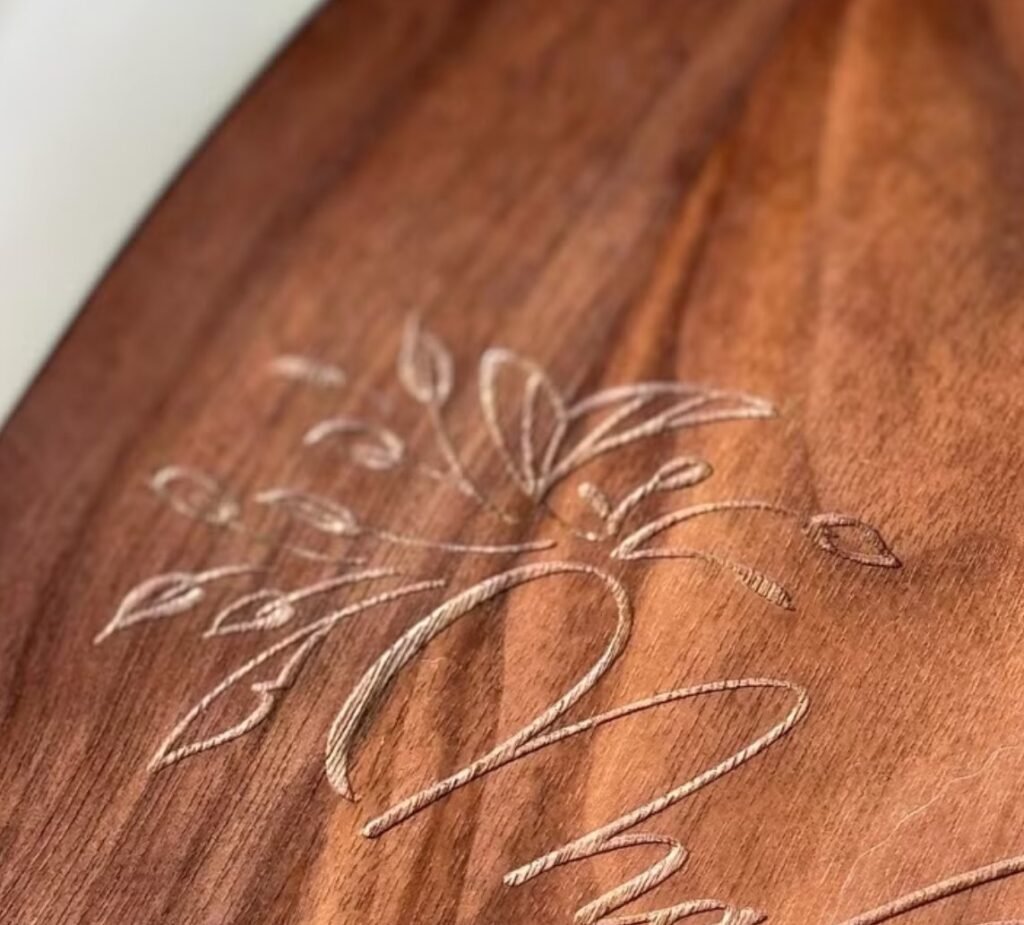
- Laser engraving: Clean, permanent, and suitable for both small and large runs. Works well with natural and stained finishes.
- Silk screen printing: Good for bold, simple logos and flat color areas.
- UV printing: For more complex graphics or photographic elements.
- Metal or acrylic badges: Often used for premium corporate gifting; badges can be affixed to the lid or side.
Discuss location (lid center, corner, inside lid message), maximum print area and tolerance for placement deviation. For Amazon and online sellers, detailed product photos must match actual logo scale and positioning to avoid returns and negative feedback.
6. Practical OEM/ODM Workflow for Chocolate Gift Box Projects
A commercially practical development path is just as important as design quality. When planning wooden packaging ideas for chocolate gift sets, the following workflow typically helps B2B buyers manage risk and timelines.
6.1 Initial Briefing and Feasibility
Provide your supplier with as much concrete information as possible at the start:
- Target channels (retail, e-commerce, corporate gifting, duty free).
- Chocolate format (bars, pralines, truffles, mixed sets) and inner pack dimensions.
- Target retail price band and budget range for empty packaging.
- Expected annual volume and launch timing.
- Any specific sourcing or certification expectations, such as FSC-oriented discussions.
This allows the OEM/ODM supplier to propose realistic materials, structures, and finishing options matching your cost and lead time constraints.
6.2 Sampling and Refinement
Sampling is where you can identify and correct issues before committing to tooling or mass production. A robust sampling process usually includes:
- Size and structure samples (sometimes uncoated) to confirm fit with your chocolates.
- Finish samples showing stain/paint/clear coat options on the actual material.
- Logo and branding samples to confirm color and positioning.
- Optional transport-simulation trials, where you pack sample chocolates in sample boxes and evaluate after a shipping test.
For complex or high-value projects, a second round of samples incorporating corrections is often worthwhile, especially where lid fit, magnet strength or inner trays require fine-tuning.
6.3 MOQ, Lead Time and Price Structure
B2B buyers should openly discuss:
- MOQ (Minimum Order Quantity): Influenced by material, process complexity and whether multiple SKUs share the same base structure.
- Lead time: Needs to consider material procurement, sampling approval, production time and shipping. Seasonal products may require earlier bookings to avoid capacity bottlenecks.
- Price structure: Clarify what is included (inner trays, printing on outer cartons, inserts, protective packaging). Identify potential cost breaks at higher quantities.
A factory with experience in export chocolate packaging can help you balance these variables and suggest approaches such as shared components across SKUs or modular inserts to reach MOQ thresholds efficiently.
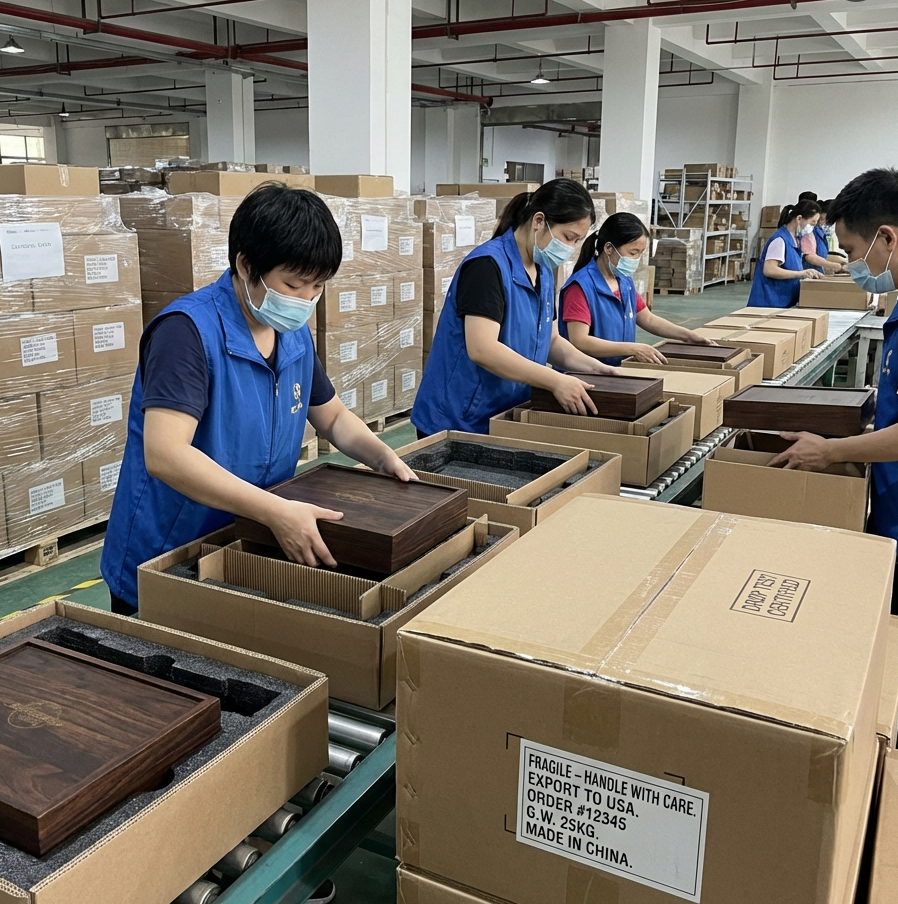
7. Export Packaging, Carton Planning and Damage Control
Because chocolate is sensitive to damage and deformation, wooden packaging must be planned not only as a retail object but as part of a full logistics system.
7.1 Outer Carton Design and Protective Materials
In B2B practice, robust export packaging is a non-negotiable. Key points include:
- Choosing inner packing materials around each wooden box (polybag, bubble bag, protective corners or paper padding) to minimize scuffing and corner damage.
- Optimizing master carton count and orientation for stability and cost-effective palletization.
- Aligning carton strength (single wall, double wall) with box weight and stacking height in your warehouse.
Discuss your internal drop-test or handling expectations early. Chic Homeware can apply “carton drop-test thinking” to adjust corrugated carton grade and inner protection before mass production.
7.2 Carton Marks, Barcodes and Compliance Labels
Most B2B chocolate packaging buyers need controlled carton markings and labeling. Typical requirements include:
- Carton marks with SKU, color, quantity, and gross/net weight.
- Barcodes or QR codes for warehouse scanning.
- Country of origin and handling symbols.
Agreeing a clear carton artwork or layout document reduces mislabeling risk and supports smooth customs clearance and warehouse operations.
7.3 Consistency for Repeat Orders
For chocolate brands with rolling seasonal ranges or subscription models, repeat-order consistency is critical. You should ask your supplier:
- How they record material and finishing parameters for future runs.
- Whether critical dimensions and color targets are stored as internal standards.
- How they handle minor supplier changes (e.g., new lacquer or veneer supply) while maintaining visual continuity.
Stable processes help ensure that your second and third production runs match the first, avoiding mixed stock appearance on shelf or in online product galleries.
8. Compliance and Market-Specific Considerations
When planning wooden packaging ideas for chocolate gift sets, compliance discussions should happen early, especially for EU and US markets.
8.1 Sourcing and FSC-Oriented Discussions
Many chocolate brands link their packaging story to responsible sourcing. While not every project requires certification, it is important to clarify:
- Whether you need FSC-certified or FSC-mix options.
- What documentation and chain-of-custody evidence you expect.
- How that affects material selection, pricing and lead time.
Early alignment prevents redesigns later and ensures marketing claims about sustainability are backed by the actual material route.
8.2 Market Regulations for Coatings and Packaging
Although the wooden box is often an outer, non-food-contact layer, some markets still require broader packaging conformity. Common discussion points include:
- Use of compliant coatings and adhesives for your target market.
- Restrictions on heavy metals and other substances in paints and hardware.
- Any special requests from your retailers or distribution partners.
Chic Homeware normally addresses these in project-based compliance communication, aligning documentation with your own QA framework and the needs of your downstream partners.
9. Working with a Factory-Oriented Partner for Wooden Chocolate Packaging
Selecting the right OEM/ODM partner for wooden chocolate gift boxes is about more than catalog designs. You need a manufacturer that combines material knowledge, export experience and flexible development support.
9.1 Advantages of a Direct Wooden Products Factory
A factory-oriented supplier like Chic Homeware can integrate material sourcing, moisture control, finishing and export packing in one workflow. This reduces friction for B2B buyers and shortens the feedback loop when adjusting structures and finishes. You can learn more about this approach in our overview as a Wooden Products Factory in China.
9.2 Customization Depth for Chocolate Gift Sets
Compared with off-the-shelf boxes, a project-based OEM/ODM workflow allows:
- Custom sizes tuned exactly to your chocolate trays or blister packs.
- Mixed-material suggestions (wood plus veneer, fabric, acrylic windows) based on your target look and budget.
- Tailored inner inserts, logos, hinges, magnets and packaging configurations for different SKUs.
If you need a fully branded system beyond chocolate packaging, you can also explore our broader capabilities as a Custom Wooden Products Manufacturer.
9.3 From Sampling to Scale
Chic Homeware’s OEM/ODM process is designed so importers, distributors and Amazon sellers can move from idea to repeatable production with controlled risk:
- Concept discussion and technical recommendation.
- Sampling with practical feedback on structure, finishing and branding.
- MOQ and price structure discussions aligned with your forecast.
- Export packaging planning and carton optimization for your logistics setup.
10. Conclusion: Turning Wooden Packaging Ideas into Profitable Chocolate Gift Programs
Well-designed wooden packaging for chocolate gift sets does more than look beautiful. It protects sensitive product, supports your brand positioning, survives the supply chain and stays consistent across repeat orders.
When planning your next chocolate gift project, focus on:
- Clarifying the commercial role of the wooden box (premium, seasonal, volume).
- Choosing the right material route based on channel, logistics and budget.
- Managing moisture, finishing and odor to respect chocolate’s sensitivity.
- Optimizing structure, inserts and closures for safe transport and strong unboxing.
- Aligning export packaging, carton marks and compliance from the beginning.
If you are exploring new wooden chocolate gift concepts or upgrading an existing line, Chic Homeware can support you with sample development, logo customization and export-oriented thinking. Review more options for tailored box structures on our Custom Wooden Boxes page, or share your brief directly with our team to start a practical OEM/ODM discussion.