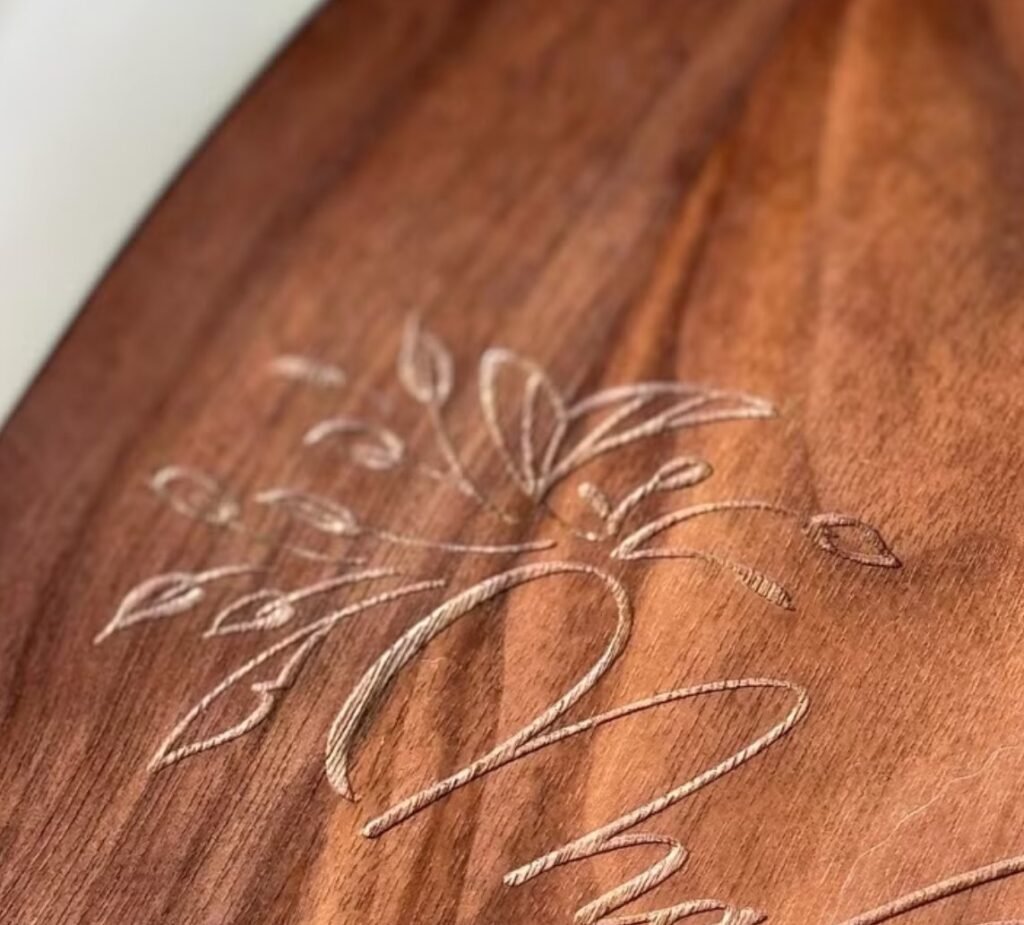

If you are sourcing a china made wooden stash box made in China for wholesale, private label, or Amazon programs, the product looks simple—but buyers often run into the same issues: warped lids, strong odor from finish, loose hinges, broken glass jars in transit, and inconsistent internal layouts.
This guide is written for importers, brands, and Amazon sellers who want a stable supply chain, consistent QC, and OEM flexibility.
What buyers mean by “wooden stash box” in today’s market
A wooden stash box is usually a multi-compartment storage box designed to keep small items organized. In many markets, buyers request features like:
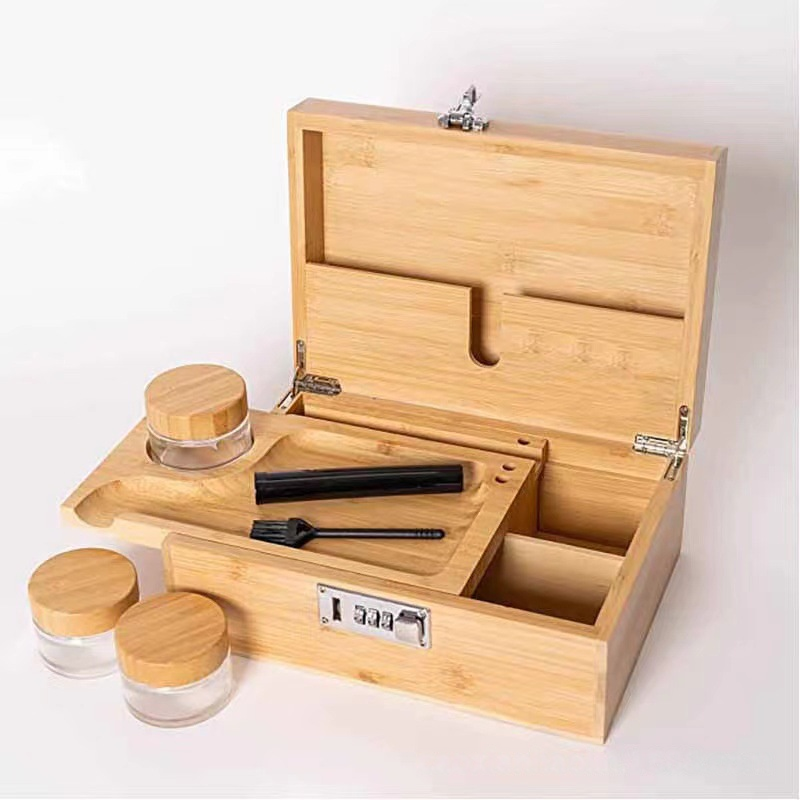
- Removable rolling tray (flat tray or with corners)
- Glass jars (1–3 pcs) with protective slots
- Dividers for accessories
- Combination lock or key lock
- Hidden compartment or lift-up tray
- Custom foam / EVA / wooden insert to fix parts in place
From a manufacturing view, these features determine your tooling, assembly time, packaging, and defect rate, so they should be confirmed early (before samples).
Why source a wooden stash box from China (and what to check first)
When requesting a quote for a china made wooden stash box, send your layout sketch, accessory sizes, and packaging expectations.,For a china made wooden stash box program, confirm MOQ, lead time, and insert structure before sampling,China sourcing works well when you need:
- OEM/ODM customization (structure, insert, branding)
- Flexible small-batch programs (your MOQ target is 100 pcs)
- Scalable supply once the listing proves demand
For wholesale programs, set realistic expectations:
- MOQ: 100 pcs (trial orders)
- Lead time: 30–40 days (after sample approval and deposit)
- Customization scope: size, logo, compartments, lock type, color/finish, and packaging (packaging typically buyer-defined for B2B)
Materials we recommend for premium stash boxes: bamboo and acacia
Material is your first “quality signal” to buyers and also your biggest variable for stability.
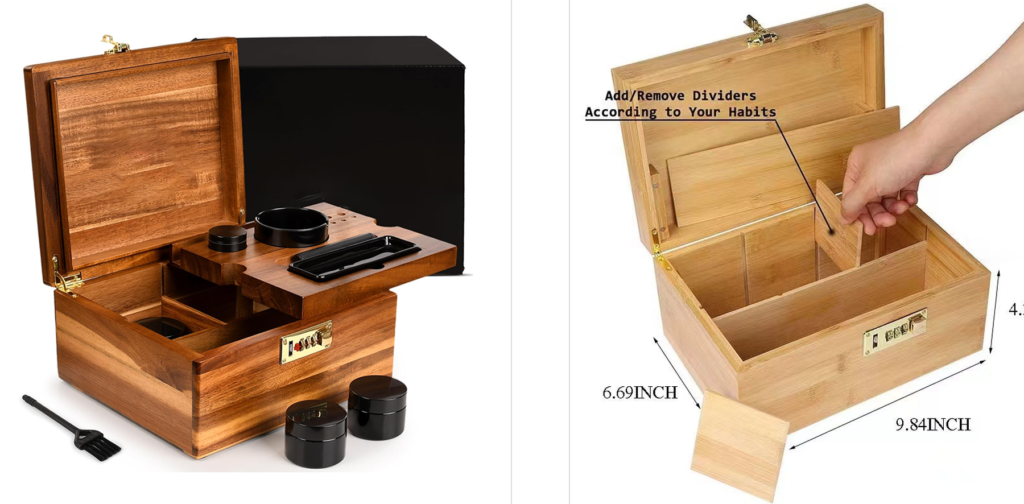
Bamboo: clean look, consistent panels, great for modern brands
Bamboo panels offer a consistent grain and clean appearance, which works well for minimalist design and private label branding. Bamboo is also popular for box kits that include trays and accessory compartments.
Acacia: harder wood, richer grain, premium feel
Acacia is harder and visually “premium” with stronger natural grain contrast. For higher-end positioning, acacia is a strong option for the lid, frame, or full body.
When pine/paulownia makes sense
If your positioning is “entry-level” or you want lower freight cost, pine and paulownia can be used. Paulownia is lightweight; pine is a solid mid-range choice. (For premium SKUs, most buyers still prefer bamboo or acacia.)
Quality control that prevents returns (warping, odor, loose hinges)
Most customer complaints come from a few controllable points.
Moisture control target and why it affects stability
For wood products exported to dry or variable climates, controlling moisture is critical. We commonly manage wood moisture in the 8–12% range to reduce warping and cracking risk during shipping and storage (exact target depends on wood type and destination climate).
Buyer tip: Ask your supplier to confirm their moisture control method and inspection point (before assembly, after finishing, before packing).
Surface finishes and “food-contact style” expectations
Even if a stash box is not a kitchen product, many buyers still prefer low-odor, fully cured finishes (for a clean unboxing experience). If your product may be used near food items, buyers often reference general “food-contact” expectations.
For Europe, food contact materials sit under the EU framework rules (helpful reference for compliance conversations).
For general safe handling guidance on wood surfaces in food-prep contexts (consumer-facing reference), USDA FSIS discusses using wood for cutting boards.
(Practically: the key is finish selection + full curing + odor control. Your supplier should provide finish options and curing time controls.)
Hardware & assembly checks (hinge, magnet, lock)
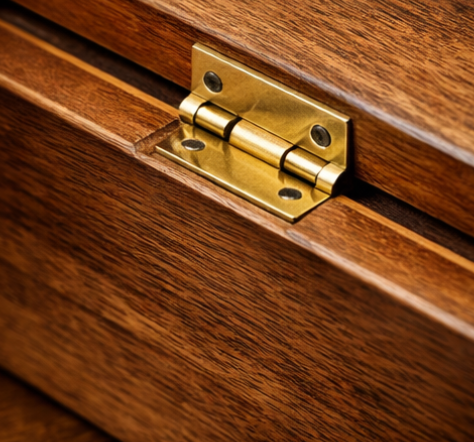
Ask for QC checks on:
- Lid alignment and gap tolerance
- Hinge screw holding strength (no stripped holes)
- Magnet / lock function cycle test
- Tray fit and smooth removal
- Insert fit (glass jar slot tightness, no rattling)
These points reduce returns more than “pretty photos” do.
Packaging and shipping: how to reduce damage in parcel delivery
If you sell online, your risk is parcel delivery impact. A stash box often ships with accessories (glass jars, grinder slot, tray), which increases damage risk.
You can specify protective packaging in your RFQ:
- Individual accessory protection (jar sleeve or slot)
- Internal cushioning (EVA/foam/cardboard divider)
- Outer carton strength based on shipment style
If you want a formal reference point, ISTA explains the purpose of different test procedure series used for shipment simulations.
(You can say “ISTA-style parcel simulation” or “3-series simulation expectation” in buyer language, even if you don’t run full certification.)
A practical RFQ checklist for buyers (copy/paste)
Send this to suppliers to get faster, more accurate quotes:
- Target market (US/EU/UK/CA) and sales channel (Amazon/retail/wholesale)
- Box material preference: bamboo or acacia (or mixed)
- Size (L×W×H) and internal layout sketch (or reference photo)
- Features: tray / jars / lock / hidden compartment / dividers
- Logo method: laser / print / metal plate
- Finish: natural / stained / matte / gloss (low-odor preference)
- Accessories included (and their dimensions)
- Packaging plan (buyer-provided or supplier suggestion)
- Order quantity: MOQ 100, and forecast for next 3 months
- Compliance needs (if any): finish declaration, material traceability, etc