
How to Source Wooden Document Trays for Corporate and Retail Programs
Wooden document trays look simple, but for corporate gifting, office programs and retail rollouts they are a technical product. Sourcing teams have to balance branding, durability, cost, compliance and packaging performance across thousands of units and multiple shipments. Choosing the right OEM/ODM partner and structure from the beginning will save time and protect your margins on repeat orders.
This guide walks through the main considerations when sourcing wooden document trays for corporate and retail programs, based on Chic Homeware’s experience as an OEM/ODM manufacturer and export partner for custom wooden boxes, organizers, trays and gift packaging.
Define the Role of Wooden Document Trays in Your Program
Before you discuss size or price, clarify how the wooden document tray will be used in your program. This drives material choice, structure, finish and packaging requirements.
Corporate and office programs
For office-based programs — such as workplace upgrades, corporate gifting, or brand-standard desk sets — buyers typically look for:
- Consistent branding: Matching stain color and logo treatment across trays, pen holders, and other desk accessories.
- Durability in daily use: Resistance to scratching from files, laptops and stationery.
- Stable structure: Trays that do not warp or twist over time, especially in air-conditioned offices with fluctuating humidity.
- Scalable repeat orders: Reliable color and size consistency for future rollouts.
Retail and e-commerce programs
For retail brands and Amazon sellers, the priorities are often different:
- Visual impact: Grain, color and finish that photograph well and stand out on the shelf or listing page.
- Retail packaging: Color boxes, mailer cartons and insert cards that support brand storytelling and protect the tray in parcel networks.
- Price laddering: A range of SKUs (single tray, 2-tier, 3-tier sets) to hit different price points.
- Low defect and return rates: Damage control through proper moisture control, QC and export packing.
Share this usage context with your factory at the start. It helps the engineering and production teams select a more suitable structure and finishing system for your specific channel instead of treating the tray as a generic wooden product.
Choose the Right Wood and Construction for Your Trays
Material selection is one of the biggest drivers of cost, appearance and stability for wooden document trays. Chic Homeware uses different material routes depending on your target price and branding.
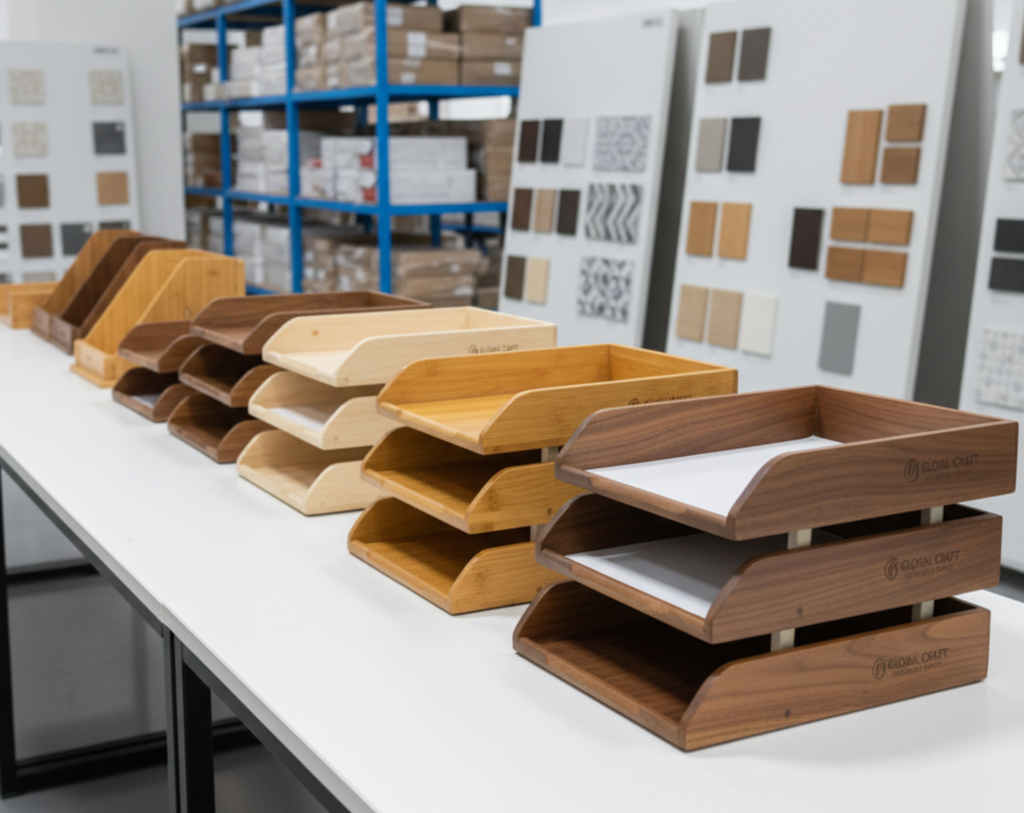
Common materials for wooden document trays
| Material | Key features | Typical use |
|---|---|---|
| Pine | Cost-effective, visible grain, light to medium color, accepts stain well. | Mass-market corporate programs, retail sets at entry to mid price points. |
| Paulownia | Very lightweight, pale color, easy to machine but softer surface. | Larger-sized trays where shipping weight is critical, decorative trays. |
| Acacia | Harder wood, rich grain, premium look, higher material cost. | Premium corporate gifts, hospitality projects, higher-end retail lines. |
| Bamboo | Modern look, strong and stable, perceived as eco-friendly. | Eco-positioned brands, contemporary office ranges. |
| Walnut (or walnut veneer) | Dark, elegant tone, luxury appearance, higher price positioning. | Executive-level desk sets, design-driven collections. |
| MDF veneer / plywood veneer | Smooth surface, stable, cost-efficient when using veneer over core board. | Projects needing solid-color painting or very uniform appearance. |
Solid wood vs. MDF or plywood veneer
For document trays, a hybrid approach is often practical. Solid wood can be used for the visible frame and front, while MDF or plywood veneer is used for the base panel to keep the tray flat and cost-effective. This structure provides a solid, natural feel without unnecessary material cost.
When you brief your supplier, specify if you need the tray to match existing products (for example, an acacia kitchen range or a walnut office series). A factory-oriented partner can propose alternative cores and mixed constructions that maintain the same visual effect while fitting your budget.
Moisture control and warping prevention
Moisture control is critical for document trays because flatness matters. Poor drying or storage can lead to twisting or cupping, especially on larger tray formats.
- Clarify the target moisture content range with your supplier depending on destination climate.
- Ask how the factory manages pre-production wood conditioning and storage to minimize movement.
- For larger trays, consider a framed construction with stable core boards instead of wide solid wood panels.
Discussing these points early with a production-driven partner helps avoid surprises when containers arrive in a different climate.
Design and Structure: Make Trays Work for Real Users
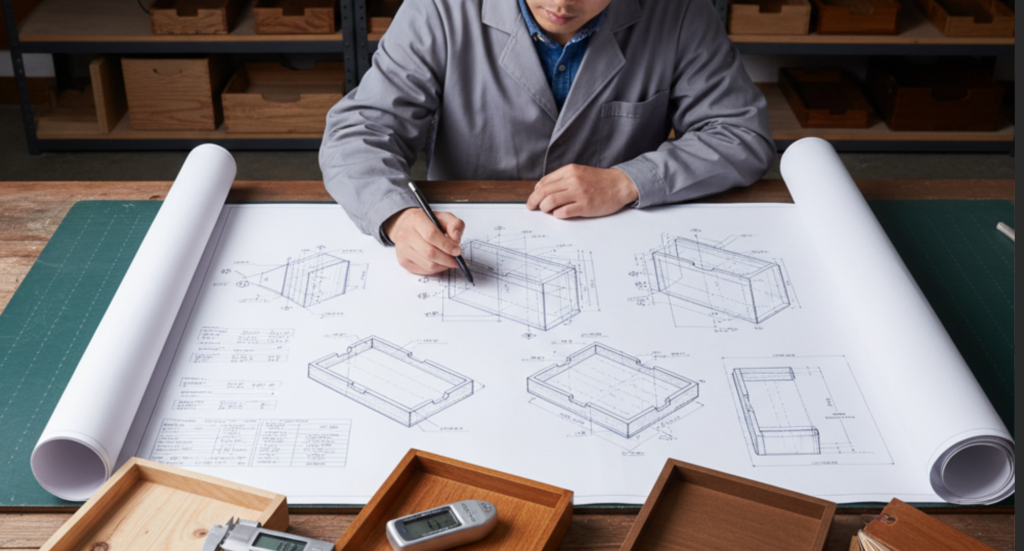
Design choices have a direct impact on user experience, packing efficiency and long-term durability. Move beyond basic rectangular trays and think through the actual workflow of the end users.
Key structural options for wooden document trays
- Single, double or triple tier: Multi-tier trays can be fixed or stackable. Fixed units feel more robust, while modular, stackable trays offer flexibility and can be sold as sets.
- Front cut-out vs. open front: A low cut-out at the front helps users pull out documents easily. For corporate programs, a small cut-out combined with higher sides offers a more formal look.
- Side walls and back height: Higher back panels prevent documents from bending or falling; side height can be adjusted to match standard paper stacks.
- Rails, runners and spacers: For sliding tray sets, wooden side runners or metal spacers can be added. Ensure enough tolerance so trays slide smoothly even with a layer of paint or lacquer.
- Handles and cut-outs: Side cut-out handles or finger grooves may be needed if the tray will be moved frequently, for example in flexible offices or hotel conference rooms.
Hardware and mixed-material solutions
Depending on positioning, you may want to introduce metal or leather elements. Common options include:
- Metal rods or brackets to hold tiered trays together.
- Magnets to align stackable units or connect a tray to matching accessories.
- Felt pads on the base to protect desks and prevent slipping.
- Leather or fabric inlays on the base for a premium, non-scratch surface.
A capable engineering team can suggest mixed-material constructions that match your brand style while remaining practical to assemble and pack at scale.
Finishing, Color and Logo Application
Finish is where a simple wooden document tray becomes a branded product. Importers and brand owners should define a clear finishing strategy that can be repeated across future collections.
Surface finishing options
- Clear lacquer: Shows the natural grain of acacia, pine, or bamboo. Good for office and eco-oriented programs.
- Stain + clear coat: Allows you to reach specific color tones like walnut, espresso, or oak while keeping the wood visible.
- Solid paint: Better on MDF or smooth veneer when you need branded colors (white, black, corporate tones).
- Oil or wax finishes: Provide a more natural, matte look, often used in lifestyle or eco collections.
Request reference photos, samples, or even cross-samples matched to your existing products. Consistent sanding and coating schedules are important so that trays from different batches align in color and gloss level.
Logo techniques
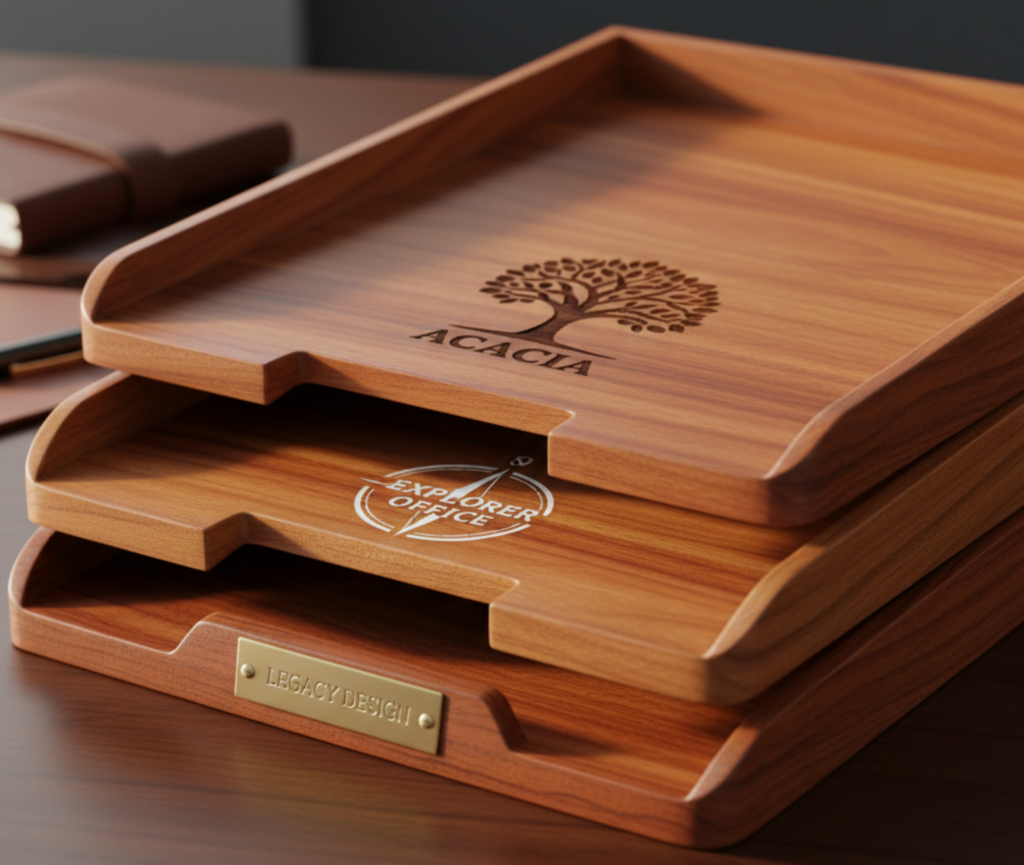
Most corporate and retail buyers require custom branding. Typical logo processes for wooden document trays include:
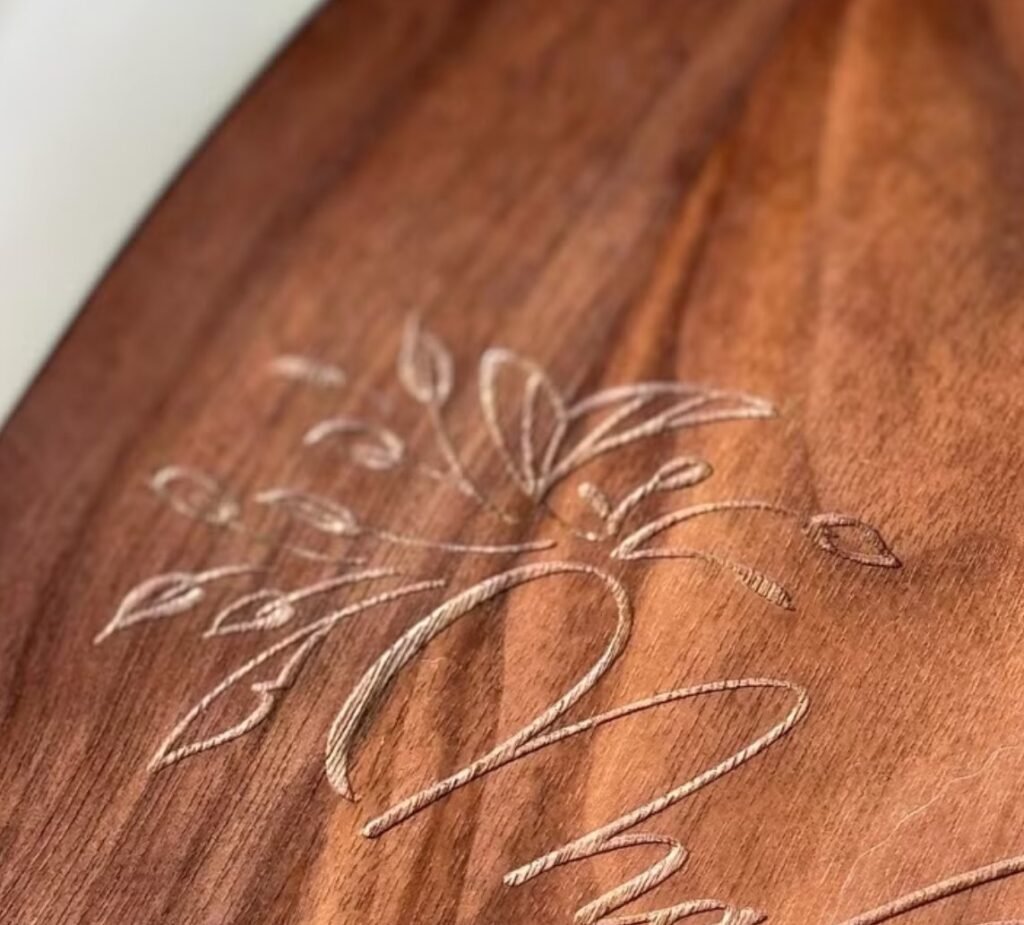
- Laser engraving: Precise, permanent, and cost-effective for medium to large runs; works well on solid wood or darker stains.
- Silk-screen printing: Good for solid logos in one or two colors; suitable on painted or smoothly lacquered surfaces.
- UV printing: Useful when you need multi-color or gradient logos.
- Metal badges or plaques: Premium solution for high-end programs, attached with adhesive or small screws.
In your brief, specify preferred logo position (front lip, side, inside base, or underside), maximum logo size, and whether the logo should be aligned across a full desk set. The factory can then create jigs to keep logo placement consistent across production.
Quality Control, Packaging and Risk Management
Document trays may not be fragile in the traditional sense, but they are vulnerable to scratches, dents, and corner damage in transit. Well-planned QC and packaging will reduce claims and returns.
Key production checkpoints
- Dimensional checks: Confirm internal dimensions fit common paper sizes (A4, letter, legal) with sufficient tolerance.
- Sanding consistency: Poor sanding is visible under stain or paint and can cause rough edges that catch documents.
- Coating adhesion: Ensure stain and lacquer adhere well, especially on edges and corners.
- Assembly stability: Check that joints are solid, hardware is fitted firmly, and stackable units sit flat.
- Moisture re-check before packing: Helps avoid mold or deformation during shipping and storage.
Export packaging and drop-test thinking
For both retail and corporate programs, packaging should be designed backward from the logistics reality: courier handling, warehouse stacking and container transport. Important elements include:
- Individual protection: Bubble bags, kraft wrap, or inner corrugated sleeves to protect surfaces and corners.
- Retail color boxes: Size, board strength, and internal fit should be confirmed with a trial packing run.
- Mailer cartons for e-commerce: Designed to pass standard carton drop-test scenarios and protect against compression.
- Master carton structure: K=A or K=B corrugated board, corner protection, and optimized stacking quantities.
- Carton marks and barcodes: Clear carton marks, item codes and orientation signs to support warehouse handling.
Discuss drop-test expectations and labeling requirements at the quotation stage. A factory used to export planning can propose carton dimensions that balance freight efficiency with protection.
Compliance and Sustainability Considerations
Corporate buyers and larger retailers often have specific compliance documentation and sustainability expectations. While requirements differ by market, typical topics include:
- Wood sourcing discussions, such as FSC-oriented supply routes when required by your program.
- Coating and adhesive information relevant to EU and US regulations.
- Formal documentation flow for audits, product specs and test reports on related items where applicable.
Engage your supplier early about which documents you need, how often they must be updated, and whether they should be organized by item, program or season. This reduces back-and-forth when you are close to launch.
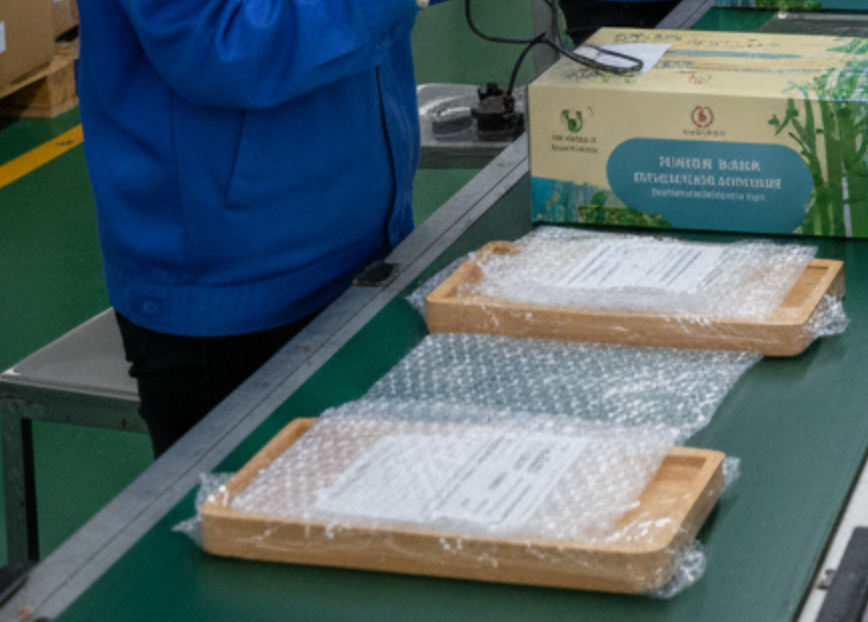
OEM/ODM Workflow for Wooden Document Trays
Working with an OEM/ODM partner is most efficient when the workflow is clear from the start. As a production-focused wooden products factory in China, Chic Homeware follows a commercially practical project flow that sourcing managers can plug into easily.
1. Briefing and feasibility
- Share target size, material direction, channel (corporate, retail, e-commerce) and target price range if available.
- Provide photos or sketches of reference products and any required matching items (e.g., pen cup, letter stand).
- Clarify expectations around logo, color box, mailer carton and master carton standards.
2. Structural proposal and quotation
- The factory proposes material combinations (acacia, pine, paulownia, bamboo, walnut, MDF/plywood veneer) and structure options.
- Quotation is broken down by material, finish, hardware, packaging and estimated freight volume where needed.
- MOQ discussions balance unit cost with your forecast volumes and packaging style.
3. Sampling and refinement
- Engineering samples confirm structure, dimensions, stacking behavior and base performance.
- Color and logo samples confirm stain, paint, gloss level and branding technique.
- Packaging samples validate fit, unboxing experience, and parcel performance for e-commerce SKUs.
4. Mass production planning
- Once samples are approved, a detailed timeline is set: raw material preparation, machining, finishing, assembly, packing and shipment.
- Any special inspection requirements (third-party QC, online checks, pre-shipment inspections) are included in the schedule.
5. Repeat orders and version control
- For stable programs, the factory maintains color recipes, jigs, and packaging specs for repeat consistency.
- Minor optimizations (for example, improved corner protection after a shipment) can be implemented while keeping the overall look and dimensions constant.
Cost, MOQ and Lead Time: What Drives Your Final Price
To build a realistic business case, buyers need to understand how each decision affects cost and lead time. For wooden document trays, major cost drivers include:
- Material route: Premium woods like acacia and walnut cost more than pine or veneer solutions.
- Size and thickness: Larger trays and thicker walls consume more wood and increase weight for freight.
- Finish complexity: Multi-step staining and multi-layer lacquer systems require more labor and drying capacity.
- Hardware and mixed materials: Metal frames, magnets, leather inlays and special inserts add component and assembly cost.
- Packaging style: Color boxes with printing, custom inserts and individual mailer cartons add to unit cost but may reduce damage and returns.
MOQ is typically aligned with material efficiency and finishing setups. For example, certain stains or paints become cost-effective only above a specific volume. Early transparency on your expected initial order and annual forecast helps the factory optimize MOQs and suggest phased rollouts or SKU bundling to reach better price breaks.
Lead time will depend on sampling rounds, material availability and your own approval speed. As a general approach, it is efficient to confirm structure and basic dimensions first, then finalize color and logo details in parallel with raw material preparation.
Why Work with a Specialized Wooden Products Partner
Wooden document trays are often part of a larger product story: office sets, hospitality solutions, lifestyle collections or seasonal gifting. Working with an experienced custom wooden products manufacturer allows you to coordinate designs across multiple items while controlling cost and complexity.
Chic Homeware supports importers, wholesalers, distributors, brand owners and Amazon sellers with:
- Flexible material options across acacia, paulownia, pine, bamboo, walnut, MDF veneer and plywood veneer.
- Project-based engineering for structure optimization, moisture control planning and surface finishing consistency.
- Brand-aligned OEM/ODM development including logo application, color matching, insert design and packaging concepts.
- Export-focused thinking around carton design, drop-test scenarios and compliance communication for EU and US markets.
Conclusion: Turning a Simple Tray into a Reliable Program
The most successful wooden document tray programs treat the tray as a component of a bigger system: brand positioning, logistics, compliance and long-term repeatability. By carefully defining the role of the tray, selecting appropriate materials, optimizing the structure, and planning finishing and packaging with a factory-oriented partner, you can reduce risk and protect your margins over time.
If you are planning a new office, corporate gifting or retail range involving wooden document trays, Chic Homeware can support the full process from initial concept and sampling through to export packing and repeat-order management. To discuss your next program or request tailored suggestions for your market, you can contact Chic Homeware and share your brief, timeline and target positioning.