
Custom Wooden Wine Box Development Guide for Promotional and Gift Packaging
For importers, wholesalers, distributors and private label brands, a wooden wine box is more than a decorative accessory. It is a structured packaging project that must balance branding, protection, cost and supply chain reliability. This guide walks through the key decisions and checkpoints Chic Homeware uses when developing OEM/ODM wooden wine boxes for promotional campaigns and gift packaging programs.
Whether you are preparing for seasonal gifting, corporate programs or long-term catalog items, understanding how materials, moisture control, finishing, logo application and export packaging work together will help you brief your manufacturer clearly and avoid costly revisions.
Clarifying Your Project Scope Before Sampling
Successful wooden wine box projects start with a precise brief. Before requesting samples, align internally on the following points so your factory can engineer a suitable construction and quote realistically.
Define the Commercial Objective
- Promotional or corporate gift: Often prioritizes branding, perceived value and presentation. Budgets are usually fixed per set, and timelines are tight.
- Retail or e-commerce product: Must balance visual appeal with unit economics, packaging efficiency and repeat-order consistency. Amazon sellers in particular need stable dimensions, weights and packaging for listing accuracy.
- Limited edition or premium launch: Allows for richer materials (e.g., walnut veneer), upgraded hardware and more complex internal structures or inserts.
Confirm the Wine and Accessory Configuration
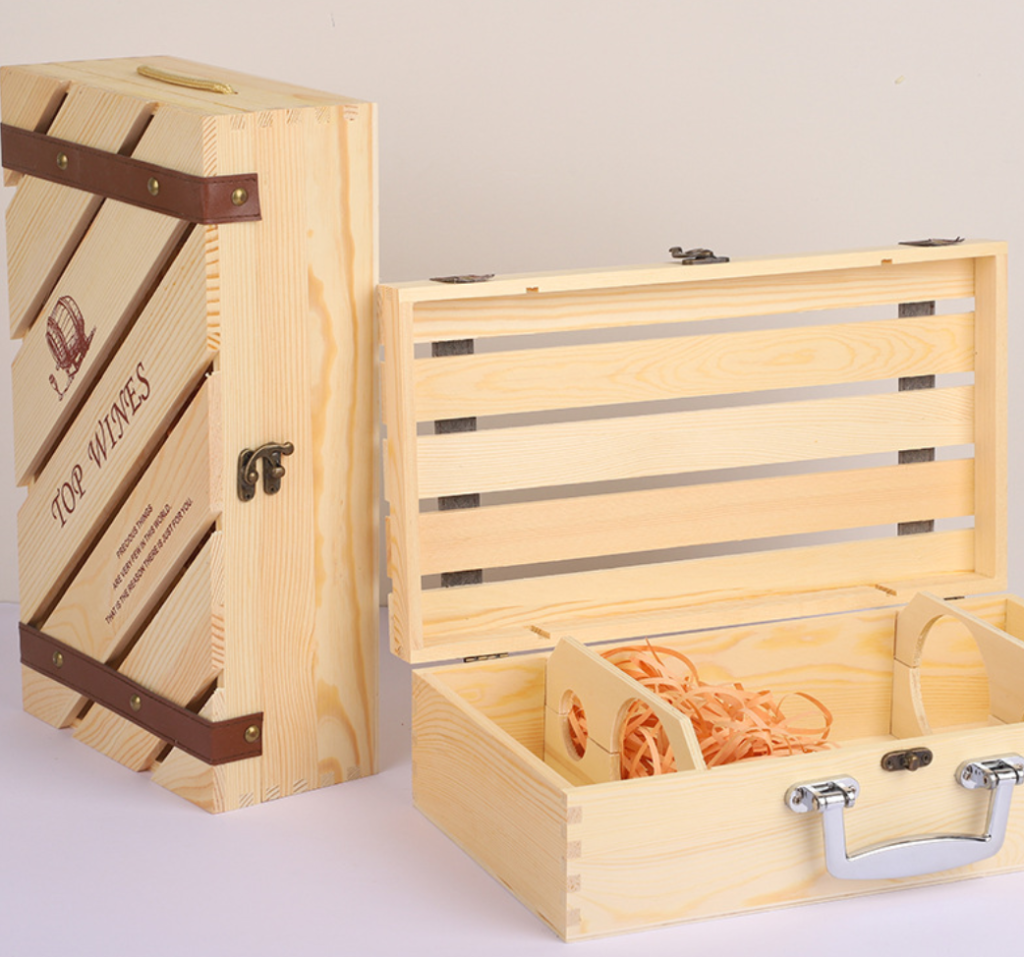
- Bottle count: Single bottle, 2-bottle, 3-bottle or 6-bottle wine box sets are the most common. Larger capacities require additional structural reinforcement.
- Bottle type: Standard Bordeaux, Burgundy, Champagne, or mixed bottle types. Diameter and height influence inner dimensions and divider structure.
- Accessories: Space for corkscrews, pourers, stoppers, tasting cards or glassware may require custom compartments, foam, EVA or wooden inserts.
Positioning and Cost Direction
- Entry-level: Lightweight woods such as paulownia or pine, simple closures and clear or light stain finishes.
- Mid-range: Acacia, bamboo or veneer finishes with upgraded hinges, magnetic closures and custom color options.
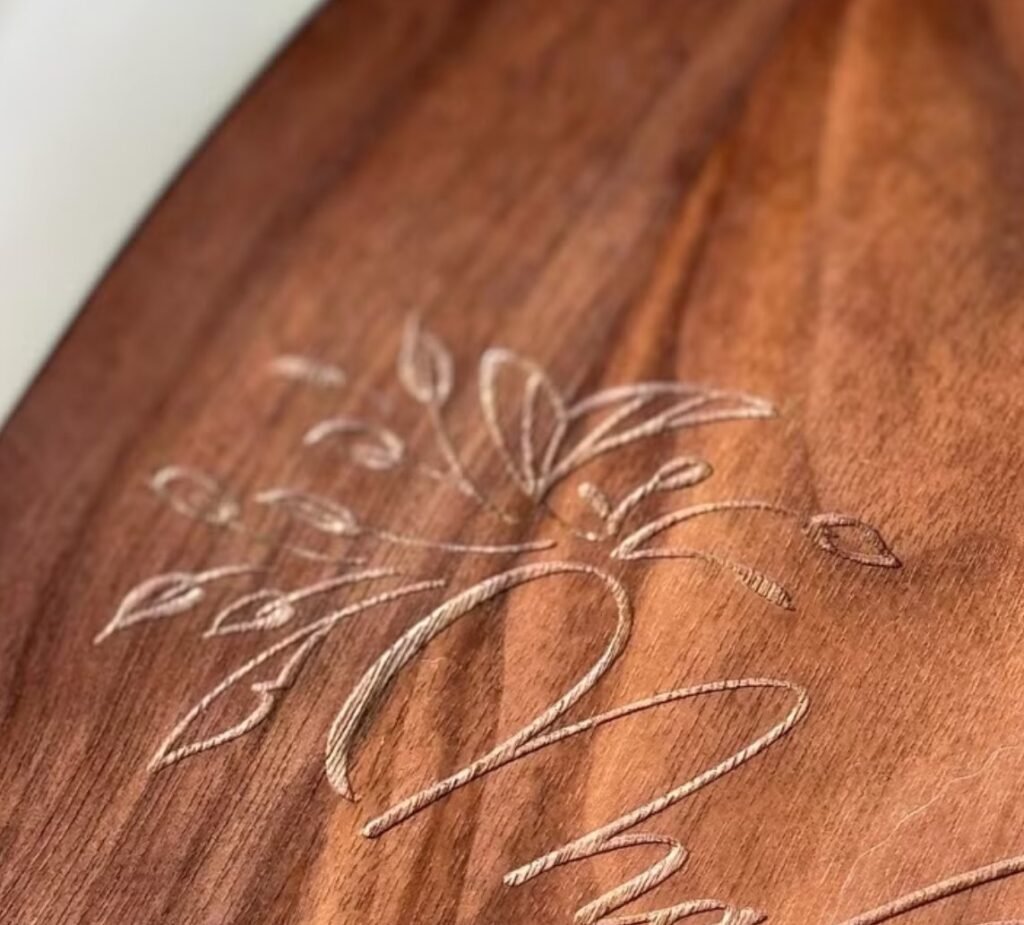
- Premium / giftable: Walnut veneer, darker stains, inlaid logos or detailed engravings, and higher-grade hardware.
Sharing this information early allows Chic Homeware to recommend appropriate wood species, wall thickness, hardware options and finishing methods that align with your target price and MOQ.
Choosing the Right Material for Wooden Wine Boxes
Material selection directly impacts weight, appearance, durability, cost and perceived value. Chic Homeware works with multiple material routes to match different project requirements.
Pine: Cost-Effective and Versatile
Pine is widely used for wooden wine boxes because it is relatively light, easy to machine and budget-friendly. It suits entry-level to mid-range projects and can be finished with clear lacquer, light stains or paint.
- Advantages: Competitive cost, good machining performance, accepts stain and paint well.
- Considerations: Visible grain and knots should be controlled; requires consistent sanding and finishing for a clean, gift-ready look.
Paulownia: Lightweight for Shipping Efficiency
Paulownia is a very lightweight wood that is useful when air freight or strict weight limits apply, or when the buyer wants a larger box format without excessive shipping cost.
- Advantages: Very light, dimensionally stable, suitable for larger volume boxes or sets with multiple bottles.
- Considerations: Softer surface; structure and wall thickness need to be engineered to avoid denting during transit.
Acacia and Bamboo: Upgraded Look and Sustainability Messaging
Acacia and bamboo are often chosen when the buyer wants a more distinct, natural aesthetic and an upgraded positioning.
- Acacia: Richer grain and color, ideal for mid to high-end wine gift boxes. Works well with clear coats and oil finishes.
- Bamboo: Clean, modern appearance with a sustainability angle. Suitable for laser-engraved logos and precise edge work.
Walnut, MDF Veneer and Plywood Veneer: Premium or Brand-Specific Finishes
Walnut and veneer solutions offer a premium visual without necessarily requiring all-solid hardwood construction.
- Walnut: Dark, sophisticated look for high-end or limited-edition projects.
- MDF veneer: Smooth and uniform surface, excellent for painted or stained finishes where visible grain should be minimized.
- Plywood veneer: Combines structural stability with a decorative top veneer, good for larger boxes that need rigidity.
Chic Homeware can combine solid wood, MDF and veneer in mixed-material constructions to balance cost, stability and appearance for your specific project.
Controlling Moisture and Dimensional Stability
For export wooden wine boxes, moisture control is a critical technical point. Unstable moisture content can lead to warping, cracking, lid misalignment or difficulty in opening and closing boxes after shipping.
Target Moisture Range and Conditioning
Wood components are kiln-dried to an appropriate moisture range for export. Chic Homeware monitors and re-checks moisture content before machining and after finishing, especially on thicker panels and lids.
- Pre-production: Moisture measurements on incoming wood, separate by species.
- In-process: Periodic spot checks during machining and assembly.
- Post-finishing: Verification of critical parts such as lids, bases and joints.
Construction Choices for Stability
- Optimized panel thickness and joint design to minimize warping risk.
- Allowance for natural expansion and contraction in hinges and lid fittings.
- Appropriate sealing of edges and surfaces to reduce moisture exchange during transit.
These measures are especially important for shipments crossing different climates on the way to EU and US markets.
Surface Finishing: From Sanding to Stain or Paint
The perceived quality of a wooden wine box is strongly influenced by surface finishing. Even when the structure is sound, inconsistent sanding or uneven coating will be immediately visible to end users.
Sanding Consistency
Chic Homeware uses multi-step sanding processes adapted to each material and finish type:
- Progressive grits to avoid scratches and swirl marks on visible surfaces.
- Special attention to edges and corners, especially on lids, handles and touch points.
- Pre-assembly sanding for internal components that are hard to reach after assembly.
Stain and Clear Coat Finishes
For acacia, pine, paulownia and walnut projects, stain and clear coat combinations are common:
- Natural clear coat: Highlights grain and suits rustic or eco-focused brands.
- Light to medium stains: Warm tone, widely used for corporate gifts and mid-range retail packs.
- Dark stains: Premium, uniform appearance; requires careful process control to avoid patchiness.
Painted and Color-Focused Finishes
For brands requiring specific Pantone-driven colors, MDF veneer or smooth pine surfaces can be used with paint systems:
- Base preparation to ensure good adhesion and color consistency.
- Color matching trials during sampling to align with brand guidelines.
- Matte, semi-matte or gloss top coats depending on positioning.
Buyers should specify whether the interior needs finishing or can remain raw to control cost. For gift packaging, a lightly finished interior often enhances perceived quality and protects the contents from wood fibers.
Logo Application Options for Wooden Wine Boxes
Branding is central to promotional and gift packaging projects. Different logo processes create different visual and tactile effects and have different cost implications.
Laser Engraving
- Best for: Natural or lightly stained wood surfaces where a subtle, permanent mark is desired.
- Advantages: Precise, durable, no additional color alignment required.
- Considerations: Contrast depends on wood species and finish; sampling is recommended for final approval.
Silk-Screen or Pad Printing
- Best for: Multi-color logos or specific brand colors on clear-coated or painted surfaces.
- Advantages: Supports solid color blocks and basic gradients.
- Considerations: Requires artwork in vector format and color references; printing area must be flat.
Foil Stamping and Metal Badges
- Foil stamping: Adds metallic accents (gold, silver, etc.) suitable for premium gift sets.
- Metal badges or plates: Suitable for long-term brand presence or limited editions.
During OEM/ODM development, Chic Homeware will help you evaluate logo process feasibility against surface finish, total order volume and unit cost targets.
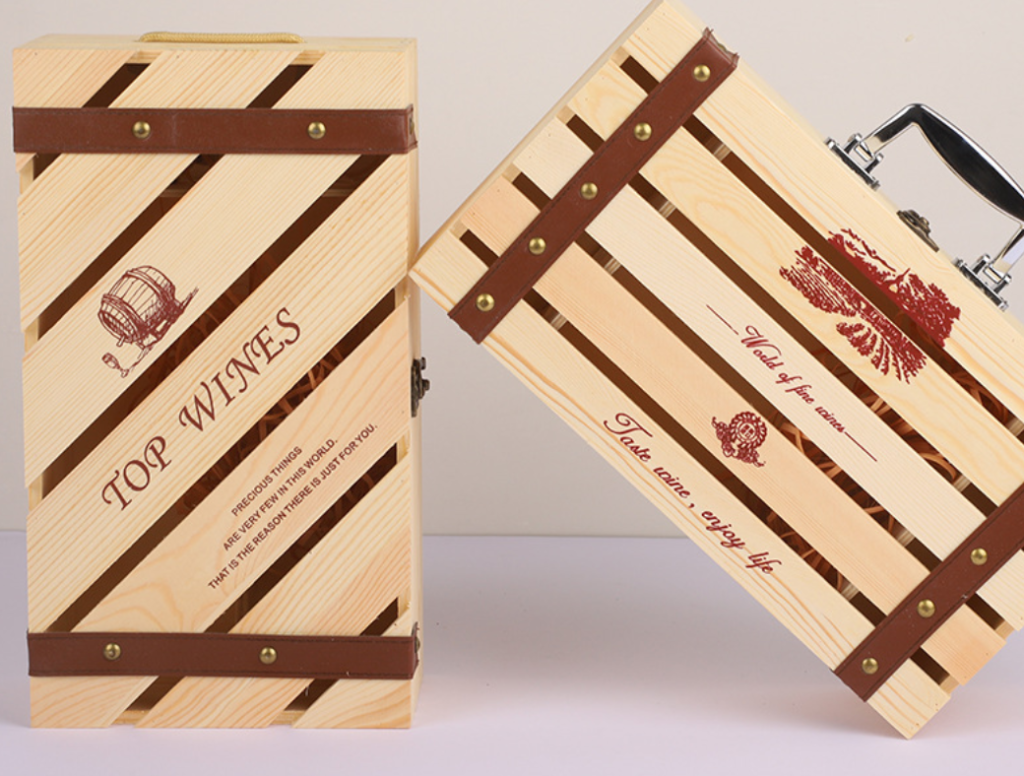
Structural Design: Hinges, Magnets, Inserts and Stability
Beyond aesthetics, structural integrity and user experience are core to wooden wine box performance. Structure choices influence both cost and damage rates in transit.
Lid Types and Opening Styles
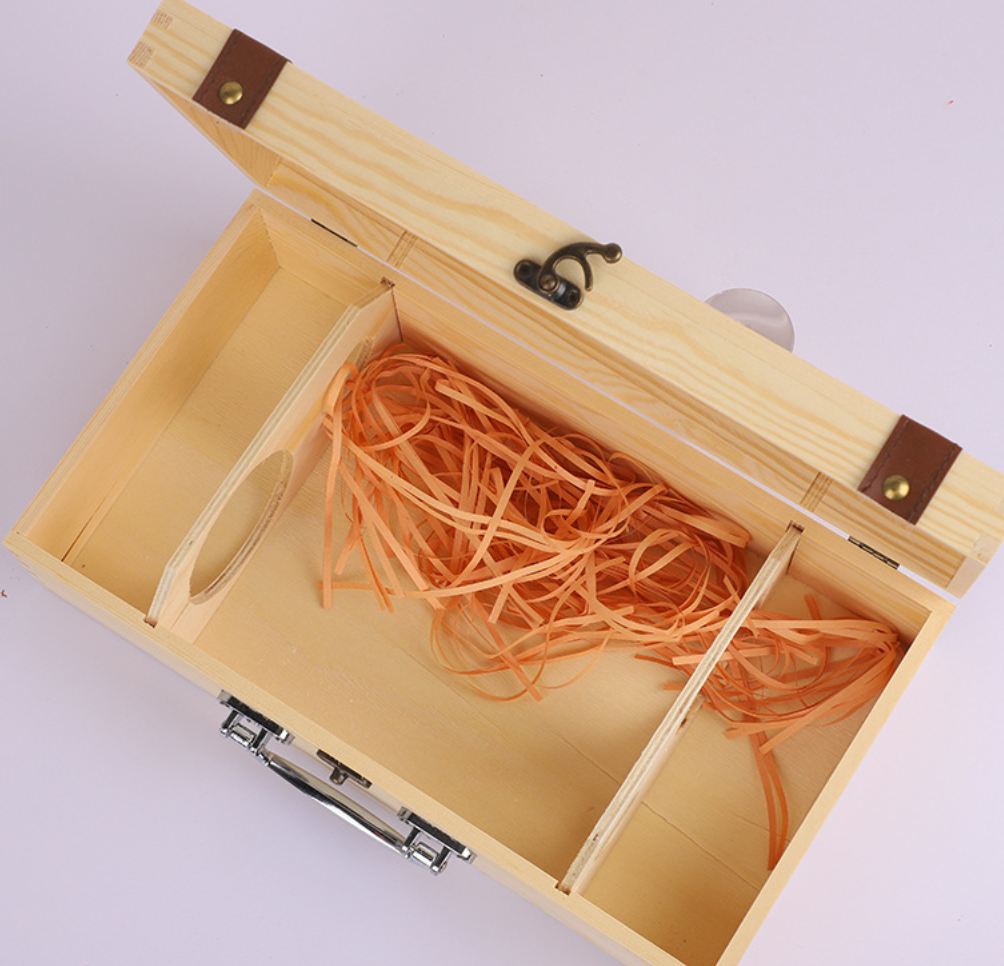
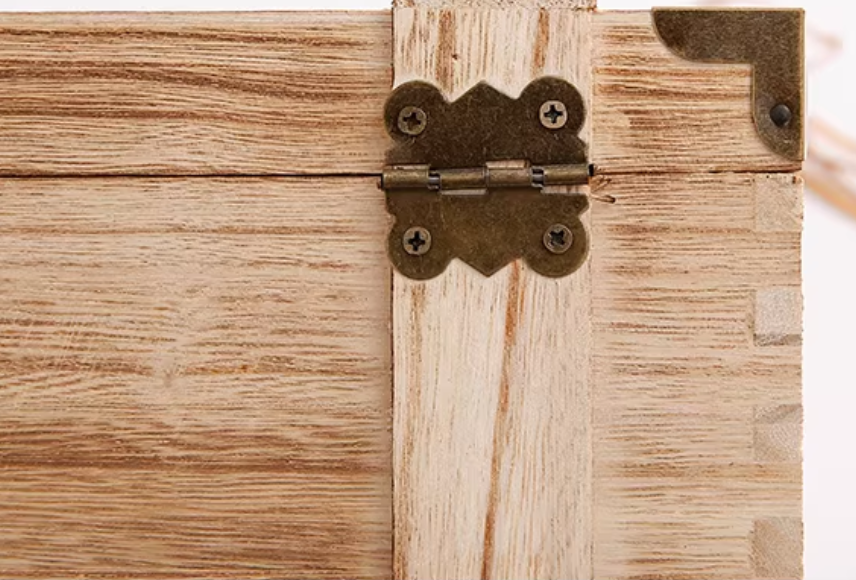
- Flip-top with hinges: Classic and user-friendly, suitable for most bottle counts. Requires precise hinge alignment and screw or nail selection.
- Sliding lid: Cost-effective and minimalist. Works well for single or double bottle boxes and supports branding on the sliding panel.
- Lift-off lid: Box and lid separated; good for sets where the contents are displayed on opening.
Hinges, Closures and Magnets
- Standard hinges: Practical and economical, suitable for bulk promotional orders.
- Concealed or upgraded hinges: Used for premium or design-focused projects.
- Metal clasps and latches: Provide secure closure, common on multi-bottle boxes.
- Magnetic closures: Clean look and convenient opening/closing; magnets must be properly embedded to avoid misalignment.
Inserts and Compartments
Inserts protect the bottles and help create an organized layout. Options include:
- Wooden dividers for multiple bottles.
- Foam, EVA, or molded pulp inserts when accessories are included.
- Cardboard or MDF inserts for cost control on large orders.
Chic Homeware optimizes inserts so they protect the contents without adding unnecessary weight or tooling cost. Dimensions are designed with tolerances for different bottle suppliers while keeping the internal layout visually balanced.
Export Packaging, Carton Design and Damage Control
Even a well-designed wooden wine box can fail commercially if the packaging is not engineered for export, warehousing and e-commerce fulfillment. Damage control is a frequent concern for B2B buyers.
Primary and Secondary Packaging Options
- Primary packaging: Bubble bag, tissue wrap, foam sleeve, or cardboard sleeve around each wine box.
- Secondary packaging: Color box, mailer carton or simple brown box depending on your sales channel.
For online retail and marketplace sellers, mailer cartons sized to the product can reduce additional repacking and protect against corner drops.
Carton Packing Strategy
- Unit per master carton count balanced between cubic efficiency and manageable weight for manual handling.
- Protective spacing inside master cartons using corrugated dividers or corner protectors.
- Clear carton marks for SKU identification, handling instructions and pallet stacking.
Drop-Test Thinking and Transit Risk
Chic Homeware supports buyers who need to plan around drop-test requirements or internal QC standards. During development, we can review packaging structure for:
- Sufficient cushioning on corners and edges.
- Box-to-carton fit to avoid excessive void space.
- Reinforced areas for heavier multi-bottle boxes.
Prototyping and trial shipments can be arranged so your team can evaluate damage rates before scaling orders.
Managing MOQ, Sampling and Lead Time for Wooden Wine Box Projects
From a sourcing perspective, clear communication on volume and timing is essential for smooth execution.
Sampling and Pre-Production
- Concept samples: Basic structure and size check; often used early when price and general direction are still being evaluated.
- Pre-production samples (PPS): Reflect final material, finish, logo and packaging, and are used for buyer approval before mass production.
Providing confirmed artwork, branding guidelines and bottle dimensions early will shorten sample lead time and reduce revisions.
MOQ and Cost Structure
MOQ depends on material, finish, logo process and packaging complexity. For example:
- Simple pine single-bottle boxes with basic engraving can support relatively lower MOQs.
- Premium walnut veneer boxes with complex inserts and custom color boxes typically require higher MOQs to absorb setup and tooling costs.
Chic Homeware works project-by-project to align MOQ with your market tests, allowing for a staged approach: initial test order followed by a larger roll-out once market response is confirmed.
Lead Time Planning
- Sampling phase, including revisions and approvals.
- Mass production, including finishing, logo application and QC checkpoints.
- Export packing and container loading schedules.
Seasonal projects (such as year-end gifting) should lock in orders early to secure production slots and avoid premium freight costs.
Ensuring Repeat-Order Consistency and Quality Control
For distributors and brand owners, repeat-order consistency is as important as the first order. Variations in color tone, grain, logo positioning or hardware can cause quality claims and disrupt brand presentation.
Specification and Documentation
Chic Homeware documents key specifications for each wooden wine box project, including:
- Confirmed drawings with critical dimensions and tolerances.
- Material and finish codes, including stain or paint references.
- Logo artwork, size, position and color references.
- Packing method, carton details and carton marks.
Production Checkpoints
- Incoming material inspection: Wood species confirmation and moisture checks.
- In-process QC: Monitoring of structural stability, sanding quality, and hardware fitting.
- Final inspection: Visual checks, function tests (hinges, magnets, closures) and packaging verification.
For long-running items, retained samples and production records help keep future orders aligned with the approved standard.
Working with a Factory-Oriented OEM/ODM Partner
Choosing a factory-experienced partner for wooden wine box projects allows you to combine creative branding with practical production and logistics capabilities. As a dedicated Custom Wooden Products Manufacturer, Chic Homeware integrates design support, material optimization and export packaging planning into a single OEM/ODM workflow.
Our team can assist with:
- Material selection across acacia, paulownia, pine, bamboo, walnut, MDF veneer and plywood veneer according to your price and positioning.
- Structural optimization for different bottle counts, accessories and inserts.
- Logo and surface finish options aligned with brand guidelines and volume.
- Export packaging design, drop-test thinking and carton optimization for different channels.
For broader box programs beyond wine – such as spirits, gourmet sets or multi-category gift packs – you can explore related capabilities in Custom Wooden Boxes development, using similar technical principles in material selection, finishing and packaging.
Conclusion: Turning Wooden Wine Box Concepts into Reliable B2B Programs
A successful wooden wine box for promotional or gift packaging is the result of many small but critical decisions: wood species, moisture control, surface finishing, logo process, structural design and export packaging. When these elements are coordinated with realistic MOQ, sampling and lead-time planning, your project is more likely to deliver both brand impact and operational reliability.
If you are planning your next wine gifting campaign, retail launch or private label range and need a factory partner who understands both branding and logistics, Chic Homeware can support you from concept to container. As an experienced Wooden Products Factory in China, we work closely with importers, wholesalers, distributors and Amazon sellers to develop commercially viable wooden wine box solutions tailored to your market.
Share your bottle configuration, target price range, branding requirements and timeline, and our team will help you translate them into a clear, executable wooden wine box specification suitable for stable repeat orders.