
Custom Wooden Watch Box Development for B2B Buyers
Developing a custom wooden watch box is rarely just about choosing a nice wood and adding a logo. For importers, wholesalers, distributors and Amazon sellers, the real questions are about material routes, moisture control, insert engineering, packaging performance and repeat-order stability. A beautiful prototype is not enough if the production run warps in transit, hinges shift during a drop-test, or the gift box color is inconsistent across batches.
As an OEM/ODM partner, Chic Homeware supports brand owners and sourcing teams from the first drawing to export carton loading. This article walks through the key decisions in custom wooden watch box development: wood and veneer choices, insert structures, surface finishing, logo application, and gift packaging options, with a focus on realistic factory checkpoints and B2B risk control.
Clarifying the Project Scope Before Sampling
A stable watch box program starts with clear scope definition. Before requesting samples, buyers can reduce rounds of back-and-forth by preparing a basic technical brief covering:
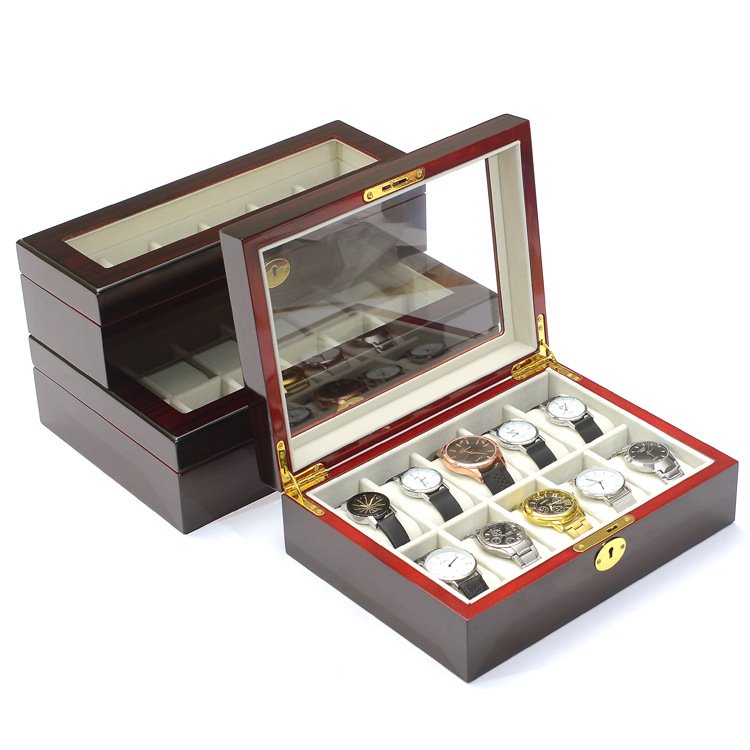
- Target watch capacity: single watch gift box, 2–4 slot presentation box, 6–12 piece organizer, or larger display case.
- Intended channel: e-commerce (Amazon, DTC), wholesale gift sets, corporate gifting, or retail display – this influences packaging and cost structure.
- Desired brand position: entry-level, mid-range, or premium, which drives material selection (e.g. MDF veneer vs. solid walnut) and hardware quality.
- Target landed cost: an approximate ex-factory target (by capacity) helps the factory propose realistic material and structure combinations.
- Compliance background: any EU/US formaldehyde, packaging, or sustainability expectations (including FSC conversations).
Once these points are clear, Chic Homeware can propose different constructions and material routes to match budget and positioning before cutting the first sample.
Choosing the Right Wood or Veneer for Watch Boxes
For wooden watch boxes, material selection influences not only the visual effect but also stability, moisture behavior, and machining performance. Below are commonly requested materials and when they are typically used in B2B projects.
Acacia: For Natural, Mid–High Positioning
Acacia offers a warm, naturally varied grain pattern that works well for mid- to premium watch boxes. It is harder than pine and paulownia, giving a more substantial feel in hand. In B2B practice, acacia is often used for:
- Premium gift sets: limited-edition watch launches or higher ASP gift sets.
- Natural look concepts: brands emphasizing sustainable or nature-inspired styling.
- Clear or light stain finishes: to highlight the grain instead of covering it with paint.
Points to align during development:
- Control of color variation between boards to avoid big visible differences across lids and bases.
- Moisture control to minimize panel movement or lid warping during long-distance shipping.
- More careful sanding procedures for smooth edges on a harder wood.
Pine: Flexible and Cost-Efficient
Pine is one of the most cost-efficient solid wood options for watch boxes and is suitable for both natural and painted finishes. Typical use cases:
- Volume programs: entry to mid-range watch sets for mass retail or large e-commerce volumes.
- Painted boxes: matte black, white, or color-lacquer boxes where grain is less visible.
- Lightweight packaging: where air freight weight is a concern.
Factory considerations include:
- Managing knots and resin pockets for a cleaner appearance.
- Consistent sanding to avoid grain “raising” after paint.
- Extra attention to moisture content to reduce risk of cracking or joint movement.
Paulownia: Ultra-Lightweight Option
Paulownia is valued for its very low density. It is useful when you need a larger box volume but must control shipping weight, especially for air shipments and FBA fees. Common applications:
- Gift sets combining a watch with additional accessories (bracelets, straps), where the box volume is larger.
- Projects where the outer carton dimensional weight is sensitive.
However, paulownia is softer than acacia or pine, so it is usually paired with careful structure design (e.g., thicker wall sections, reinforcing frames) and may be better suited to natural or stained finishes rather than high-gloss lacquer.
Bamboo: Eco-Positioned and Structured
Bamboo suits brands that emphasize “eco” or “sustainable” messaging in their watch packaging. It delivers a clean, structured grain and a contemporary feel. In watch box projects, bamboo is often:
- Used for lids or frames combined with MDF interiors.
- Finished with clear or slightly tinted coatings to preserve the linear grain.
- Matched with minimalist hardware and subtle logos.
Because bamboo behaves differently from solid timber, special attention is given to panel lamination, edge finishing and moisture control to maintain flatness of the lid.
Walnut: Premium Veneer or Solid Accents
Walnut provides a deep, rich tone and fine grain that signals premium positioning. Many buyers choose:
- Walnut veneer on MDF: to control cost while preserving a luxury look.
- Solid walnut accents: such as lids, edges, or inlays for higher-end SKUs.
Walnut watch boxes pair well with dark metal hardware, minimal visible joints and soft-touch interior inserts. It is important to specify veneer grade, grain direction, and color tolerance to keep a consistent appearance across repeat orders.
MDF Veneer: Stable and Brand-Friendly
MDF core with natural veneer is one of the most widely used structures for custom watch boxes, especially in private label and Amazon programs. Benefits include:
- Dimensional stability: less risk of warping or twisting during transport.
- Cost control: more economical for larger scale programs than full solid wood.
- Smoother surfaces: excellent for uniform stain or paint finishes.
MDF veneer is often the most practical solution when the buyer needs a specific look (walnut, oak-like, or generic wood grain) at a defined price point. To support EU/US buyers, Chic Homeware maintains project-based communication for formaldehyde and coating compliance expectations.
Plywood Veneer: Strength with Visual Flexibility
Plywood veneer offers better screw-holding and resistance to impact compared with MDF, which can be relevant when a watch box uses more complex hinges, gas struts, or frequent opening and closing. It is useful for:
- Display cases or boxes that may be opened many times in a retail environment.
- Designs with deeper lids or heavier glass tops, where extra structural strength is needed.
During development, it is important to test hinge screws, magnets and hardware connections on the real plywood structure to confirm long-term stability.
Moisture Control and Structural Stability
Even a well-designed watch box can fail in real logistics if moisture and structure are not controlled. Key checkpoints in Chic Homeware’s workflow include:
- Wood moisture content: ensuring material is conditioned to a suitable range before machining and assembly, reducing warping or cracking risks.
- Panel construction: correctly oriented grain and balanced structures (e.g., veneer both sides) to prevent lid or base cupping.
- Joint design: optimizing corner joints, lid frames and base structures to handle the weight of watches and inserts without deformation.
- Environmental simulation: aligning with buyer expectations for humidity and temperature ranges along the shipping route.
These factors are especially critical for export orders that may pass through multiple climate zones or stay in warehouses for extended periods.
Inserts and Compartments: Engineered Protection for Watches
The insert system is the main interface between the watch and the box. A premium exterior cannot compensate for loose, deformed or unstable watch pillows. Designing inserts correctly reduces returns caused by damage, pressure marks, or poor presentation.
Common Insert Structures for Watch Boxes
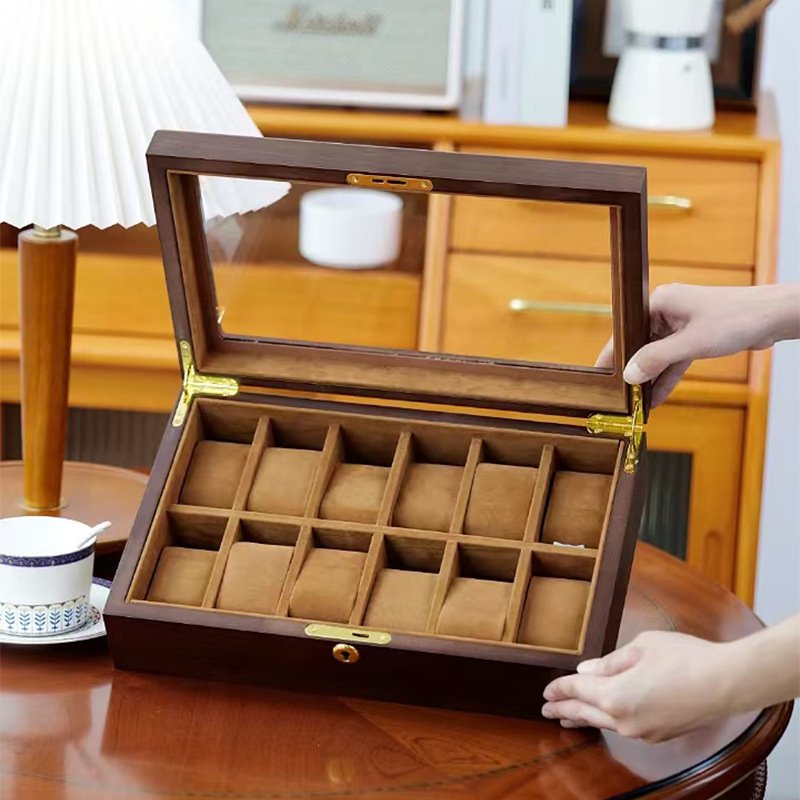
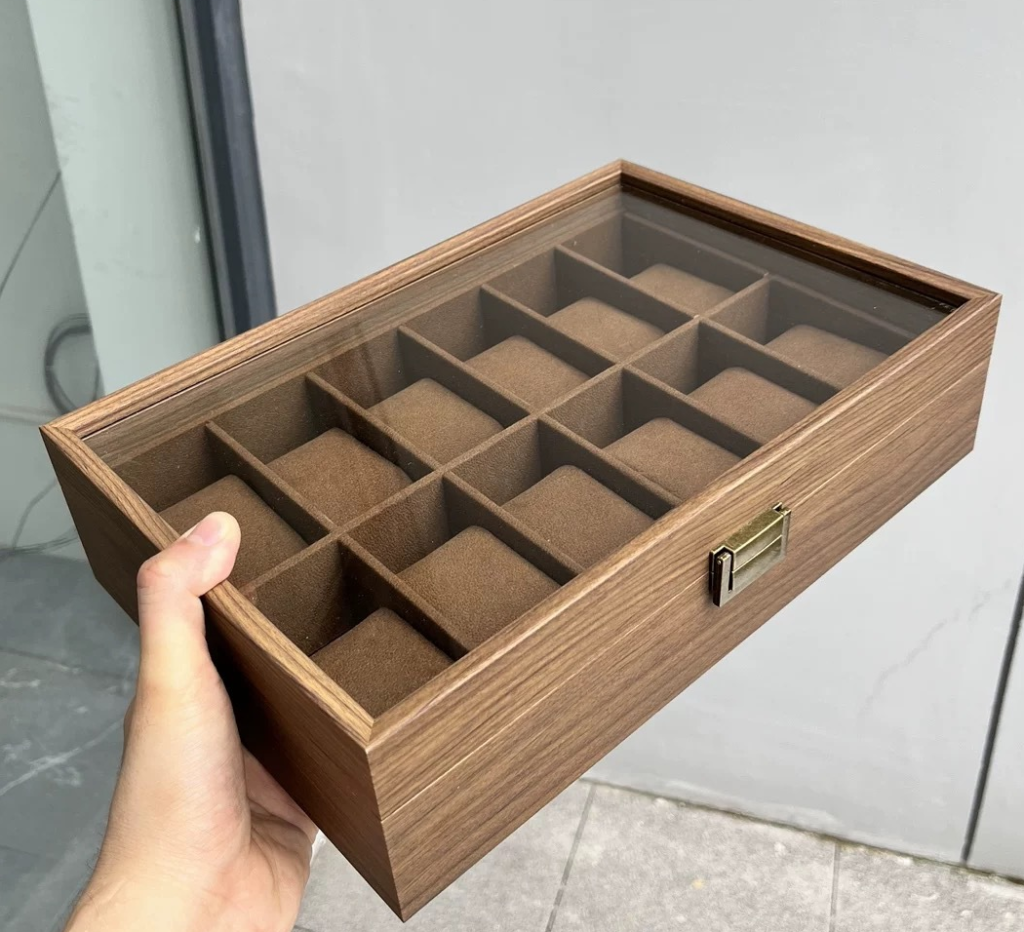
- Fixed compartments with removable watch pillows: the classic layout for 4–12 slot watch boxes, balancing display and protection.
- Universal foam insert: CNC- or die-cut foam that can accommodate different case diameters, often used in gift sets or multi-brand programs.
- Tray-style inserts: removable wooden or MDF trays, sometimes with additional compartments for straps, tools or warranty cards.
- Single-watch presentation cradle: shaped insert for hero products or high-value gift sets.
Insert Materials and Their Trade-Offs
Insert material choice depends on budget, surface feel and SKU flexibility.
- PU leather-wrapped pillows and bases:
- Gives a premium, gift-ready impression.
- Suitable for mid-to-high priced watches.
- Requires attention to stitching consistency and color matching across batches.
- Fabric (linen, velvet, microfiber):
- More tactile and soft; velvet and microfiber protect polished surfaces well.
- Color selection must consider lint visibility and dust.
- EVA or PU foam:
- Highly protective, easy to customize for different watch shapes.
- Can be wrapped with fabric or PU for higher-end presentation.
- Cardboard or paperboard inserts:
- Used for entry-level or promotional sets where unit cost is very sensitive.
- More suitable for single-watch packaging than multi-slot organizers.
Technical Details Buyers Should Specify
To avoid misalignment between sample and production, it is helpful to specify:
- Watch case diameter range: for example, 36–44 mm, and whether oversized cases (e.g., 48 mm) must fit.
- Strap length and type: metal bracelet vs. leather strap, which affects pillow circumference and depth.
- Required clearances: distance between watch head and lid, and between each slot, to prevent contact.
- Color and texture of insert fabric: with physical color standards or Pantone references when available.
During sampling, Chic Homeware normally checks the fit using watches or dummy units based on customer guidelines to ensure that the insert design is functional before moving to pilot production.
Hardware, Magnets and Opening Experience
The perceived quality of a watch box is strongly influenced by the opening experience: hinge operation, magnet force, and the sound/feel of closing. These details matter for both retail customers and corporate gift recipients.
Hinge Choices
Common hinge options for wooden watch boxes include:
- Standard butt hinges: cost-effective and suitable for most multi-slot boxes.
- Concealed hinges: cleaner visual effect, often used with premium veneers or solid woods.
- Stay hinges or lid supports: used when the lid is heavier (glass top, thicker panels) or when the lid should stay open at a fixed angle.
In B2B development, hinge selection should be done alongside material and lid structure choice. During sample approval, it is helpful to test multiple open/close cycles and check screw holding strength on the actual material.
Magnets and Closures
Magnets are widely used for watch box lids and front flaps.
- Magnet strength: must be balanced; too strong and the user struggles to open, too weak and the lid feels loose.
- Positioning: magnets should align cleanly with metal plates or opposing magnets, avoiding visible misalignment on the exterior.
- Surface impact: magnet placement must not cause visible dimples or distortion in the veneer or paint finish.
Other closures such as metal clasps or key locks can be added depending on brand positioning. These must be aligned during structural design to avoid interference with inserts or watch crowns.
Surface Finishing and Logo Application
Surface finishing defines both appearance and durability. For watch boxes, finishing must be evaluated not only for showroom aesthetics but also for real-life handling, abrasion, and packaging contact.
Stain, Paint and Clear Coatings
- Stain + clear coat: commonly used on acacia, pine, walnut and veneers to highlight wood grain.
- Opaque paint: suitable for pine or MDF, popular in matte black, white, or brand colors.
- Clear PU or NC coatings: for bamboo or walnut where the natural look is part of the brand story.
Key checkpoints include:
- Sanding consistency before coating to avoid visible swirl marks.
- Color and gloss level consistency across different parts (lid, base, interior edges).
- Resistance to minor scratches during packing and shipping.
Logo Processes for Watch Boxes
Logo application on a watch box can be subtle or bold, depending on brand guidelines. Typical processes include:
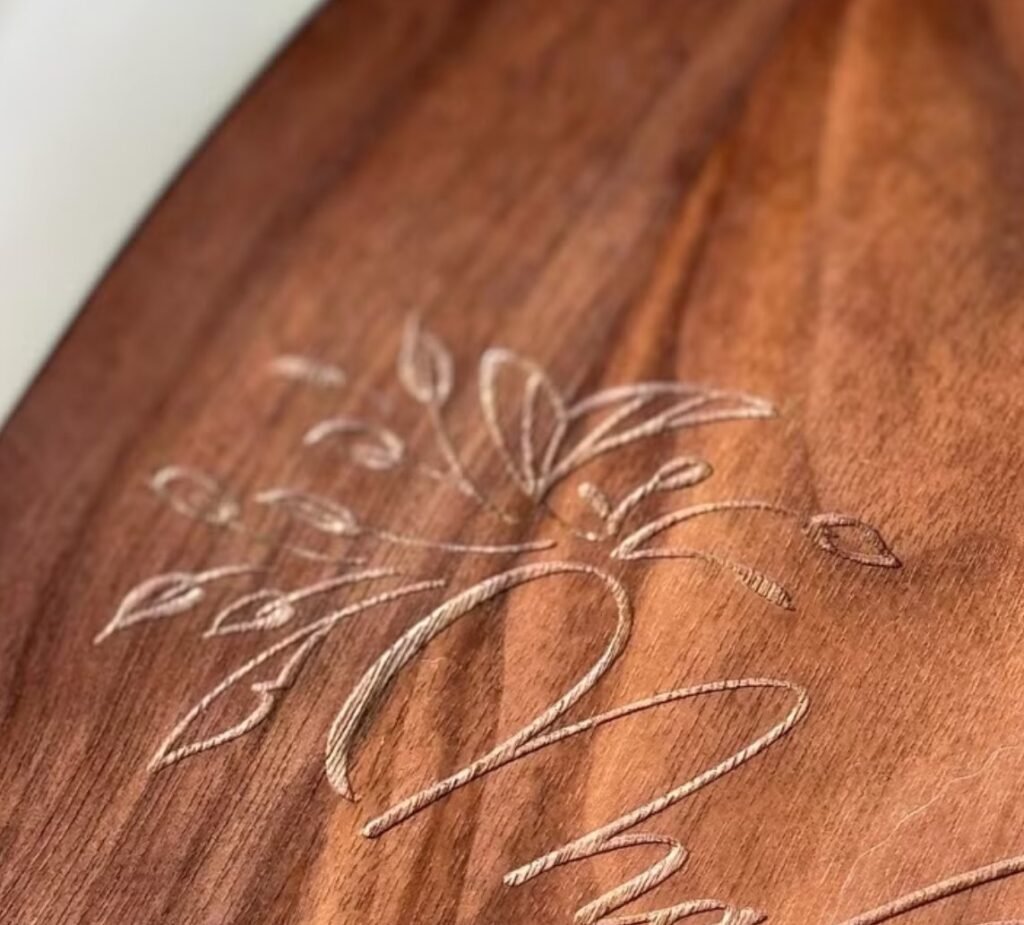
- Laser engraving: precise and durable, well-suited to bamboo, acacia, and many veneers; gives a natural, understated effect.
- Silk-screen or pad printing: suitable for painted surfaces and flat areas; good for matching specific Pantone colors.
- Metal or acrylic badges: applied to the lid or interior; often used in premium corporate gifts.
- Foil stamping on inserts or interior panels: gold/silver foil on fabric-wrapped or PU surfaces for a refined look.
When planning logos, buyers should clarify preferred placement (outer lid, inner lid, insert, or combination), color expectations, and whether there are different logo versions for the same structure (e.g., multi-brand private label programs).
Gift Packaging: From Color Box to Export Carton
Gift packaging is where many B2B watch box projects either gain efficiency or lose margin due to damage. A coherent packaging plan covers inner presentation, transit protection and carton planning.
Inner Gift Box and Color Box Options
For retail and e-commerce, the visible gift packaging layers are critical:
- Color gift box with insert: typical for single or double watch sets; the wooden watch box is presented inside a printed cardboard box with custom graphics.
- Sleeve + plain inner box: cost-effective solution where branding is concentrated on a printed sleeve over a kraft or white box.
- Rigid setup box: used for higher-end collections; gives a strong premium impression but adds cost and volume.
Typical customization points:
- Artwork, brand colors and finish (matte, gloss, soft-touch).
- Cut-outs or windows to display the wooden box or watch inside.
- Barcodes, regulatory marks and language versions.
Protective Inner Packaging
Inside the color box, protective elements ensure the wooden watch box and watches arrive intact:
- EVA or EPE foam blocks: tailored to the shape of the watch box; strong protection and reusable.
- Molded pulp or cardboard structure: paper-based solution with better recyclability.
- Bubble bag or non-woven bag: additional scratch protection for the wooden surface.
Chic Homeware typically combines a primary protection method (foam or cardboard structure) with secondary scratch protection (bag or tissue) and then validates the solution against the buyer’s drop-test expectations.
Master Carton and Drop-Test Thinking
For export shipments, master carton design is a critical part of damage control and freight cost optimization.
- Carton strength: suitable board grade based on box weight, stacking height and shipping method.
- Inner pack configuration: how many watch boxes per carton, orientation and spacing; optimizing this reduces corner crush and edge damage.
- Void fill or corner protection: using cardboard partitions or cushions where needed.
- Carton mark: custom printing with item codes, EAN, quantity, handling symbols and other buyer-required information.
Many buyers also request alignment with standard carton drop-test practices. In these cases, a pre-shipment carton configuration can be reviewed and adjusted together before mass packing.
Managing MOQ, Sampling and Lead Time
From a procurement viewpoint, even an excellent design must pass MOQ and lead time constraints. Chic Homeware’s OEM/ODM workflow is structured to make these constraints transparent early in the project.
Sampling Workflow
- Concept alignment: review the buyer’s brief, clarify wood choice, capacity, target price range and packaging direction.
- Structure and material proposal: suggest one or more constructions (e.g., MDF veneer + PU insert vs. pine + fabric insert) with estimated cost implications.
- Prototype sampling: develop a physical sample including insert and basic packaging; adjust based on buyer feedback.
- Pre-production sample: confirm final construction, finish, logo and packaging for sign-off before mass production.
MOQ and Cost Structure
MOQ typically depends on:
- Material route (solid wood vs. veneer vs. mixed materials).
- Insert complexity and whether components are standard or fully customized.
- Printing and packaging requirements (custom color boxes and rigid boxes have higher MOQs).
By discussing the full product + packaging set as one project, buyers can often consolidate SKUs and reach more efficient MOQs for components such as inserts and color boxes.
Lead Time Considerations
Lead time is influenced by:
- Sampling rounds and approval speed.
- Material preparation and moisture conditioning.
- Complexity of finishing (multiple coats, special colors, additional curing time).
- Gift packaging and printing schedule.
Sharing launch timelines early allows the factory to plan production stages, especially when coordinating multiple SKUs in a watch box collection.
Ensuring Repeat-Order Consistency
For ongoing collections and e-commerce programs, repeat-order consistency is just as important as the first shipment. Key practices include:
- Detailed specification sheets: documenting dimensions, materials, finishes, hardware and packaging in a structured way.
- Color standards: physical color panels or approved reference samples kept on file for future matching.
- Standardized QC checkpoints: agreed inspection criteria for wood quality, finishing, logo, insert fit and packaging.
- Batch testing: for moisture and coating performance on periodic batches, especially when season or humidity changes.
Clear documentation and stable processes help prevent surprises when reordering months or years after the initial launch.
Working with Chic Homeware as Your OEM/ODM Partner
Chic Homeware operates as a commercially practical OEM/ODM partner for buyers who need more than a catalog item. With an integrated, factory-oriented supply chain, the team can combine different woods (acacia, pine, paulownia, bamboo, walnut) and engineered materials (MDF veneer, plywood veneer) to build suitable watch box structures for different price levels and channels.
If you are planning a watch collection with multiple box sizes or gift sets, it is often efficient to treat it as a single project: aligned material palette, shared insert concept, and unified packaging language. This approach helps reduce tooling costs, stabilize MOQs across components, and simplify export packaging planning.
For a broader view of structure options and finishing possibilities, you can explore additional box concepts on our Custom Wooden Boxes page, or review our capabilities as a Custom Wooden Products Manufacturer across organizers, trays and storage items.
Buyers who value direct factory communication on moisture control, FSC-oriented sourcing discussions, and carton drop-test thinking can also review our background as a Wooden Products Factory in China, where we manage sampling, structural optimization and export packing under one roof.
Conclusion: Turning Watch Box Concepts into Repeatable Supply
Custom wooden watch box development touches many disciplines: wood behavior, veneer and MDF engineering, insert ergonomics, hardware fitting, logo execution and packaging protection. For B2B buyers, the goal is not just a beautiful sample, but a stable, scalable solution that protects watches, represents the brand correctly, survives export logistics and stays consistent across repeat orders.
When these elements are aligned early – material choice, insert design, finishing, logo process and packaging – the result is a reliable watch box program that supports your brand and channel strategy instead of creating operational risk.
If you are planning a new watch launch, updating an existing box design, or consolidating multiple packaging suppliers into a more integrated solution, Chic Homeware can support with project-based OEM/ODM development, practical MOQ discussion and export-oriented packaging planning. Share your brief, technical requirements and timelines, and our team will propose suitable structures, material combinations and packaging options tailored to your market and channel