
Factory Direct Wooden Boxes vs Trading Sourcing: What B2B Buyers Should Compare
For buyers of custom wooden boxes, organizers, trays and gift packaging, choosing between a factory direct partnership and trading-based sourcing is a strategic decision. It affects not only price, but also consistency, lead time, technical control and how smoothly your projects move from idea to repeat orders.
This article looks at factory direct wooden boxes versus trading/company sourcing from the perspective of importers, wholesalers, Amazon sellers and private label brands. It highlights the practical checkpoints that really decide whether your wooden box program remains stable, scalable and profitable.
1. How the Supply Route Changes Your Control
Factory Direct: Transparent Workflow and Production Visibility
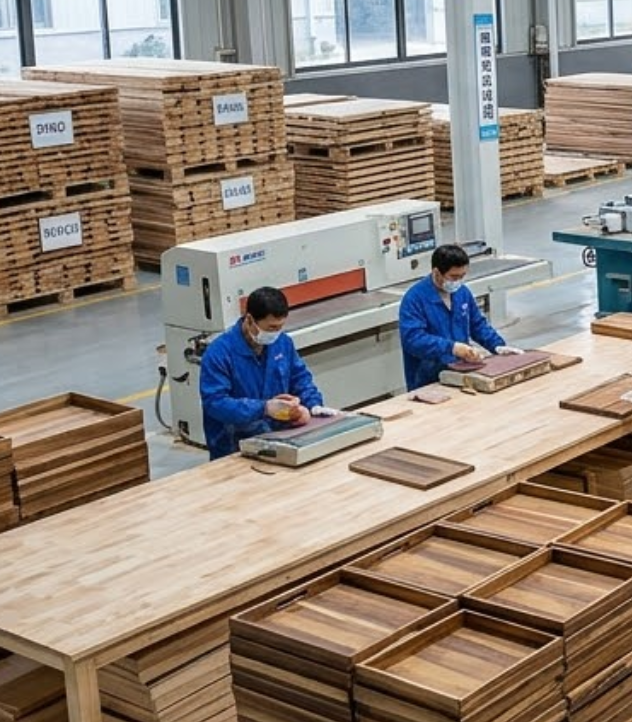
Working directly with a wooden products factory in China gives you visibility into how your boxes are actually made. This is critical when your SKUs rely on specific wood species, moisture standards, finish quality and export packaging strength.
A factory like Chic Homeware typically offers:
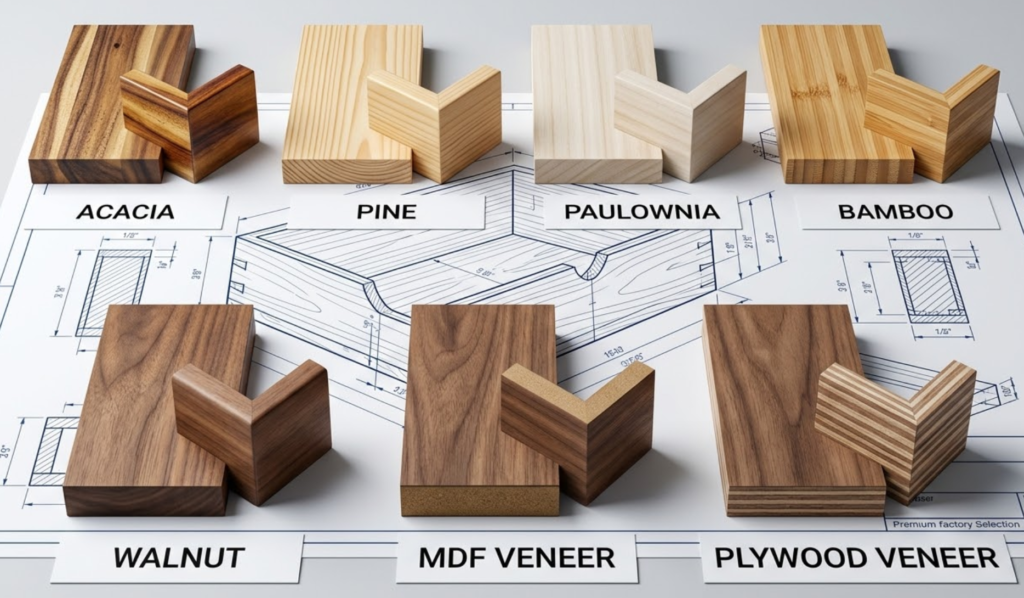
- Flexible material routes in acacia, pine, paulownia, bamboo, walnut, MDF veneer and plywood veneer.
- Direct engineering feedback on wall thickness, joint methods, hinge positions and magnet strength.
- Project-based communication around moisture control, surface finishing and logo process before mass production.
- Realistic lead time evaluation based on machine loading, finishing complexity and packaging requirements.
For buyers running multiple SKUs or rolling launches, this direct visibility reduces misinterpretation and saves time in sample revisions.
Trading Sourcing: Convenience with Limited Technical Depth
Trading companies can be convenient for low-volume or highly mixed orders. They may consolidate from different factories and handle documentation. However, the technical and process visibility is usually weaker:
- Unclear factory choice: Different POs may be placed in different workshops, even when you expect the same standard.
- Slower technical feedback: Questions on moisture content, finish systems or hardware specs often pass through multiple layers.
- Higher risk of spec drift: As your order grows, a trader may switch factories for better price, changing material and finish behavior.
For standard commodity items this may be acceptable, but for branded wooden boxes and organizers, this route can compromise consistency and brand perception.
2. Comparing Control Over Materials and Moisture
Wood Species and Panel Construction
With factory direct sourcing, you can work step by step on how each wooden box is constructed:
- Solid wood selection: Acacia, pine, paulownia and bamboo each have different density, grain look and cost profiles.
- Engineered options: MDF veneer and plywood veneer help control warping and offer a more uniform look for painted or stained boxes.
- Mixed-material suggestions: For example, solid acacia lid with MDF body for price balance, or bamboo dividers inside a pine organizer.
A direct factory partner can adjust panel thickness, joint structure and veneer direction based on your priority: cost, weight, or long-term flatness.
Moisture Control and Warping Risk
Most quality issues for wooden boxes and trays across seasons are related to moisture imbalance: warping lids, sticking drawers, cracked panels, or joints opening during overseas shipping.
Factory direct sourcing allows you to align on:
- Target moisture range before machining and before packing.
- Drying method suitable for acacia, pine, paulownia or bamboo.
- Buffer time between finishing and packing, especially before container loading.
- Export packaging design that limits moisture shock and physical stress.
Trading sources may reference general quality standards, but often cannot detail the actual moisture procedures or adjust them per project. For buyers shipping across climates or selling in regions with strict returns behavior, this gap quickly shows up in claims and negative reviews.
3. Finishing, Branding and Hardware: Where Details Decide Your Brand Image
Surface Finishing and Color Matching
For B2B buyers, finish is more than color. It influences perceived quality, touch feeling and defect rate in warehouses.
A factory direct partner can:
- Align on sanding consistency so the surface feels smooth but not over-burnished.
- Recommend stain vs paint systems for different species: for example, stain on acacia to highlight grain, or opaque paint on MDF veneer.
- Build finish panels and keep them as master references for repeat orders.
- Plan edge coverage and sealer layers to minimize fiber raising during shipping.
With trading sourcing, finish matching often relies on photos and generic descriptions. The underlying factory may change, making it difficult to maintain the exact tone or sheen across reorders.
Logo Application and Branding Options
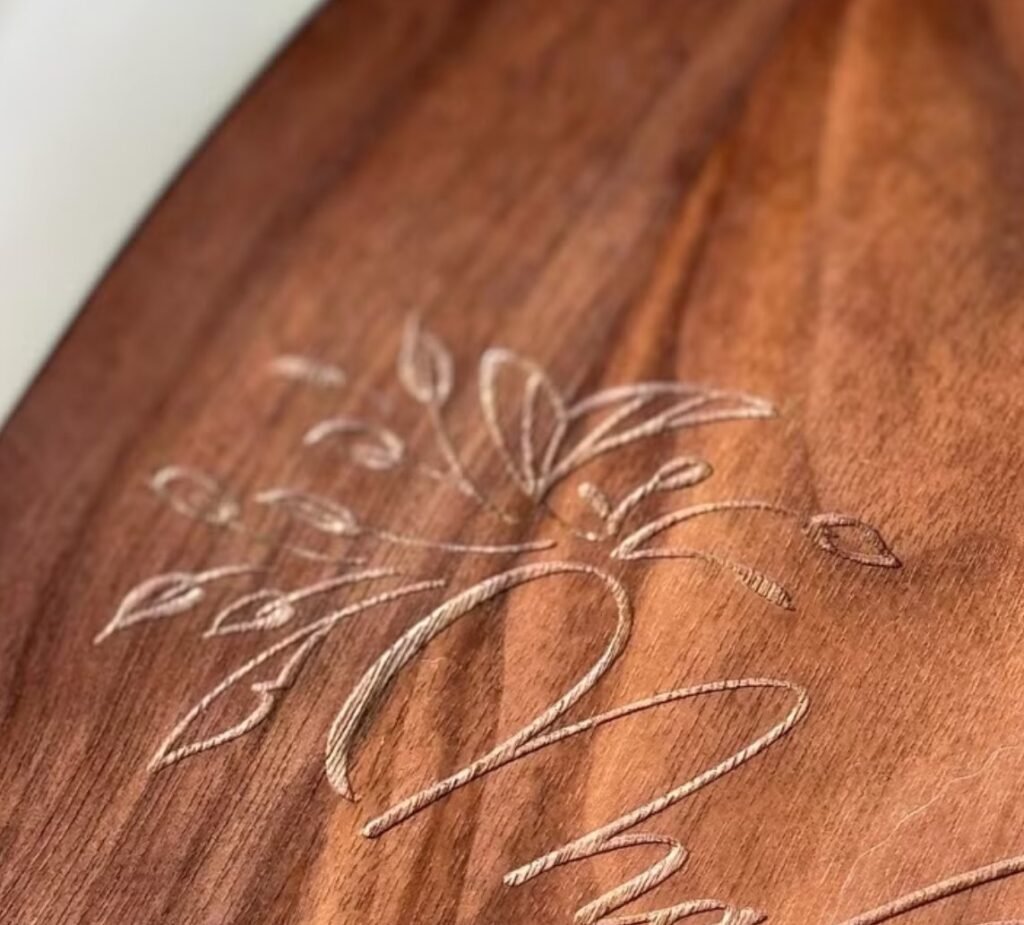
Brand owners and Amazon sellers rely heavily on logo consistency across wooden boxes, trays and organizers. Common logo processes include laser engraving, screen printing, hot stamping, UV printing and metal badges.
Factory direct advantages:
- Stable jigs and fixtures for logo alignment, reducing skewed or misplaced branding.
- Sample-based approval for logo size, depth and color before mass production.
- Shared logo files across product families
- Support for multi-position branding (lid, bottom, internal divider, color box).
Through trading channels, logo files and parameters may be forwarded to different factories with varying equipment. Over time, subtle changes in engraving depth or print density become visible in your catalog.
Hardware Fitting and Structural Stability
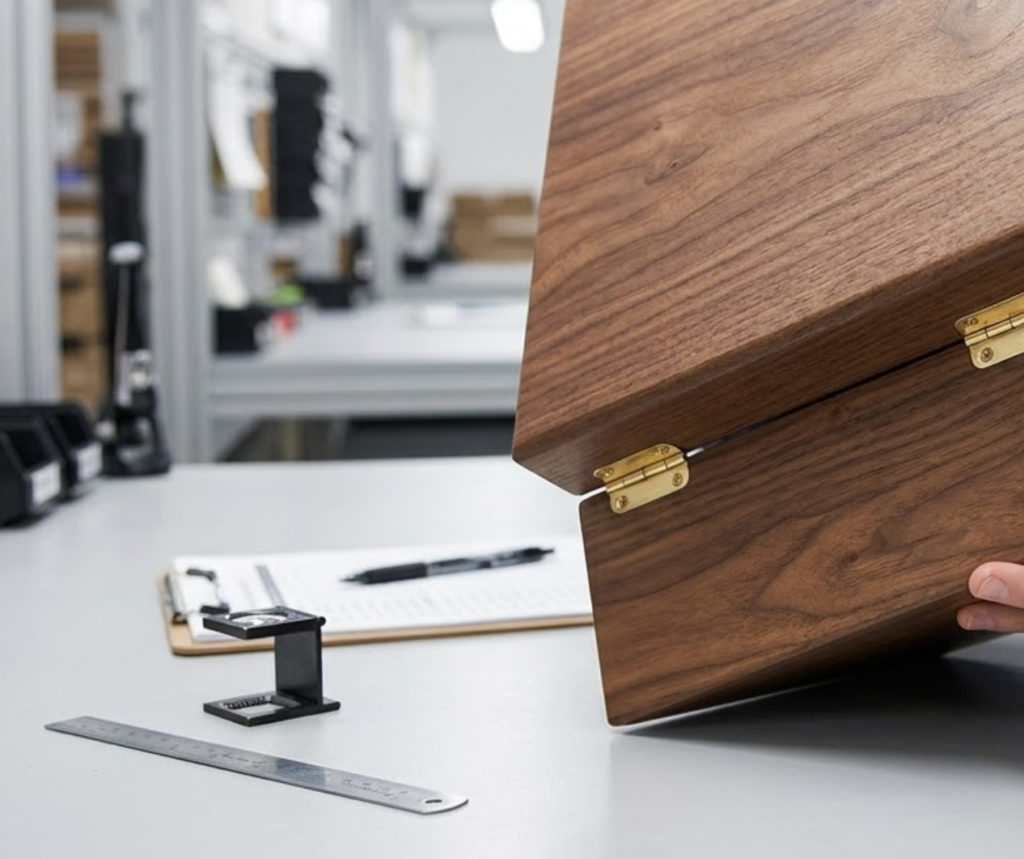
Hinges, clasps, magnets and internal fittings are common failure points for wooden boxes if they are not engineered and installed correctly.
Direct factories can:
- Recommend hardware options that match your price target but still endure usage (e.g., soft-close hinges vs basic butt hinges).
- Test magnet strength and adjust magnet size or quantity for gift sets and jewelry boxes.
- Control pilot hole depth and screw selection to avoid splitting thin panels.
- Suggest reinforcement methods on corners or long spans to reduce deformation.
Traders may provide attractive photos of finished boxes, but often do not control the underlying engineering or component sourcing. This makes it harder to address hardware issues that appear after the first shipment.
4. MOQ, Sampling and Lead Time: How Each Model Handles Your Scaling Plan
Understanding MOQ Logic at the Factory Level
Minimum order quantity for wooden boxes is driven by material batching, machining set-up, finishing lines and packaging. A factory-oriented partner can explain:
- Where MOQ is flexible (for common materials like pine or MDF veneer) and where it is more rigid (special walnut veneers or custom hardware).
- How mixing related SKUs in one production window can share raw material and finishing processes.
- Which dimensions and structures are more cost-efficient, so you can standardize across collections.
Trading companies may show lower MOQs by combining orders from different customers, but at the cost of weaker spec control and low visibility of how the MOQ is achieved. For brands planning multi-year programs, understanding genuine factory constraints is more strategic than chasing the lowest MOQ on paper.
Sampling Workflow
With direct factories, sampling is usually integrated into the OEM/ODM workflow:
- Technical drawings or reference samples → structure confirmation.
- Material confirmation (acacia, pine, paulownia, bamboo, walnut, MDF veneer, plywood veneer).
- Finish and logo sampling on the actual wood type.
- Packaging proposal: inserts, color box, mailer carton, master carton.
Adjustments can be handled in a structured way: change wall thickness, modify dividers, upgrade magnets, adjust stain color, change logo position. This reduces rework cost and timeline friction.
In trading sourcing, sampling may be faster for off-the-shelf items, but customization steps often involve back-and-forth with multiple factories. When revisions are required, communication delays and misinterpretation are more common.
Lead Time and Peak Season Risk
Lead time for wooden box production depends on raw material readiness, machining, sanding, finishing, drying and packaging capacity. A direct factory partner can:
- Give realistic lead time windows based on line loading.
- Advise on cut-off dates for seasonal orders such as Q4 gifting.
- Support partial shipment planning when you need early arrival for priority SKUs.
Trading companies might offer optimistic dates to secure orders, then negotiate later when actual factory capacity is tight. For importers and Amazon sellers working against strict launch schedules, this uncertainty can create stock-outs and advertising waste.
5. Price Structure vs Total Cost: Seeing Beyond the Unit Price
Where Factory Direct Pricing Is Usually More Efficient
Unit price comparisons must consider what is included. Direct factory pricing typically reveals:
- Material cost structure (e.g., impact of switching from acacia to paulownia or MDF veneer).
- Process cost drivers such as complex routing, multi-step finishing, double logo positions or assembled inserts.
- Packaging cost for color boxes, mailer cartons and export cartons.
Because the factory owns the production, you can work together on engineering changes that actually move costs: simplifying joints, standardizing sizes across SKUs, or changing hardware combinations.
Hidden Costs with Trading Sourcing
Trading sources may offer lower initial quotes, especially on simpler products. However, hidden costs can accumulate:
- Higher sampling frequency because of inconsistent spec execution between batches.
- Quality claims and rework if moisture, finishing or hardware issues are not well-controlled.
- Logistics inefficiency due to non-optimized packaging dimensions or insufficient drop-test thinking.
- Time cost for your team to coordinate technical issues through intermediaries.
For businesses relying on repeat orders, total landed cost plus claim risk is more important than a small unit price difference.
6. Export Packaging and Damage Control
Planning Export Packaging with the Factory
Wooden boxes and trays are vulnerable to corner impacts, compression and vibration during long-distance shipping. A factory-driven export packaging plan typically covers:
- Internal inserts: foam, corrugated or molded pulp to stabilize boxes and protect hardware.
- Color box and mailer carton design: thickness, structure and opening style aligned with your channel (retail shelf, e-commerce, wholesale).
- Master carton optimization: dimension planning to balance freight efficiency and protection.
- Carton drop-test thinking: pre-checking how the packaging behaves under typical warehouse handling.
When you work directly with the factory, packaging changes can be integrated into the production flow without creating confusion between suppliers.
Managing Damage Rate and Claims
For many buyers, the main pain point is not the one damaged carton, but the systematic damage pattern that appears with large volumes. Factory direct sourcing gives more control because:
- Carton strength, internal dividers and corner protection can be adjusted based on real shipment feedback.
- Material choices (e.g., switching from solid panel to plywood veneer for specific large lids) can reduce cracking risk.
- Humidity-sensitive products can be combined with desiccants or specific film wraps.
Trading routes may manage claims on a case-by-case basis, but they usually cannot deeply adjust structure and packing methods across multiple factories.
7. Compliance, Documentation and FSC-Oriented Discussions
Project-Based Compliance Communication
Buyers supplying EU and US markets often need more than a standard invoice and packing list. Depending on sales channel and end use, you may require specific compliance discussions for wooden products.
A direct factory partner can support:
- FSC-oriented sourcing discussions when you need to evaluate certified material routes.
- Material and finish transparency for internal compliance review.
- Documentation alignment according to your customer or platform requirements.
Trading companies can sometimes coordinate documents, but are largely dependent on the factories they use and may not control or fully understand the underlying systems.
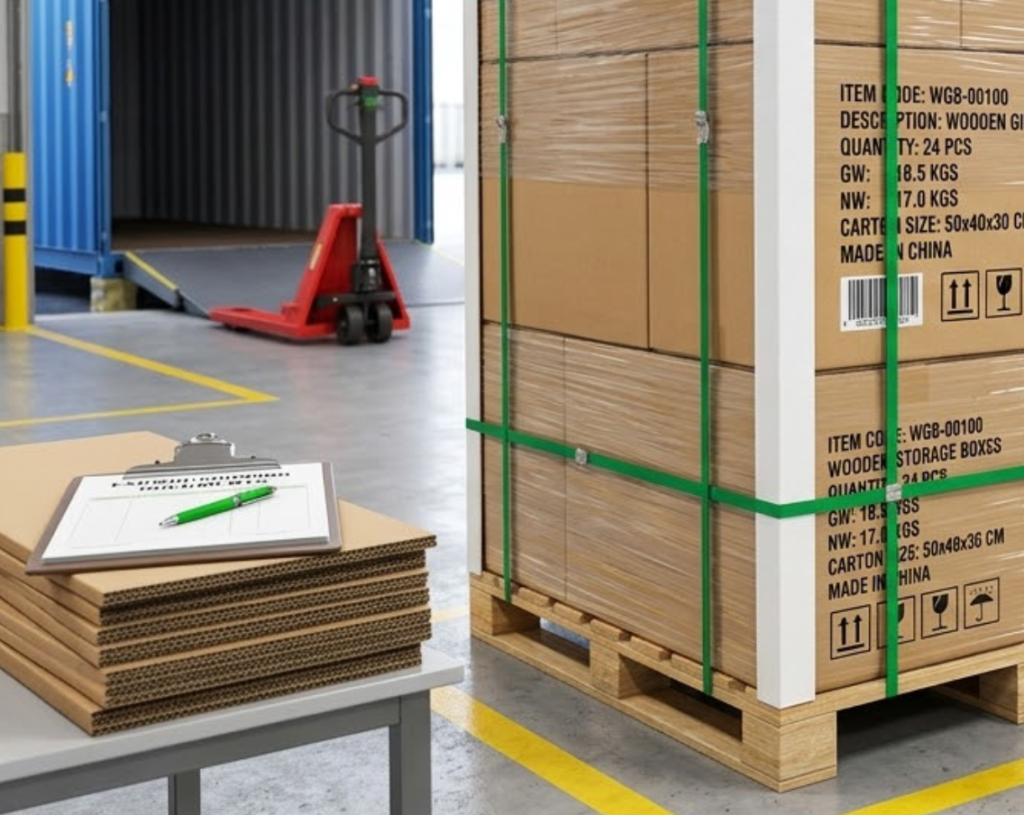
Traceability and Repeatability
When your wooden boxes become core SKUs, traceability matters. You need to know that the next production run will match the previous one in color, structure and packaging. Working directly with one wooden products factory in China gives you:
- Recorded master samples for each approved SKU.
- Process records for finish formulas and hardware specifications.
- Clear communication path if legal or customer requirements change.
In contrast, a trading-based model may shift factories over time, reducing traceability and making it harder to explain differences between batches.
8. Practical Checklist: Factory Direct Wooden Boxes vs Trading Sourcing
| Aspect | Factory Direct Wooden Boxes | Trading Sourcing |
|---|---|---|
| Material Control | Direct choice of acacia, pine, paulownia, bamboo, walnut, MDF veneer, plywood veneer; custom construction. | Depends on the factories selected by trader; may change between orders. |
| Moisture Management | Project-level standards, drying processes and packaging aligned with your markets. | Often general and not fully transparent; harder to adjust. |
| Finish & Color Matching | Master finish boards, repeatable processes and controlled sanding steps. | More variation when factories change; relies on photo-based matching. |
| Logo & Branding | Stable jigs, shared logo files and multi-position branding options. | Different equipment and operators across factories. |
| Hardware & Structure | Engineered hinge, magnet and insert solutions; structural optimization. | Limited ability to adjust or deeply troubleshoot hardware issues. |
| MOQ & Scaling | Transparent MOQ logic, support for SKU families and long-term planning. | Flexible for mixed small orders but less stable for scaling programs. |
| Export Packaging | Designed for drop-test thinking, carton optimization and damage reduction. | Often basic; difficult to standardize across factories. |
| Compliance & Traceability | Project-based communication, documented specs, clearer traceability. | Documentation varies with each factory used. |
| Total Cost Over Time | Optimizable via engineering and packaging; lower long-term risk. | May look cheaper initially; higher hidden cost from variation and claims. |
9. When a Factory Direct Partner Adds the Most Value
Factory direct sourcing is especially valuable when:
- You manage branded collections of custom wooden boxes, organizers, trays or kitchen storage.
- Your channel is review-sensitive (e-commerce, Amazon, DTC) and quality inconsistency quickly shows online.
- You need project-based compliance and FSC-oriented sourcing discussions.
- Your business depends on repeat orders where color, structure and packaging must match previous runs.
- You expect to expand SKUs and benefit from shared materials, processes and packaging systems.
In these cases, partnering with a custom wooden products manufacturer that can integrate OEM/ODM development, sampling, finishing, branding and export packing provides a more stable foundation than purely trading-based sourcing.
10. How Chic Homeware Approaches Factory Direct Wooden Box Projects
Chic Homeware works as a factory-oriented OEM/ODM partner for custom wooden boxes, organizers, trays, kitchen storage and gift packaging. Our focus is to turn your brief into a manufacturable, repeatable product roadmap.
Key points in our approach include:
- Material flexibility: acacia, pine, paulownia, bamboo, walnut, MDF veneer and plywood veneer, including mixed-material suggestions.
- Production checkpoints: moisture control, sanding consistency, stain or paint finish, logo process, hardware fitting, structural stability and export packaging.
- Custom options: size, compartments, hinges, magnets, inserts, logo, color box, mailer carton and carton mark aligned with your branding and logistics needs.
- OEM/ODM workflow: sample development, feedback loops, MOQ discussion, lead time planning, and repeat-order documentation.
For buyers specifically planning box and packaging series, our custom wooden boxes capability covers structure optimization for gift sets, storage systems and e-commerce-friendly packaging.
Conclusion: Choosing the Right Sourcing Model for Your Wooden Boxes
Factory direct wooden boxes and trading sourcing both have a place in B2B purchasing. Trading routes may be suitable for test quantities, highly mixed assortments or short-term projects. However, once your wooden boxes, organizers and trays become strategic SKUs, the benefits of working with a capable factory partner become clear: stronger control of materials and moisture, more consistent finishes and logos, better-engineered hardware and packaging, and a clearer total cost picture.
If your next sourcing step is to consolidate and upgrade your wooden box supply base, you can explore our capabilities as a wooden products factory in China. Share your current items, target price range and channel requirements, and we can evaluate practical ways to improve structure, finish, branding and export packaging for more reliable long-term supply.
To discuss an upcoming project or review your existing wooden box range, you are welcome to reach out to the Chic Homeware team for detailed, factory-level input on feasibility, costing and timeline planning.