
How To Compare Wooden Box Suppliers: Pricing, Communication, Sampling and Lead Time
For importers, wholesalers, private label brands and Amazon sellers, choosing a wooden box supplier is no longer only about who can offer the lowest FOB quote. Experienced sourcing managers compare suppliers across a full matrix of pricing structure, communication efficiency, sampling capability and lead time management. The goal is to secure a partner who can support repeat orders with consistent quality, predictable timelines and commercially workable MOQs.
At Chic Homeware, our daily conversations with buyers revolve around these exact topics. As an OEM/ODM manufacturer of custom wooden boxes, organizers, trays, kitchen storage and gift packaging, we see how professional buyers evaluate suppliers at factory level, not just at catalog level. This article breaks down how buyers actually compare wooden box suppliers and what you can look for when building your next sourcing project.
1. How B2B Buyers Really Compare Wooden Box Pricing
1.1 Price is a structure, not a number
When buyers compare wooden box suppliers, they rarely look at a single unit price in isolation. Instead, they look at the full cost structure behind that price. Key elements include:
- Material route: acacia, pine, paulownia, bamboo, walnut, MDF veneer, plywood veneer or mixed material with metal, glass or fabric.
- Finish level: raw, clear lacquer, stained, painted, distressed, or color-lacquered for premium gift packaging.
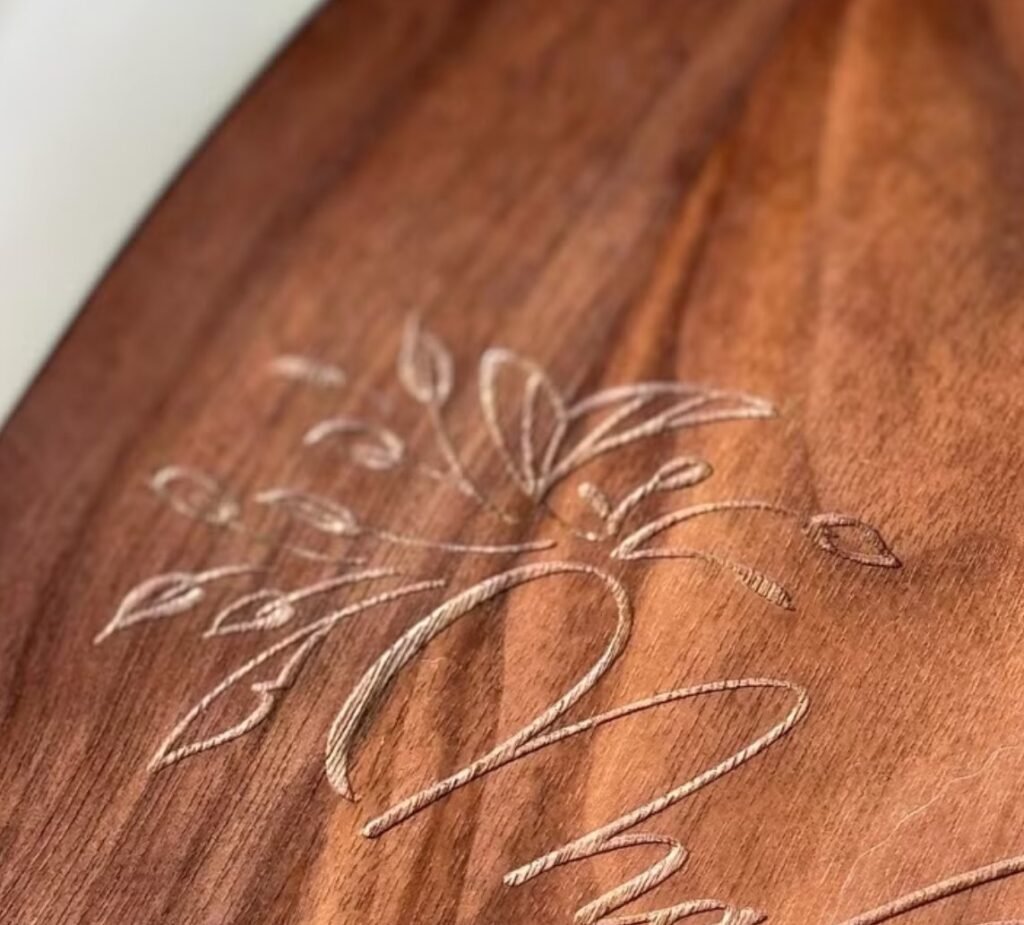
- Logo method: laser engraving, silk-screen, UV, heat transfer, branding iron, metal plate or decal.
- Hardware: hinges, clasps, magnetic closures, handles, metal corners, sliding lids or acrylic windows.
- Packaging: bulk pack, simple mailer carton, color box, or e-commerce-ready packaging with inserts.
A supplier that only quotes an attractive number without explaining these components makes it difficult for buyers to compare like-for-like. Professional buyers usually prefer a transparent breakdown, even if the initial price looks slightly higher, because it reveals where cost and value are created.
1.2 Comparing material options for cost and positioning
The choice of wood species strongly influences both unit price and brand positioning. Common comparisons include:
- Acacia: Dense, durable and visually rich, often used for premium kitchen storage and presentation boxes. Higher material cost but strong retail value.
- Pine: Cost-effective, widely available and easy to work with. Suitable for mass-market organizers, crates and gift boxes where price competitiveness is critical.
- Paulownia: Extremely light, often used when air freight weight or large-volume gift packaging is a concern. Helps control logistics cost for bulky sets.
- Bamboo: Perceived as eco-conscious and modern. Often chosen for kitchen, bathroom and tea boxes targeting a sustainability-oriented audience.
- Walnut: Premium appearance and darker tone, suitable for high-end branding, whiskey boxes, watch cases or collector’s items.
- MDF and plywood veneer: Stable, consistent and ideal for painted finishes or where flatness and uniformity are more important than visible wood grain.
Experienced buyers often ask for two or three material routes for the same design, to understand the price band and how it matches the target retail. A factory-oriented partner can provide comparative quotations and highlight where small structural changes can reduce material waste and, therefore, lower cost.
1.3 Hidden cost drivers buyers pay attention to
Beyond wood species, buyers compare suppliers based on how they handle the less visible cost drivers:
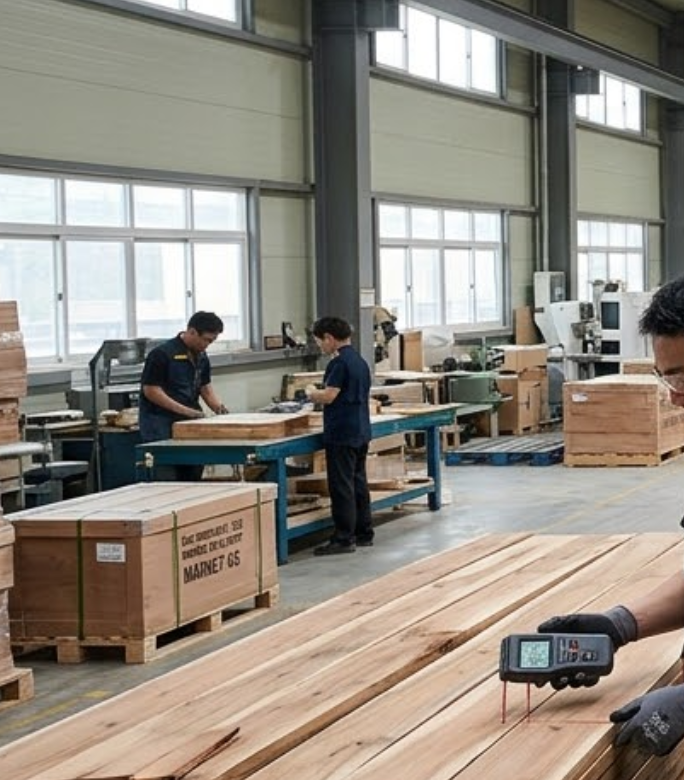
- Moisture control: Poor drying increases warping and cracking risk, leading to higher claim and return costs. Suppliers that invest in proper moisture control may look slightly more expensive but often reduce total cost over the project lifecycle.
- Sanding and finishing consistency: Better sanding and finishing can reduce customer complaints and lower the risk of negative reviews for e-commerce brands.
- Export packaging: Carton design, internal protection, and palletization planning directly impact damage rates and warehouse handling efficiency.
Professional buyers frequently ask for photos or videos of internal packaging, as well as details about carton drop-test thinking, especially for shipments going into central warehouses and 3PLs.
2. Communication: The Real Indicator of Supplier Reliability
Once price structure is clear, communication becomes the next major comparison point. For long-term wooden box projects, communication quality often predicts how a supplier will perform under pressure.
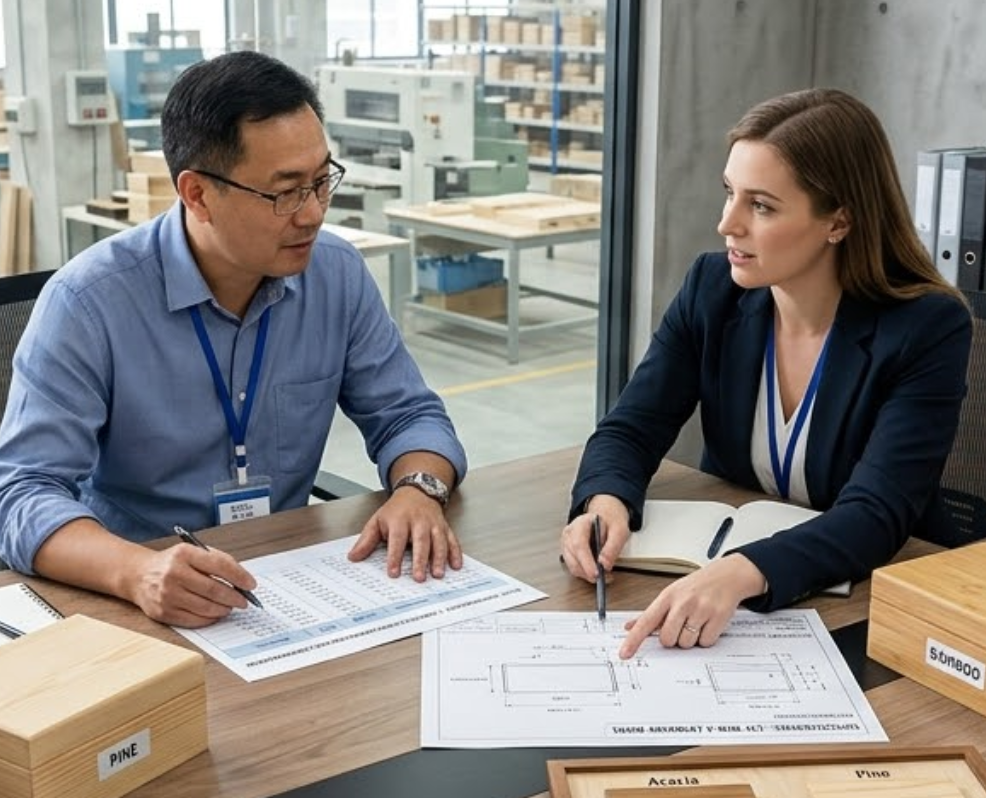
2.1 Responsiveness and clarity
Buyers typically track how fast and how clearly a supplier responds during initial quotation and sampling. They look for:
- Response time: Does the factory reply within 24 hours with relevant information, or simply acknowledge and delay?
- Question quality: Does the supplier ask detailed, factory-level questions about size, thickness, compartments, hinges, magnets, inserts and packaging?
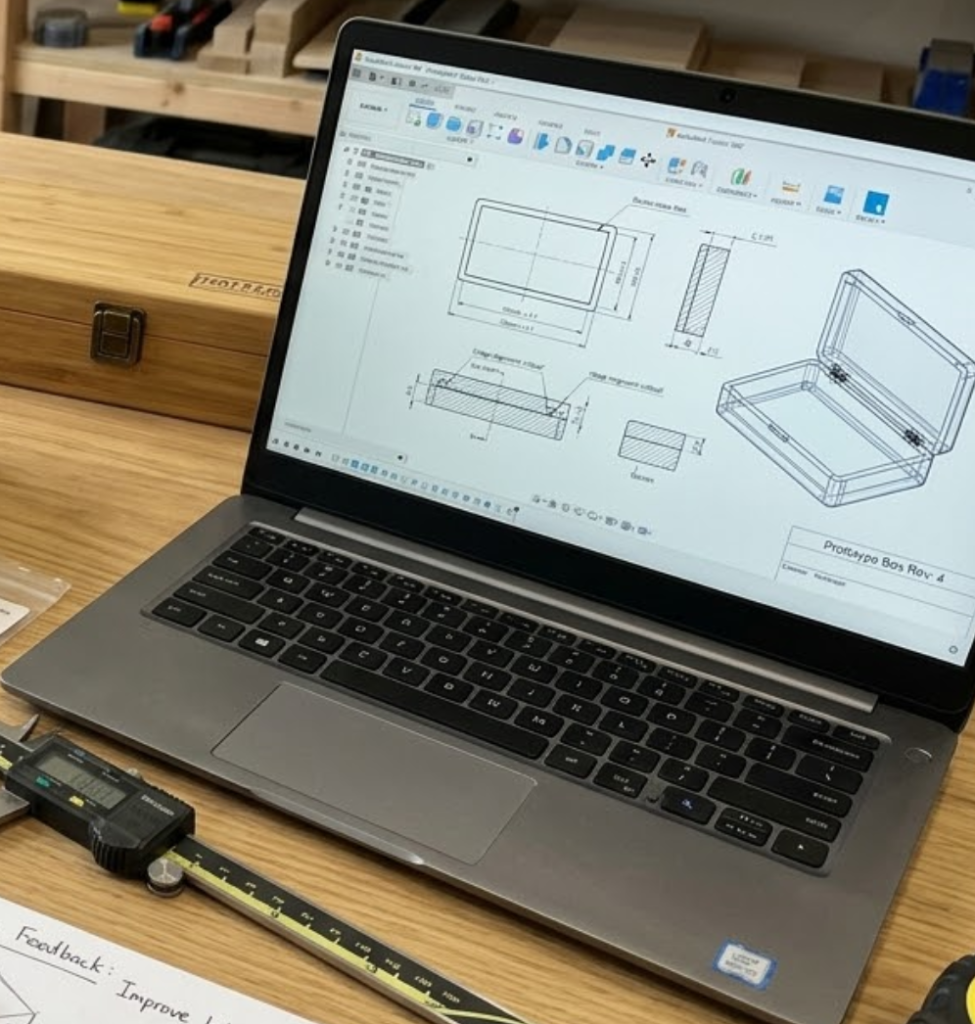
- Documentation: Are drawings, spec sheets and quotations clearly labeled with version control, dimensions and material specifications?
Clear, structured communication at this stage allows buyers to compare suppliers on professional behavior, not only on price.
2.2 Project-based communication for EU and US requirements
Importers serving EU and US markets often need project-based compliance and sourcing discussions. When comparing wooden box suppliers, they evaluate who can handle topics such as:
- FSC-oriented sourcing discussions and certification routes.
- Regulatory considerations related to coatings, contact surface for food-related items and packaging materials.
- Labeling, carton marks and documentation to align with retailer or marketplace requirements.
A factory that can discuss these topics in practical terms—not just send generic certificates—usually ranks higher when buyers compare options. Sourcing managers know that compliance issues often surface months later, so they prefer partners who treat compliance as a continuous conversation, not a one-time document share.
2.3 OEM/ODM thinking vs. pure trading responses
Another way buyers compare suppliers is by assessing whether the partner thinks like an OEM/ODM manufacturer or like a simple trading source. Indicators of a manufacturing mindset include:
- Proactive suggestions on structure optimization to reduce cracking risk or hardware failure.
- Alternative material and thickness suggestions when buyers push for lower cost or specific weight limits.
- Realistic comments on what is feasible within the required lead time and MOQ.
Professionals recognize the value of a partner who can say “no” to risky configurations, rather than agree to every request just to secure an order. This type of communication builds trust and reduces expensive surprises later in the project.
3. Sampling: Where Buyers Test Quality Claims
Experienced buyers know that a wooden box supplier’s catalog is only a starting point. Sampling is where quality claims are tested and future issues are anticipated. When comparing suppliers, the sampling stage often becomes the decisive factor.
3.1 What buyers expect from wooden box samples
Professional buyers do not just check if the sample matches the photo. They inspect a detailed checklist, including:
- Moisture and stability: Is the sample flat, with no twisting or obvious warping? Does the lid close smoothly after some time in the buyer’s warehouse environment?
- Sanding and edges: Are corners smooth to the touch? Is the sanding consistent on both outer and inner surfaces?
- Finish and color: Is stain or paint applied evenly, with consistent tone from sample to sample if multiple pieces are sent?
- Hardware fitting: Are hinges aligned? Do magnets align accurately for clean closure? Are screws sunk properly without cracking?
- Logo execution: Is the logo sharp, correctly positioned and aligned with the brand’s guidelines?
Many buyers will stress-test the sample by opening and closing the lid repeatedly, or stacking sample cartons to simulate basic handling. This gives them a realistic view of how the product might perform in the supply chain and at customer level.
3.2 Comparing sampling flexibility
Sampling flexibility is a key differentiator when buyers compare suppliers for complex or multi-SKU wooden box programs. They evaluate:
- Sample lead time: How quickly can a supplier convert drawings or buyer’s reference samples into workable pre-production samples?
- Sample rounds: Is the factory willing to adjust and iterate when small issues arise, such as lid alignment, magnet strength or compartment sizing?
- Mixed material sampling: For designs combining wood with glass, metal, fabric or acrylic, can the factory coordinate these elements coherently in a single sample?
Suppliers who maintain in-house engineering, woodworking and finishing capabilities tend to perform better during this phase, as they can make controlled adjustments without relying heavily on sub-suppliers.
3.3 MOQ and its connection with sampling
MOQ discussions usually start during sampling. Buyers compare suppliers on how flexible they are, especially during market testing or for new product launches. Typical approaches include:
- Offering different MOQs for different material routes (e.g., lower MOQs for pine or MDF veneer than for walnut).
- Allowing mixed sizes or colors within one production run where process-wise feasible.
- Setting a project-based MOQ for a whole collection rather than per individual SKU.
Chic Homeware, as a Custom Wooden Products Manufacturer, often helps buyers structure MOQs around their launch strategy, balancing factory efficiency with the buyer’s inventory risk. When comparing suppliers, buyers favor partners who can discuss MOQ with a commercial mindset rather than simply stating a minimum number.
4. Lead Time: Planning Beyond the Production Calendar
Lead time is one of the most critical comparison points for wooden box suppliers, especially when projects are tied to seasonal launches, gifting calendars or retail promotion windows. Professional buyers look beyond a single quoted production time and evaluate how the factory plans and protects the timeline.
4.1 What professional buyers look for in lead time quotes
Instead of accepting a generic “40–50 days,” experienced buyers ask suppliers to break the timeline into stages:
- Sample development time from artwork or reference sample.
- Approval buffer, including time for express shipping of samples and buyer review.
- Material preparation time, including drying, cutting and pre-assembly.
- Production and finishing time, including drying time between coats.
- Packing, inspection and loading arrangements.
Suppliers that can explain this breakdown signal that they understand capacity management. Buyers compare how different suppliers describe their process, and use this to judge how likely the factory is to keep promises once orders are placed.
4.2 Capacity planning and peak seasons
Wooden boxes and gift sets are highly seasonal in many markets. When comparing suppliers, buyers ask direct questions about peak-season capacity and how the factory manages overlapping orders. Key topics include:
- How far in advance the factory needs final order confirmations for Q4 shipments.
- Whether material pre-booking is necessary for specific woods like walnut or special veneers.
- How the factory prioritizes long-term customers vs. one-off projects during busy periods.
A realistic conversation around capacity tells buyers how serious the supplier is about planning. Over-optimistic timelines are a red flag at this stage.
4.3 Lead time risk and damage control planning
Lead time is closely linked to damage control. A supplier whose packaging is not optimized may cause delays through rework, re-shipping or claims management. Buyers therefore compare how factories think about damage prevention when quoting lead times. Common checkpoints include:
- Export carton design and material choice based on product weight and stacking height.
- Internal protection for fragile designs with glass windows, delicate lids or fine hardware.
- Carton drop-test thinking for e-commerce projects where parcels are handled multiple times.
Factories that integrate protective packaging into their lead time planning often reduce the overall risk of delays caused by in-transit damage, which is crucial for Amazon sellers and online-first brands.
5. Structural and Quality Checkpoints Buyers Use to Compare Suppliers
Beyond price, communication, sampling and lead time, buyers also compare the technical depth of a wooden box supplier. They pay special attention to structural design, moisture management and finishing routines that influence long-term product performance.
5.1 Structure optimization and hardware stability
For wooden boxes, organizers and trays, structural decisions carry significant implications for cracking, warping, and hardware durability. Professional buyers look for suppliers who can:
- Adjust panel thickness and joinery based on wood species and box size.
- Recommend hinge types, screw sizes and magnet placement that suit the design and anticipated usage.
- Plan reinforcement where lids are large, where boxes will be stacked with load, or where handles are heavily stressed.
A supplier that has built a wide range of projects, from small jewelry boxes to large storage trunks, will usually have a deeper library of structural solutions. Buyers often request references or photos of similar past projects to compare technical competence.
5.2 Moisture control and surface finishing
Moisture is one of the most frequent root causes of issues with wooden boxes shipped across climates and stored in different warehouse conditions. Buyers compare how suppliers manage:
- Initial wood drying and storage conditions.
- Moisture checks before cutting, assembly and finishing.
- Drying time between stain or paint layers to minimize future surface defects.
For finishes, buyers inspect whether the supplier can maintain consistent color, gloss level and tactile feel across large batches. This is particularly important for private label programs where repeat-order consistency is essential. If a supplier can show long-running programs with stable finish quality, they usually stand out in buyer comparisons.
5.3 Export packaging and repeat-order consistency
Packaging is not only about protection; it also impacts warehouse efficiency, repacking operations and repeat-order predictability. Buyers compare suppliers by observing:
- Whether internal packaging is standardized and documented so repeat orders are packed the same way.
- How carton dimensions are optimized for pallet patterns and container loading.
- How carton marks and labeling are managed for multiple destinations and sales channels.
Chic Homeware’s role as a Wooden Products Factory in China means we are involved from material selection through to export packing. Buyers who have experienced inconsistent packaging across repeat orders know how costly warehouse confusion and re-labeling can be; therefore, they value documented packing standards and clear photos included in PI files.
6. Practical Comparison Checklist for Wooden Box Buyers
To make supplier comparison more structured, sourcing managers often build internal checklists that go beyond price. Below is a practical framework you can adapt for your own purchasing process:
| Comparison Area | Key Questions | What to Watch For |
|---|---|---|
| Pricing & Material | Are material routes clearly stated? Is thickness and finish specified? | Unusually low prices without clear material and finish details may lead to quality compromises. |
| Communication | Does the supplier respond with detail and drawings, or only short confirmations? | Look for structured replies, meaningful questions and version-controlled documents. |
| Sampling | How many days for samples? Is adjustment possible after your feedback? | Rigid or slow sampling suggests potential inflexibility during mass production. |
| Lead Time | Can the supplier break down the timeline into stages and explain capacity planning? | Generic or over-optimistic timelines are risky for seasonal orders. |
| Quality & Structure | Does the factory discuss moisture control, hardware selection and structure optimization? | Technical comments indicate real factory experience and problem-prevention thinking. |
| Packaging & Damage Control | Is export packaging explained in detail with photos or drawings? | Surface-level answers can lead to higher damage and claim rates later. |
| Repeat Orders | How is finish, color and packaging documented for consistent repeat production? | Factories with clear SOPs and records generally deliver more stable repeat orders. |
Using a structured checklist makes it easier to compare multiple wooden box suppliers objectively, especially when coordinating across regional sourcing offices or multiple brand teams.
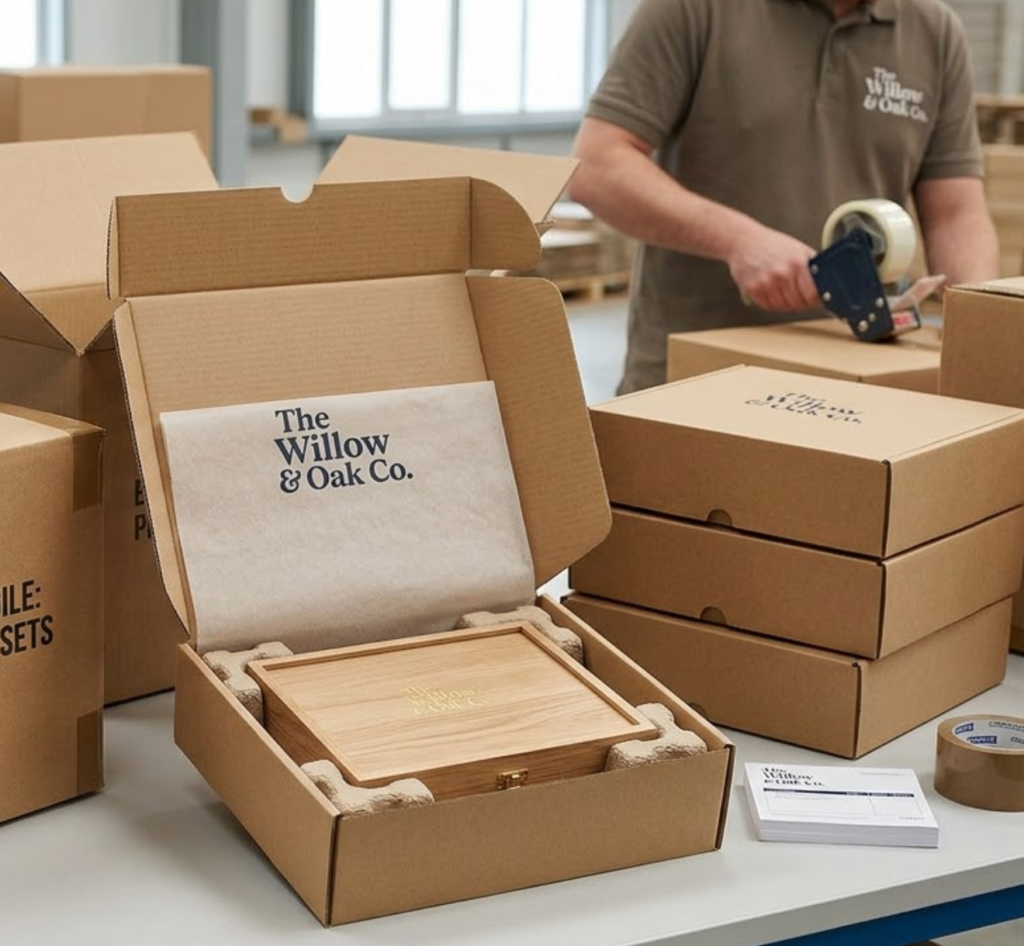
7. Why Buyers Choose Chic Homeware as Their Wooden Box Partner
For buyers who need a long-term OEM/ODM partner, Chic Homeware combines factory-oriented production with commercially practical project management. Our focus areas include:
- Flexible material routes: Support for acacia, pine, paulownia, bamboo, walnut, MDF veneer and plywood veneer, including mixed-material suggestions when appropriate.
- OEM/ODM workflow: Structured sample development, logo customization, compartment planning, hinge and magnet selection, plus packaging options from simple bulk pack to e-commerce-ready solutions.
- Quality checkpoints: Moisture control, sanding consistency, finish tuning, logo process validation, hardware fitting checks and structural stability assessments before shipment.
- Export-oriented mindset: Discussions around FSC-oriented sourcing, export packaging planning, carton drop-test thinking and project-based compliance communication for EU and US markets.
Whether you are building a single hero product or a full category range of custom wooden boxes, organizers and trays, working directly with an experienced factory helps you control cost, reduce quality risk and protect your delivery schedule.
8. Next Steps: Turn Comparison into a Concrete Project
Comparing wooden box suppliers is ultimately about reducing risk and finding a partner who can support your growth. By evaluating pricing structure, communication style, sampling approach, lead time management and technical depth, you can move beyond simple quotation comparisons and choose a supplier aligned with your long-term strategy.
If you are planning a new wooden box, organizer, tray or gift packaging project, you can explore the types of OEM/ODM work Chic Homeware handles on our Custom Wooden Boxes page. For project discussions, drawings, reference samples or RFQs, you can reach our team directly through Contact Chic Homeware. A short, structured briefing is usually enough for us to prepare material options, initial quotations and a realistic sampling and lead time plan for your review.