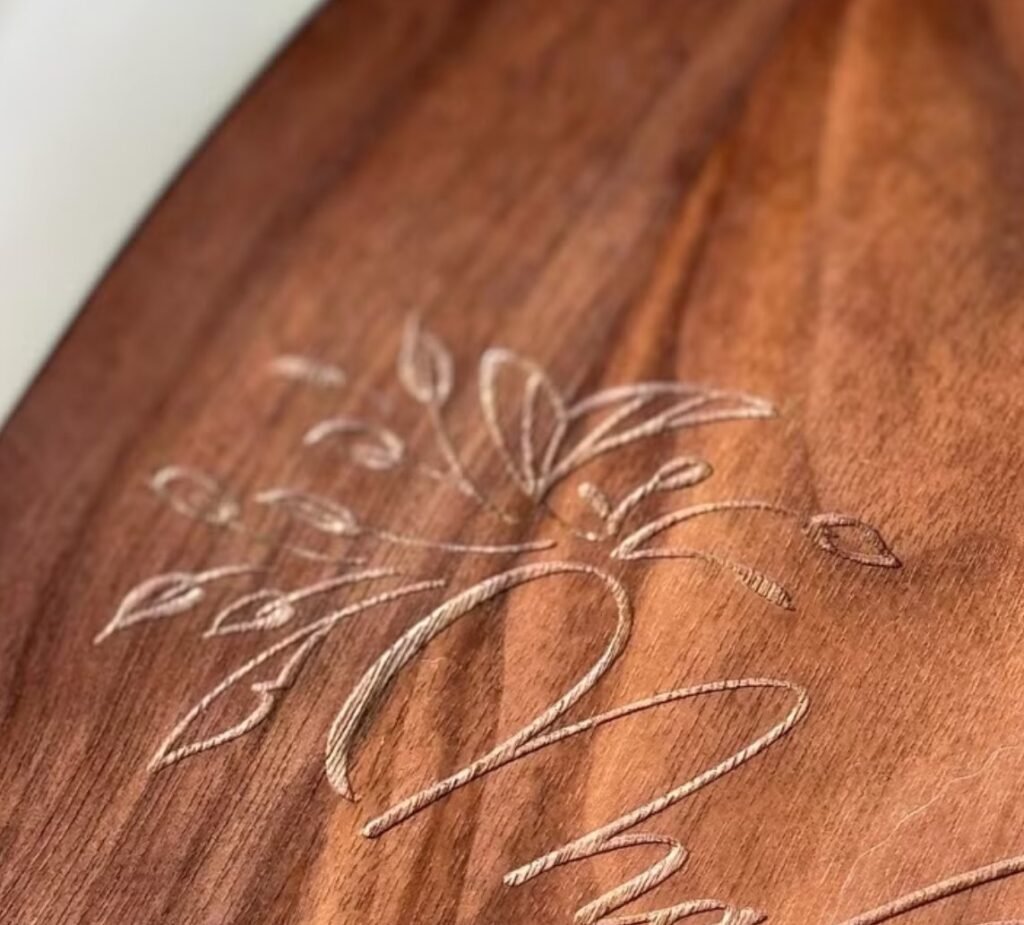

Kitchen storage trends 2026 are reshaping how buyers source spice racks, bamboo organizers, countertop storage, and multi-use shelving. For brands, wholesalers, and private label sellers, the focus is shifting toward small-space solutions, natural materials, warmer finishes, and products that are easier to merchandise across multiple channels.
Kitchen Storage Trends 2026: What Buyers and Brands Are Looking For
Kitchen storage trends 2026 are giving buyers, brands, importers, and private label sellers a much clearer picture of what the market wants next.
This year, the category is moving beyond simple utility. Buyers are not only looking for products that store well. They are also looking for products that fit smaller spaces, photograph better online, match warmer interior styles, and offer more flexibility across retail, e-commerce, and wholesale channels.
In other words, kitchen storage trends 2026 are no longer just about adding another organizer to a shelf. They are about choosing products that solve real space problems while still feeling current, display-friendly, and commercially practical.
A spice rack, storage shelf, salt box, or countertop organizer now has to do more than one job. It needs to be useful, easy to understand, easy to style, and easy to position within a broader kitchen collection.
For B2B buyers, this shift matters. Kitchen storage trends 2026 show stronger demand for compact formats, natural bamboo and wooden materials, multi-use storage concepts, and products that can work in more than one room scene.
Buyers also care more about whether a product can be developed into a series, customized for brand needs, packed efficiently, and sold across different price levels without losing its visual appeal.
So what are kitchen storage buyers really looking for now? From a sourcing perspective, kitchen storage trends 2026 point in a fairly consistent direction. Buyers want space-saving products, warmer natural finishes, cleaner but less sterile design, stronger OEM potential, and storage pieces that feel practical in real homes rather than only attractive in product photos.
That combination is what makes a kitchen storage product more relevant, more marketable, and easier to scale in 2026.
1. Compact Products for Small Spaces Are Still a Priority
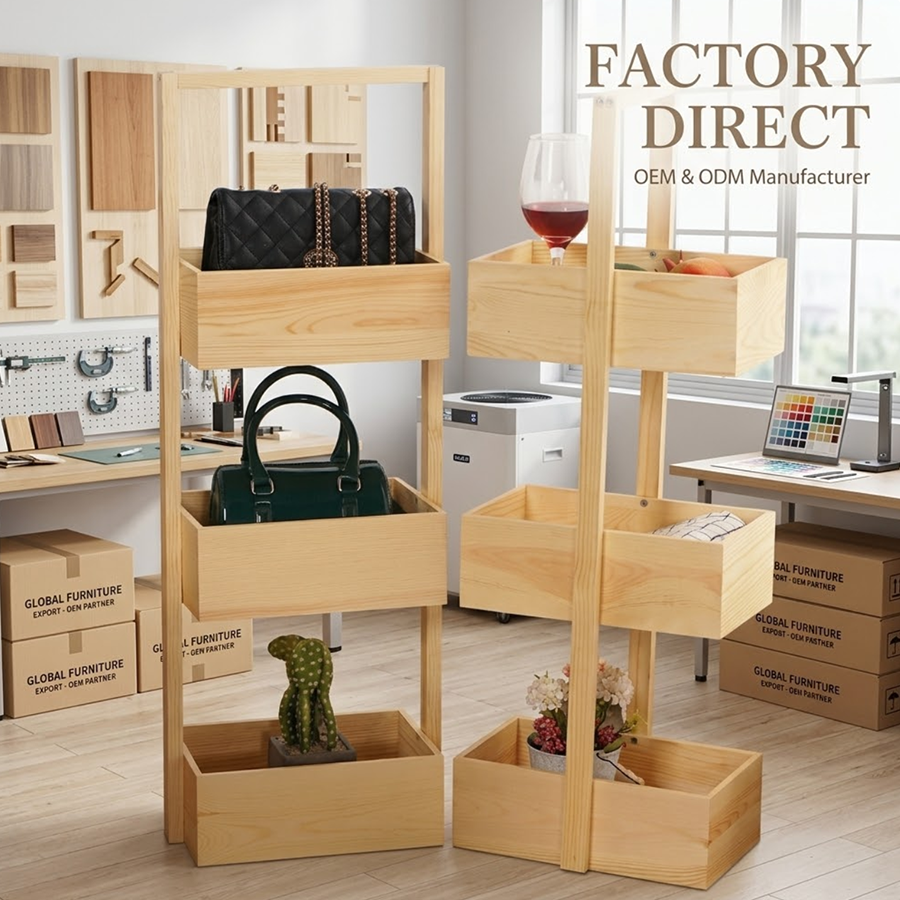
One of the clearest signals in kitchen storage trends 2026 is that buyers are still leaning toward products that help people improve a kitchen without changing the whole room.
Small upgrades continue to matter. In trend coverage, this shows up through micro-renovations and small-space solutions. In product sourcing, it shows up in the ongoing demand for organizers that take up less room while making the space feel more controlled.
That is why narrow spice racks, compact salt boxes, small countertop organizers, freestanding side shelves, and multi-tier storage pieces still make commercial sense.
These products answer a simple question many end users still have: how do I store more without making my kitchen feel crowded?
For buyers, that practicality matters more than fancy features that look impressive in a showroom but are harder to place in real homes.
This is especially important for importers and wholesalers serving apartment markets, first-home buyers, smaller urban kitchens, and multi-use living spaces. Products that save space without looking temporary or overly plastic are usually easier to merchandise and easier to keep relevant over time.
That is one reason bamboo and wooden countertop organizers continue to stay commercially useful. They offer function, but they also soften the room visually.
2. Natural Materials Still Matter, but Buyers Want a Softer Finish
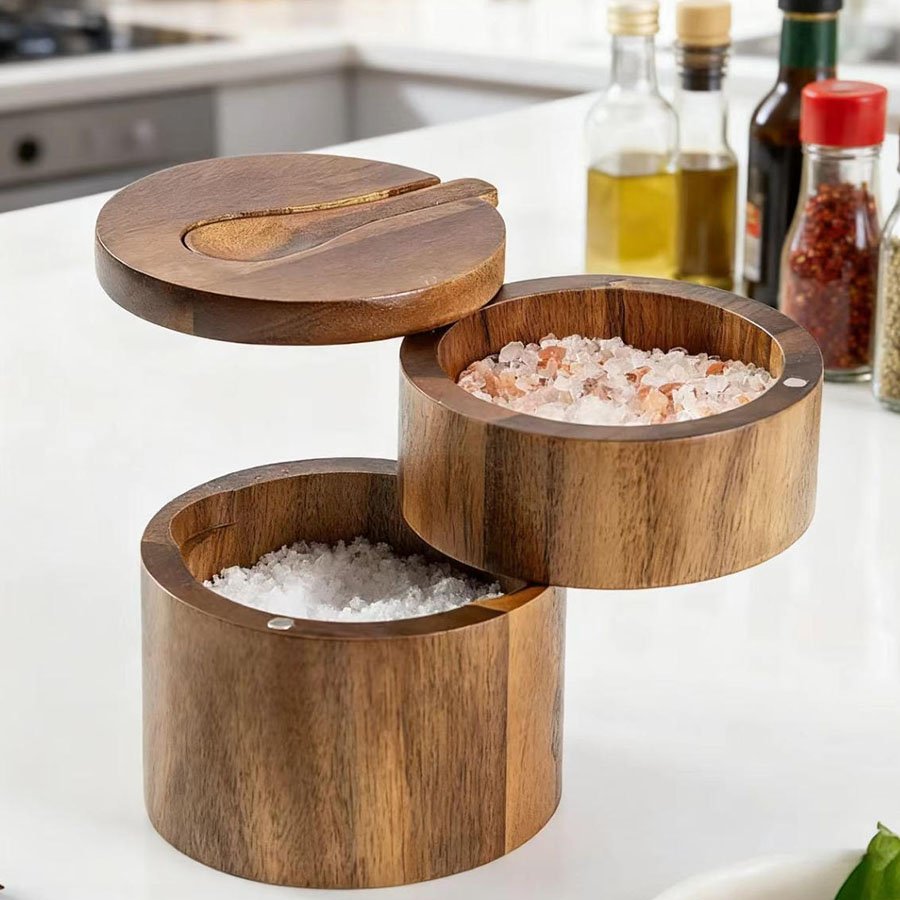
Another important point in kitchen storage trends 2026 is that natural materials still matter, but the finish direction has changed.
Buyers are showing more interest in warm bamboo, visible grain, lighter natural wood tones, and surfaces that feel more organic. Highly glossy or over-polished finishes often look less current now, especially in categories that are supposed to feel practical and easy to live with.
For kitchen storage, this makes a real difference. A bamboo spice rack or wooden organizer may seem like a simple product, but surface finish can completely change how modern or outdated it feels.
Today, buyers usually respond better to products that look warm, clean, and honest to the material. They want storage products that feel natural rather than artificial, and refined rather than shiny.
If you are planning a broader kitchenware collection and comparing material directions, our complete guide to wood materials for kitchenware may also be useful for product planning.
3. Buyers Want Organizers That Can Stay on Display
Kitchen storage trends 2026 are also being shaped by a broader interior shift. Homes are still organized, but they are becoming less cold and less sterile. Buyers are looking for products that feel tidy without making the space feel empty.
That matters because many kitchen storage products are no longer hidden away in cabinets. They are left on countertops, open shelves, coffee corners, and dining-side surfaces.
In practical terms, this means a product must now work as storage and as visual styling. A basic organizer that solves a problem but looks awkward on the counter is harder to sell than one that does both jobs well.
This is one reason products like bamboo spice racks, rotating spice organizers, countertop salt boxes, and small open shelves continue to perform well. They are functional, but they also contribute to the look of the kitchen.
For B2B buyers, this means products that are visually balanced, easy to style, and easy to photograph will usually have a stronger advantage across both wholesale and e-commerce channels.
4. Multi-Use Positioning Is More Valuable Than Before
One of the smartest moves buyers can make in 2026 is choosing products that can be sold in more than one way.
Many similar organizer products are no longer being presented only as kitchen items. Freestanding bamboo shelves and compact racks are often positioned for bathrooms, bedrooms, living rooms, entryways, coffee stations, or pantry corners as well.
That multi-use positioning matters because it gives one product more commercial flexibility.
A rack that only works as a spice shelf has one clear use. A rack that can also be sold as a coffee station organizer, small shelf for bathroom items, side organizer for small spaces, or tabletop display piece has several.
For importers, distributors, and private label buyers, that flexibility creates better value.
- It widens the addressable market.
- It creates more content angles for listings.
- It helps one SKU stay relevant across multiple customer types.
Products with clean structures, simple proportions, and neutral styling are often the easiest to position this way.
5. Series Development Is Becoming More Important
A single product can sell. But a collection usually sells better.
Another clear signal in kitchen storage trends 2026 is that more buyers want products that can be developed into a matched series rather than remaining isolated SKUs.
This is especially true for brands and wholesalers trying to build stronger merchandising logic. Instead of sourcing one spice rack and stopping there, many buyers now want coordinated product families.
That might include:
- a spice rack
- a rotating spice organizer
- a countertop salt box
- a tea and coffee organizer
- a compact side shelf or freestanding rack
When these products share a similar material language, finish tone, logo method, and packaging direction, the collection feels more intentional. It also feels more branded.
This is where OEM and ODM capability become more valuable. Buyers increasingly want suppliers who can support line building, not just one-item production.
If you want to present that strength more clearly, it helps to guide readers toward broader pages like Custom Wooden Products Manufacturer and Wooden Products Factory in China.
6. Customization Needs to Be Practical, Not Just Decorative
In kitchen storage trends 2026, customization is still important, but buyers are becoming more practical about what kind of customization actually matters.
They do not always want dramatic changes. More often, they want adjustments that help the product fit their market better.
That usually means requests like:
- changing shelf spacing to fit a bottle size
- adjusting product dimensions for small-space markets
- choosing a lighter or darker finish
- adding a laser logo or printed branding
- improving gift box or mail-order packaging
- building matching items around one main design direction
For suppliers, the lesson is simple. The most useful OEM work is not necessarily the most complicated. It is the customization that helps the buyer sell more efficiently.
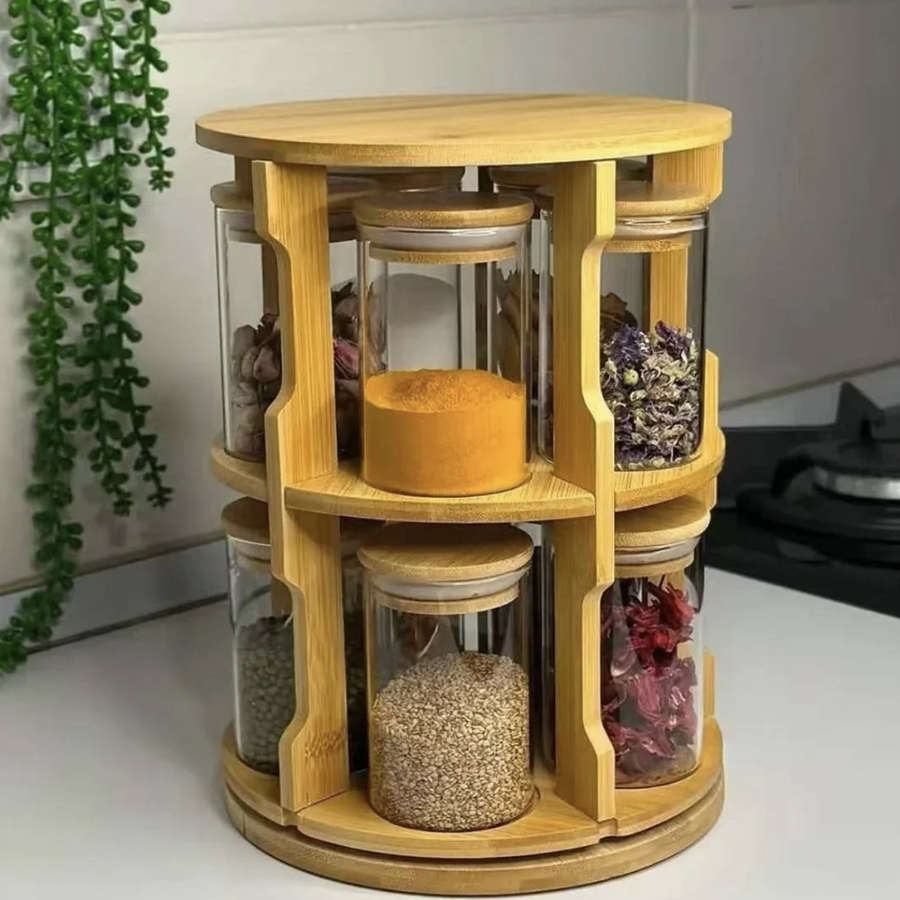
If you want readers to see a practical product example, you can also link them to your bamboo rotating spice rack with 6 glass jars as a more premium organizer option within a broader kitchen storage line.
7. Packaging and Freight Logic Are Part of the Trend Too
Trend discussions often focus on color, material, or styling. But experienced buyers know that the real commercial decision is bigger than appearance.
A product can look attractive and still become difficult to scale if it is too bulky, difficult to pack, or unsuitable for e-commerce shipment.
That is why kitchen storage trends 2026 also include a stronger practical layer. Buyers increasingly pay attention to:
- carton efficiency
- breakage risk
- assembly requirements
- mail-order compatibility
- retail presentation
- container loading logic
This is one more reason why structurally clear and commercially practical products keep performing well. They are not only easier for end users to understand. They are also easier for importers and wholesalers to manage.
8. What Kitchen Storage Buyers Really Want in 2026
If you bring all of these signals together, the overall direction becomes quite clear.
Kitchen storage buyers in 2026 are generally looking for products that are:
- compact enough for real homes and smaller spaces
- warm in appearance, with natural bamboo or wood appeal
- display-friendly rather than visually cold
- flexible enough for more than one room scene
- easy to develop as part of a collection
- practical to customize for brand and channel needs
- reasonable to pack, ship, and scale
That combination matters more than any single feature.
A beautiful organizer without commercial logic is hard to scale. A practical organizer without visual appeal is harder to merchandise. In 2026, buyers want both.
Final Thought
Kitchen storage trends 2026 show that this category is still practical, but it is no longer purely functional.
The products that perform best are the ones that solve everyday storage problems while also matching how homes are being styled now: warmer, more personal, more layered, and more realistic for small spaces.
For brands, wholesalers, and sourcing teams, that means the opportunity is bigger than just selling one organizer. The bigger opportunity is building kitchen storage lines that feel modern, useful, and easy to merchandise across multiple channels.
If that is the direction you are working on, the next step is not only choosing a product. It is choosing the right material, the right structure, and the right factory support behind it.
You can explore more through our wood materials guide, learn more about our factory capabilities, or contact us here if you are planning a kitchen storage project for your market.
Planning a Kitchen Storage Collection for Your Market
We support OEM and ODM development for bamboo and wooden kitchen storage products, including spice racks, salt boxes, countertop organizers, display shelves, and custom collection planning.
Contact us here to discuss your product ideas, target market, and customization needs.