
Where to Buy Wooden Chocolate Boxes Wholesale?
If you are searching where to buy wooden chocolate boxes for wholesale or private label projects, the real question is not which website sells them — but which supplier can support stable bulk production, realistic MOQ, and export-ready quality control. From our experience as a wooden box factory in China, sourcing decisions directly affect cost structure, defect rate, and long-term supply stability.
For overseas B2B buyers, this is not a decorative purchase. It is a production decision.
Where to Buy Wooden Chocolate Boxes (Factory Perspective)
When buyers ask where to buy wooden chocolate boxes, they usually mean one of three things:
- Where can I get stable bulk supply?
- Where can I customize my structure and logo?
- Where can I control cost without risking quality?
The answer depends less on geography, and more on manufacturing capability.
Common Sourcing Channels — And What Buyers Often Overlook
1. Online Marketplaces
Marketplaces are usually the starting point. They provide fast access to suppliers and product samples.
However, in actual factory production, sample-level presentation does not always reflect mass production stability.
We often receive projects where buyers say:
“The sample looked good, but the bulk order had color variation and lid misalignment.”
In wooden packaging, this usually happens because:
- Wood moisture was not fully stabilized before assembly
- Sanding tolerance was inconsistent
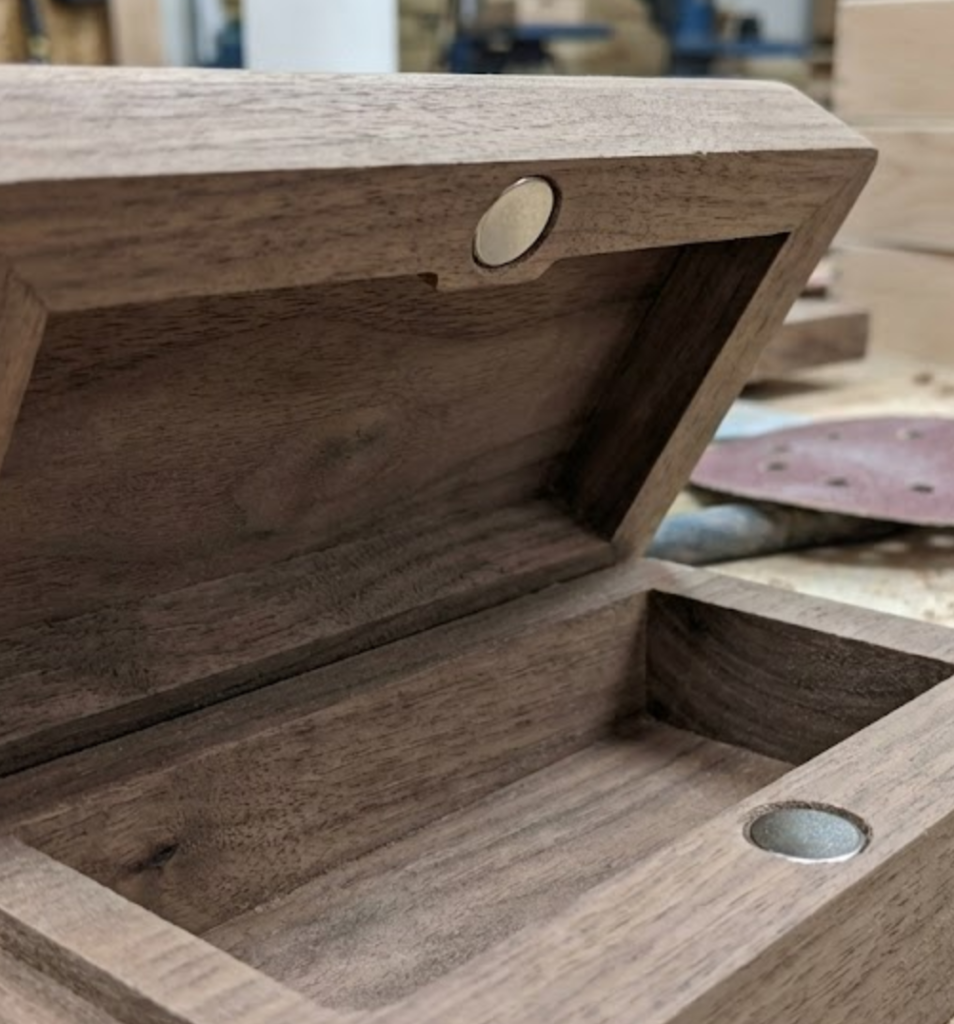
- Magnet positioning lacked fixed tooling
Wood is a natural material. Without production control, scale exposes problems.
2. Trading Companies
Trading companies can simplify communication and sometimes offer broader catalogs.
But when the project involves:
- Magnetic lid alignment
- Drawer sliding tolerance
- Acrylic window positioning
- Insert fit accuracy
Direct discussion with the factory reduces technical misunderstandings.
For standard ready-made items, traders may work well.
For custom wooden chocolate packaging, structural details matter too much to rely purely on intermediaries.
3. Direct Factory Manufacturers
For wholesale buyers, working directly with a wooden chocolate box manufacturer provides:
- Transparent MOQ discussion
- Realistic lead time planning
- Clear understanding of finishing limitations
- Stable batch production capability
However, not every factory understands export logic. That difference is critical.
MOQ and Customization: What Is Realistic?
One of the most common misunderstandings is:
“Can I fully customize at 100 pcs?”
In real manufacturing:
- Custom size adjustments require setup time
- Special inserts may require die tooling
- Low quantity increases unit cost significantly
For most wooden chocolate box structures (magnetic, drawer, sliding lid), practical MOQ starts from 300–500 pcs.
Below that level, cost per unit rises sharply due to labor setup and finishing efficiency.
We usually confirm structure and insert layout before quoting final price. This avoids unrealistic expectations later.
Material Differences Buyers Often Underestimate
Buyers frequently compare pine, paulownia, and hardwood without understanding their manufacturing impact.
In practical production:
- Paulownia is lightweight and reduces shipping cost, but softer in structure
- Pine offers balanced cost and strength, widely used for mid-range packaging
- Hardwood (walnut / oak) improves luxury positioning but increases weight and freight
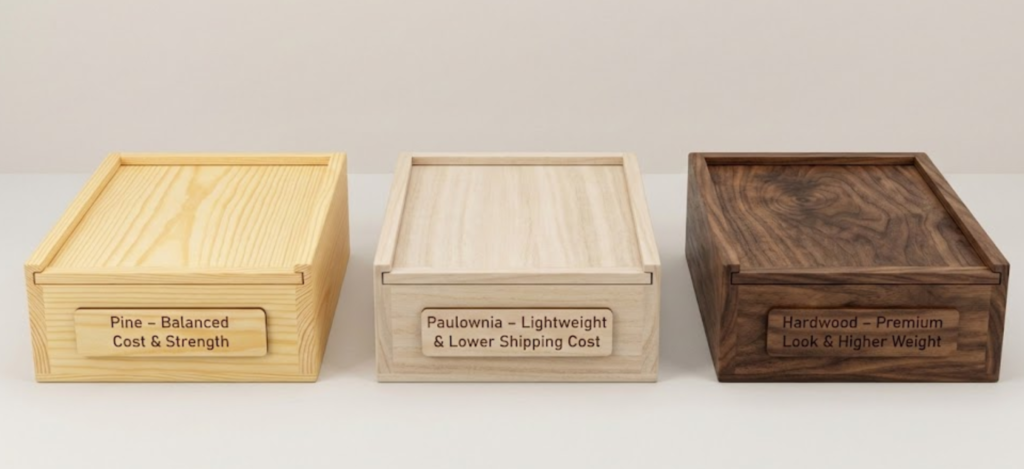
Choosing hardwood without calculating freight impact is a common cost-efficiency mistake.
If needed, buyers can refer to basic wood properties via public resources such as Wikipedia’s wood species entries for general understanding.
Material selection should align with:
- Retail positioning
- Shipping market
- Order volume
- Budget structure
Not just visual preference.
Cost vs Visual Effect: A Production Reality
Many projects request:
- Deep dark staining
- Multiple coating layers
- Strong embedded magnets
- Velvet + EVA inserts
- Thick acrylic windows
But expect entry-level pricing.
In actual production, each additional process step means:
- Longer drying time
- More sanding stages
- Higher labor input
- Increased quality inspection time
We usually help buyers balance:
- Finish thickness
- Structural complexity
- Retail positioning
- Shipping cost
A sustainable packaging strategy requires cost-effect alignment, not maximum decoration.
Batch Production: What Really Matters
In wooden packaging, consistency is more important than sample perfection.
During mass production, we focus on:
- Moisture level control before assembly
- Magnet depth alignment using positioning tools
- Drawer sliding tolerance adjustment
- Color consistency across batches
Without these controls, scaling from 50 samples to 1,000 units often exposes hidden structural defects.
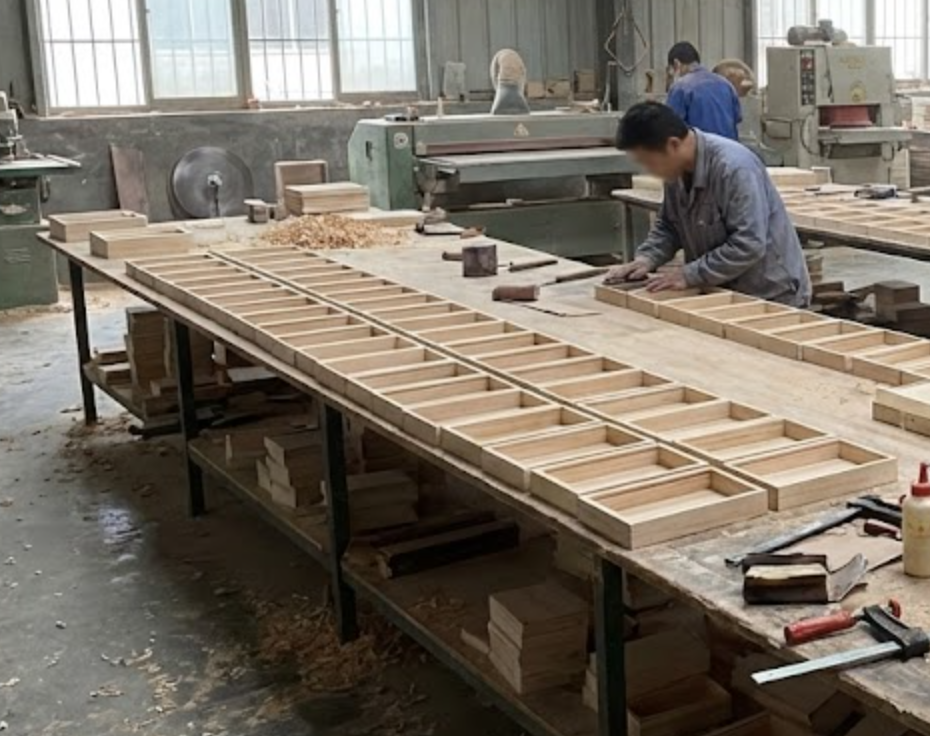
Bulk readiness is what separates sample-level suppliers from production-level factories.
How Chic Homeware Approaches B2B Wooden Chocolate Box Projects
As a China-based OEM/ODM wooden box factory, our approach is structure-first, not decoration-first.
In actual production, we usually:
- Confirm chocolate dimensions before insert design
- Control wood moisture before assembly
- Test magnetic alignment in bulk phase
- Inspect sliding tolerance manually before packing
Our focus is not one-time visual effect — but repeat order stability.
Practical Advice for Overseas Buyers
If you are evaluating where to buy wooden chocolate boxes, consider asking suppliers:
- What is the realistic MOQ for my structure?
- How do you control moisture before assembly?
- Can you share bulk production photos?
- How do you ensure magnet alignment consistency?
- What finishing method is used for export durability?
The quality of the answers usually reveals whether the supplier understands production beyond sampling.
Internal Links
- Explore our full range of custom wooden chocolate boxes
- Learn more about our custom wooden boxes manufacturing capabilities
External Reference (For Buyer Education)
These standards are relevant for buyers importing into North America or Europe.
Final Perspective
Where to buy wooden chocolate boxes is not simply a supplier search question.
It is a manufacturing partnership decision.
For B2B buyers, the right supplier provides:
- Realistic MOQ
- Material transparency
- Production stability
- Export-ready quality control
That is what determines long-term packaging reliability.