
Acacia vs Bamboo Organizer
Introduction: The End of the “Green Gold” Rush
This article compares Acacia vs Bamboo organizers from a manufacturer and buyer perspective.
If you walked into a Global Sources exhibition or the Canton Fair five years ago, 80% of the kitchen organization booths were filled with Bamboo. It was cheap, it was marketed as “eco-friendly,” and it was everywhere.
But if you look at the best-selling lists of Crate & Barrel, Pottery Barn, or top-tier Amazon brands in late 2025, you will notice a quiet revolution. The bamboo is disappearing. It is being replaced by the rich, dark, walnut-like grain of Acacia Wood.
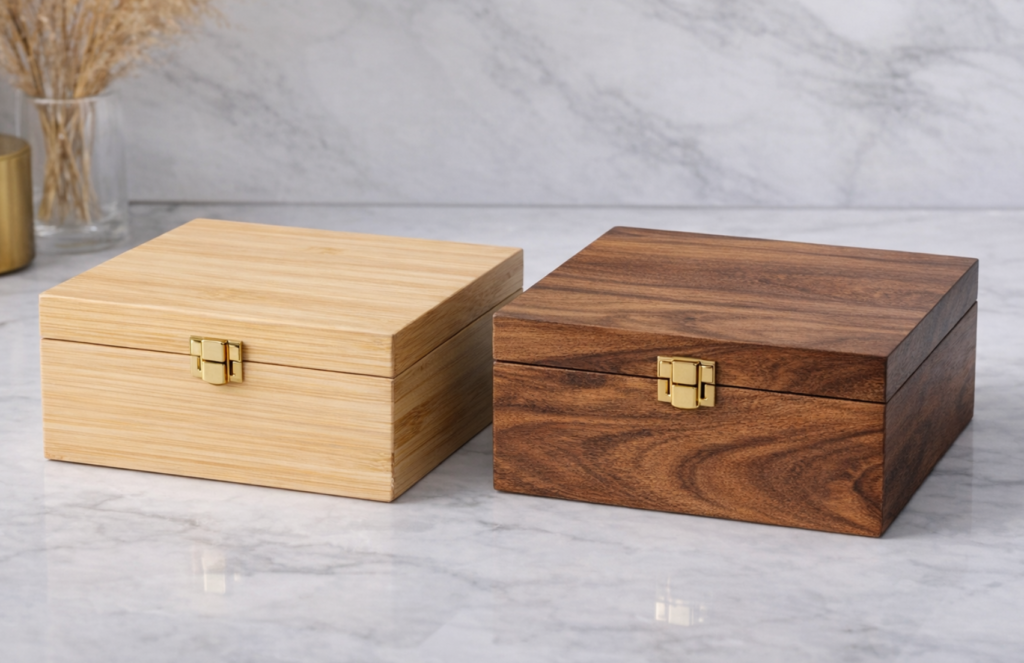
Why the shift?
The shift from bamboo to acacia wood is not just a design trend.
For brands, retailers, and Amazon sellers, This is why many buyers are now upgrading their core SKUs to solid acacia wood organizers designed specifically for kitchen environments., acacia wood organizers offer:
– Higher durability in humid kitchens
– More premium grain patterns that justify higher retail pricing
– Lower return rates caused by cracking or mold
– Better performance in long-distance shipping and warehouse storage
As a manufacturer supplying OEM wooden organizers, we have seen increasing demand from US and European buyers seeking alternatives to bamboo.
Is it just a fashion trend? No. It is a functional necessity. After years of selling bamboo products, retailers are waking up to a brutal reality: Bamboo has a hidden “return rate” problem.
At Xiamen Chic Homeware, we manufacture both. We don’t hate bamboo—it has its place. But for kitchen environments (where moisture and heat fluctuate), we have advised our clients to switch to Acacia. Here is the technical and commercial reasoning why your next procurement catalog needs to upgrade.
1. Moisture Mechanics: Acacia vs Bamboo Organizers in Real Kitchens
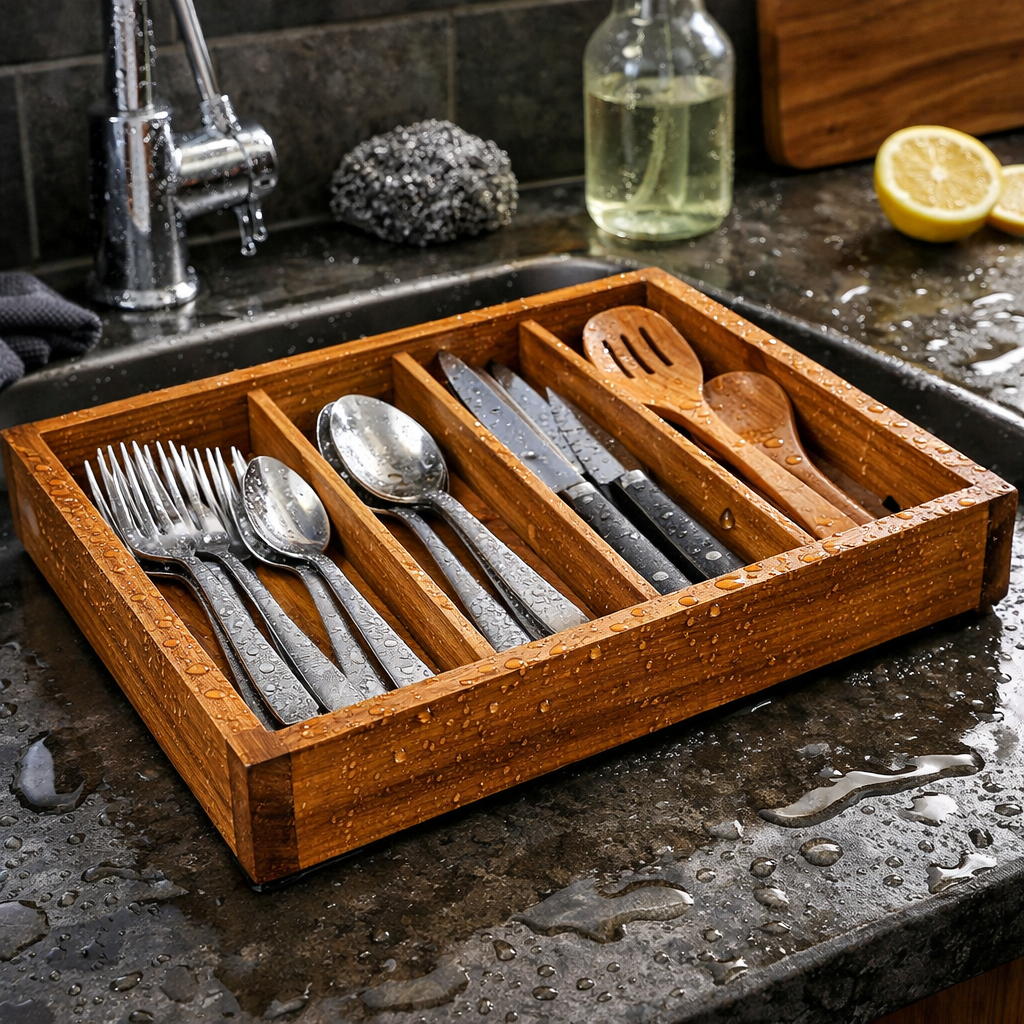
To understand why bamboo organizers crack, you have to understand biology.
Bamboo is not wood; it is grass. To make a flat board out of round grass, factories must strip it, boil it, and glue thousands of thin strips together under high pressure. Bamboo is technically a grass rather than a hardwood, which fundamentally affects its structural behavior.
- The Risk: Bamboo fibers are naturally straight and extremely porous. In a humid environment (like a kitchen drawer next to a dishwasher), bamboo absorbs moisture like a sponge.
- The Failure Point: When it swells, the glue bonds break. This leads to the infamous “vertical splitting” that accounts for 40% of all 1-star reviews on Amazon for drawer organizers.
The Acacia Advantage: Nature’s Water Seal Acacia is a hardwood rich in natural oils and resins. Historically, this wood was used to build ships in the 18th century because of its water resistance.
- In Your Product: When we make an Acacia Expandable Drawer Organizer, we are using a material that naturally repels water. It doesn’t need to be drowned in chemical sealants to survive a spill. It just survives.
2. The “Sliding Rail” Dilemma (Crucial for Expandable Items)
This is a specific pain point for Expandable/Adjustable organizers.
If you are sourcing a fixed box, bamboo is okay. But if you are sourcing an expandable tray with sliding rails:
- Bamboo Swells: Even a 1mm expansion due to humidity can cause the sliding mechanism to jam. The user pulls the drawer, the tray gets stuck, and they get frustrated.
- Acacia Glides: Because Acacia is denser (Janka Hardness: 1750 lbf vs. Bamboo’s varied 1180-1380 lbf) and more stable, we can machine the sliding rails with tighter tolerances.
- The Result: A smooth, premium “glide” feel that customers associate with high-end furniture, not cheap storage.
3. The Aesthetic Shift: “Warm Minimalism” vs. “Industrial Uniformity”
Consumer tastes in 2026 are moving away from the sterile, uniform look of the 2010s.
- The “Bamboo Look”: Bamboo looks manufactured. Every piece looks exactly the same—pale yellow with distinctive “knuckles.” It screams “mass-produced.”
- The “Acacia Look”: Acacia is famous for its chatoyancy (a cat-eye effect where the wood grain changes depth under light). It features contrasting colors—from golden honey to deep chocolate brown.
Why this matters for your margin: A consumer looks at a Bamboo tray and thinks “Utility ($20).” A consumer looks at an Acacia tray and thinks “Furniture ($45).” You are selling the same function, but the Perceived Value of Acacia allows you to command a significantly higher retail price point, insulating you from the “price wars” of generic sellers.
4. The Manufacturing Truth: Glue and Formaldehyde
Here is a secret most factories won’t tell you.
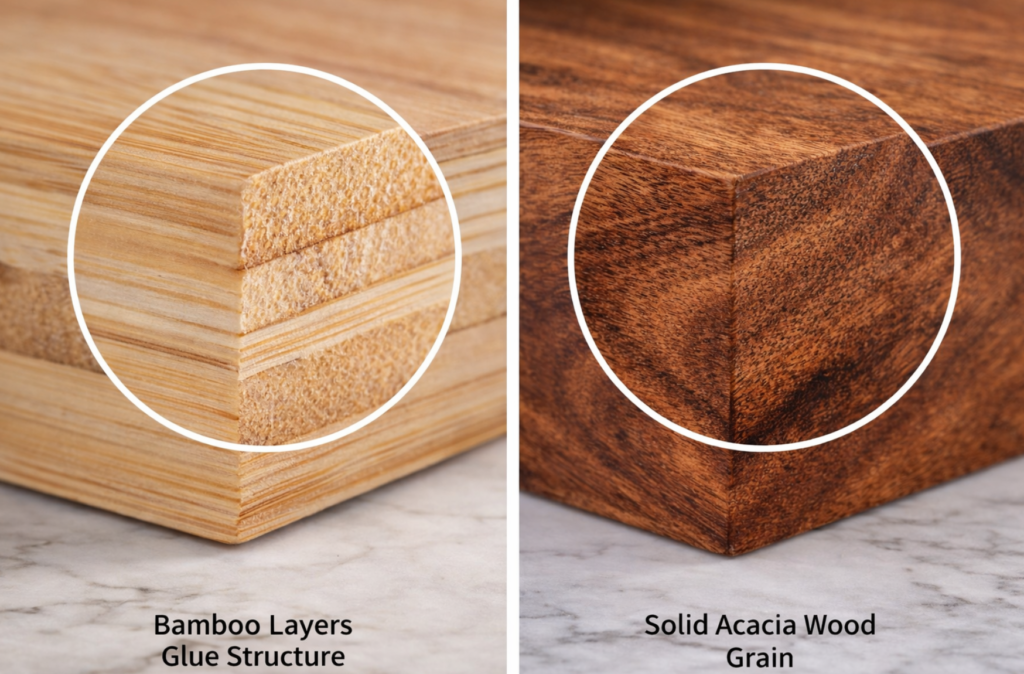
Because Bamboo is made of thin strips, the Glue-to-Wood ratio is very high. To keep costs down, many budget factories use Urea-Formaldehyde adhesives. This difference in material structure is one of the key reasons brands are re-evaluating wood selection across their entire organizer collections. Some bamboo products may raise concerns related to formaldehyde emissions depending on the adhesive used.
- The Risk: If your product is tested by strict customs authorities (like in California or Germany), high formaldehyde emissions can get your shipment seized.
Acacia is solid lumber. When we manufacture our Premium Acacia Organizers, we are cutting solid slabs of timber. We use minimal glue—only at the joinery points.
- Our Standard: We finish our Acacia with 100% food-safe vegetable wax oil. It smells like nature, not chemicals. This is a massive selling point for health-conscious moms who are buying organizers for their cutlery.
5. Case Study: The Cost of Returns
Let’s do the math. Why pay 20% more for Acacia FOB price?
Imagine you order 1,000 units.
Scenario A: Bamboo ($5.00 FOB)
- Total Cost: $5,000
- Return Rate (Cracking/Jamming): 5% (50 units)
- Cost of Returns (Shipping + Refund + Disposal): $1,500
- Hidden Loss: Brand Reputation Damage (Priceless)
Scenario B: Acacia ($6.50 FOB)
- Total Cost: $6,500
- Return Rate: 0.5% (5 units)
- Cost of Returns: $150
- Gain: 5-Star Reviews & “Premium” Branding
The Verdict: The “cheaper” Bamboo option actually costs you more in the long run. Professional buyers focus on Total Landed Cost, not just the factory sticker price.
Manufacturer Insight: Why We Recommend Acacia Wood Over Bamboo
As a manufacturer supplying OEM wooden organizers, we have seen increasing demand from US and European buyers seeking alternatives to bamboo, especially for private label and bulk supply projects.
With moisture content controlled at 8–12%, solid acacia organizers perform better in dry climates and heated indoor environments, reducing post-sale quality issues for brands and distributors.
Conclusion: The debate of Acacia vs Bamboo organizers is no longer about trends, but long-term performance.
The market has spoken. The era of cheap, disposable kitchenware is ending. Consumers want “Buy It For Life” quality.
At Xiamen Chic Homeware, we still love bamboo for simple, dry-storage items. But for the kitchen—the heart of the home—we stand firmly behind Acacia.
Don’t let your brand be defined by cracked trays and stuck drawers.
Many brands start their upgrade by testing one flagship acacia wood organizer before rolling the material change across their full product line.: 👉 [View the Acacia Expandable Drawer Organizer (FSC Certified)
FAQ – Acacia vs Bamboo Organizers
Is acacia wood better than bamboo for kitchen and home organizers?
Yes. Solid acacia wood offers higher density, better moisture resistance, and more stable performance compared to laminated bamboo. For kitchen and home organizers, acacia wood reduces the risk of cracking, delamination, and mold in humid or heated environments.
Why are premium home brands switching from bamboo to acacia wood?
Many premium brands are moving to acacia wood because it provides a more natural solid-wood appearance, stronger durability, and better long-term quality. Acacia organizers also support higher retail positioning and lower return rates compared to bamboo products.
Are acacia wood organizers suitable for Amazon FBA and long-distance shipping?
Yes. When properly kiln-dried and moisture-controlled at 8–12%, acacia wood organizers perform well in Amazon FBA logistics. They are more resistant to warping and structural failure during long-distance shipping and warehouse storage.
Do you offer OEM and private label services for acacia wood organizers?
Yes. We are an OEM manufacturer of acacia wood organizers, providing private label services including size customization, structural design, laser-engraved logos, and custom packaging for brands, retailers, and distributors.
What is your MOQ for custom acacia wood organizers?
Our standard MOQ is 500 sets per design, depending on size, structure, and customization requirements. Lower trial quantities may be discussed for long-term cooperation or multi-SKU projects.
How does acacia wood compare to bamboo in terms of sustainability?
Both materials are sustainable when responsibly sourced. Bamboo grows faster, while acacia wood offers longer product lifespan due to its durability. Many brands prefer acacia wood as it reduces replacement frequency and overall environmental impact over time.